As a professional hairstylist or salon owner, tape-in extensions falling out can quickly become a service issue. Clients may think the hair is poor quality, while the real cause may be installation, hair preparation, aftercare, adhesive quality, or natural hair condition.
Tape-in extensions usually fall out when the adhesive bond cannot hold securely. This may happen because of oil or product residue, incorrect sectioning, weak tape tabs, moisture exposure, or too much tension on the client’s natural hair.
This guide breaks down the most common causes, what stylists should check first, and how to reduce repeat slippage without overpromising results

Why Are Tape In Extensions Falling Out?
Tape-in extensions typically fall out due to:
- Improper installation technique
- Inadequate hair preparation before application
- Too much or too little natural hair inside the tape sandwich
- Use of incompatible aftercare products
- Substandard tape adhesive or aged tape tabs
- Excessive moisture, sweat, heat, or humidity
- Client behavior that places tension on the adhesive bonds
- Natural hair that is too fine, weak, or damaged for the weight used
Each factor can weaken adhesion and lead to slipping, lifting, or early detachment. In many cases, the problem is not one single mistake. It is a combination of product choice, installation detail, and client maintenance.
Professional Breakdown: Causes and Solutions
Before changing products or blaming the client, check the full service process. Tape-in slippage usually comes from one of four areas: preparation, placement, adhesive quality, or aftercare.
1. Inadequate Hair Preparation Before Application
A clean, residue-free foundation is mandatory for a secure bond. Any presence of oil, silicone, conditioner, or styling product interferes with the tape’s ability to adhere effectively to the natural hair.
Recommended protocol:
Wash hair twice with a clarifying shampoo only. Do not use conditioner or any post-wash products.
Ensure the hair is completely dry prior to installation.
Avoid applying Tape Ins on damp or humid hair, as moisture weakens the adhesive.
Note: Clarification must include the root area where tape will be placed. Many installation issues begin at the scalp level due to insufficient cleansing.
2. Incorrect Sectioning and Tape Placement
Precision in sectioning and alignment is critical. Misalignment, incorrect spacing, or improper density can all result in premature fallout.
Best practices:
Section thickness: No more than the density of a paper sheet—thin enough to allow light to pass through.
Tape placement: Apply approximately 0.5 inches from the scalp to avoid tension as the hair grows.
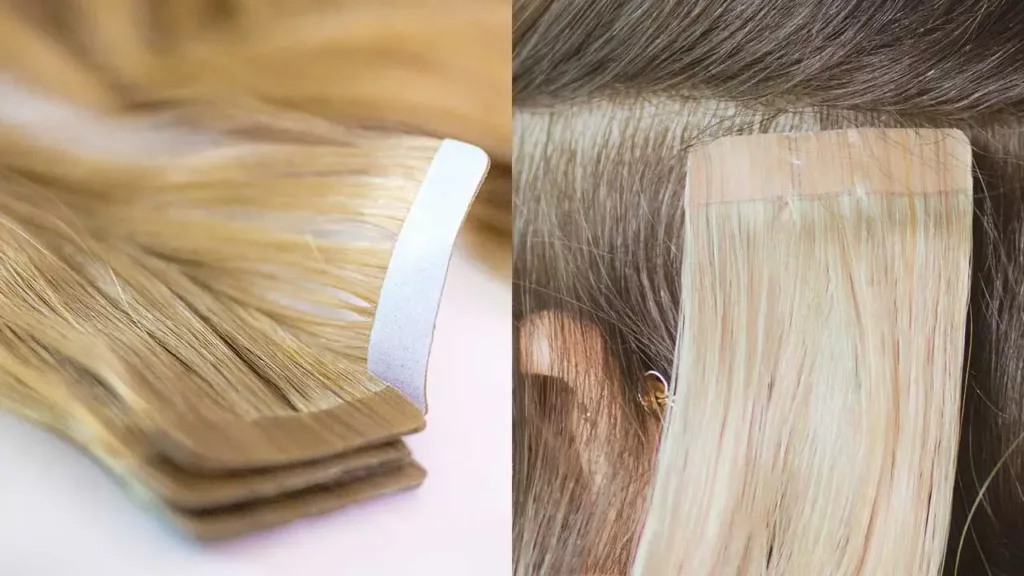
Hair distribution: Ensure natural hair is evenly sandwiched between tape tabs. Avoid using too little (tape sticks to tape) or too much (tape cannot seal).
Professional tip: A tail comb is essential for clean parting, and a precision approach ensures each extension is fully supported by natural hair.
3. Substandard Tape or Old Adhesive Tabs
Not all tape adhesives are suitable for professional salon use. Low-quality tape may lose grip quickly, especially when clients wash often, sweat, work out, or live in humid climates.
Old tape tabs can also fail. Even good adhesive can dry out, weaken, or become unstable if it has been stored poorly.
Solutions:
- Use fresh, salon-quality replacement tape for every reinstallation.
- Never reuse worn tape tabs.
- Store tape in a dry, cool, sealed container.
- Check adhesive performance before offering a new tape-in line to clients.
- Test removal and retaping, not only the first installation.
For salons and hair brands, adhesive quality is part of product quality. If many clients report the same slipping issue, the supplier’s tape system should be reviewed.
You can also compare the hair quality itself. Premium full cuticle hair usually stays smoother with proper care, which helps reduce brushing stress near the tape area.
4. Use of Incompatible Hair Products Post-Installation
Once Tape Ins are applied, maintenance is crucial. Many consumer-grade shampoos and conditioners contain oils, alcohols, or silicone that directly interfere with tape bonds.
Prohibited product ingredients:
Silicone derivatives (e.g., dimethicone)
Heavy oils (e.g., argan, coconut, castor)
Sulfates and alcohols
Recommendations:
Advise clients to use only extension-safe, sulfate-free shampoos and conditioners.
Avoid application of serums, sprays, or oils within 3–4 cm of the root area.
Provide an aftercare guide and offer salon-approved retail products.
| Possible Cause | What Stylists Should Check | Professional Fix |
|---|---|---|
| Hair was not clean enough | Roots feel oily, coated, or slippery | Clarify the hair and avoid conditioner near the tape area |
| Hair was damp during installation | Bonds loosen soon after fitting | Fully dry the root area before application |
| Section is too thick | Tape does not close flat | Use a thinner, cleaner section |
| Section is too thin | Tape has poor natural hair support | Add enough hair to support the bond |
| Tape is too close to scalp | Client feels pulling or tightness | Place tape with enough room for natural movement |
| Adhesive is old or weak | Tabs lift, slide, or feel gummy | Replace with fresh salon-quality tape tabs |
| Aftercare products are too heavy | Client uses oils, masks, or silicone near roots | Keep slippery products away from the bond area |
| Natural hair is too fragile | Hair sheds or breaks around the tape | Pause installation or choose a lower-tension method |
5. Exposure to Heat, Humidity, and Moisture
Tape adhesive is highly sensitive to environmental stress. High humidity, daily workouts, swimming, or frequent heat tool use can all accelerate adhesive breakdown.
Professional advice:
Advise clients to wait 48 hours before washing hair after application.
Recommend using a shower cap during hot showers or steam treatments.
Instruct clients to avoid direct contact between heat styling tools and the tape bond.
Apply thermal protection sprays only on the mid-lengths and ends—not the roots.
6. Client-Induced Tension and Improper Handling
Client behavior can also contribute to early fallout. Constantly touching or brushing near the adhesive can weaken the tape bond over time.
Educate clients on:
Using a loop brush or soft-bristle brush
Brushing from ends upward—never at the root
Tying hair into a loose braid or low ponytail at night
Avoiding excessive manipulation or picking at the bonds
Clear post-installation guidance can drastically reduce maintenance issues and prolong extension life.
7. Product Quality Risk: When the Problem Is Not Only Installation
Tape-in extensions can be installed correctly and still perform poorly if the product quality is unstable.
For professional buyers, the key is not only how the hair looks before installation. You also need to check how the tape holds, how the hair behaves after washing, and whether the extensions can be retaped cleanly.
| Product Factor | Why It Matters for Salons |
|---|---|
| Adhesive strength | Affects how securely the tape holds during wear |
| Tape freshness | Old tabs may lift or lose grip faster |
| Hair weight | Heavy hair can add pressure to fine or weak natural hair |
| Cuticle alignment | Smoother hair reduces tangling and brushing stress |
| Retaping performance | Important for reuse and long-term client value |
| Removal result | Poor adhesive can leave heavy residue or damage the service experience |
If you are testing a new supplier, order samples before placing a bulk order. Install, wash, wear, remove, and retape the hair before judging the product.
For professional salon use, Hibiscus Hair offers premium tape-in hair extensions for buyers who need smooth texture, stable quality, and sample testing before larger orders.
8. When to Stop Wearing Tape-In Extensions Temporarily
Tape-ins are not suitable for every client at every stage.
If the client’s natural hair is heavily shedding, over-bleached, extremely weak, or irritated at the scalp, it may be safer to pause the service and reassess. This protects both the client and the stylist.
| Client Condition | Risk Level | Better Salon Decision |
|---|---|---|
| Healthy medium-density hair | Low | Tape-ins can work well with correct installation |
| Fine but healthy hair | Medium | Use lighter sections and careful placement |
| Very thin hair near the crown | Medium to high | Consider fewer pieces or a lower-tension method |
| Over-bleached fragile hair | High | Avoid heavy installation until the hair improves |
| Active scalp irritation | High | Stop installation and recommend professional consultation |
| Heavy shedding | High | Do not install until the cause is checked |
This is not about losing a service. It is about protecting long-term client trust.
9. Better Product Choice for This Client Type
| Client Type | Better Option | Why It Helps |
|---|---|---|
| Fine hair clients | Lightweight tape-ins or fewer pieces | Reduces pulling and visible bulk |
| Clients wanting flat roots | Tape-in extensions | Creates a smooth, discreet finish when installed correctly |
| Sensitive scalp clients | Lower-tension placement and lighter density | Helps reduce pressure on natural hair |
| Premium salon clients | Full cuticle tape-ins | Supports smoother wear and better reuse value |
| New wholesale buyers | Sample testing first | Reduces risk before bulk ordering |
For fine hair clients or salon buyers testing a new product line, you can request samples or a low-tension product recommendation before placing a wholesale order.
How to Fix Tape In Extensions That Are Slipping
If slippage has already occurred, do not simply press the tape back into the hair. That may only hide the problem for a short time.
Use a professional correction process instead:
- Remove the slipping extension with a professional tape bond remover.
- Clean the extension tab and remove all adhesive residue.
- Clarify the client’s natural hair again.
- Dry the root area completely.
- Apply fresh tape tabs.
- Reinstall with correct sectioning, spacing, and placement.
- Review the client’s aftercare routine.
If the same client keeps having problems, check hair density, scalp oil level, lifestyle, product use, and adhesive quality.
If many clients report the same issue, check the product batch or supplier.
FAQ: Common Questions About Tape In Extensions Falling Out
Q1: How long should Tape In extensions last without falling out?
A: Most professionally installed tape-in extensions need maintenance after 6–8 weeks. Some clients may need earlier adjustment depending on hair growth, scalp oil, lifestyle, aftercare, and natural hair density.
Q2: Can clients work out or sweat with Tape In extensions?
A: Yes, but it’s recommended to wait 48 hours post-installation before engaging in vigorous activities. Excessive sweat and moisture can weaken the adhesive over time, so clients should tie hair up and keep roots dry during workouts.
Q3: Is it safe to dye hair with Tape In extensions installed?
A: Tape In extensions made with full cuticle, virgin hair can be dyed. However, coloring near the tape bond is not recommended, as dye chemicals can interfere with the adhesive. For best results, dye hair prior to installation or have a professional handle the color process.
Q4: Why do Tape In extensions fall out more in humid climates?
A: Humidity affects adhesive integrity. Tape glue is sensitive to water vapor, and prolonged exposure to moisture can cause slippage. Using professional-grade adhesive designed for all climates is essential in these environments.
Q5: Can you reapply Tape In extensions that have fallen out?
A: Yes. If the hair and weft are in good condition, remove any adhesive residue, retape using fresh tabs, and reinstall following the correct procedure.
Q6: How can I ensure my Tape In installation stays secure?
A: Use salon-grade, medical-quality tape, ensure proper hair prep, follow professional installation protocols, and educate the client on maintenance. Also, avoid overloading the wefts and keep placement strategic—not too close to the scalp or in areas prone to movement.
Q7: Are tape-in extensions suitable for thin hair?
A: They can be, but only with careful product choice and low-tension installation. Fine hair clients may need lighter tape-ins, fewer pieces, or smaller sections. If the natural hair is weak, shedding, or damaged, installation should be delayed or reviewed by a professional.

Conclusion
Tape-in extension slippage usually comes from preparation, placement, adhesive quality, aftercare, or the client’s natural hair condition.
For stylists, the best solution is not only stronger tape. It is better diagnosis, safer installation, clearer aftercare, and choosing the right product for the right client.
For salons and hair brands, product testing is also important. Check how the tape holds, how the hair wears, and how it performs after retaping before placing larger orders.
If you work with fine hair clients or need a stable tape-in line for salon use, you can request samples or ask for a low-tension product recommendation from Hibiscus Hair.