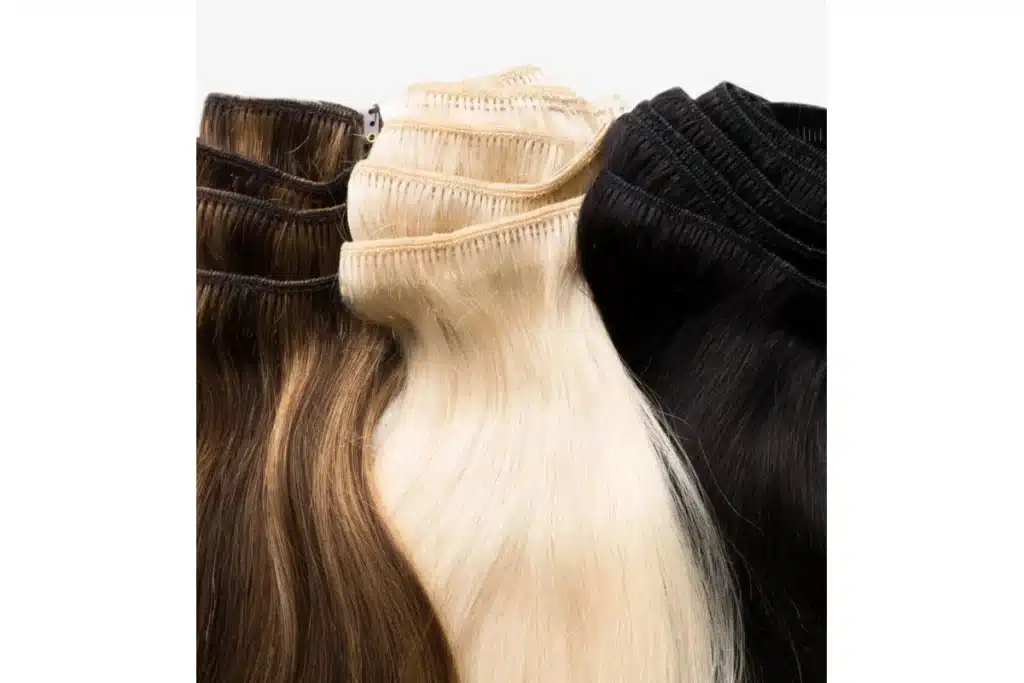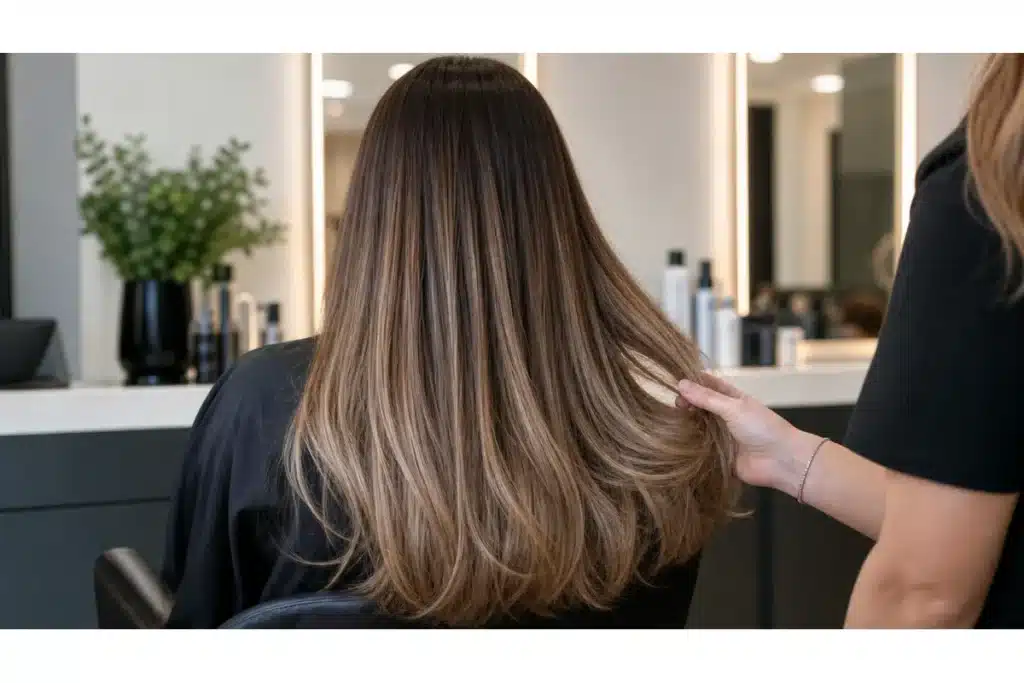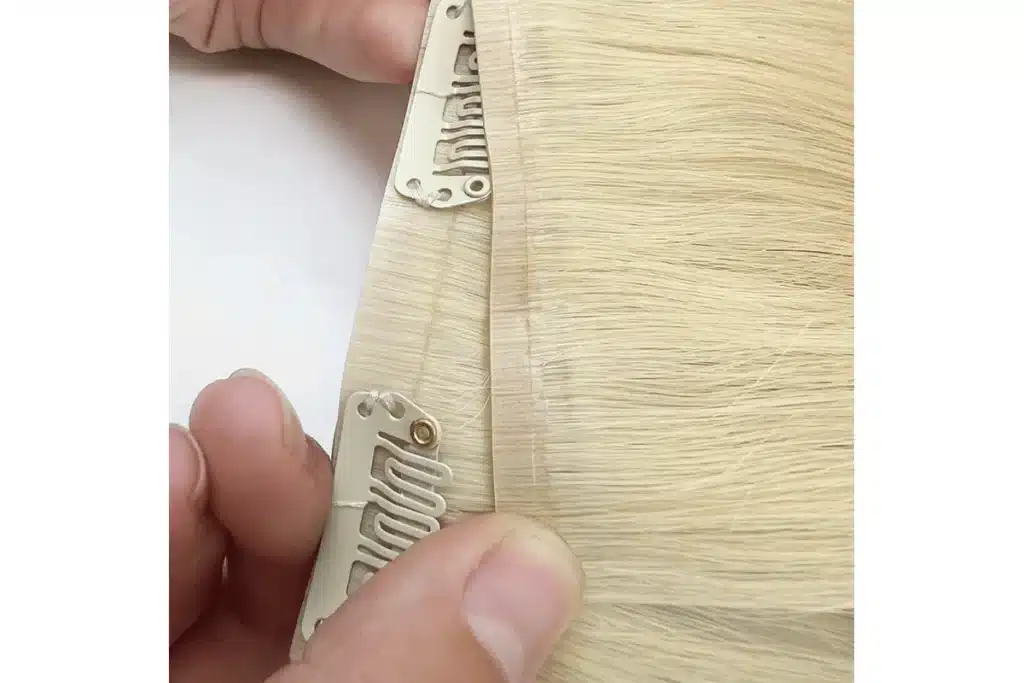
A thin seam can still create discomfort or visible rows when the weft weight and client density do not match.
Micro weft hair extensions use a narrow, lower-profile seam to reduce bulk and support flexible row planning. They can suit clients who want flatter weft installations, but the name does not prove comfort or quality. Salons should compare seam width, thickness, grams, cutability, hair quality, and the planned attachment method.
Before adding micro wefts to a service menu, buyers need to separate seam appearance from the full installation system. The row, beads, thread, weight, placement, and client aftercare all influence the result.
What Are Micro Weft Hair Extensions?
Micro weft hair extensions are wefts made with a relatively narrow or low-profile top seam, but exact construction and dimensions can vary by supplier.
The term “micro weft” is not always used for one standardized construction. One supplier may use it for a narrow machine seam. Another may use it for a lightweight weft designed for smaller rows. Buyers should request measured specifications instead of ordering by the product name alone.
The seam affects how the row sits and how easily it can be hidden. The total grams affect the load placed on the natural hair. A thin seam with too much weight can still feel heavy. A light weft with poor stitching may create shedding risk after cutting or repeated wear.
| Parameter | What the salon should check | Why it matters |
|---|---|---|
| Seam height and thickness | Measure the top band on the sample | Affects visibility, stacking, and row profile |
| Weight per weft | Record grams and usable width | Affects client load and quantity planning |
| Cutability | Confirm whether cut ends need sealing | Affects customization and shedding risk |
| Hair density | Compare root, mid-length, and ends | Affects blending, price, and finished fullness |
Ask for seam measurements, grams, usable width, cut instructions, shade, and wash-test guidance before a bulk order.
Request a micro weft specification checkHow Does a Micro Weft Compare With Other Weft Types?
A micro weft may offer a smaller seam than a standard machine weft, while hand-tied and Genius Weft products use different construction and cutting rules.
A standard machine weft is often durable and practical for volume, but its seam can be thicker. Hand-tied wefts are usually light and flat, yet many constructions should not be cut freely. Genius Weft can offer a thin cuttable format, depending on the product specification.
Micro weft buyers should not assume that one thin product replaces every other type. The salon may prefer a durable standard weft for dense clients and a lower-profile option for clients with moderate density. Service technique and stylist training also affect the choice.
The machine weft versus hand-tied weft guide helps buyers compare two common constructions. A micro weft sample should be assessed using the same practical questions: how it is made, how it can be customized, and which clients can support the planned row.
Which Salon Clients May Fit a Micro Weft?
Micro wefts may fit clients with enough density to cover and support a row who also want a flatter profile than a standard bulky weft.
Fine hair does not automatically make a client suitable. The stylist must check the strength and distribution of the natural hair. Sparse sides, active shedding, scalp sensitivity, or damaged sections may require a lighter plan or a different method.
Dense hair can also use micro wefts, but the salon may need more rows or wider coverage to reach the desired volume. Too many stacked wefts can remove the low-profile advantage.
The American Academy of Dermatology warns that repeated tension from tight styles and extensions can contribute to traction-related hair loss. A row that causes pain or persistent tightness needs attention, regardless of how thin the seam looks. [1]
In sample consultations, we often separate the “flat seam” request from the “light installation” request. These goals overlap, but they are not identical. The supplier can make a thin seam, while the salon still controls the number of wefts, row placement, bead spacing, and total weight.
What Should Salons Check About Cutting and Sealing?
Salons should confirm whether the micro weft can be cut, where it can be cut, and whether each cut end needs sealing.
An unclear cutting rule can create avoidable shedding. The stylist should receive written instructions and test a sample before using the product across several clients. If sealing is required, the salon should also confirm the suitable product and drying time.
The salon should inspect both ends after washing and brushing. A clean first cut does not prove that the seam will remain stable after wear. Buyers should record how many cuts were made and whether the tested piece lost hair near the cut point.
The human hair weft buyer checklist provides a broader quality review. For micro wefts, buyers should add seam dimensions and cutting instructions to that checklist.
How Should Wholesale Buyers Test a Micro Weft Sample?
Wholesale buyers should test the seam, usable width, grams, cut points, shedding, washing behavior, end fullness, color, and repeat-order specification.
The sample should match the planned shade and length. Very light colors and longer lengths can behave differently because processing and density targets change. A short dark sample may not represent a light 24-inch bulk order.
From the factory side, written measurements are more useful than a label such as “ultra thin.” The buyer should record seam height, seam thickness, grams, and usable width. The same measurements should be checked again when the repeat order arrives.
Buyers should also check whether the weft twists, curls at the seam, or becomes stiff after washing. These observations help separate a product issue from an installation issue before the salon expands the service.
My View
From our factory perspective, micro weft hair extensions should be purchased by specification rather than by name. A buyer needs to know the seam height, thickness, usable width, grams, hair density, and cutting rule. These details explain more than a claim that the weft is thin. We usually suggest testing the planned shade and length because processing and length can change how the hair feels and how full the ends look. The salon should also match total row weight to the client’s natural density. A lower-profile seam can improve concealment, but it does not remove the need for careful placement, suitable attachment tension, and maintenance. For repeat orders, the approved sample and written measurements should stay together. This gives the buyer a practical reference when checking whether the next delivery matches the service standard.
Frequently Asked Questions
Are Micro Wefts the Same as Genius Wefts?
Not always. Suppliers may use different construction terms. Buyers should compare the seam, cutting rule, grams, and manufacturing specification rather than treating the names as identical.
Can Micro Wefts Be Cut Anywhere?
Some can be cut, while others may need specific cut points or sealing. The supplier should provide written instructions, and the salon should test a sample first.
Are Micro Wefts Good for Fine Hair?
They can suit some fine-hair clients when the natural hair can support and cover the row. The stylist should reduce weight and avoid weak areas instead of relying only on a thin seam.
How Many Micro Wefts Does a Client Need?
The number depends on grams per weft, usable width, client density, target volume, and the number of planned rows. Salons should calculate total weight, not only count pieces.
Conclusion
Micro weft hair extensions can give salons a lower-profile row when the seam specification, total weight, cutting rule, and client density work together. Buyers should approve a measured sample, test the intended shade and length, and keep written specifications for repeat orders.