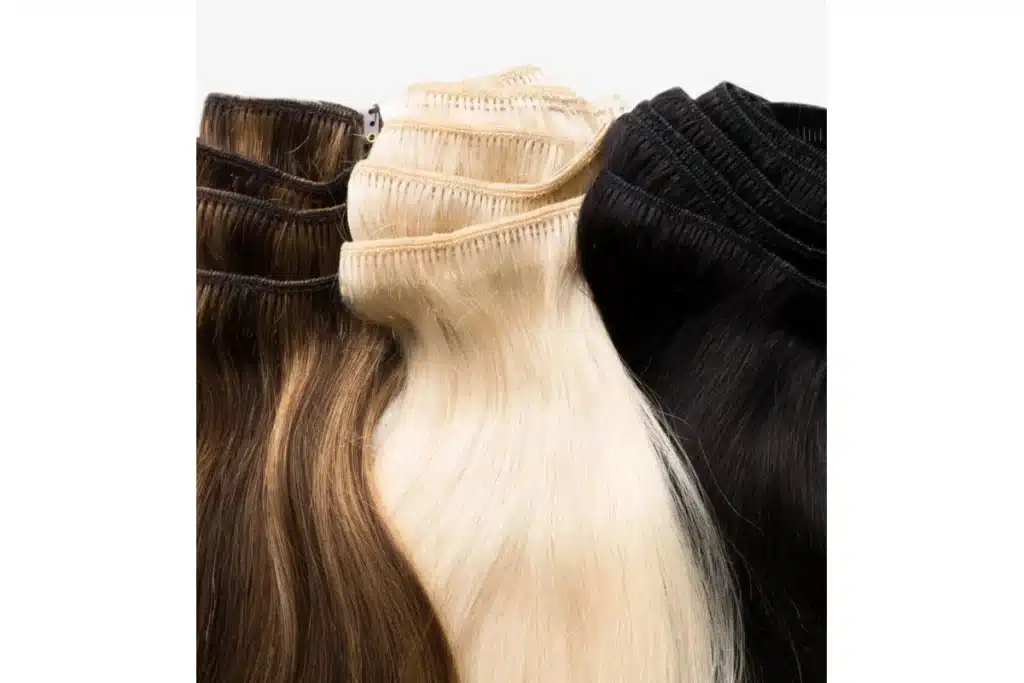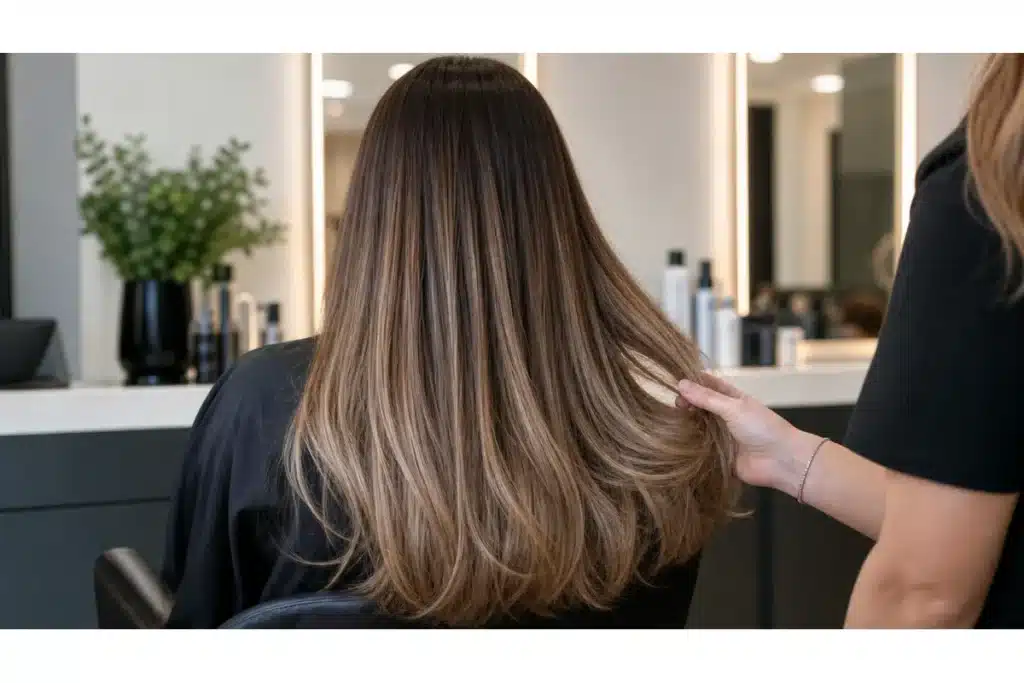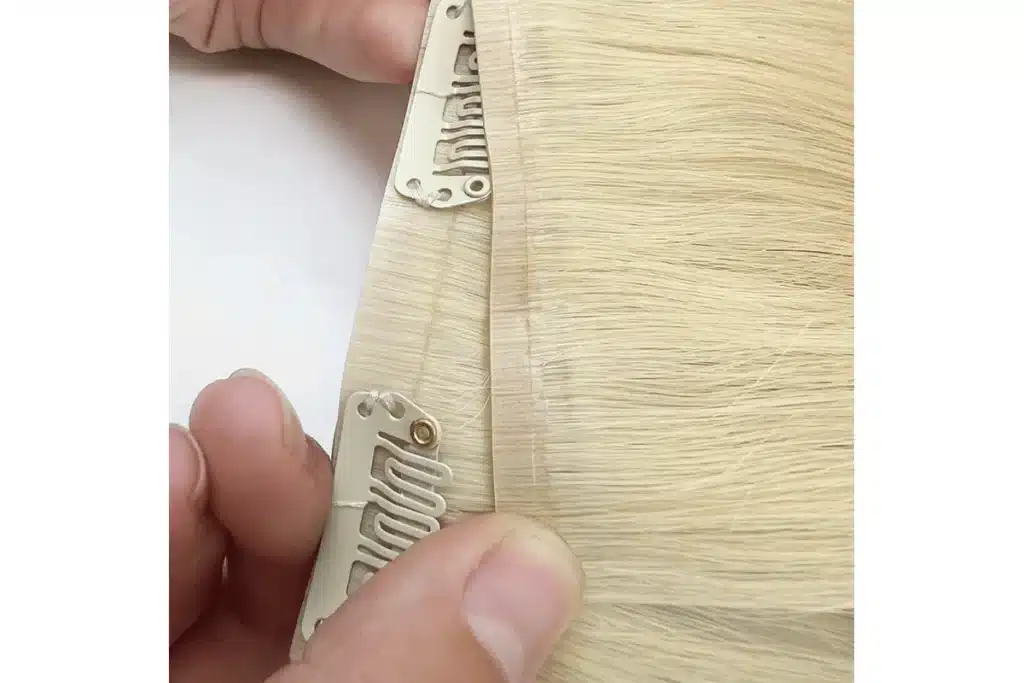
A client brushes quickly at home and catches the attachments. The hair may be fine, but the wrong tool and technique make every morning harder.
A hair extension brush should detangle the lengths without catching tabs, clips, beads, or sewn rows. Test it on the method your salon sells, not just on loose hair. Show clients how to hold the hair near the attachment and brush from the ends upward.
The best kit is the one the client can actually use. A brush that feels soft on a display swatch may still hook the edge of a tape tab or pull at a weft row.
What Should a Hair Extension Brush Do at the Attachment?
The brush should detangle the lengths while the stylist can control pressure near the attachment. It should not catch or lift the attachment during normal use.
Try it on the installed method
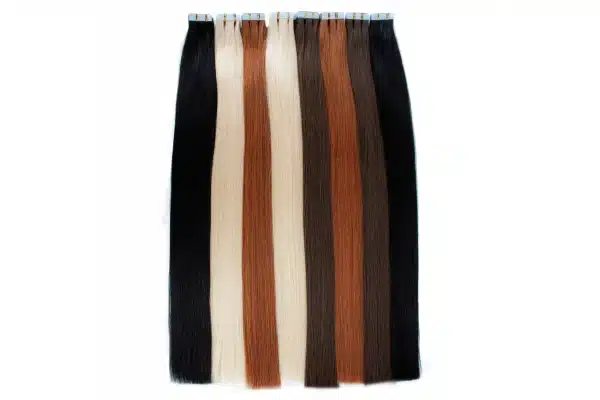
Take the same kind of tape in hair extensions, weft, or clip-in set that the salon plans to sell. Place it on a mannequin or another approved practice setup. Brush a tangled section from the ends upward, then approach the attachment with the stylist supporting the hair above it. Listen for catching and look for strands wrapping around the teeth.
Do not drag a brush hard across a tab or sewn seam to prove it is “extension-safe.” The client should be shown which area to brush around and which area to support with a hand. The tool and the technique belong together.
| Tool feature | Useful salon check | Possible problem |
|---|---|---|
| Flexible bristles | Move through lengths with light pressure | Too soft to clear a knot without repeat pulling |
| Loop or protected tips | Pass near the attachment without hooking it | Still snags if pushed directly under a tab |
| Wide-tooth comb | Separates a larger tangle before brushing | Long teeth can catch a seam or clip |
| Handle grip | Lets a client control short strokes | Slips when hands or hair are wet |
No row in this table means one brush works on every extension. We would test the exact combination that goes into the salon’s aftercare card.

Is a Loop Brush Better Than a Regular Paddle Brush?
A loop design can be useful around attachment points, but the better choice is the one the client can use without snagging and without forcing through knots.
Separate detangling from brushing at the root
For a long, loose section, a flexible paddle brush may feel comfortable. Near a tape tab or a sewn row, a loop or protected-tip design may offer more control. Neither design makes rough brushing safe. The stylist should show a few short strokes on the actual installed hair while the client watches in a mirror.
Imagine a salon selling one brush to every client because the package says “for extensions.” A tape-in client reports a hooked tab; a clip-in client reports knots near the ends. The answer is not simply to change brands. We would first watch where each client starts brushing and which part of the tool catches. This is an illustrative aftercare check, not a claim about a documented return.
Our guide to detangling clip-ins before washing covers loose sets. An installed tape row needs a different conversation about the attachment area.
What Goes in a Small Salon Aftercare Kit?
Include one tested brush, a brief method-specific card, and enough explanation for the client to use both correctly. More accessories are not always more helpful.
Put the instruction beside the tool
A useful card can say: “Support the hair near the attachment. Start at the ends. Work upward in short strokes. Do not pull through a knot at the root.” If the client wears clip-ins, add the instruction to remove and detangle them according to the salon’s fitting plan. If the client wears tape-ins, point out the actual tab line and explain how to brush around it.
We would avoid printing a fixed daily brushing count as a promise of better wear. A client with long wavy hair may need a different routine from someone with short straight extensions. The consistent point is gentle handling before a small tangle becomes a hard one.
Test the kit before a bulk reorder
Give a few stylists the same brush for the same extension type. Ask them to note where it catches, whether the client can grip it, and whether it stays easy to clean. Look at the bristles after repeated use. A tool that bends out of shape or traps shed hair may be a poor retail item even if the first stroke feels good.
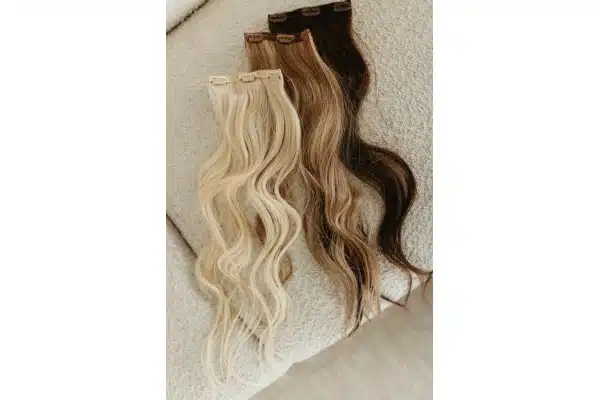
For salons that stock several hair methods, one base kit can include different short cards. That is simpler than sending every client a long general handout. A clip in hair extensions buyer can see the removable-set advice; a tape-in buyer sees the tab advice.
What If the Hair Still Tangles After Careful Brushing?
Do not blame the client or the brush immediately. Look at where the tangles start and what changed after washing.
Ask the client to bring the brush and show their normal motion. Photograph the area that tangles before detangling it. Tangles in the lengths, at the ends, and at the attachment can point to different next checks. Product buildup, heat, friction, hair processing, and the hair’s original condition may all matter.
We would compare a clean sample from the same hair order if available. If that sample also becomes hard to comb after a normal wash, the supplier should review the hair. If the sample stays manageable and the client’s knots sit around the attachment, the stylist should revisit placement and aftercare. A useful complaint report names the place of the tangle, not only the word “tangles.”
My View
We would not choose a brush from its label alone. A salon can test a brush in a few minutes on the exact attachment it installs. That is more useful than a claim that the bristles are “safe for all extensions.” The client needs a tool that feels comfortable and a short lesson on how to use it near the hair they actually wear.
We also want the aftercare kit to make complaints easier to understand. If tangling starts later, the client can show the brush and the motion they used. The stylist can look at the hair condition and the attachment without guessing. A brush cannot repair poor-quality hair or a rushed installation, but the right tool and clear instruction can remove one avoidable source of pulling. Keep the card short enough that a client will remember it.
Frequently Asked Questions
Should every extension client receive the same brush?
Not automatically. Try the brush on each attachment type your salon sells. A removable clip-in set and an installed tape row can need different handling near the base.
Can a client brush wet extensions?
Follow the salon’s instructions for that hair and method. Wet tangles can need gentle separation first. Do not pull a dense brush through a wet knot near an attachment.
Is a wide-tooth comb enough?
It may help separate a larger tangle, but the client still needs a controlled way to finish the lengths. Check that the comb teeth do not catch the seam, tab, or clip.
Conclusion
Choose a hair extension brush by testing it on the installed method and watching how a client uses it. Pair the tool with a short, specific instruction. If the hair still tangles, locate the problem before blaming the brush, the client, or the hair alone.