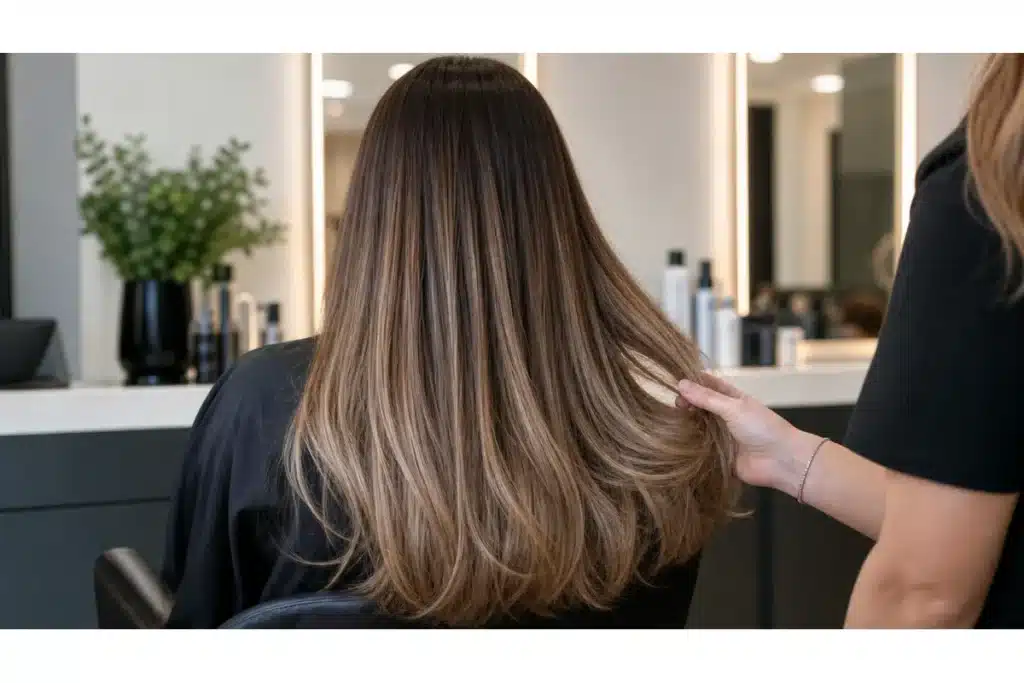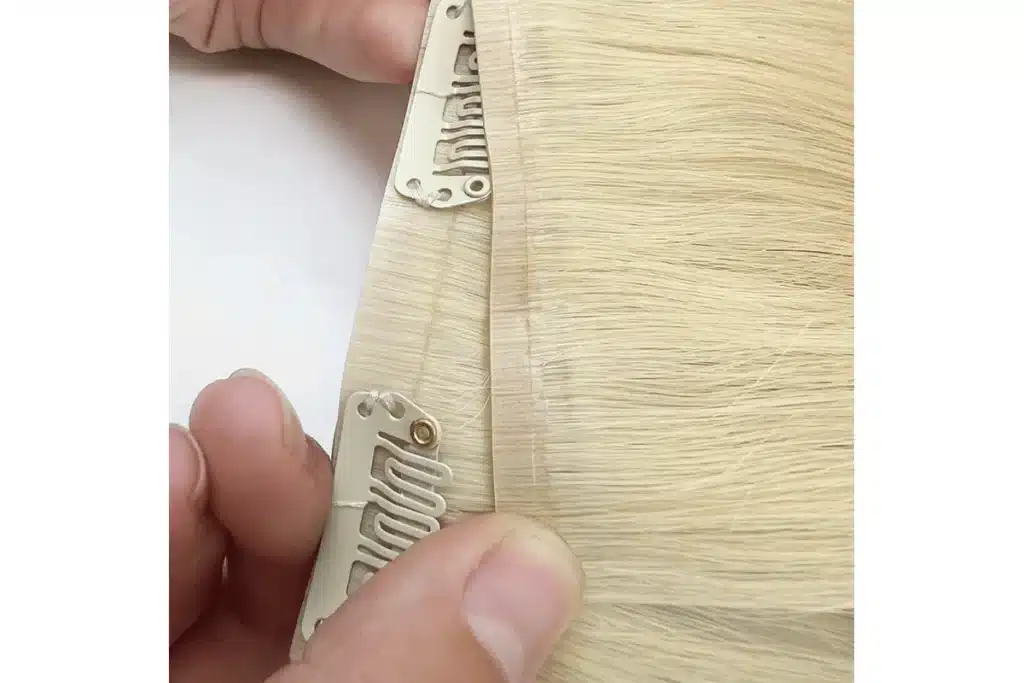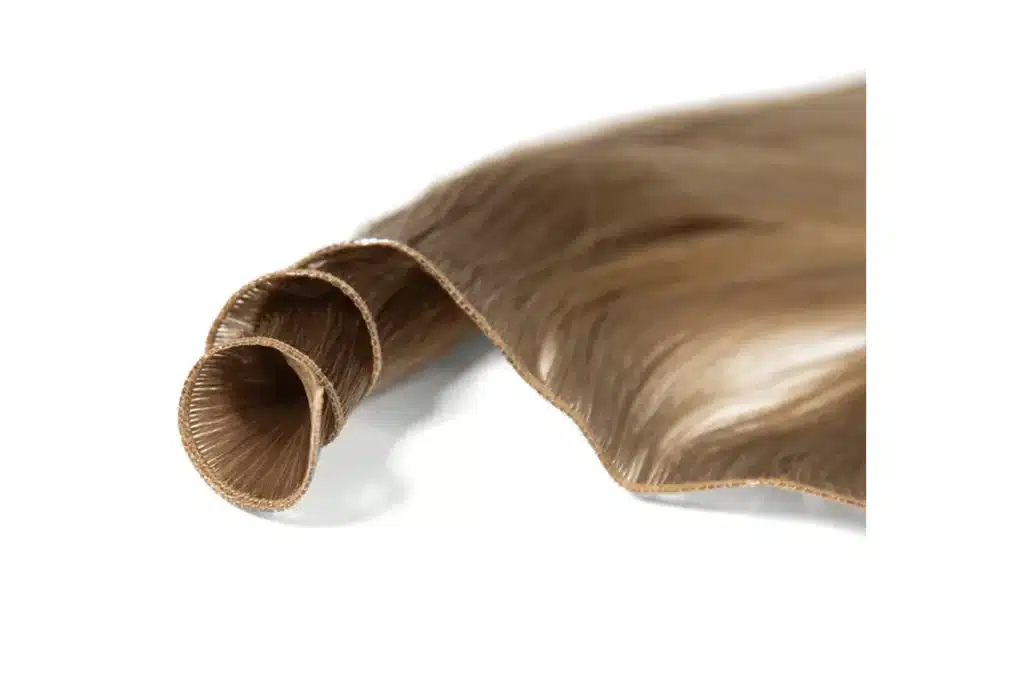
Many hair extensions feel soft before selling, but some become dry, rough, or tangled after only a few washes. The real difference often starts with the cuticle.
Full cuticle hair means human hair with the outer cuticle layer kept intact and aligned in the same direction. This helps the hair stay smoother, reduce tangling, keep natural shine, and last longer than lower-grade processed hair. For salons and hair brands, it is one of the key signs of premium hair extension quality.
For salons, stylists, hair brands, and wholesale buyers, full cuticle hair is not just a quality term. It affects client satisfaction, product lifespan, repeat orders, and brand reputation.
From a manufacturer’s view, the real test is not how soft the hair feels in a sample bag. The real test is how the hair performs after washing, brushing, styling, and repeated use.
What Is Full Cuticle Hair?
Full cuticle hair is human hair with the cuticle layer preserved and aligned.
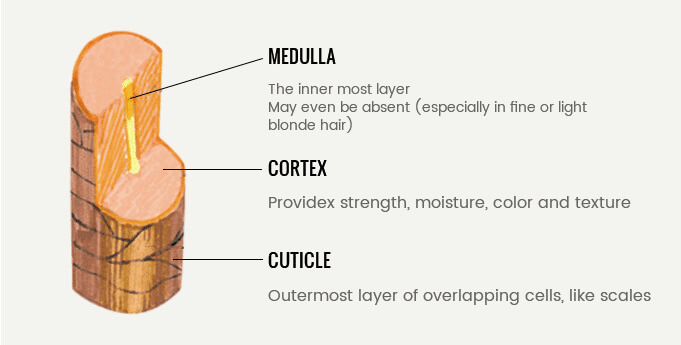
The cuticle is the outer protective layer of the hair shaft. When the cuticle is intact and follows the same direction, the hair can feel smoother and is less likely to tangle.

Why the Cuticle Matters
Each hair strand has an outer layer called the cuticle. You can think of it as a natural protective surface. When this layer is damaged, stripped, or reversed, the hair may feel rough and tangle more easily.
| Cuticle Condition | What Usually Happens |
|---|---|
| Intact and aligned | Hair feels smoother and tangles less |
| Partly damaged | Hair may become dry faster |
| Stripped by strong processing | Hair may need coating to feel soft |
| Mixed direction | Hair can rub against itself and tangle |
Many low-cost hair extensions are treated to feel smooth at first. But if the cuticle layer is damaged or removed, that softness may not last after washing.
Full cuticle hair is usually chosen for premium hair extensions because it has better long-term performance. It is especially important for salons and brands that need products to stay soft after repeated wear.
Why Does the Cuticle Layer Matter in Hair Extensions?
The cuticle layer matters because it affects smoothness, shine, tangling, and lifespan.
When the cuticle is kept intact and aligned, the hair behaves more like healthy natural hair. When it is stripped or heavily processed, the hair may need coating to hide dryness.
Cuticle Direction and Tangling
Hair extensions are worn, brushed, washed, curled, straightened, and sometimes reinstalled. This means the hair must handle friction and movement.
If cuticles are mixed in different directions, the strands can rub against each other. This may cause matting and tangling. If the cuticle direction is consistent, the hair usually moves more smoothly.
| Performance Point | Why Cuticle Matters |
|---|---|
| Smooth feel | Aligned cuticles reduce rough friction |
| Natural shine | Intact cuticles reflect light more evenly |
| Lower tangling | Same-direction cuticles move more smoothly |
| Longer wear | Better surface protection helps durability |
| Better reuse | Stronger hair can perform after washing and styling |
For professional buyers, this is important. A client may not understand the words “full cuticle hair.” But she will know whether the hair still feels good after several weeks of use.
This is why full cuticle quality is important for premium salons and hair brands. It protects the client experience after the first installation or first sale.
Full Cuticle Hair vs Remy Hair vs Non-Remy Hair
Full cuticle hair, Remy hair, and non-Remy hair are not the same.
Full cuticle hair has the cuticle layer intact and aligned. Remy hair may have aligned cuticles, but quality can vary. Non-Remy hair is often mixed, processed, or stripped, so it usually has a shorter lifespan.
Hair Quality Comparison
| Hair Type | Cuticle Condition | Typical Performance | Best For |
|---|---|---|---|
| Full cuticle hair | Cuticle intact and aligned | Smooth, less tangling, long lifespan | Premium salons and brands |
| Remy hair | Cuticle may be aligned, quality varies | Medium durability | Standard salon service |
| Non-Remy hair | Cuticle often mixed or stripped | More tangling, shorter lifespan | Low-cost short-term use |
| Coated hair | Soft at first because of coating | May become dry after washing | Price-sensitive markets |
Many suppliers use the word “Remy,” but Remy does not always mean premium. Some Remy hair can perform well, but some is heavily processed or coated.
Full cuticle hair has a higher standard. It needs better raw hair selection and more careful processing. This is why it costs more and is harder to produce consistently.
For B2B buyers, the key point is not the label. The key point is performance after washing. If the hair becomes dry, tangled, or rough quickly, the grade may not match premium salon standards.
What Makes Full Cuticle Hair Extensions Special?
Full cuticle hair extensions are special because they stay smoother, last longer, and support a more natural client experience.
They are not only soft at first touch. Good full cuticle hair should remain manageable after washing, drying, brushing, and styling.
Main Advantages
| Advantage | Why It Matters |
|---|---|
| Natural shine | Intact cuticles reflect light better |
| Soft texture | Hair feels closer to healthy natural hair |
| Less tangling | Same-direction cuticles reduce friction |
| Longer lifespan | Better hair surface supports longer wear |
| Better reuse | Premium hair can perform after reinstallation |
| Stronger client trust | Fewer complaints help salons and brands |
Full cuticle hair is especially valuable for premium extension products, such as tape-in hair extensions, hair wefts, keratin tips, I Tip extensions, clip-ins, and halo extensions.
When the base hair quality is strong, the final product has better performance. The tape can be good, the weft can be thin, and the keratin tip can be clean, but the client still feels the hair every day. If the hair quality is weak, the method cannot fully solve the problem.
For professional buyers, full cuticle hair is a long-term value choice. It can reduce complaints, support repeat clients, and help a brand build a higher-end position.
How Is Real Full Cuticle Hair Produced?
Real full cuticle hair needs good raw hair selection and careful processing.
It is not enough to use better raw material. The processing method must also protect the cuticle layer and keep the hair smooth after washing.
Raw Hair Selection
High-quality full cuticle hair starts from better raw hair. In premium production, raw hair should be carefully selected for texture, length, color, and direction.
Single donor hair can offer better consistency in texture and shade. It is usually harder to source, but it can help create more stable product quality.
| Production Point | Why It Matters |
|---|---|
| Raw hair selection | Decides the base quality |
| Cuticle direction | Affects tangling and smoothness |
| Gentle processing | Helps protect the outer layer |
| Color control | Helps repeat orders match |
| Final sorting | Improves consistency by length and texture |

Processing Method
Processing matters as much as raw hair.
If the hair is treated with harsh acid or strong chemicals, the cuticle layer can be damaged. Some hair may still look smooth after coating, but it may become dry after several washes.
A careful process should protect the natural hair surface as much as possible. This is why true full cuticle hair is not easy to produce at scale.
From a factory view, the hardest part is not making one good sample. The harder part is keeping quality stable across repeated orders.

How Can Buyers Identify Real Full Cuticle Hair?
Buyers should not judge full cuticle hair only by first-touch softness.
Real full cuticle hair should be tested after washing, brushing, drying, and repeated use. This shows whether the hair depends on coating or has real long-term quality.

Practical Test Points
| Test Point | What to Check |
|---|---|
| Wash test | Hair should stay smooth after washing |
| Brush test | Hair should not tangle heavily from mid-length to ends |
| End check | Ends should not become dry too quickly |
| Color test | Color should remain stable after washing |
| Heat test | Hair should handle normal styling with protection |
| Reuse test | Hair should still perform after removal or reinstallation |
| Batch test | Repeat orders should match previous quality |
A sample can be misleading if it is judged too quickly. Some lower-grade hair feels very soft in the package because of silicone coating. The real difference appears after washing.
For salons and hair brands, this test is very important. Your client will not judge the hair only when it is new. She will judge it after wearing, washing, styling, and brushing it at home.
This is why I suggest professional buyers test samples like real salon products before placing bulk orders.
How Long Does Full Cuticle Hair Last?
Full cuticle hair extensions can last 1–2 years with proper care, depending on the product type, client habits, color level, and maintenance.
The exact lifespan depends on how the hair is processed, installed, washed, brushed, styled, and stored.
Lifespan by Hair Grade
| Hair Grade | Typical Lifespan | Notes |
|---|---|---|
| Non-Remy hair | 1–3 months | Short-term and low-cost use |
| Standard Remy hair | 3–6 months | Quality varies by supplier |
| Full cuticle hair | 12–24 months | Best with proper care and gentle processing |
Full cuticle hair usually lasts longer because the hair surface is better protected. It can stay smoother and easier to manage when the client follows the correct care routine.
Blonde colors, very long lengths, frequent heat styling, and poor aftercare may shorten the lifespan. This does not mean the hair is bad. It means the client must understand how premium hair should be maintained.
For salons and brands, lifespan should be explained honestly. Good full cuticle hair is durable, but it still needs care.
How Should You Care for Full Cuticle Hair Extensions?
Full cuticle hair needs gentle care to keep its softness and shine.
Clients should wash carefully, condition properly, dry the hair before sleeping, avoid harsh chemicals, and reduce high-heat styling.
Care Guide
| Care Step | Recommendation |
|---|---|
| Washing | Use sulfate-free shampoo and wash downward |
| Conditioning | Apply conditioner from mid-length to ends |
| Drying | Dry the hair fully before sleeping |
| Brushing | Start from the ends and move upward |
| Heat styling | Use heat protectant and moderate heat |
| Chemical treatment | Avoid strong bleaching or harsh processing |
| Swimming | Rinse after chlorine or saltwater |
| Storage | Store dry in a silk or satin bag |
Clients should avoid sleeping with wet hair. They should also avoid rough brushing, heavy product buildup, and direct high heat.
For blonde hair extensions, extra care is needed. Sunscreen, seawater, pool water, and heat can affect color and texture. Clients should rinse the hair after swimming and keep the hair moisturized.
Good care helps full cuticle hair show its real value. Poor care can shorten the lifespan even when the hair quality is strong.

What Should Buyers Check Before Ordering Full Cuticle Hair Extensions?
Before ordering full cuticle hair extensions in bulk, buyers should check hair source, cuticle direction, processing method, color consistency, after-wash softness, shedding control, and packaging support.
This is especially important for salons, hair brands, wholesalers, and private label buyers who need stable quality across repeat orders.
Buyer Checklist
| Buying Point | What to Check |
|---|---|
| Hair source | Whether the hair quality is stable |
| Cuticle direction | Whether the strands are aligned |
| Processing method | Whether harsh processing is avoided |
| Product type | Tape, weft, keratin, I Tip, clip-in, halo |
| Color consistency | Whether repeat orders match |
| After-wash softness | Whether hair stays smooth after washing |
| Shedding control | Whether wefts, tips, or tapes stay stable |
| Packaging | Whether private label is supported |
At Hibiscus Hair, we supply full cuticle hair extensions for salons, stylists, hair brands, and wholesale buyers. We can support different product types, including tape in hair extensions, hair weft extensions, keratin hair extensions, and I Tip hair extensions.
If you are preparing a premium product line, you can send your required product type, length, color, texture, quantity, packaging needs, and destination country. Our team can help you check suitable options and prepare a quotation.
You can also contact us here:

My View
From years of working with overseas salons and hair brands, I do not suggest buyers judge full cuticle hair only by first-touch softness.
Many lower-grade hair extensions can feel smooth at the beginning because of coating. The real test comes after washing, brushing, styling, and reuse. If the hair becomes rough or tangled quickly, the problem is usually raw hair quality, cuticle direction, or processing method.
For premium salons and brands, full cuticle hair is not only a material choice. It protects client experience and brand reputation. A client may not know the technical term “full cuticle,” but she will notice if the hair stays soft after weeks of wear.
For B2B buyers, I suggest testing samples like real salon products:
| Test | Why It Matters |
|---|---|
| Wash test | Shows whether the hair depends on coating |
| Brush test | Shows tangling level |
| End check | Shows dryness risk |
| Heat styling test | Shows daily service performance |
| Color match test | Shows repeat order stability |
| Reuse test | Shows long-term value |
My suggestion is simple. Do not only ask if the hair is full cuticle. Ask how it performs after washing, brushing, and repeated use. That is where real quality becomes clear.

FAQs
Why is full cuticle hair more expensive?
It requires better raw hair selection and more careful processing. It is harder to source and harder to produce consistently.
How long does full cuticle hair last?
With proper care, full cuticle hair extensions can last 12–24 months. The exact time depends on product type, color, styling habits, and maintenance.
Does full cuticle hair tangle?
Good full cuticle hair tangles less than lower-grade hair, but it still needs proper care. Poor brushing, dryness, or sleeping with wet hair can still cause tangling.
Can full cuticle hair be colored?
It can often be colored by a professional, but strong bleaching may affect the hair. Always test a small section first and avoid harsh chemical processing.
What products can be made with full cuticle hair?
Full cuticle hair can be used for tape-ins, wefts, keratin tips, I Tips, clip-ins, halo extensions, ponytails, and other premium extension products.
Can salons order full cuticle hair extensions wholesale?
Yes. Salons, hair brands, stylists, and wholesale buyers can order full cuticle hair extensions in different lengths, colors, textures, product types, and packaging options from Hibiscus Hair.
Conclusion
Full cuticle hair is one of the strongest signs of premium hair extension quality. For salons and brands, it helps support smoother wear, longer lifespan, fewer complaints, and better client trust.
References
- Hoover, E., & Alhajj, M. “Physiology, Hair.” StatPearls, NCBI Bookshelf.
https://www.ncbi.nlm.nih.gov/books/NBK499948/ - He, Y., et al. “Mechanisms of impairment in hair and scalp induced by hair dyeing and perming.” PMC, 2023.
https://pmc.ncbi.nlm.nih.gov/articles/PMC10232955/ - American Academy of Dermatology Association. “How to stop damaging your hair.”
https://www.aad.org/public/diseases/hair-loss/insider/stop-damage