Slipping Tape In extensions during wear? You’re not alone—and it’s more common than you think. Whether it’s due to poor prep, scalp oil, or product buildup, we’ve got the fix that puts you back in control—permanently. This guide gives you the real solutions to lock down retention and restore your client’s trust.
To fix slipping Tape In extensions, first remove the wefts using a bond remover. Clean both the natural hair and extension tabs thoroughly with clarifying shampoo and 99% alcohol. Replace the old tape with fresh, salon-grade adhesive and reinstall on clean, dry hair using proper sectioning and spacing. Avoid oils, conditioners, or styling products near the root before and after application to prevent future slippage.
In this post, you’ll learn the real reasons Tape Ins slip—and exactly how to fix them in the salon or at home. From expert prep tips to long-term solutions for tricky clients, we’ve got every angle covered.
Common Causes of Tape-In Extension Slippage
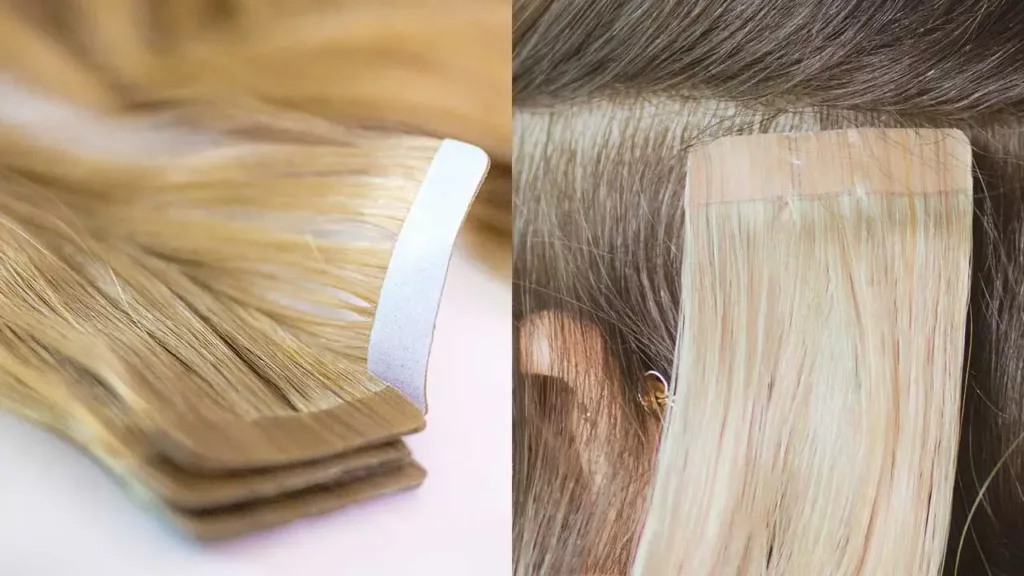
Tape-in extensions usually slip because the adhesive cannot bond properly to the natural hair. This can happen before installation, during application, or after the client leaves the salon.
| Cause | What Happens | How to Prevent It |
|---|---|---|
| Oil on the scalp or hair | Adhesive cannot grip cleanly | Clarify before installation |
| Conditioner near roots | Tape becomes soft or unstable | Keep conditioner mid-length to ends |
| Damp hair during install | Moisture weakens adhesion | Dry hair 100% before applying tape |
| Product buildup | Silicone, oils, or dry shampoo block the bond | Use clarifying shampoo before install |
| Wrong section size | Tape sandwich does not close evenly | Match section thickness to tape tab |
| Weak or old tape | Adhesive loses strength quickly | Use fresh salon-grade replacement tape |
| Heat near tape tabs | Adhesive softens | Keep hot tools away from the root area |
| Oily scalp or heavy sweating | Tape breaks down faster | Shorten maintenance cycle |
Slipping is rarely caused by one single thing. In most salon cases, it is a combination of prep, placement, client lifestyle, and tape quality.
Understand the what causes tape in extensions to slip
Let’s call it what it is: slipping Tape Ins are a symptom, not the problem.
It’s Often Not the Tape—It’s the Prep
Yes, I know your client says they washed their hair. But did they wash it right? One pass with a sulfate-free shampoo isn’t enough. You need a squeaky clean base—think two rounds of a strong clarifying shampoo, no conditioner, no leave-in, no styling product.
Even microscopic traces of silicone, oil, or dry shampoo can sabotage adhesion. Especially if they’ve been using purple shampoo or keratin treatments recently—both coat the cuticle.
Pro Tip: Always clarify in-salon before installation. Never assume the client came in with “clean hair.”
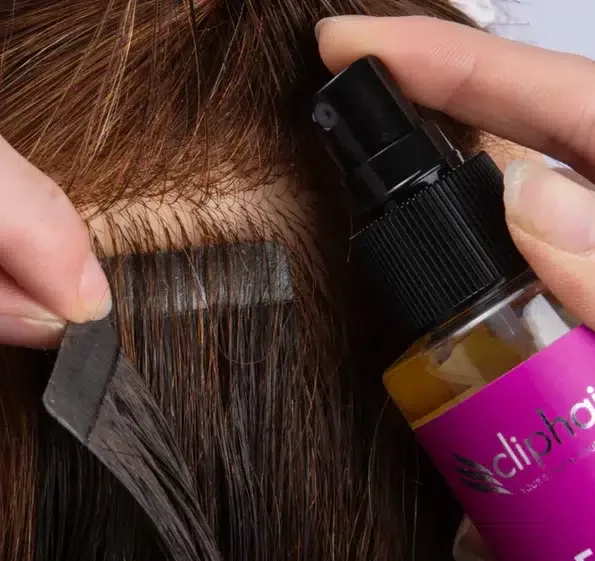
How to Fix Slipping Tape-In Extensions Safely
If the tape has already started slipping, do not press it back into the hair and hope it holds. Loose tape usually has oil, dust, product residue, or old adhesive on it.
The safest repair is to remove, clean, retape, and reinstall.
Step 1: Remove the Loose Tape-Ins
Use a professional tape-in bond remover to release the adhesive.
Do not pull the tab out dry. Pulling can break natural hair and leave sticky residue behind.
Step 2: Clean the Extension Tabs
Remove all old adhesive from the extension tab.
Use a lint-free cloth and a suitable remover or alcohol-based cleaner if needed. The tab must be clean before new tape is applied.
Step 3: Clarify the Natural Hair
Wash the natural hair with clarifying shampoo to remove oil, silicone, conditioner, dry shampoo, and styling buildup.
Do not apply conditioner near the root area before reinstalling.
Step 4: Dry the Hair Completely
Tape-in extensions should only be installed on fully dry hair.
Even slight dampness can reduce adhesion and cause the tabs to slip again.
Step 5: Apply Fresh Replacement Tape
Do not reuse old tape.
Apply fresh, salon-grade replacement tape that matches the tab size and extension type.
Step 6: Reinstall With Correct Sectioning
Use a clean, thin section of natural hair between the two tape tabs.
The section should be thick enough to support the tape but not so thick that the two tabs cannot seal properly.
Step 7: Press Evenly
Press the tape sandwich evenly from side to side.
A plier press or extension clamp can help reduce air gaps, but pressure should stay controlled. Do not crush the tab or pull the section too tight.
| Repair Step | Why It Matters | What to Avoid |
|---|---|---|
| Remove with bond remover | Protects natural hair | Pulling the tape out dry |
| Clean old adhesive | Helps new tape bond properly | Retaping over sticky residue |
| Clarify natural hair | Removes oil and buildup | Installing on coated hair |
| Dry 100% | Prevents moisture-related slippage | Applying tape to damp hair |
| Use fresh tape | Restores hold strength | Reusing old adhesive |
| Check section thickness | Creates a stable sandwich | Too much or too little hair between tabs |
| Press evenly | Reduces air gaps | Uneven finger pressure only |
Can You Fix Slipping Tape-In Extensions at Home?
You can do a small at-home repair only if one or two tabs are slipping and there is no scalp pain, matting, or heavy residue.
A safe home fix should still follow the same rule: remove, clean, retape, and reinstall. Do not add glue, double tape, clips, or random adhesive products.
| Situation | Home Fix? | Better Choice |
|---|---|---|
| One tab is loose | Possible with caution | Remove, clean, retape |
| Several tabs are slipping | Not ideal | Book a salon check |
| Hair feels sticky near roots | No | Professional residue removal |
| Scalp is sore or red | No | Stop and consult a stylist |
| Hair is matting around tape | No | Safe removal first |
| Tape keeps slipping after every install | No | Review prep, scalp oil, tape quality, or method fit |
Home repair should be temporary. If tape-ins keep slipping, the problem is usually the system, not just one tab.
When Should You Not Reapply Tape-In Extensions?
Do not reapply tape-in extensions if the natural hair or scalp is not ready.
Reapplying tape over the wrong condition can create more slippage, pulling, residue buildup, or breakage.
| Warning Sign | Why It Matters | What to Do |
|---|---|---|
| Sticky residue remains | New tape cannot bond cleanly | Remove residue fully first |
| Hair is oily at the root | Adhesive will not hold well | Clarify and dry before reinstalling |
| Scalp feels sore | Tension or irritation may be present | Pause and assess |
| Hair is tangled around tape | Reinstalling can trap knots | Remove and detangle first |
| Tabs are old or weak | Adhesive strength is reduced | Replace with fresh tape |
| Extensions feel dry or tangled | Hair may not be suitable for reuse | Test hair quality before reinstalling |
If the hair or scalp condition is not clean, dry, and stable, the repair will not last.
Why Slipping Happens More with Some Clients
Some clients follow the aftercare rules and still experience faster tape slippage. That does not always mean the tape is bad.
Scalp oil, sweat, humidity, frequent workouts, root-area heat styling, and heavy product use can all shorten tape retention.
| Client Factor | Why It Affects Tape Hold | What Salons Can Do |
|---|---|---|
| Oily scalp | Oil softens adhesive faster | Shorter maintenance cycle |
| Gym or hot yoga routine | Sweat and heat reduce hold | Stronger aftercare instructions |
| Humid climate | Moisture affects adhesion | Dry roots carefully after washing |
| Heat tools near roots | Adhesive softens | Keep heat away from tape tabs |
| Heavy dry shampoo use | Powder and buildup block adhesion | Clarify before retaping |
| Conditioner near scalp | Tape becomes slippery | Keep conditioner off the root area |
For some clients, tape-ins may still work, but the wear cycle needs to be shorter. For others, a different method such as wefts, I tips, nano rings, or keratin tips may be a better fit.
If tape-ins do not suit a client’s scalp or lifestyle, salons can compare other methods such as keratin hair extensions or hair weft extensions.
How to Prevent Tape-In Extensions From Slipping
Preventing tape-in slippage starts before the first tab is installed.
Clean prep, correct sectioning, fresh tape, and clear aftercare instructions matter more than simply pressing harder.
| Prevention Step | Better Practice |
|---|---|
| Clarify before installation | Remove oil, silicone, dry shampoo, and buildup |
| Skip conditioner near roots | Keep the attachment area clean |
| Dry hair completely | Tape should not be applied to damp hair |
| Use correct section thickness | Tape tabs should seal evenly |
| Avoid root oils | Oils break down adhesive faster |
| Keep heat away from tape tabs | Heat can soften the adhesive |
| Brush with support | Hold near the root to avoid pulling |
| Rebook on time | Do not stretch tape-ins past their safe wear cycle |
Most salons can reduce slippage by standardizing the prep routine instead of changing products every time a client complains.
Tape Quality Notes for Salons and Hair Brands
Tape-in retention is not only about the adhesive. Hair quality, tab construction, tape freshness, and batch consistency also affect salon results.
For salons and hair brands, the best tape-in product should stay soft, flat, and easy to retape after proper removal.
| Product Check | Why It Matters |
|---|---|
| Tape adhesive strength | Affects initial hold and wear cycle |
| Tape freshness | Old adhesive may lose grip before installation |
| PU tab quality | Helps the tape sit flat and clean |
| Hair cuticle condition | Reduces tangling and pulling near the tabs |
| Shedding control | Protects salon results after brushing |
| Color stability | Keeps repeat orders consistent |
| Retaping performance | Helps salons reuse the hair safely |
| Sample-to-bulk consistency | Reduces complaints when ordering wholesale |
Before buying tape-in extensions wholesale, test more than first-touch softness. Wash the hair, remove the tape, retape it, reinstall it, and check whether the hair and tab still perform cleanly.
You can review our tape-in hair extensions or learn more about full cuticle hair before testing samples.
FAQs About Slipping Tape-In Extensions
Why are my tape-in extensions slipping?
Tape-in extensions usually slip because of oil, product buildup, damp hair during installation, wrong sectioning, weak tape, or aftercare mistakes near the root area.
How do you fix slipping tape-in extensions?
Remove the loose tape-in safely, clean off old adhesive, clarify the natural hair, dry everything completely, apply fresh replacement tape, and reinstall with correct sectioning.
Can I just press slipping tape-ins back into place?
No. If the tape is already slipping, it usually has oil, dust, or residue on it. Pressing it back without cleaning usually does not hold well.
Can I reuse tape-in extensions that slipped out?
Yes, if the hair and tab are still in good condition. You must remove all old adhesive and apply fresh tape before reinstalling.
Why do tape-ins slip more on oily scalps?
Oil can soften or weaken the adhesive bond. Clients with oily scalps may need stricter prep, shorter maintenance cycles, or a different extension method.
Is double-taping a good way to stop slipping?
Usually no. Double-taping can make the tab bulky, stiff, and uncomfortable. It may also create uneven tension and does not solve the real prep or adhesion problem.
How can salons prevent tape-ins from slipping?
Salons should clarify the hair, avoid conditioner near roots, install on fully dry hair, use fresh tape, section correctly, press evenly, and educate clients on aftercare.

Final Takeaway
Slipping tape-in extensions are usually a system problem, not just a tape problem.
The safest fix is to remove the loose tab, clean away old adhesive, clarify the natural hair, dry everything fully, apply fresh tape, and reinstall with correct sectioning. If several tabs keep slipping, the salon should check prep routine, scalp oil, product buildup, tape quality, and whether tape-ins are the right method for that client.
For salons and hair brands, better retention starts with both technique and product quality. You can explore our tape-in hair extensions, compare full cuticle hair, or contact Hibiscus Hair to request tape-in samples for salon testing.