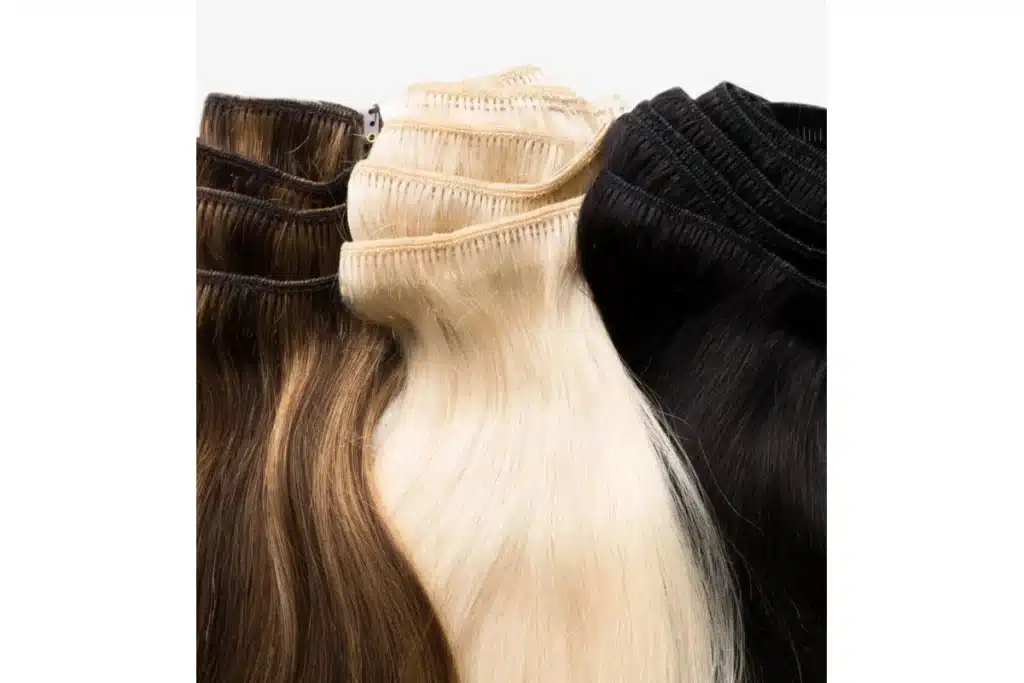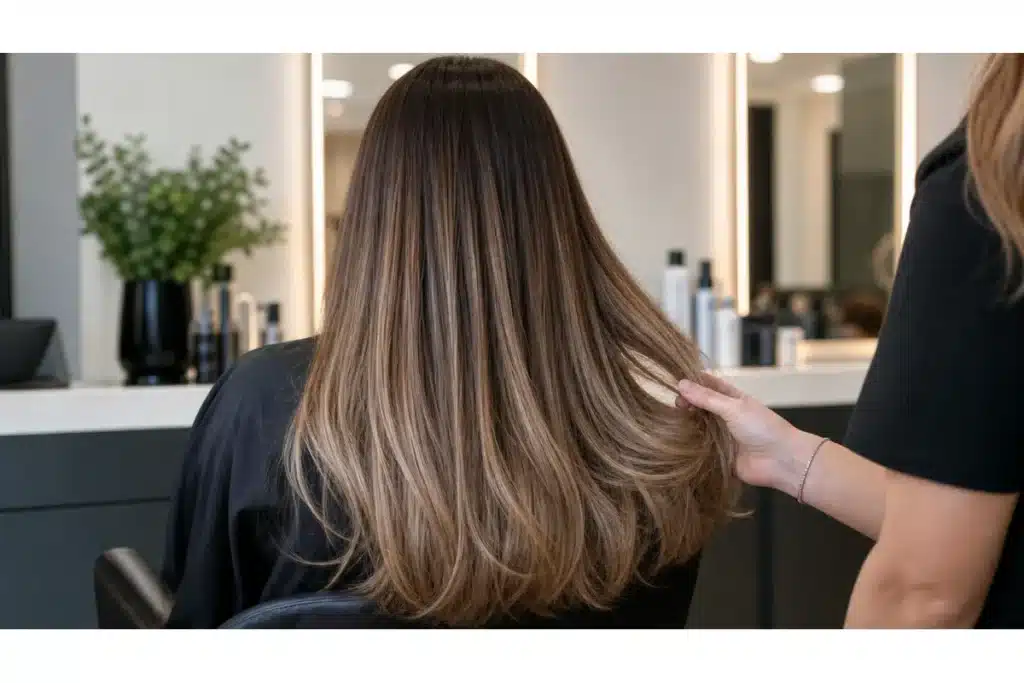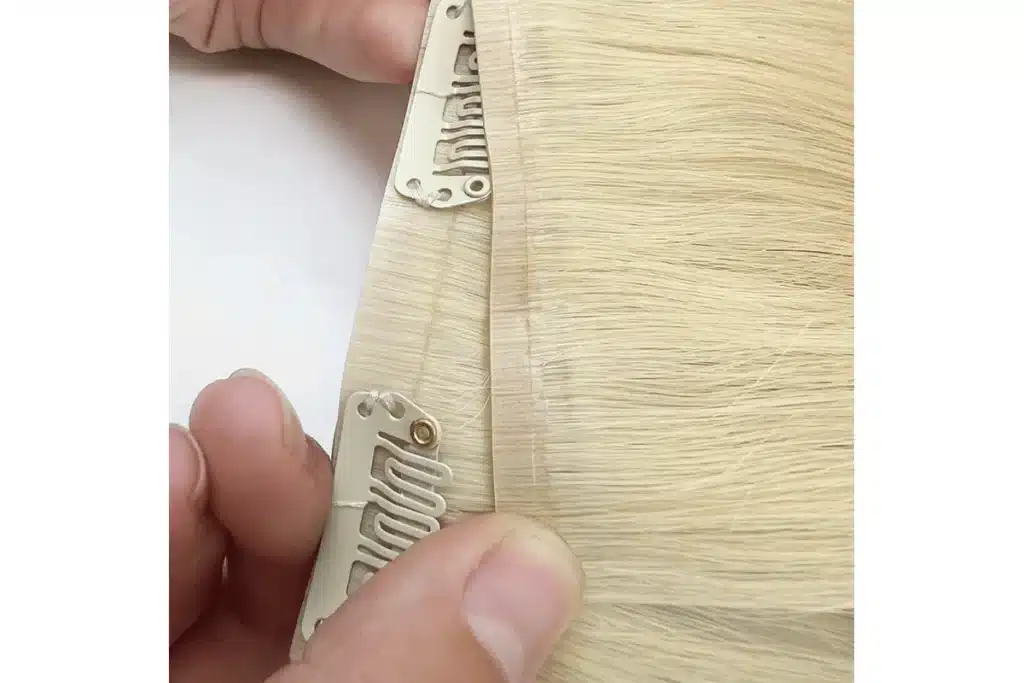
Sew-in weft hair extensions can give clients secure volume and long wear, but they are not the right method for every head of hair.
Sew-in weft hair extensions are usually best for medium to thick hair, clients who want fuller volume, and salons that can control row placement, tension, and maintenance. The main advantages are security, reuse, no adhesive, and a natural finish. The main risks are tension, long installation time, poor suitability for very fine hair, and damage if the move-up is delayed.
For salons, stylists, and hair extension buyers, the real question is not only whether sew-ins are good. The better question is which weft type, hair quality, and installation plan will protect the client’s natural hair and reduce after-sales complaints.

Sew-In Weft Hair Extensions Pros and Cons at a Glance
Sew-in weft extensions are strong, reusable, and natural-looking when installed correctly. They are best for clients with enough natural hair density to support a row-based method.
| Pros | What It Means for Salons |
|---|---|
| Secure hold | Good for clients who want longer wear and less slipping |
| No adhesive | Lower risk of tape residue or glue-related irritation |
| Reusable wefts | Better long-term value when the hair quality is high |
| Good volume | Efficient for fuller transformations |
| Natural finish | Hand-tied, flat, and genius wefts can lay very discreetly |
| Cons | What Stylists Must Control |
|---|---|
| Installation takes time | Proper row building and sewing cannot be rushed |
| Tension risk | Tight rows or heavy wefts can stress natural hair |
| Not ideal for very fine hair | Thin or weak roots may not support the weft safely |
| Maintenance is required | Late move-ups can cause matting and breakage |
| Skill matters | Poor placement can create discomfort or visible tracks |
Types of Sew-In Weft Hair Extensions
Think all sew-in wefts are the same? Not quite—there are several weft styles, and knowing the differences is key for salons offering premium services.
Sew-in wefts come in different forms: hand-tied, machine weft, flat weft, and genius weft. Each type suits different clients’ needs and installation techniques.
Hand-Tied Wefts
Hand-tied wefts are thin, lightweight, and flexible. They can sit very flat when sewn correctly, which makes them popular for premium salon work.
The important limitation is that traditional hand-tied wefts should not be cut. If a stylist cuts the weft line, it may unravel or shed. Another point many buyers forget is the short return hair near the weft base. On sensitive scalps, this can sometimes feel itchy or irritating.
Hand-tied wefts are best for clients who want a flat, delicate finish and have enough natural hair to support the row without tension.

Machine Wefts
Machine wefts are thicker, stronger, and easier to customize because they can be cut. They are usually better for thick hair or clients who want larger volume.
The downside is bulk. A machine weft does not sit as flat as hand-tied, flat, or genius weft. If the client has thin hair or wears high ponytails often, the track may be easier to feel or see.
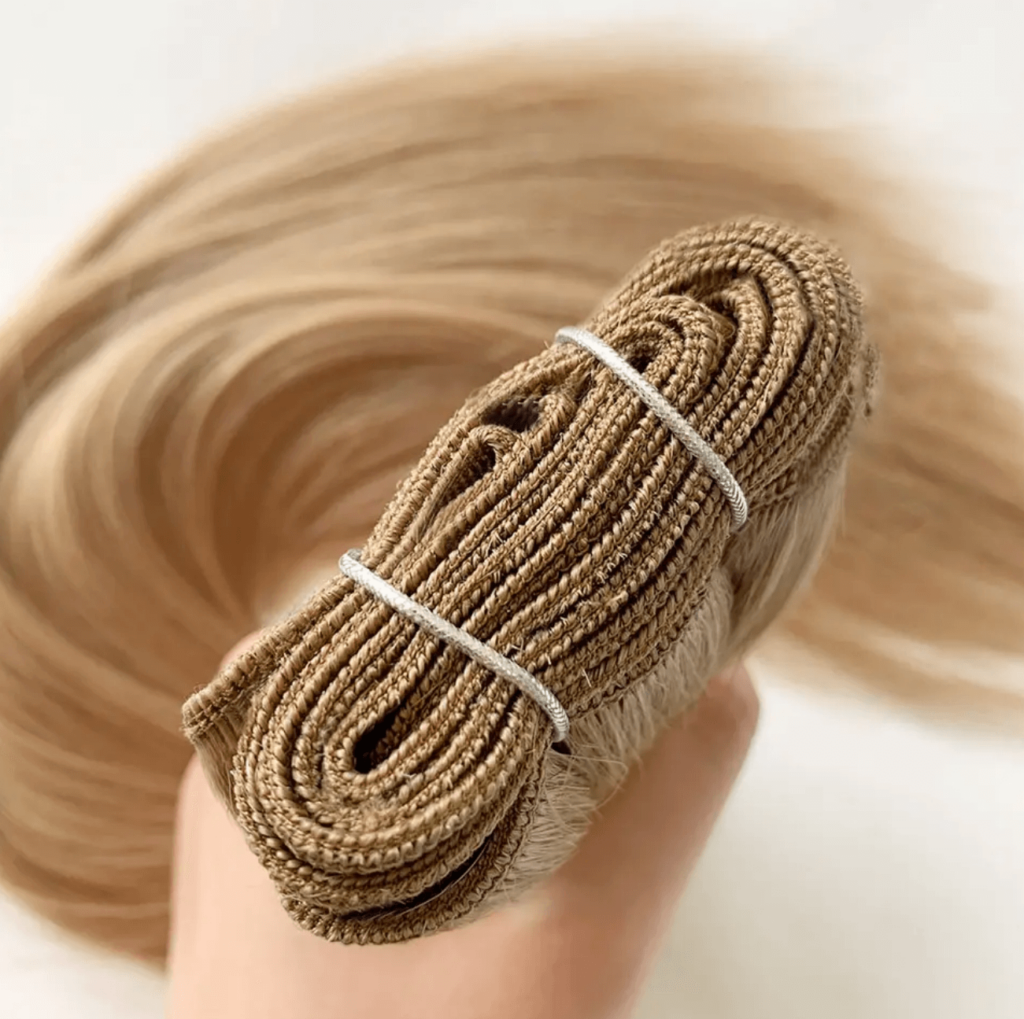
Flat Wefts
Flat wefts are designed to give a thinner profile while still allowing stylists to cut the weft. They are a practical choice for salons that want a cleaner finish than machine weft without the cutting limitation of hand-tied weft.
They are useful for many clients, but the final result still depends on row placement, weight control, and the quality of the hair.
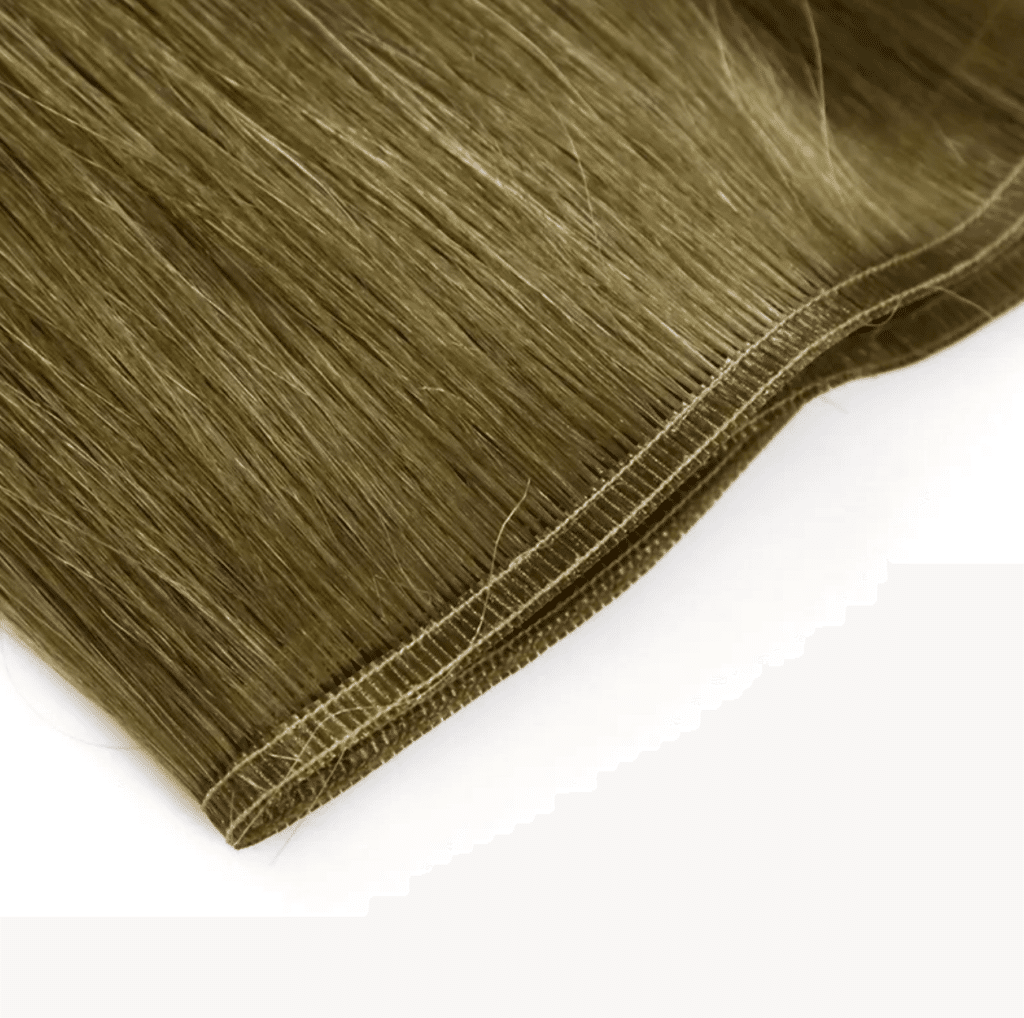
Genius Wefts
Genius wefts are ultra-thin, flexible, and cuttable. They are designed to reduce bulk and avoid the short return hair problem that can appear in traditional hand-tied wefts.
For high-end salons, genius wefts are often easier to customize during installation. They can be trimmed to fit the client’s head shape, which helps with comfort and blend. The main limitation is cost. They are usually more expensive than machine wefts, but they can reduce installation complaints when the client wants a flat, clean result.
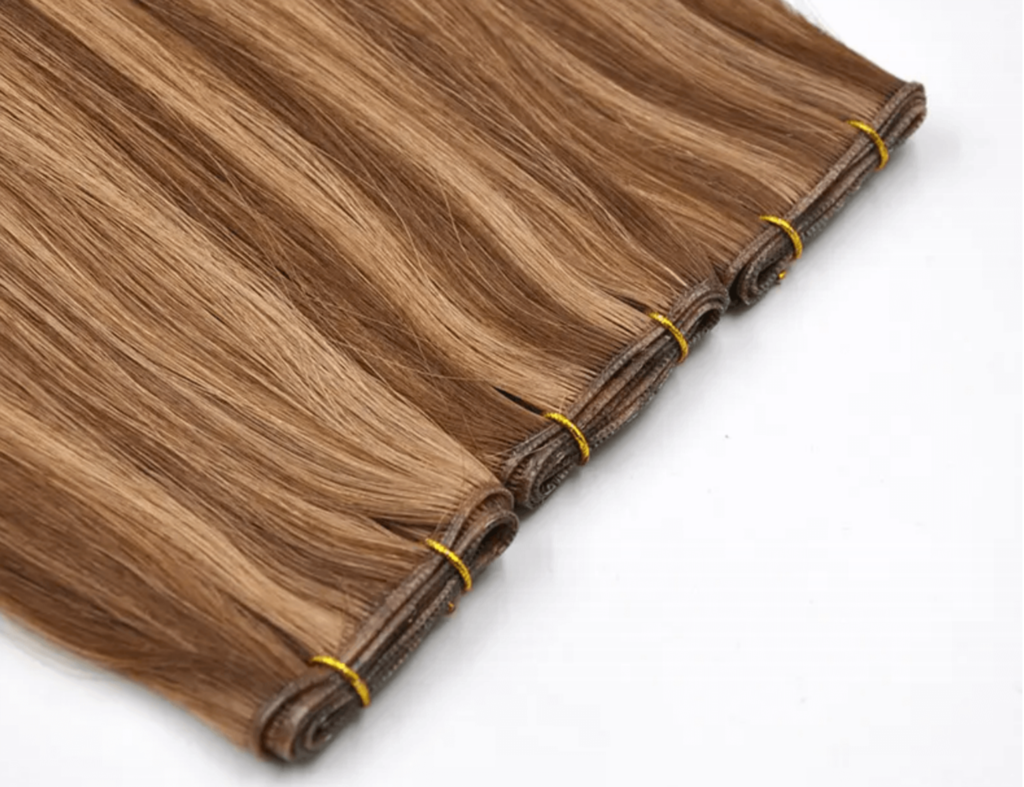
| Weft Type | Can Be Cut? | Thickness | Main Advantage | Main Limitation | Best For |
|---|---|---|---|---|---|
| Hand-Tied Weft | No | Thin | Flat and lightweight | Cannot be cut; return hair may irritate sensitive scalps | Fine to medium hair with careful placement |
| Machine Weft | Yes | Thick | Strong and durable | More bulk at the track | Thick hair and high-volume installs |
| Flat Weft | Yes | Thin | Flat profile with cutting flexibility | Quality varies by supplier | Most medium-density clients |
| Genius Weft | Yes | Ultra-thin | Cuttable, discreet, no return hair | Higher cost | Premium salon work and custom installs |
Benefits of Sew-In Weft Hair Extensions
Clients want results that last. Stylists want installations that are reliable. Sew-in wefts often strike the perfect balance between both needs.
Sew-in wefts are secure, long-lasting, reusable, and create a natural look with minimal damage when installed correctly.
Long-Lasting and Secure
Sew-in wefts can usually be worn for 6–10 weeks before a move-up, depending on hair growth, row condition, scalp comfort, and aftercare.
Because there is no tape adhesive, sew-ins are less affected by oil, sweat, or adhesive breakdown. This makes them useful for clients who need a secure semi-permanent method.
Cost-Efficient for Salons
High-quality wefts can often be reused through multiple move-up services. For salons, this creates better long-term value than methods that depend heavily on replacement adhesive or single-use pieces.
The key is hair quality. If the weft hair becomes dry, tangled, or sheds after washing, the reuse value disappears.
Natural Finish
Sew-in wefts can look very natural when the weft type matches the client’s density. Hand-tied, flat, and genius wefts usually give a flatter finish than classic machine wefts.
The blend still depends on color matching, row placement, cutting, and the client’s natural hair coverage.
Good for Active Clients
Sew-ins can work well for active clients because there is no tape to loosen or glue to break down. The weft is sewn onto a braided or beaded foundation, so the hold can feel secure during daily movement.
Clients still need aftercare. Sweat, poor drying, and skipped brushing can still cause tangling near the row.
No Adhesive on the Scalp
For clients who react badly to tape or glue, sew-in wefts can be a better option because they do not use adhesive.
But “no adhesive” does not automatically mean “no irritation.” Tight rows, heavy wefts, or short return hair on some hand-tied wefts can still bother sensitive scalps. Comfort comes from both product design and installation control.

Disadvantages of Sew-In Weft Hair Extensions
Even the best methods come with limitations. Ignoring them can cost your salon time, clients, and reputation.
Sew-in extensions can be time-consuming, cause tension spots, and require expert-level installation to avoid scalp stress and hair breakage.
Sew-in wefts are not a low-skill service. Most problems happen when the stylist uses too much tension, too much weight, or chooses this method for the wrong client.
| Disadvantage | What It Means in Salon Work |
|---|---|
| Longer installation time | Full installs can take 2–3+ hours |
| Requires trained technique | Poor rows can cause pain, pulling, or uneven weight |
| Not best for very fine hair | Weak roots may not support the weft safely |
| Maintenance cannot be skipped | Late move-ups increase matting and breakage risk |
| Product design matters | Bulky seams or return hair may reduce comfort |
Time-Consuming Installations
Unlike clip-ins or tape-ins, a proper sew-in install can take 2–3 hours or more. Braiding or bead-row preparation alone eats up time. For stylists charging by the hour, this may lower efficiency.
Skill Intensive
Sew-in wefts demand technique. An untrained stylist may sew too tight or place rows incorrectly, leading to discomfort or uneven weight distribution. This can pull on the scalp and cause pain—or even traction alopecia over time.
Limited Scalability for Thin Hair
Clients with very fine hair or weak roots may not be good candidates. The tension of the braid or bead-row can stress the follicles. Other options, like tape-ins or keratin tips, may be safer.
Maintenance Required
Even the best sew-in system needs move-ups every 6–8 weeks. Clients who skip maintenance risk matting, tangles, and even hair loss. Education is critical—clients must know aftercare is non-negotiable.
| Concern | Explanation |
|---|---|
| Time | Installs can take 2–3+ hours |
| Training Requirement | Improper tension = discomfort or damage |
| Client Suitability | Not ideal for thin/fine hair |
| Upkeep | Needs regular move-up appointments to prevent tangles |
Stylists must evaluate the hair type, scalp condition, and lifestyle of each client before offering sew-ins.

Do Sew-In Wefts Damage Natural Hair?
Sew-in wefts do not automatically damage natural hair. Damage usually comes from tension, poor row placement, heavy wefts, late maintenance, or rough removal.
For salons, the safest approach is simple: match the weft weight to the client’s natural hair strength, keep rows comfortable, and schedule move-ups before the row grows too far from the scalp.
Where Damage Happens
Damage typically comes from:
- Too-tight braiding or sewing
- Using wefts too heavy for the hair type
- Not moving up the extensions on time
- Lack of proper aftercare
If U’re using full cuticle, soft, and aligned extensions like those from Hibiscus Hair, U reduce friction and matting risks.
| Damage Cause | What Happens | How to Prevent It |
|---|---|---|
| Rows are too tight | Scalp pain, pulling, possible traction damage | Use soft tension and check client comfort |
| Wefts are too heavy | Stress on natural roots | Match grams and row count to density |
| Late move-up | Matting and trapped shed hair | Book maintenance every 6–8 or 6–10 weeks |
| Poor hair quality | Tangling creates brushing stress | Use smoother, full cuticle hair where possible |
| Wrong client choice | Fine hair may not support the method | Recommend tape-ins, nano, or lighter methods when needed |
Best Practices to Prevent Damage
- Choose the right weft weight: Heavier wefts = more tension. Match thickness to hair type.
- Install with clean, balanced rows: Beaded or braided rows should not pull or pinch.
- Educate clients on maintenance: Sleeping with a silk wrap, using sulfate-free shampoo, and detangling daily make a big difference.
My Honest Take
I’ve seen clients walk away thrilled—and I’ve seen stylists ruin their own work with shortcuts. If U take the time to do it right, sew-ins are one of the safest methods out there.
What Salons and Hair Brands Should Check Before Ordering Wefts
For salons and hair brands, sew-in weft quality should be tested before bulk orders. A weft can look beautiful in the package and still fail after washing, sewing, moving up, or removing.
| Check Point | Why It Matters |
|---|---|
| Hair cuticle condition | Reduces tangling and friction during wear |
| Weft seam thickness | Affects comfort and visibility |
| Shedding control | Protects salon reputation after installation |
| Return hair / beard | Can affect scalp comfort, especially in hand-tied wefts |
| Color stability | Helps with repeat orders and client color matching |
| Weight consistency | Keeps row planning predictable |
| Sample-to-bulk consistency | Reduces after-sales complaints |
| Reuse performance | Shows whether the weft has real long-term value |
Before choosing a wholesale weft supplier, test the hair through washing, brushing, sewing, move-up, and reuse. First-touch softness is not enough.
My View as a Hair Extension Manufacturer
Sew-in wefts are one of the strongest methods when the client has enough natural hair to support them. They are not the fastest service, and they are not the best choice for every fine-haired client. But for the right client, they can give a secure, natural, reusable result.
From a factory side, I would not judge sew-in wefts only by how soft they feel when opened. I would check the weft seam, shedding, return hair, cuttability, color stability, and how the hair behaves after washing and reinstalling.
For premium salons, genius weft and flat weft often solve many of the complaints linked to bulk and visibility. Hand-tied weft still has its place, but stylists need to respect its cutting limitation and scalp comfort issues.

FAQ
FAQs About Sew-In Weft Hair Extensions
How long do sew-in wefts last?
Sew-in wefts usually need a move-up every 6–10 weeks, depending on hair growth, row condition, and aftercare. High-quality weft hair may be reused through multiple installations if it stays soft and does not tangle.
Are sew-in wefts good for fine hair?
Usually, they are not the first choice for very fine or weak hair. Some fine-haired clients can wear light rows with careful placement, but tape-ins, nano, or lighter strand methods may be safer.
Can sew-in wefts damage natural hair?
They can if the rows are too tight, the wefts are too heavy, or the client skips maintenance. When installed with balanced tension and moved up on time, sew-in wefts can be safe for suitable clients.
Which weft type is best for sew-in extensions?
It depends on the client. Machine wefts work well for thick hair and strong volume. Hand-tied wefts are thin but cannot be cut. Flat wefts are cuttable and flat. Genius wefts are ultra-thin, cuttable, and often better for premium custom installs.
How many grams are needed for a full head?
Many clients need around 100–150 grams for normal volume. Thick hair or dramatic transformations may require 200 grams or more. The stylist should match the weight to natural hair density instead of simply adding more hair.
Conclusion
Sew-in weft hair extensions have clear advantages: they are secure, reusable, adhesive-free, and suitable for clients who want strong volume and longer wear. But they also have real limitations. They take time to install, require trained row placement, and are not always suitable for very fine or fragile hair.
The safest result comes from matching the weft type to the client. Machine wefts suit thicker hair. Hand-tied wefts give a flat finish but cannot be cut. Flat wefts offer more flexibility. Genius wefts are a strong option for salons that want a thin, cuttable, low-bulk weft.
For salons and hair brands, product quality matters as much as installation skill. Test the hair, seam, shedding, cuttability, color stability, and reuse performance before placing bulk orders.
You can learn more about our wholesale weft hair extensions, compare full cuticle hair, or contact Hibiscus Hair to request weft samples for salon or brand testing.