Retailers create returns when synthetic and human hair clip-ins are sold with the same styling, care, lifespan, and price expectations.
Human hair clip-ins usually offer more natural movement and styling flexibility, while synthetic clip-ins can support lower-price, occasional-wear, or fashion-color needs. Retail buyers should compare fiber, heat limits, appearance, set weight, clips, care, and target customer before choosing stock.
Neither material fits every range. The right decision depends on the retailer’s price tier, service promise, color strategy, and customer use case.
What Are the Main Differences Between Synthetic and Human Hair Clip-Ins?
The main differences are fiber behavior, heat tolerance, color options, movement, care, expected wear, and wholesale cost.
Human hair can often be washed and restyled more like natural hair, but performance still depends on cuticle direction, processing, color, and care. Synthetic fibers can hold a preset texture well, yet heat and coloring options depend on the specific fiber and supplier instructions.
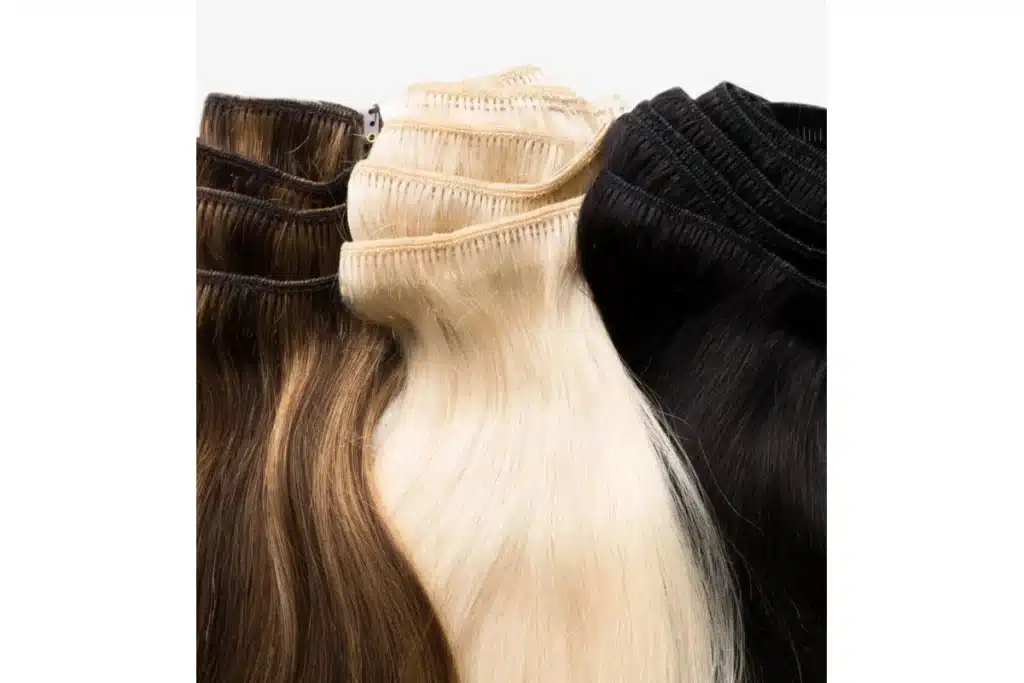
The clip in hair extensions range shows the human-hair format Hibiscus Hair supplies. Retailers comparing categories should request complete sets with identical lengths and similar grams rather than judging two loose strands.
| Buyer factor | Human hair clip-ins | Synthetic clip-ins |
|---|---|---|
| Styling | Often supports controlled heat and restyling | Depends on fiber-specific heat limits |
| Appearance | Can blend with natural movement when quality and color fit | May keep a fixed texture but can show different shine |
| Care | Needs washing, conditioning, detangling, and heat control | Needs fiber-specific washing and friction control |
| Retail position | Often fits reusable, service-supported ranges | Can fit fashion color, occasional wear, or lower-price ranges |
Share target price tier, lengths, set weights, colors, styling promise, and customer use before approving stock.
Request a human-hair clip-in specification reviewWhich Material Fits Different Retail Customers?
Human hair often fits customers who want repeated wear and styling flexibility, while synthetic hair may fit occasional use, vivid fashion colors, or a lower entry price.
A salon that cuts, curls, and blends each set may benefit from human hair. A costume, festival, or temporary color customer may accept a synthetic piece with a fixed style. Retailers should state the intended use clearly instead of describing both materials as interchangeable.
The private label clip-in guide explains how target customer, price tier, set weight, packaging, and after-sales support belong in one range decision. A lower purchase price can create more service pressure if product limits are unclear.
How Should Buyers Compare Appearance and Styling?
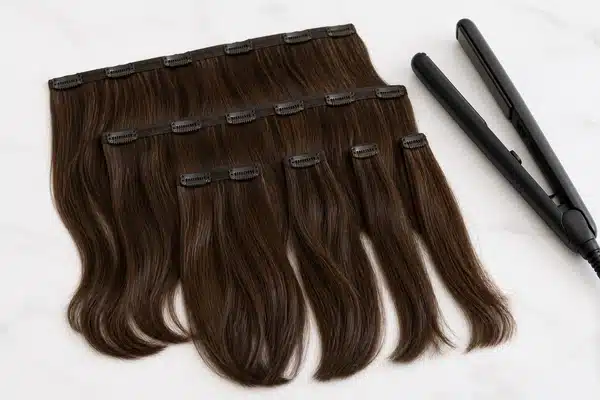
Buyers should compare shine, movement, texture recovery, color depth, seam finish, and the exact styling methods promised to customers.
The test should use complete sets under daylight and indoor light. Synthetic fiber can reflect light differently from natural hair, especially in dark solid shades. Human hair color can also vary by processing and source, so it still needs a physical standard.
In sample testing, we often see buyers compare a synthetic fashion-color piece with a human-hair natural shade. That does not answer whether the products fit the same customer. We recommend testing each set against its intended promise: occasional color effect, daily blending, heat styling, or repeated salon use.
What Safety and Comfort Checks Still Matter?
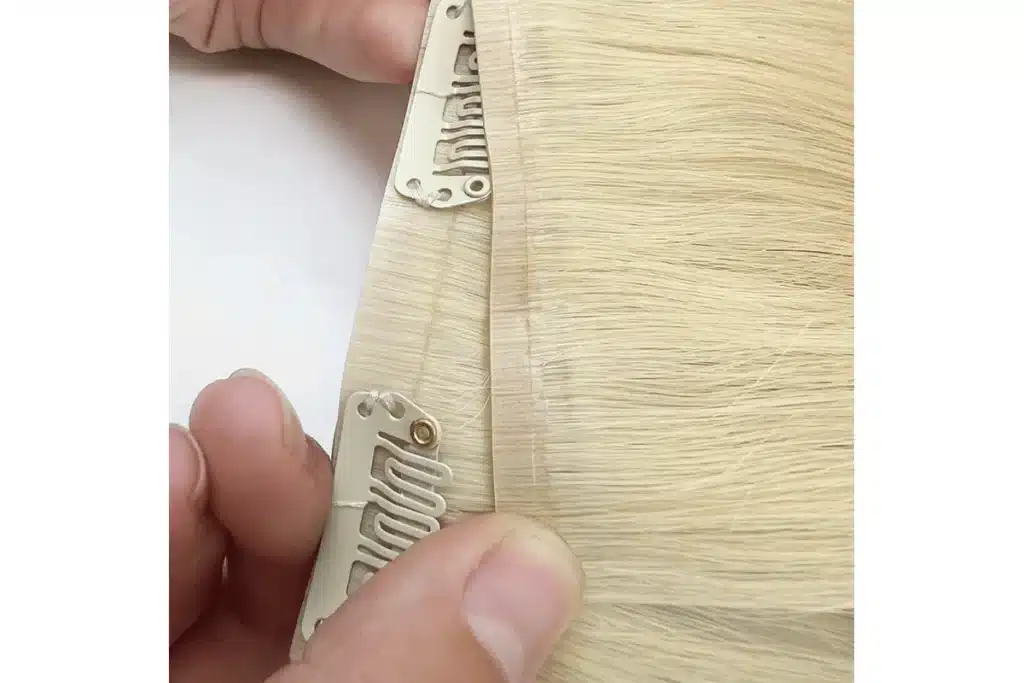
Both materials need secure clips, smooth seams, suitable set weight, healthy placement sections, and instructions that tell customers to remove the set if it causes pain.
The American Academy of Dermatology warns that hairstyles that pull can contribute to hair loss. [1] The fiber type does not remove tension. A heavy synthetic set and a heavy human-hair set can both create discomfort if clip placement is unsuitable.
A clinical review describes traction alopecia as hair loss caused by prolonged or repetitive tension. [2] Retail instructions should cover placement, wear time, removal, and the need to avoid fragile sections.
What Should Wholesale Buyers Test Before Choosing a Material?
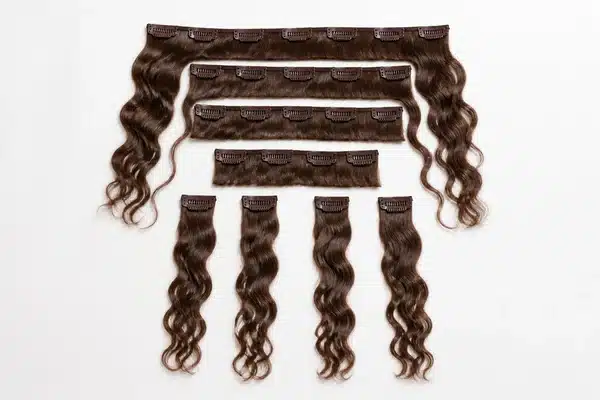
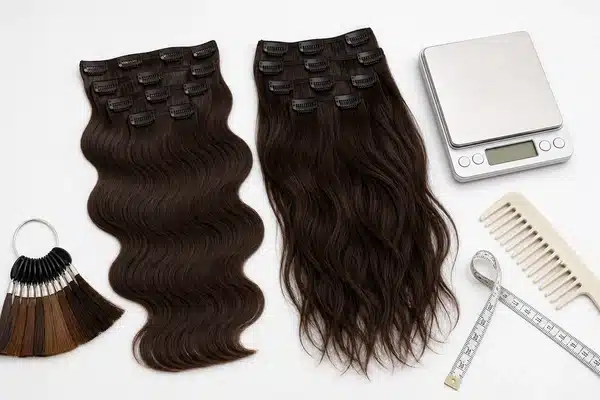
Buyers should test complete set grams, piece layout, clip quality, seam comfort, color, washing, tangling, shedding, styling limits, packaging recovery, and repeat-order consistency.
The wholesale clip-in buyer checklist gives retailers a broader approval framework. Human hair should be checked after washing and controlled restyling. Synthetic fiber should be tested only within the supplier’s stated care and heat limits.
Buyers should also compare return reasons and support requirements, not only unit cost. A clearly positioned synthetic SKU may perform well for occasional use, while an unclear product promise can create complaints. Human hair needs equally clear grade, processing, and care information.
My View
From our factory perspective, retailers should choose the material after defining the customer promise. Human hair clip-ins often make sense when the range depends on natural blending, repeat wear, and controlled restyling. Synthetic pieces can serve a different purpose, especially temporary fashion colors or occasional looks. We usually suggest comparing full sets at similar lengths and grams, then testing the exact care and styling instructions that will appear on the package. Buyers should also inspect clip pressure and seam comfort because material choice does not solve poor set construction. The safer range is one where each SKU has a clear use case, honest limitations, and support instructions that match the actual product.
Frequently Asked Questions
Can synthetic clip-ins be curled?
Only when the specific fiber and supplier instructions allow heat or another approved setting method. Test the product before making a retail claim.
Can human hair clip-ins be dyed?
Some can accept color, but prior processing affects the result. A strand test and supplier guidance are needed.
Which material lasts longer?
The result depends on fiber quality, use frequency, heat, washing, storage, and care. Material name alone does not prove lifespan.
Can a retailer stock both materials?
Yes, if the ranges have different price positions and clearly stated styling, care, and use expectations.
Conclusion
Synthetic and human hair clip-in extensions serve different customers. Retail buyers should choose by use case, styling promise, set construction, care limits, and tested quality rather than unit price alone.