A vague ombre code can leave wholesalers with harsh transitions, visible tabs, dry blonde ends, and adhesive complaints across an otherwise attractive bulk order.
Wholesale ombre tape in hair extensions should be approved by color code, root length, transition method, tab size, adhesive SKU, piece weight, and wash-test result. Buyers should compare a full sample pack with a retained standard before confirming OEM or repeat production.
The product name does not define these details. A useful purchase specification must connect each color and construction choice to salon fit, complaint risk, and repeat-order control.
What Should Buyers Specify for Wholesale Ombre Tape In Hair Extensions?
Buyers should specify the complete color path, measured transition position, tape format, pack configuration, end-density target, and accepted sample before production.
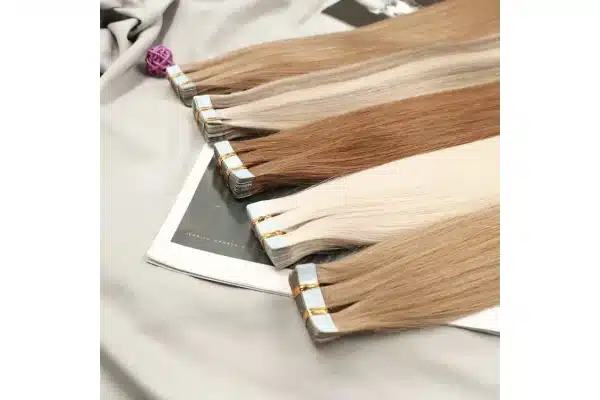
Color codes such as #1B/4/27, #4/6/27, #2/6/18, and #4/18/60 can start a discussion. They are not universal formulas. The physical color ring and approved full-length sample should control the order.
Professional color education separates level from tone, and both affect an ombre match. [1]
| Approval point | What to record | Why it matters for B2B orders |
|---|---|---|
| Color path | Root, mid-tone, end tone, and highlight ratio | Prevents one code from producing different visual results |
| Root section | Depth and exact length measured from the tab | Controls tab coverage and where the lighter area begins |
| Transition | Soft melt, defined band, or mixed highlight placement | Affects whether salons see ombre, balayage, or a color error |
| Tape format | Tab width, height, color, adhesive SKU, and remover | Affects visibility, hold, residue, and retaping |
| Pack format | Piece weight, piece count, and total grams | Supports accurate pricing and full-head planning |
| End density | Single drawn, two-length ratio, or double drawn standard | Changes end fullness, processing exposure, and material cost |
Send the target color codes, root length, tape format, grams, end-density level, and market requirements before sample approval.
Request Ombre Color Ring and Sample Pack Get OEM Ombre Specification and Wholesale Quote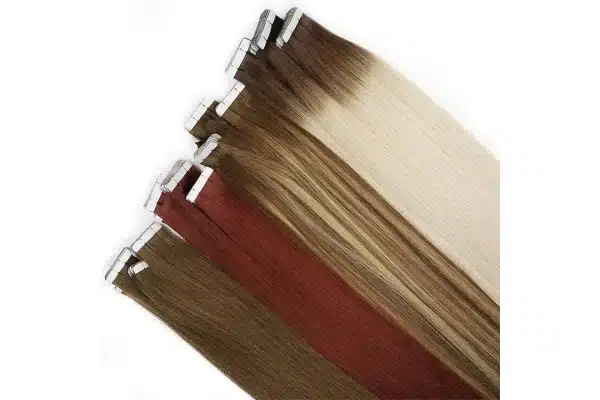
Which Dye Process Can Create the Ombre Transition?
A supplier may use hand-applied color, staged color baths, or mixed-color strand assembly, and buyers should judge the controlled result rather than rely on one process label.
Hand-applied transition
A technician can place color or lightener at a planned distance. This can support custom root lengths, but repeatability still needs measurements and a retained sample.
Staged color-bath transition
The hair can enter processing stages at measured depths. This can support a repeatable broad transition, but buyers should check the boundary across several pieces.
Mixed-strand construction
Some balayage-style pieces mix prepared colors instead of using one continuous gradient. The mixing ratio and tab-area color must remain stable.
Terms such as “hand-painted” or “machine dyed” do not prove quality. “Mechanical press dye” is not a reliable universal process category. Buyers should ask how the transition is measured and checked against the approved sample.
Very light ends need extra attention. Research on alkaline peroxide-persulfate bleaching found cuticle and cortex damage, protein oxidation, and greater protein loss as bleaching severity increased. [2] The lightest section should receive the strictest washing, combing, and end-density checks.
How Should Buyers Compare Tape Adhesive and Pack Specifications?
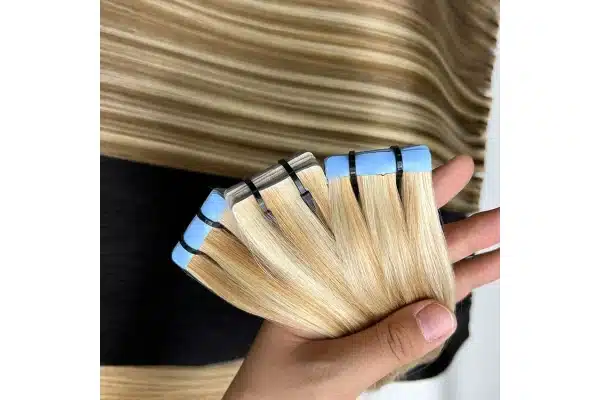
Buyers should approve the exact adhesive SKU with the hair sample because a glue color or country label alone does not predict hold, residue, removal, or reuse.
Our earlier product training records several adhesive descriptions, including white, blue, yellow, malt-colored, German, American, and Italian references. This is why a phrase such as “German white glue” is not a complete current specification. Buyers should confirm the actual tape SKU, tab dimensions, replacement tape, and remover.
A common standard in our training material is 2.5 grams per piece, 40 pieces per 100-gram pack, with 20 pieces for a 50-gram pack. Tab sizes may be 0.8 x 4 cm or 1 x 4 cm. Buyers should confirm these figures for the selected product instead of assuming that every tape in hair extensions order follows one standard.
A four-to-six-week move-up interval should not be guaranteed from the adhesive name alone. Preparation, scalp oil, product buildup, tab weight, placement, and aftercare can change the result.
Should Ombre Tape Ins Use Single Drawn or Double Drawn Hair?
Single drawn hair gives a more natural taper, while double drawn hair gives fuller ends and usually needs more long-length material, so the right choice depends on the buyer’s price tier and salon result.
Single drawn packs include more length variation and a natural taper. A two-length ratio keeps more long hair while retaining some taper. Double drawn construction creates fuller ends but also raises material demand.
Buyers should compare end density after washing, not only on a dry display board. Very light #60 ends may need a different acceptance range from darker #27 ends. Define both fullness and acceptable condition.
What Sample Tests Should Run Before a Bulk Order?
A useful approval test checks a complete pack before and after controlled washing, then records color, transition, adhesive behavior, shedding, tangling, end density, and retaping.
We recommend this sample sequence for salon, wholesale, and private-label buyers:
- Approve a full pack instead of one loose strand or edited product photo.
- Measure the root length from the top of the tab on several pieces.
- Check the pack in daylight and neutral indoor light. Metamerism can make two colors match under one light and differ under another. [3]
- Photograph the pack before washing under the same setup.
- Wash with a fixed shampoo, water temperature, timing, and drying method.
- Recheck color bleed, transition clarity, tangling, shedding, end feel, and end density.
- Test attachment, removal, residue, replacement tape, and retaping.
- Keep one approved pack as the control sample for the next lot.
In sample work, we often see buyers approve the color and ask about adhesive only after installation. The same hair can create different salon feedback when the tab, adhesive, remover, or piece weight changes. Our factory capabilities can support the discussion, but the signed sample remains the order standard.
How Can Private-Label Buyers Keep Repeat Orders Consistent?
Private-label buyers should retain an approved pack, lock the written specification, and compare each repeat lot under the same light and wash procedure before mixing inventory.
The record should include the physical color standard, root tolerance, transition, tab dimensions, adhesive SKU, grams, end density, and accepted variation.
If the supplier changes adhesive, color formula, raw-hair batch, or processing route, a new sample check may be needed. This also makes complaint review more specific.
My View
From our factory perspective, ombre tape-in sourcing should begin with a measurable product brief, not a popular color name. We usually suggest that buyers narrow the first range to a few useful color paths and test each one as a complete pack. The root length, transition shape, light-end condition, tab size, adhesive system, and end density should be approved together because salons experience them as one product. A soft sample at first touch does not prove that the light ends will stay manageable after washing, and an adhesive origin claim does not prove clean removal. For repeat orders, the safer control is a retained physical sample supported by measurements, wash records, and photographs under fixed lighting. This process takes more work before ordering, but it gives salons, distributors, and private-label brands a clearer basis for pricing, training, and complaint review.
Frequently Asked Questions
Are #1B/4/27 and #4/6/27 universal ombre formulas?
No. These codes can describe a general color path, but depth, warmth, ratios, and transition length vary by supplier. Approve a physical color ring and full sample.
Is hand-painted ombre always better than staged dyeing?
No. Hand application can support custom transitions, while a controlled staged process may offer good repeatability. The sample result and lot-control method matter more than the label.
Which tape glue is best for US salons?
There is no single adhesive for every client or climate. Buyers should test the exact adhesive, remover, residue, replacement tape, and retaping process under the intended salon conditions.
Should wholesalers order 50-gram or 100-gram packs?
The choice depends on retail positioning and salon planning. A common format is 20 pieces for 50 grams or 40 pieces for 100 grams when each piece weighs 2.5 grams, but the quotation must confirm it.
Conclusion
Wholesale ombre tape in hair extensions need more than an attractive gradient. Buyers should approve the complete color path, transition measurement, light-end condition, tape system, pack format, and sample-test result. A retained standard and controlled repeat-lot check provide a stronger purchasing basis than color names, supplier photos, or adhesive claims alone.