Launching too many clip-in options at once can leave a new brand with confusing sets, weak shade coverage, and expensive retail returns.
A private label clip in hair extension starter collection should use a focused set of weights, practical piece layouts, clear shades, accurate packaging, and simple customer guidance. A smaller launch often gives brands better stock control and clearer feedback before they expand the range.
For retailers, stylists, and distributors, a clip-in collection is a complete home-use product. The customer needs to understand what comes in the set, how much hair it contains, which shade may fit, and how to place it without damaging or altering the product.
What should a starter clip-in collection include?
A starter collection should include a controlled shade range, one or two clear set weights, consistent piece layouts, packaging, and basic placement and care guidance.
| Launch decision | What the brand should define | Retail benefit |
|---|---|---|
| Set weight | Total grams for a volume set or length-and-volume set | Customers can choose based on a clearer expectation |
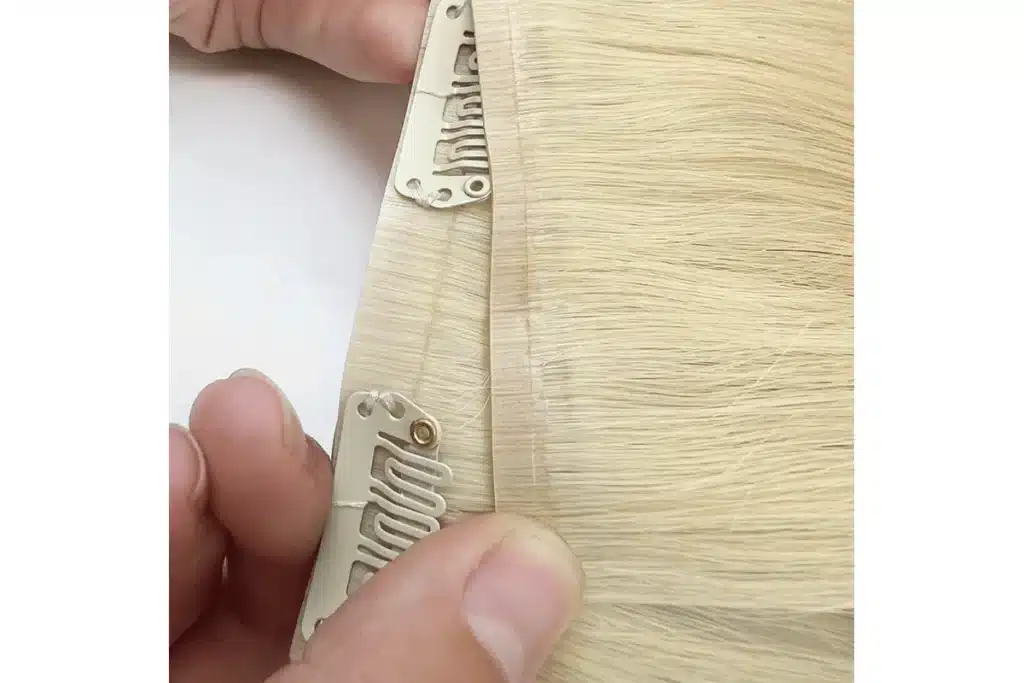
| Piece layout | Wide back pieces, side pieces, and clip count | It affects placement ease and the finished balance |
| Shade range | Core browns, blondes, rooted shades, and color codes | A focused range is easier to photograph and stock |
| Packaging | Set contents, weight, shade, care, and return condition | It can reduce confusion before the customer alters the set |
In retail sample checks, we usually ask someone who did not help choose the set to open the pack and place it with the proposed instructions. This simple test can show whether the piece order, shade label, and care information are clear enough for a first-time buyer.
Confirm set weight, piece layout, clip count, shade code, packaging, and customer guidance before your first retail production run.
Request a clip-in starter collection checkHow should brands choose clip-in set weights?
Brands should choose set weights based on the intended customer result, natural hair density, and the level of volume the collection promises.
Start with a clear product purpose
A lighter set may fit customers who want limited fullness or subtle length. A fuller set may fit customers who need more volume or length-and-volume support. The product description should state the grams and the intended outcome without claiming that one set works for every hair density.
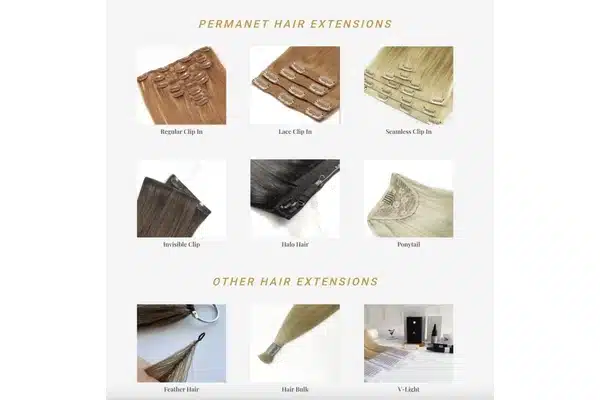
The clip-in set design guide can help brands compare weft width and clip count before they approve a final set. More grams do not always mean a better retail product if the layout becomes difficult to hide or place.
Test the set on realistic hair profiles
A brand should test its chosen set on the kind of customer it expects to serve. Fine hair, medium density, and thicker hair can need different amounts of coverage. A focused starter collection can describe those differences honestly and add another weight later if customer feedback supports it.
Which shades should a new brand launch first?
A new brand should begin with shades that are clearly different from one another and easy to explain through photos, swatches, and color codes.
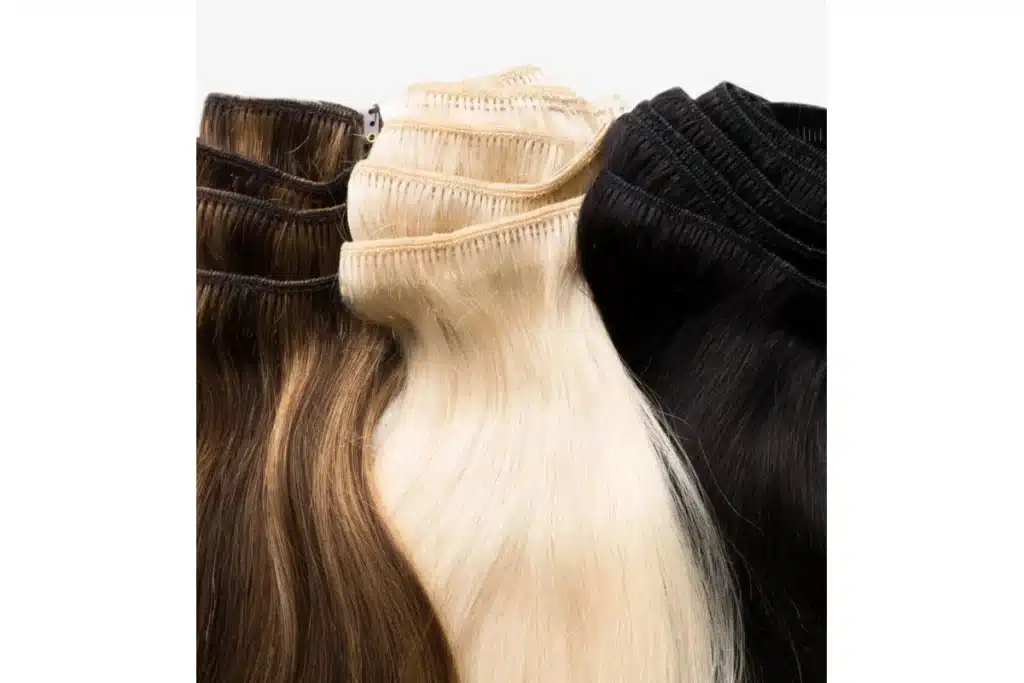
Core browns, a few blondes, and selected rooted blends often provide a practical starting point. The exact range depends on the customer base. The key is that each shade should look distinct in the online store and match the physical product under neutral light.
The clip-in color matching guide can support the customer-facing guidance. The brand should state whether customers should match their mid-lengths, ends, or a blended highlight pattern, rather than only saying to choose the closest color.
What should the package tell the customer?
The package should state the set weight, number of pieces, shade code, basic placement order, care notes, and the return condition before the set is altered.
For a private-label retailer, the package and product page should use the same information. If a customer sees one gram weight online and receives another in the box, the brand may create a return issue before the hair is even worn.
From the factory side, we recommend that brands keep the instruction card short and visual in its order. It should help the customer identify the wider and narrower pieces, explain a secure placement section, and remind the customer to avoid sleeping or swimming in a clip-in set unless the product guidance states otherwise.
How can a brand reduce early retail returns?
A brand can reduce early returns by testing a complete sample set, using accurate shade information, stating the contents clearly, and setting a fair return condition before hair is worn or altered.
The brand should inspect the clip stitching, clip pressure, weft widths, total grams, color label, packaging, and instruction card before release. It should also define how a customer can report a possible quality issue, such as by providing order information and clear photos before changing the set.
This does not remove every color mismatch or fit concern. It gives the customer clearer information before purchase and gives the support team a practical way to review a genuine issue.
My View
From our factory perspective, a private label clip-in launch should begin with a small range that the brand can explain well. We usually suggest confirming the set weights, piece layout, clip pressure, shade codes, package contents, and return guidance before adding more colors or formats. A wider collection can look impressive, but it may be harder for a new brand to photograph, stock, and support consistently. The safer path is often to build a stable starter range, collect customer feedback, and expand only when the product records and reorder checks are working well.
Frequently Asked Questions
How many shades should a new clip-in brand launch?
The right number depends on the target customer, but a focused range of clearly different shades is often easier to stock and explain than many similar tones.
Should a starter collection offer more than one set weight?
It can, when the difference is clear. For example, a lighter volume option and a fuller length-and-volume option can serve different needs if the product information explains the grams and layout.
What should a private-label clip-in sample include?
The sample should include the complete set, packaging, labels, instruction card, shade reference, and the final grams and clip count. A loose hair swatch cannot test the retail experience.
Conclusion
Private label clip in hair extensions are easier to launch when the collection begins with clear weights, layouts, shades, packaging, and customer guidance. A controlled starter range gives the brand a stronger base for stock planning, customer support, and later expansion.