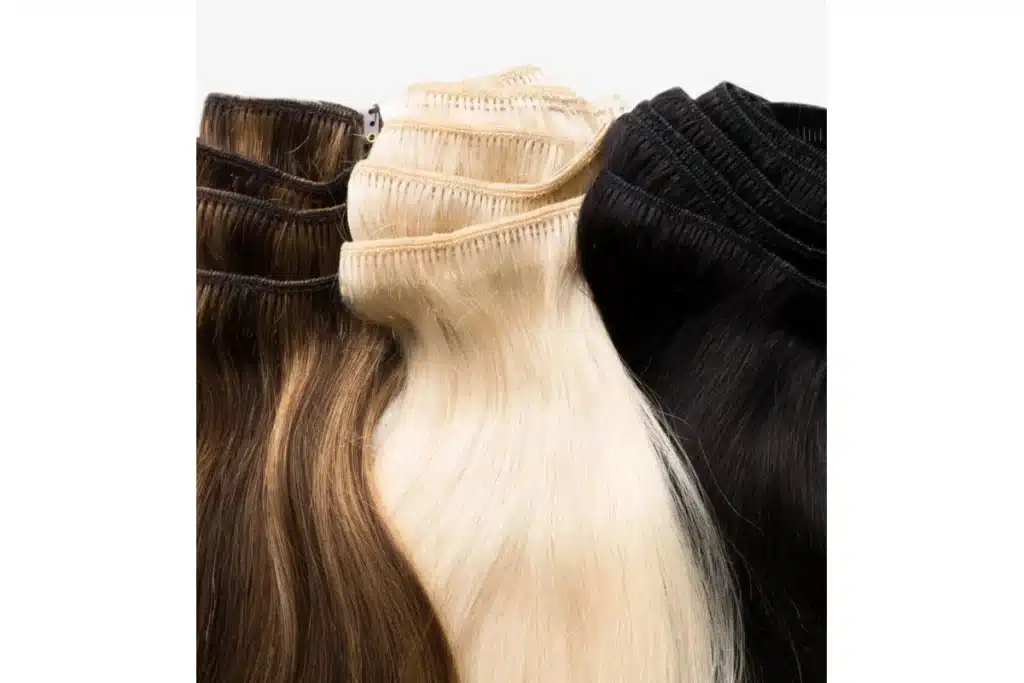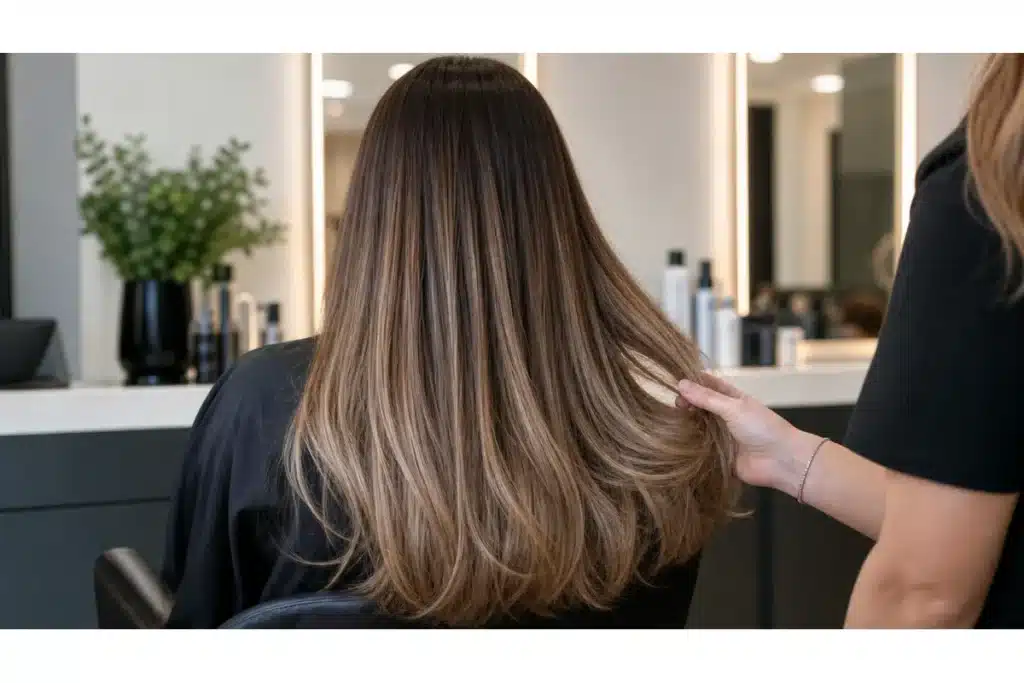
Clip in hair can look uneven even when the hair color is correct. The usual problem is not the hair itself. It is often the wrong weft layout, clip count, or placement plan.
A natural clip in blend depends on using the right set design for the client’s hair density and head shape. Wider wefts support the lower back area, while smaller wefts help around the sides and upper sections. The number of clips must hold the weft securely without creating pressure or bulky lines.
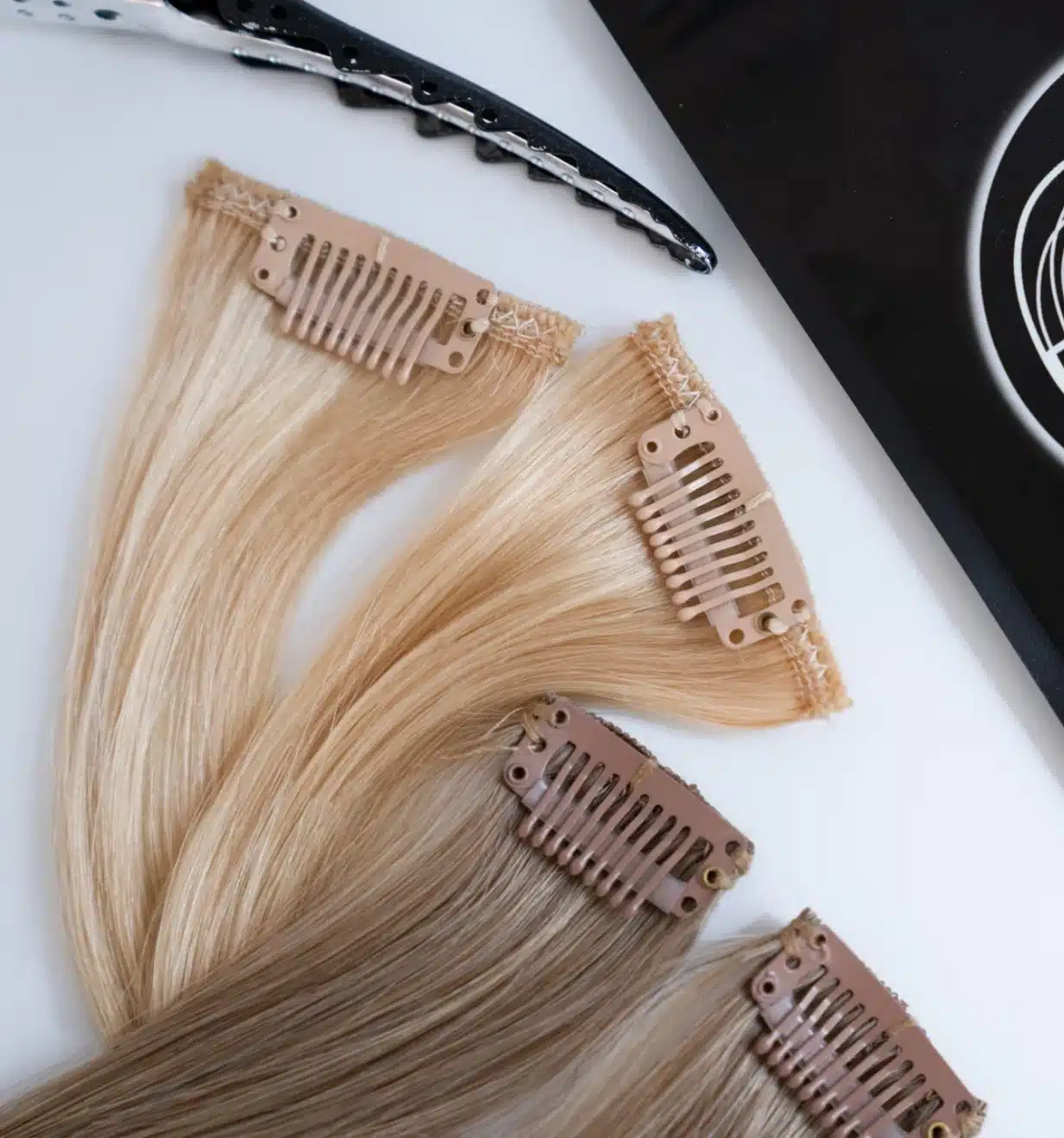
What a Clip In Set Is Made Of
Clip in hair extensions are temporary wefts with clips already attached. They do not need glue, tape, or heat for normal use. The wearer can add length or fullness, then remove the set after the occasion or at the end of the day.
The buyer should not judge a clip in set by total weight alone. A 100g set can be designed as seven pieces, eight pieces, or ten pieces. Each layout distributes the hair and clips differently.
Why weft width matters
A large back weft can cover more area with fewer seams. Smaller side wefts help the blend near the temples and around shorter layers. If a set has too few narrow pieces, the client may see gaps. If a set has too many wide pieces, the upper rows can look bulky.
Why clip count matters
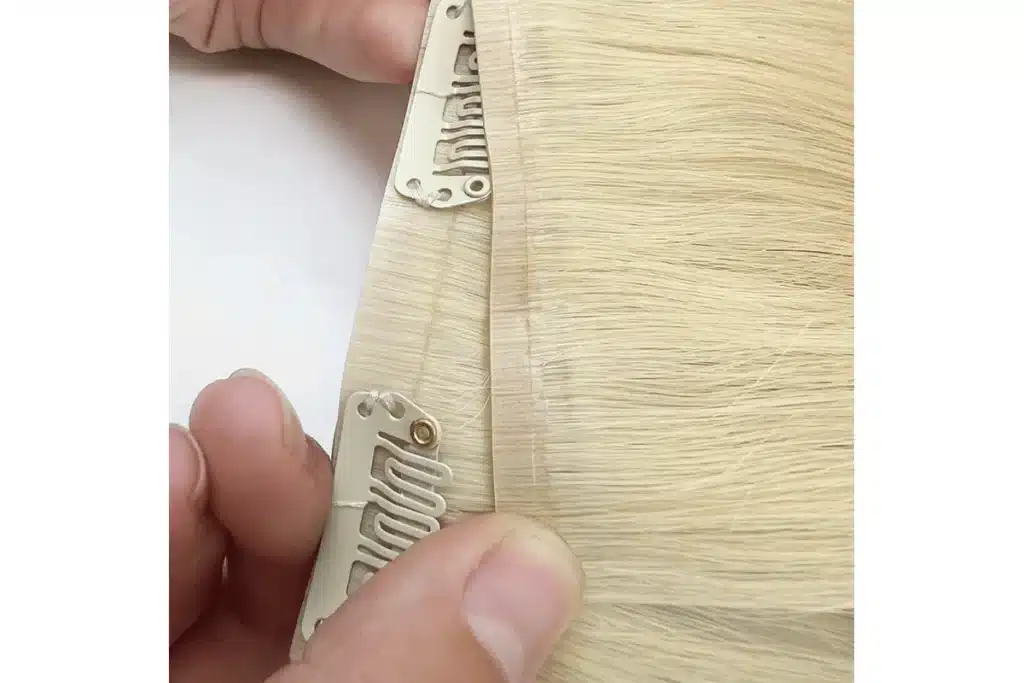
The clips hold the weft in place. A wider weft usually needs more clips than a small side piece. But more clips are not always better. Too many clips can add pressure, and poor clip placement can make the top edge show through fine hair.
| Set layout | Typical use | Strength | Buyer question |
|---|---|---|---|
| 7-piece set | Simple everyday length or volume | Fewer sections to apply | Does the layout cover the sides well enough? |
| 8-piece set | Balanced full-head set | Flexible mix of back and side wefts | What is the width and clip count of each piece? |
| 10-piece set | More detailed blending | More placement options around layers | Will the client have enough density to hide each top edge? |
How We Choose a Set Layout for a Natural Blend
We choose the set layout by matching the weft widths to the client’s density, haircut, and target result.
Start with the lower back section
The lower back usually needs the widest weft because it carries the main length and fullness. The stylist should leave a clean layer of natural hair below the weft. That hair helps hide the bottom edge when the client moves.
Use side wefts for shape, not only for extra weight
Side pieces can make the result look more complete, especially when the client has shorter face-framing layers. They should sit low enough to remain hidden and high enough to blend with the natural hair. The stylist should avoid placing a large weft too close to the hairline.
Keep the top section light
The upper area does not always need more hair. A small amount of natural hair should cover the top edges of the clip in wefts. If the client has very fine hair, a lighter set or fewer pieces can look better than a heavy full set.
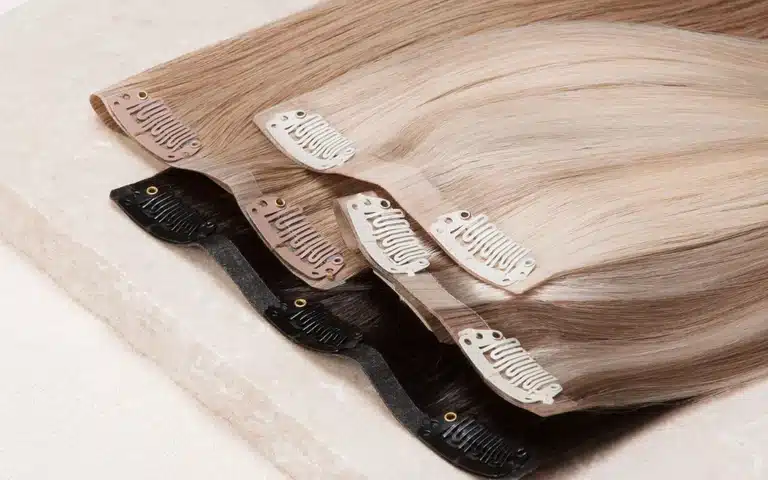
Tell us the target weight, length, texture, number of pieces, and clip layout. We can help you prepare a clearer product specification for your brand or salon.
Common Layout Mistakes That Make Clip In Hair Look Less Natural
Using one set design for every client
One fixed set can be efficient for stock, but it does not fit every haircut. Fine hair, blunt cuts, and thick layered hair need different placement choices. A salon can offer a core set, then teach clients how to use fewer pieces when their hair does not need the full layout.
Ignoring the client’s natural ends
The extension hair can be full, but the client’s own ends may be thin. If the length gap is too large, the result can look disconnected. A stylist can use a shorter extension length, add more fullness around the lower area, or trim the extension hair after installation.
Treating clips as a small detail
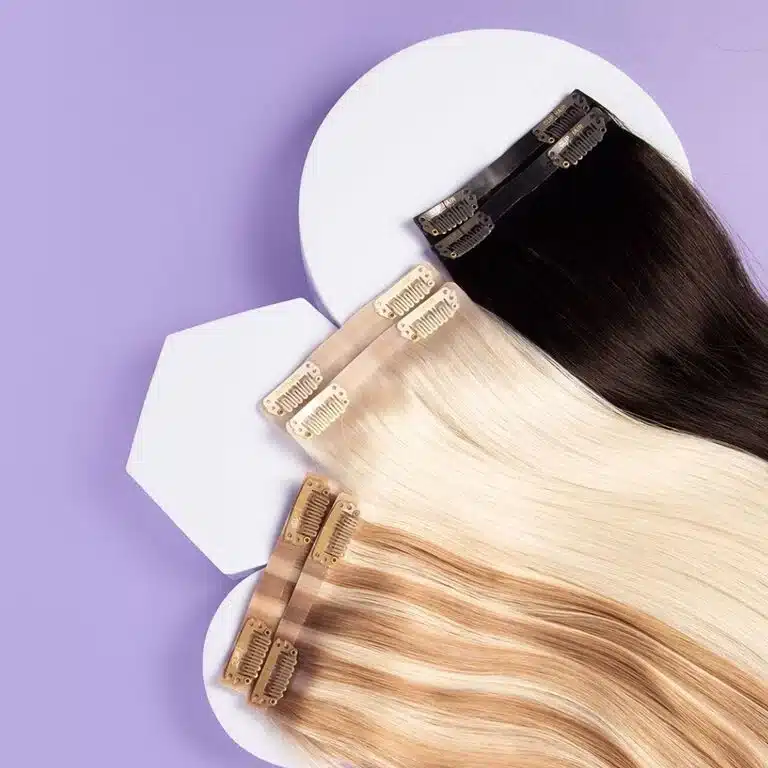
When a brand orders clip in hair, it should confirm clip color, size, placement, and count. In our product discussions, buyers sometimes focus on the hair grade and leave the clip layout open. That can create a mismatch between the sample set and the repeat order.
Buyer Check: What to Confirm Before a Clip In Order
Ask the supplier to confirm these points in writing:
- Total weight and length
- Number of wefts in the set
- Width of each weft
- Clip count on each weft
- Clip color and material
- Texture, color, and end fullness
- Whether the set is designed for thin, average, or thick hair
For buyers who also sell professional methods, our Hair Weft collection can help show where temporary clip in sets fit beside longer-wear extension services.
Our View
We see clip in hair as a set-design product, not only a hair-weight product. A natural result comes from the relationship between the large back wefts, the smaller side pieces, and the clips that hold them. A good 100g set can still look wrong if the widths are not balanced for the client’s haircut.
For private-label and wholesale orders, we recommend that buyers confirm a physical layout photo before the bulk order. It is one of the simplest ways to reduce later questions about missing coverage, bulky rows, or clip placement.
Frequently Asked Questions
How many pieces should a clip in hair extension set have?
Most sets use seven, eight, or ten pieces, but the right layout depends on the intended wearer and result. More pieces give more placement options, but they are not always better for fine hair.
Are 7-piece clip in sets enough for thick hair?
They can work for light volume or a small length change. Thick hair often needs a fuller set, more total weight, or a layout with more side coverage.
Should clip in hair extensions match the roots or the ends?
They should usually blend with the mid-lengths and ends, where the extension hair sits. If the natural hair has several tones, a blended color or two-shade set can give a softer result.
Conclusion
Clip in hair extensions blend best when the weft widths, clip count, and placement work together. Wider back pieces create coverage, smaller side pieces support the blend, and the top area needs enough natural hair to hide the edges. A clear set specification helps a salon or brand keep the result consistent.