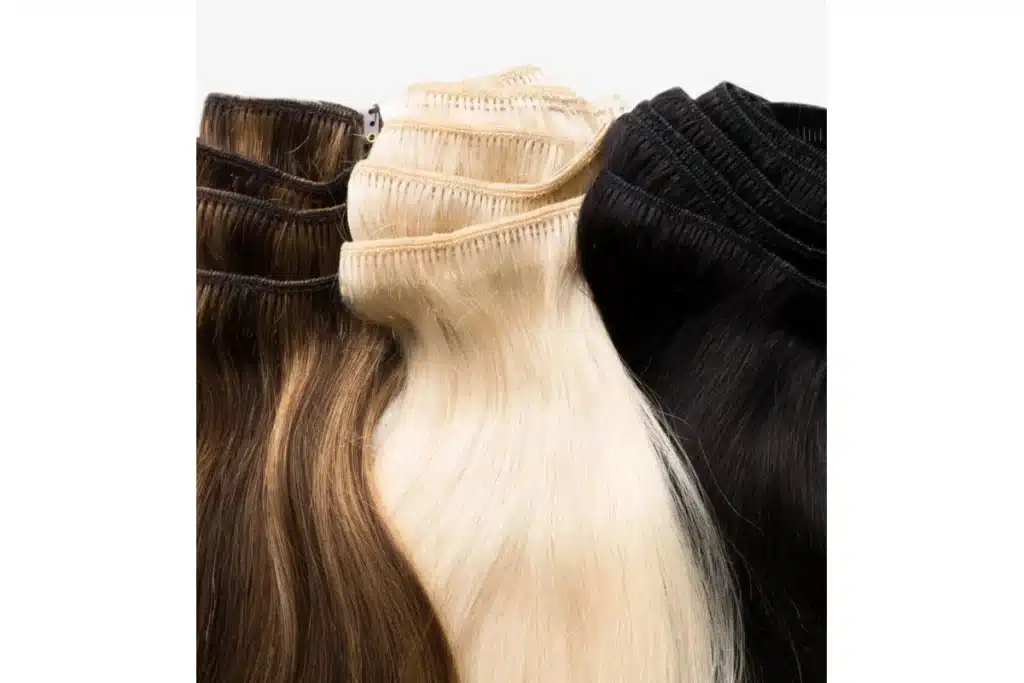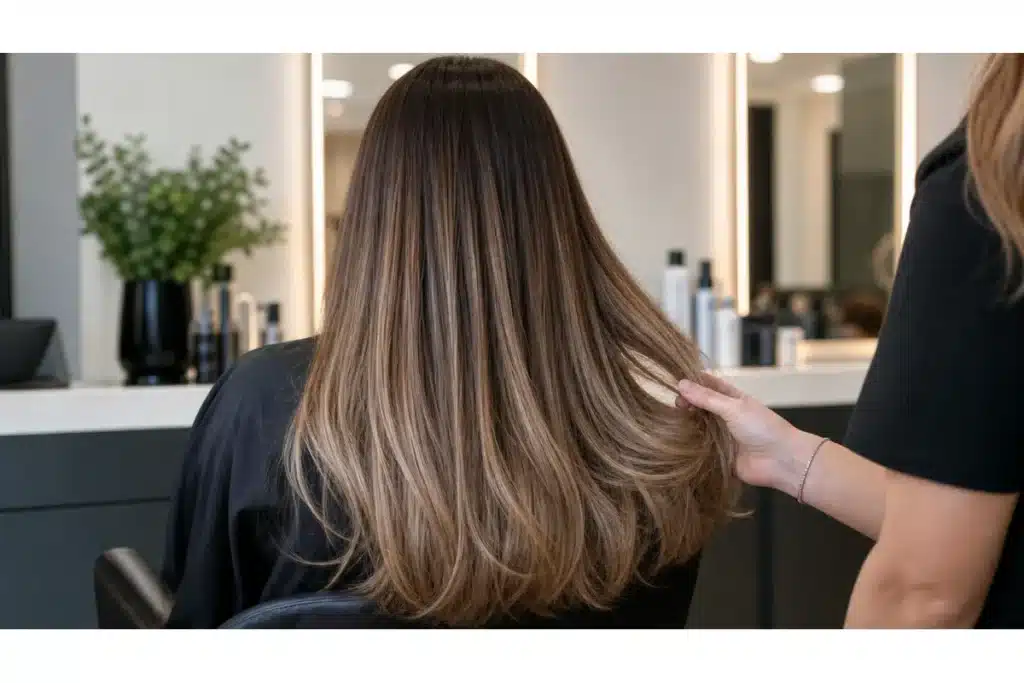
Thick hair can make a clip in set disappear at the roots but look thin at the ends. A light set can leave gaps, force poor placement, and disappoint the client.
Most clients with thick hair need more than a light 100g set for a full-head result. A practical starting point is often 150g to 200g, but the right amount depends on length, natural end density, haircut, and the volume goal.
The total weight is only the first check. A salon also needs enough separate wefts to place hair across the lower back and sides without creating a heavy line near the crown.
Why Does Thick Hair Need More Than Total Weight?
Thick natural hair has more bulk to blend with. If the extension set has too little hair, the client's own hair can show below the extension ends or between the wefts. The result may look full close to the scalp but thin through the lower lengths.
Thick roots and thin extension ends create a visible mismatch
Natural density does not stay the same from root to end. A client can have very dense roots and slightly thinner natural ends. A light extension set can still look too small because it must blend with the dense middle area before it reaches the ends.
More pieces can matter as much as more grams
A single heavy back weft does not solve every coverage problem. Thick hair often needs several wefts with suitable widths. This lets the stylist spread the added hair across the head instead of placing too much weight in one row.
How Much Clip In Hair Is Usually Needed for Thick Hair?
For thick hair, 150g to 200g is often a stronger starting range for a full-head clip in result. A client who wants a major length change, long hair, or high volume can need more weight or a fuller set layout.
| Client goal | Useful starting range | What the stylist should check |
|---|---|---|
| Light volume on thick hair | 100g to 150g | Whether the lower natural hair still shows through |
| Full-head length and volume | 150g to 200g | Back coverage, side blend, and end fullness |
| Long length or very full result | 200g or more | Whether the set has enough wefts to distribute the weight |
These are starting ranges, not a universal prescription. The same 150g can look very different at 16 inches and 24 inches. Longer hair normally needs more fullness through the ends to keep the blend balanced.
How Should a Stylist Choose Between a 7-Piece, 8-Piece, or 10-Piece Set?
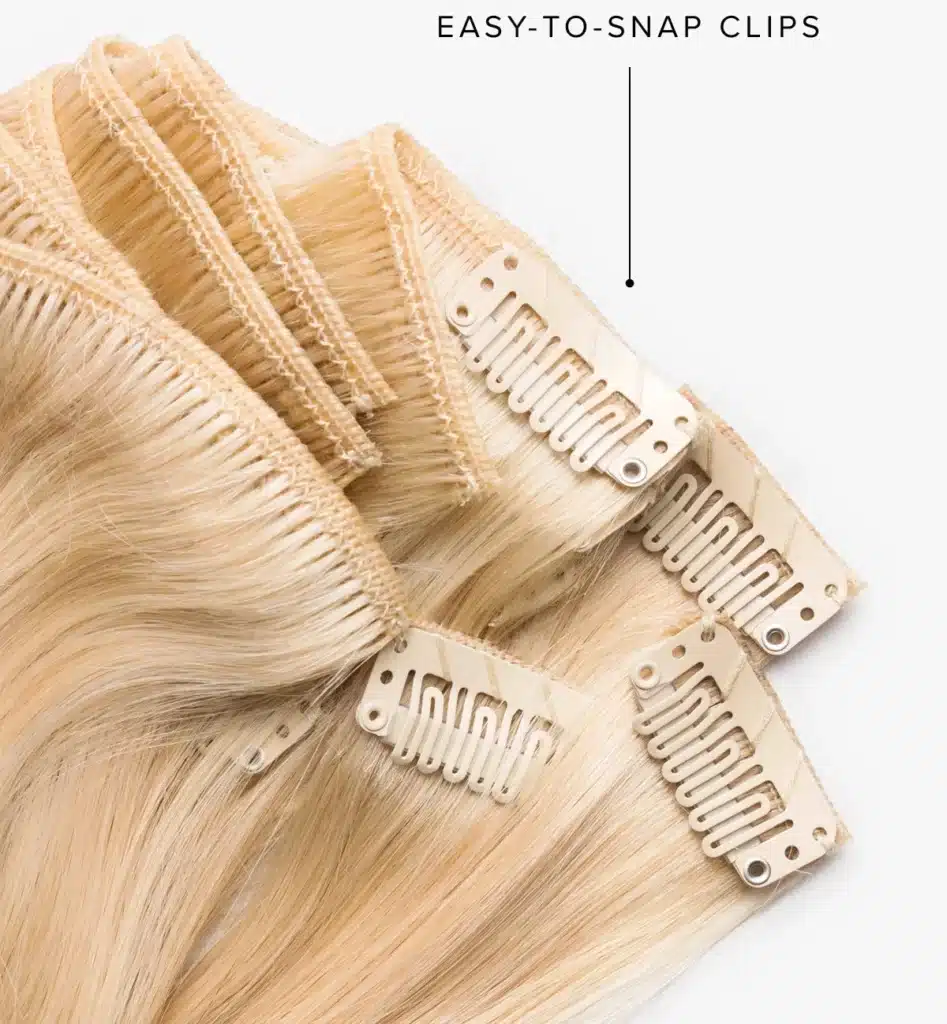
A 10-piece set usually gives a stylist more control for thick hair because it adds smaller side and upper pieces. But the set only works when each weft width, clip count, and total weight match the client's density.
A 7-piece set can suit a simple result
A 7-piece set can work when the client wants a small amount of added length or wears the hair down. It may not give enough side coverage for very dense hair or a layered haircut.
An 8-piece set can balance stock and flexibility
An 8-piece layout is often a practical standard for a salon retail program. It can combine wider back wefts with narrower side pieces. The buyer should still ask for the width and clip count of every piece, not only the total number of pieces.
A 10-piece set can help with detailed blending
More pieces can help a stylist work around layers and distribute hair across a broad head shape. The upper rows still need to stay light. The client must keep enough natural hair above the clips to hide the top edges.
Where Should Clip In Wefts Sit for a Natural Thick-Hair Blend?
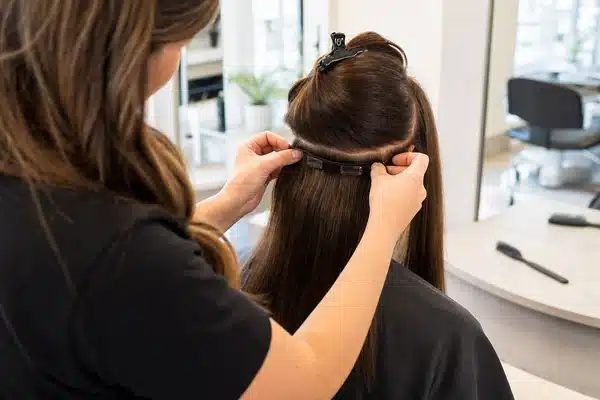
The widest wefts normally sit in the lower back area. Smaller wefts can support the sides and the middle area. The stylist should leave natural hair below each row so the clips and lower edges stay hidden when the client moves.
The American Academy of Dermatology advises that extension styles should not feel painful or overly tight because repeated pulling can damage natural hair over time.[1] A client who feels pressure from clips should remove or reposition the weft instead of adding more clips to the same section.
The same guidance also recommends keeping extensions light and avoiding repeated pulling or tugging during styling.[2]
Keep the crown lighter than the lower sections
The crown does not need the same amount of added hair as the back. For thick hair, the main risk is often placing too many wefts high on the head. This can create a shelf-like line and make the set more visible.
Match the natural mid-lengths before matching the roots
Clip in hair sits through the middle and lower lengths. The extension shade should blend with the mid-lengths and ends. A small amount of root contrast can be less noticeable than an obvious difference at the ends.
What Should a Salon or Retail Buyer Confirm Before Ordering?
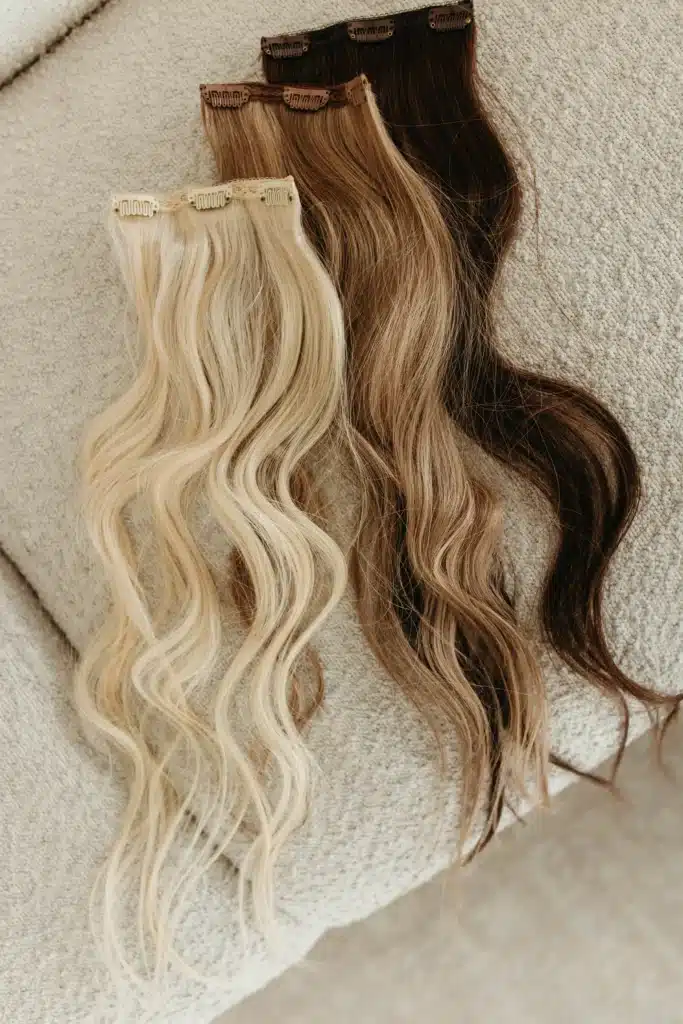
For a thick-hair clip in program, we recommend that buyers confirm the set design in writing:
- Total hair weight and available lengths
- Number of wefts in each set
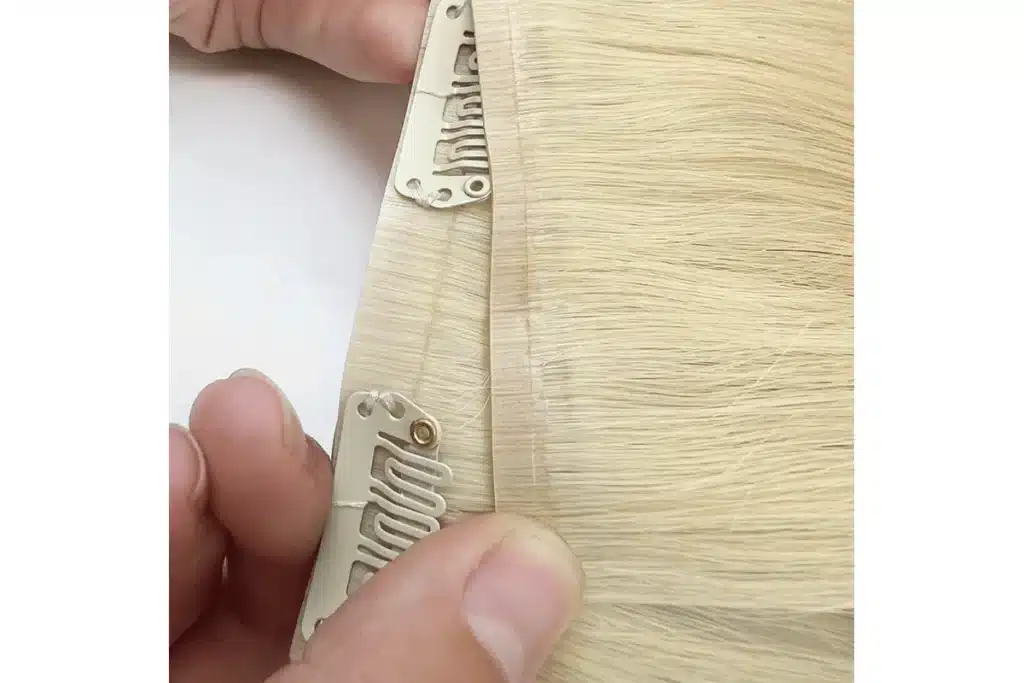
- Width and clip count of every weft
- Hair density from the top to the ends
- Clip color, clip material, and stitching position
- Whether the set is intended for light volume, a normal full head, or very thick hair
When we review a clip in set request, we do not rely on the phrase "full head" alone. We ask for the target length, natural density, and final look. A buyer may order the correct total weight but still receive a set that does not give enough side coverage. A layout photo and a written piece list reduce that risk before the bulk order.
For other salon service options, buyers can compare our Hair Weft collection with temporary clip in sets. Buyers who need a set specification can also contact Hibiscus Hair with their target weight, length, and clip layout.
What Do Buyers Commonly Ask About Clip In Extensions for Thick Hair?
Is 100g enough for thick hair?
100g can work for light volume, but it is often too light for a full-head length and volume result on thick hair. The stylist should check the natural end density and the desired finished length before choosing one 100g set.
Can a client wear two clip in sets at the same time?
Yes, but the stylist should divide the wefts across the head instead of stacking too many clips in the same small area. The client should remove or adjust any weft that feels tight or painful.
Does a heavier set always look better on thick hair?
No. Extra weight without the right piece layout can create bulky rows. A balanced set needs enough hair through the back and sides while keeping the crown light.
Conclusion
Thick hair usually needs more than a light clip in set for a seamless full-head result. For many clients, 150g to 200g and a flexible 8-piece or 10-piece layout provide a more useful starting point. The final decision should combine weight, weft widths, clip count, length, and the client's own end density.