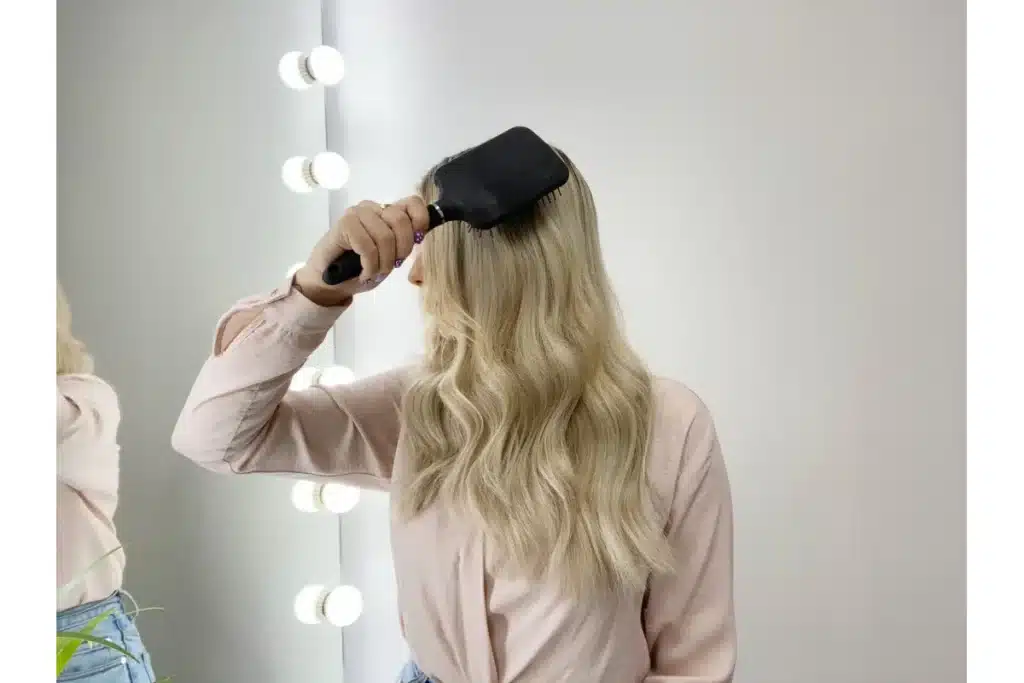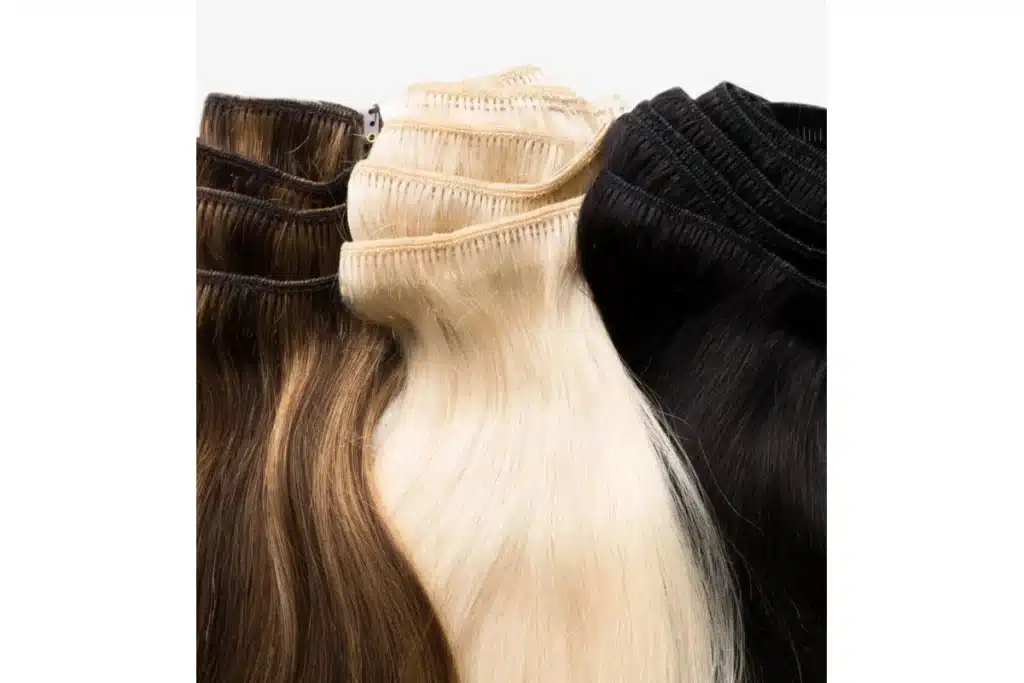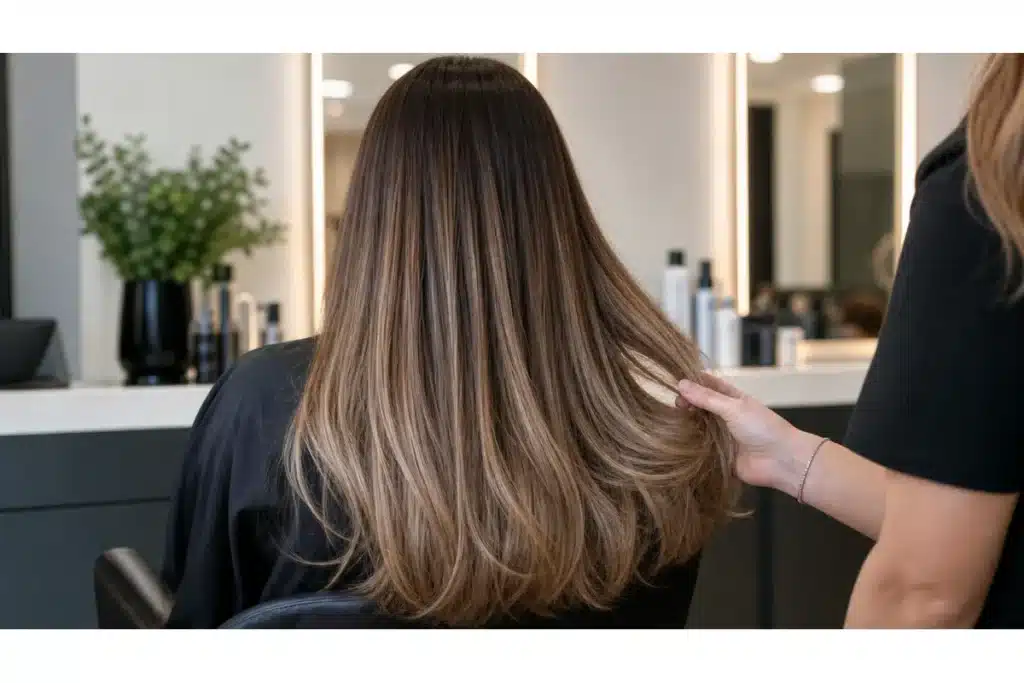
Halo hair extensions use a clear, adjustable wire that rests around the crown, while clip-in extensions attach with multiple small clips. Both are removable, temporary methods, but they differ in comfort, blending, placement control, and styling flexibility.
Halo extensions are usually better for clients who want fast application and less direct tension on the roots. Clip-ins are better for targeted volume, short layers, thicker hair, side filling, and more detailed styling.
For salons and hair brands, the right choice depends on the client’s hair density, haircut, comfort needs, styling habits, and how often the extensions will be worn.

Halo vs. Clip-In Hair Extensions: Quick Comparison
Halo extensions are better for clients who want fast, low-tension volume without clips, glue, tape, or beads. They are often easier for beginners and more comfortable for fine or sensitive hair.
Clip-in extensions are better for clients who need more control over placement, volume, side filling, short-layer blending, or updo styling. They take longer to apply, but they give stylists more flexibility.
For salons and hair brands, halo and clip-in extensions should not replace each other. They serve different temporary extension clients.
| Feature | Halo Hair Extensions | Clip-In Hair Extensions |
|---|---|---|
| Attachment | One-piece weft supported by an adjustable wire | Multiple wefts attached with small clips |
| Application time | About 2–5 minutes | About 10–15 minutes |
| Placement control | Limited | High |
| Root attachment | No clips attached directly to the roots | Clips attach to sections of natural hair |
| Best blending | Medium-to-long hair with enough coverage | Short, layered, medium, or thick hair |
| Side volume | Limited | Easier to customize |
| Updos | More limited | More flexible |
| Beginner use | Very easy | Easy, but sectioning matters |
| Removal | Remove after wear | Remove after wear |
| Best fit | Fast, simple volume | Customized volume and styling |
Halo extensions are the faster and simpler option. Clip-ins provide more control over where volume is added and usually work better when the client needs side coverage, short-layer blending, or flexible styling.
What Are Halo Hair Extensions?
Halo hair extensions are temporary, one-piece extensions supported by a thin, adjustable wire. The wire rests around the crown while the client’s natural hair is released over the top to conceal it.
Unlike clip-ins, the halo does not attach multiple clips directly to the natural hair. This makes application faster and can reduce direct tension on individual root sections.

How Halo Extensions Work
The client places the halo wire behind the hairline, adjusts the position, and releases natural hair over the wire. The hair then blends with the extension piece.
| Feature | Why It Matters |
|---|---|
| One-piece design | Fast to apply and remove |
| Invisible wire | No clips pulling on roots |
| No heat or glue | Gentle for temporary wear |
| Lightweight feel | Good for comfort |
| Simple maintenance | Easy for beginners |
Halo extensions are often chosen by clients who want quick length or volume for events, photoshoots, bridal styling, or occasional daily wear.
They are usually better for medium to long hair. Very short or blunt hair may need more blending work because the one-piece structure gives less placement control.
If you are sourcing temporary extensions for salon resale or online sales, halo hair can be positioned as a beginner-friendly option for clients who want fast volume without clips or adhesive methods.
What Are Clip-In Hair Extensions?
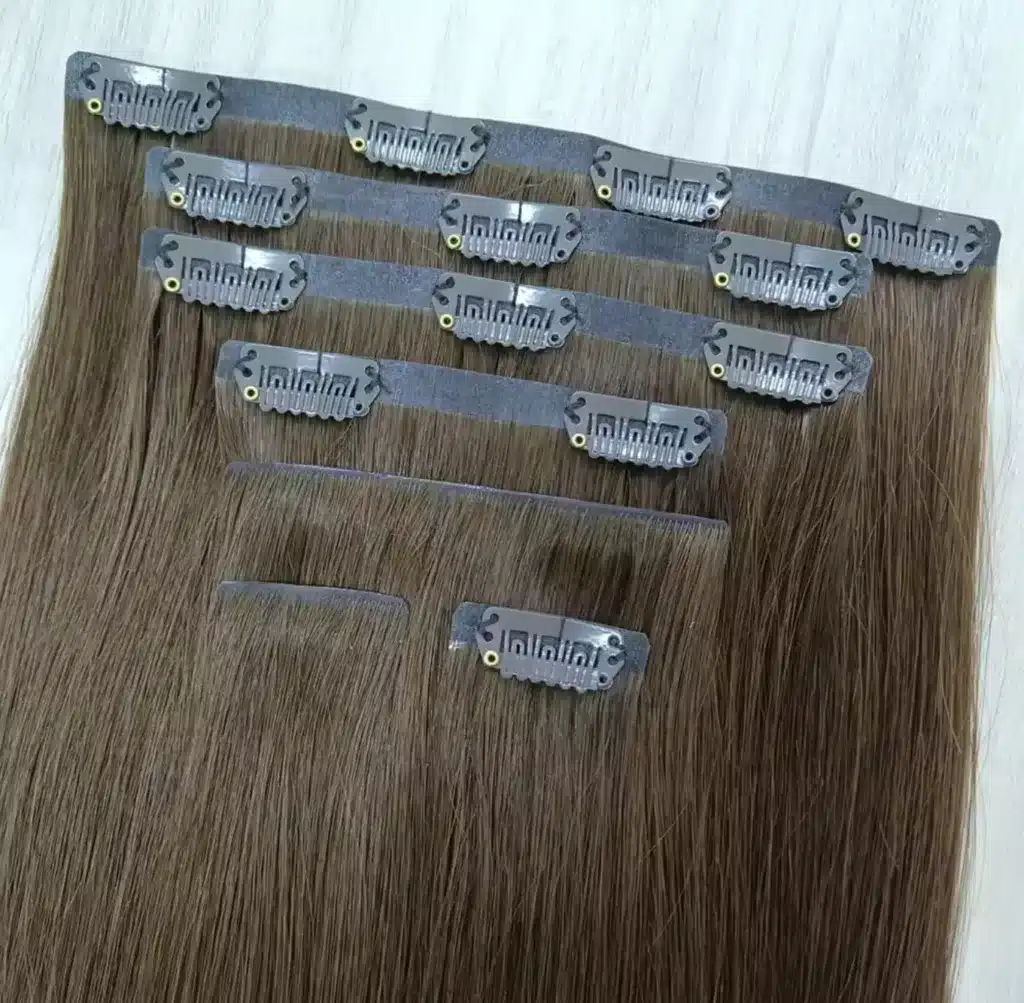
Clip-in hair extensions are temporary wefts with small clips sewn onto the base. Sets usually include several different-sized wefts that can be placed around the back, sides, and crown.
Because each piece can be positioned separately, clip-ins give more control over blending, side fullness, volume distribution, and styling.
The client or stylist sections the natural hair, clips the wefts into place, and blends them with the natural hair.
How Clip-Ins Work
Clip-ins usually come as multiple wefts. These wefts can be placed in different areas of the head to add volume, length, or side fullness.
| Feature | Why It Matters |
|---|---|
| Multiple wefts | Better placement control |
| Small clips | Easy to apply and remove |
| Custom layering | Helps blend short or thick hair |
| Reusable hair | Good for long-term temporary use |
| Flexible styling | Works for curls, waves, and updos |
Clip-in extensions are useful for clients who want more control over the final look. They can work well for thick hair, short layers, and clients who like changing their style.
The main risk is clip pressure. Clips should not be placed too tightly or too close to weak roots. Tight or repeated pulling can increase stress on natural hair. [1]
Halo vs Clip-In Hair Extensions: What’s the Difference?
Halo and Clip-in extensions are both temporary methods, but they feel very different in real use.
Halo extensions are faster and gentler. Clip-ins are more customizable and usually better for detailed styling.
| Feature | Halo Extensions | Clip-In Extensions |
|---|---|---|
| Application method | One-piece wire system | Multiple clip-in wefts |
| Application time | About 2–5 minutes | About 10–15 minutes |
| Root pressure | Very low | Low to medium, depending on placement |
| Customization | Limited | High |
| Best for | Quick volume, fine-medium hair | Custom styling, thick or short hair |
| Updo flexibility | Limited | Better |
| Beginner-friendly | Very easy | Easy, but needs sectioning |
| Maintenance | Low | Moderate |
| Reuse value | Good | Very good with proper care |
Halo extensions work well when the client wants speed and comfort. Clip-ins work better when the client wants more control over volume, placement, and style.
For salons, it helps to carry both options. Halo hair can serve quick transformation clients. Clip-ins can serve clients who want fuller styling and more flexibility.
Pros and Cons of Halo Hair Extensions
Halo hair extensions are simple, comfortable, and gentle, but they are not perfect for every client.
The biggest benefits are quick application, no root pressure, and low damage risk. The main limits are lower customization and harder blending on short or very thick hair.
| Point | Type | Why It Matters |
|---|---|---|
| Very fast application | Pro | Good for quick styling |
| No clips or glue | Pro | Less root stress |
| Comfortable wear | Pro | Good for fine or sensitive clients |
| Easy for beginners | Pro | Simple at-home use |
| Limited placement control | Con | Less suitable for targeted volume |
| One-piece structure | Con | May not blend well with short hair |
| Less flexible for updos | Con | Better for down styles |
| May not add enough density | Con | Thick hair may need more volume |
| Point | Type | Why It Matters |
|---|---|---|
| High customization | Pro | Wefts can be placed where needed |
| Good for thick hair | Pro | More pieces can add balanced volume |
| Better for short layers | Pro | Placement can hide blunt lines |
| Reusable | Pro | Good long-term temporary method |
| Takes longer than halo | Con | Needs sectioning and clipping |
| Clips may show | Con | Fine hair needs careful placement |
| Clip pressure | Con | Can feel uncomfortable if too tight |
| More care needed | Con | Must be removed and stored properly |
Halo extensions are a strong option for clients who want an easy, gentle method. They are especially useful for clients who do not want clips pulling on their roots.
For B2B buyers, the important points are wire comfort, hair weight balance, and weft quality. A halo should feel secure but not heavy. The wire should be adjustable and comfortable enough for repeated use.
Pros and Cons of Clip-In Hair Extensions
Clip-in extensions offer more styling control, but they need correct placement.
The biggest benefits are versatility, better blending, and stronger customization. The main limits are longer application time and possible clip pressure if placed incorrectly.
| Pros | Why It Matters |
|---|---|
| High customization | Wefts can be placed where needed |
| Good for thick hair | More pieces can add balanced volume |
| Better for short layers | Placement can hide blunt lines |
| Reusable | Good long-term temporary method |
| Works for many styles | Better for curls, waves, and updos |
| Cons | Why It Matters |
|---|---|
| Takes longer than halo | Needs sectioning and clipping |
| Clips may show | Fine hair needs careful placement |
| Clip pressure | Can feel uncomfortable if too tight |
| More care needed | Must be removed and stored properly |
Clip-ins are a good choice for clients who want more control. They are also better for stylists who need to build shape, volume, and blending in different areas.
For salons and brands, clip quality matters. Clips should hold securely without feeling sharp or heavy. The weft base should also stay flat and comfortable.
Which Is Better for Different Hair Types?
Halo extensions can be a useful option for some fine-haired clients because no clips are attached directly to small root sections. However, the halo weight, wire fit, natural hair length, and available coverage must still be checked.
What Should Salons and Brands Check Before Ordering?Very fine hair may struggle to conceal the wire or top of the weft. In those cases, a lighter halo, lower-density piece, or carefully placed clip-in set may produce a better result.
| Hair Type | Better Option | Reason |
|---|---|---|
| Fine or thin hair | Halo | Less root pressure |
| Medium hair | Halo or Clip-In | Both can blend well |
| Thick hair | Clip-In | More wefts create better balance |
| Short hair | Clip-In | Better placement control |
| Curly or wavy hair | Clip-In | More texture and placement options |
| Fragile hair | Halo | No clips attached to roots |
For fine hair, Halo extensions can feel more comfortable because the wire distributes weight instead of clipping onto small root sections. For thick hair, Halo may not provide enough density. Clip-ins are better because the stylist can add more wefts where needed.
For short hair, Clip-ins usually blend better because they allow more layering. A Halo can be harder to hide if the client has a blunt cut or strong short layers.
How Long Do Halo and Clip-In Extensions Last?
The lifespan depends on hair quality, wearing frequency, washing habits, heat styling, and storage.
Full cuticle hair usually lasts longer than lower-grade hair because the cuticles are aligned in the same direction, helping the hair stay smoother and easier to manage with proper care.
| Hair Quality | Halo Lifespan | Clip-In Lifespan |
|---|---|---|
| Standard Remy hair | 4–8 months | 6–12 months |
| Full cuticle hair | 9–12+ months | 12–18 months or longer |
Clip-ins often last longer because wear is spread across multiple wefts. Halo hair can still last well if the hair quality is strong and the client stores it correctly.
Clients should avoid overwashing, daily high heat, rough brushing, and damp storage. These habits shorten lifespan faster than normal wearing.
For salons and brands, lifespan is a key sales point. But it should be explained honestly. Temporary extensions last longer when clients wear them occasionally and care for them properly.
How Should Clients Care for Halo and Clip-In Extensions?
Temporary extensions need simple but consistent care.
Clients should brush gently, wash only when needed, use low heat, and store the hair dry and protected.
| Care Step | Recommendation |
|---|---|
| Brushing | Start from ends and work upward |
| Washing | Wash only after product buildup |
| Shampoo | Use sulfate-free shampoo |
| Conditioner | Apply from mid-length to ends |
| Drying | Air dry when possible |
| Heat styling | Use heat protectant and moderate heat |
| Storage | Store dry in a silk bag or hanger |
Recommended washing frequency:
| Method | Suggested Washing |
|---|---|
| Halo extensions | Every 15–20 wears |
| Clip-in extensions | Every 10–15 wears |
Clients should not store extensions while damp. They should also avoid alcohol-heavy sprays and heavy product buildup. These can make the hair dry or sticky.
Good aftercare reduces complaints and increases repeat purchases. This is especially important for salons and brands selling temporary hair extensions.
What Should Salons and Brands Check Before Ordering?
Before ordering Halo or Clip-in extensions, buyers should check hair grade, weft construction, clip quality, wire comfort, color consistency, after-wash softness, and packaging options.
This is important for salons, hair brands, and wholesale buyers who need stable quality across repeat orders.
Buyer Checklist
| Buying Point | What to Check |
|---|---|
| Hair grade | Full cuticle, Remy, or lower-grade hair |
| Hair lifespan | Whether hair stays soft after washing |
| Clip quality | Clips should hold without pulling |
| Halo wire | Wire should be comfortable and adjustable |
| Weft construction | Wefts should be flat and low-shedding |
| Color consistency | Repeat orders should match |
| Texture options | Straight, body wave, or custom texture |
| Packaging | Private label options for brands |
At Hibiscus Hair, we supply full cuticle Halo and Clip-in hair extensions for salons, stylists, hair brands, and wholesale buyers. We can support different lengths, colors, textures, weights, and private label packaging.
If you are preparing a temporary hair extension product line, you can send your required product type, length, color, texture, weight, packaging needs, and destination country. Our team can help you check suitable options and prepare a quotation.
For temporary hair extension products, clip-in hair extensions are useful for clients who want flexible placement and reusable styling.
If your salon or brand also sells semi-permanent methods, you can compare temporary products with hair weft extensions and tape-in hair extensions to build a more complete product line.

My View
From years of working with salons and hair extension brands, I do not think the best choice is simply “Halo or Clip-in.”
The better question is: what does the client need, and what quality level can protect the salon’s reputation?
Halo extensions are easier and gentler for quick volume. Clip-ins give more control for thick hair, short layers, and customized styling. But both methods depend heavily on hair quality.
If the hair becomes dry, tangled, or loses softness after washing, the client will not blame the method first. She will blame the product and the salon.
For B2B buyers, I suggest testing Halo and Clip-in samples after washing, brushing, heat styling, and storage. A good temporary extension product should stay soft, shed less, keep color stable, and feel comfortable during repeated use.
This is why full cuticle hair matters for salons and brands. It gives better long-term wear, smoother after-wash performance, and helps reduce complaints after the first purchase.
FAQs
What are halo hair extensions?
Halo hair extensions are temporary, one-piece extensions supported by a thin, adjustable wire that rests around the crown. The client’s natural hair is released over the wire and weft to conceal them.
Are halo extensions better than clip-ins?
Halo extensions are better for fast application, simple volume, and lower direct root tension. Clip-ins are better for customized placement, side volume, short-layer blending, thick hair, and flexible styling.
Are Halo extensions good for fine hair?
A lightweight halo can work for some fine-haired clients because no clips attach directly to small root sections. However, the natural hair must still provide enough coverage to conceal the wire and weft.
Can halo and clip-in extensions be worn every day?
Both can be worn regularly when they fit correctly and remain comfortable, but they should be removed before sleeping. Frequent heat styling, product buildup, rough brushing, or incorrect storage can shorten their usable life.
Which is easier to blend, halo or clip-in extensions?
Clip-ins usually offer more blending control because separate wefts can be placed around the sides, back, and crown. Halo extensions are faster but may require more natural length and density to cover the one-piece weft.
Are Clip-ins good for thick hair?
Yes. Clip-ins are usually better for thick hair because multiple wefts can create balanced volume.
Can salons order Halo and Clip-in extensions wholesale?
Yes. Salons, stylists, hair brands, and wholesale buyers can order Halo and Clip-in extensions in different lengths, colors, textures, weights, and packaging options from Hibiscus Hair.
What should buyers check before ordering temporary extensions?
Buyers should check hair grade, weft construction, clip quality, wire comfort, color consistency, after-wash softness, and private label packaging options.
Which is better, halo or clip-in hair extensions?
Halo extensions are better for fast, low-tension volume. Clip-in extensions are better for placement control, thick hair, short layers, and more customized styling.
Are halo and clip-in extensions good for salon retail?
Yes. Both can work well for salon retail because they are temporary, reusable, and easier for clients to apply at home. Salons should choose the method based on client hair type, comfort needs, and styling goals.

Conclusion
Halo and clip-in hair extensions are both useful temporary methods, but they are not the same product.
Halo extensions are better for quick, gentle volume and low root pressure. Clip-in extensions are better for customized placement, thick hair, short layers, updos, and stronger styling control.
For salons and hair brands, the right choice depends on the customer base. If your buyers want beginner-friendly temporary hair, halo can be useful. If they want flexible styling and fuller placement control, clip-ins are usually necessary.
Hair quality still decides long-term satisfaction. Before ordering in bulk, test softness, shedding, color consistency, clip quality, wire comfort, and after-wash performance.
You can contact Hibiscus Hair to request samples, wholesale pricing, or product recommendations for temporary hair extension products.