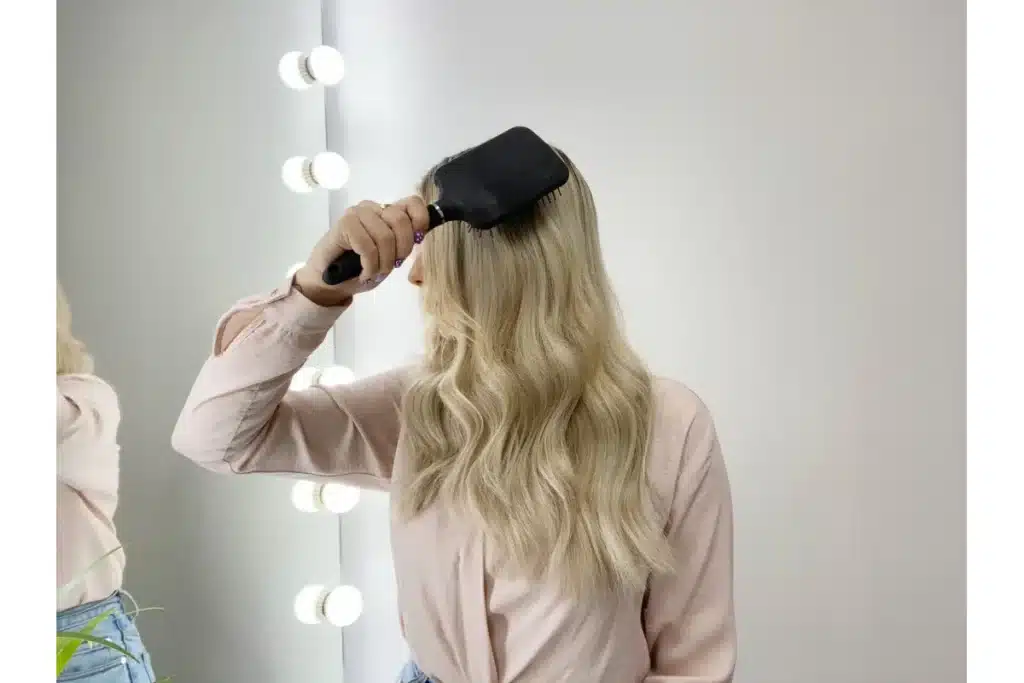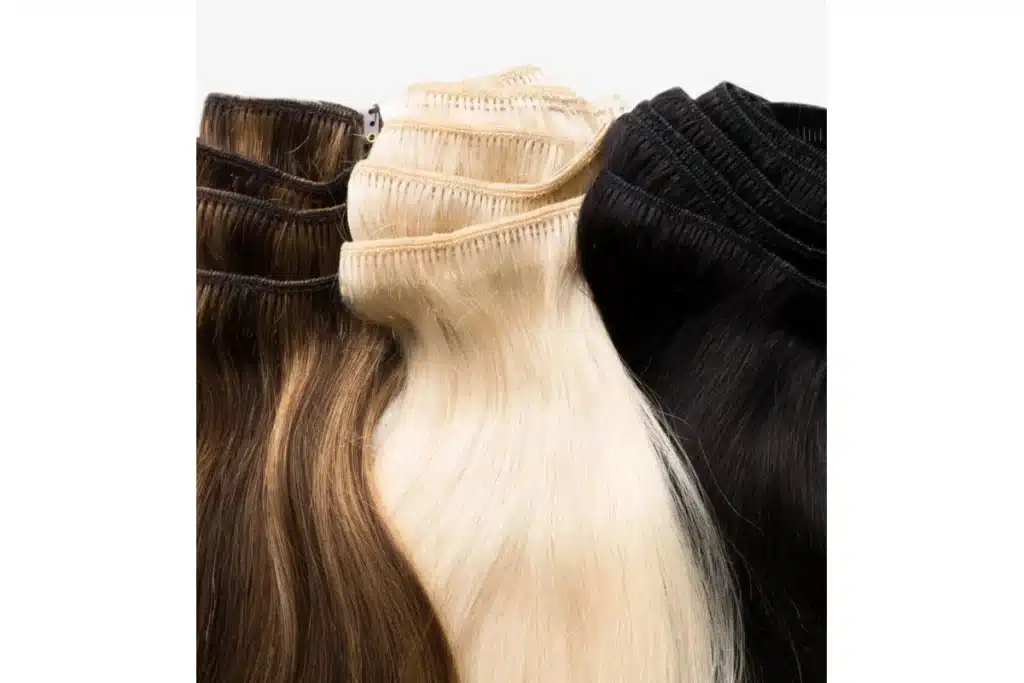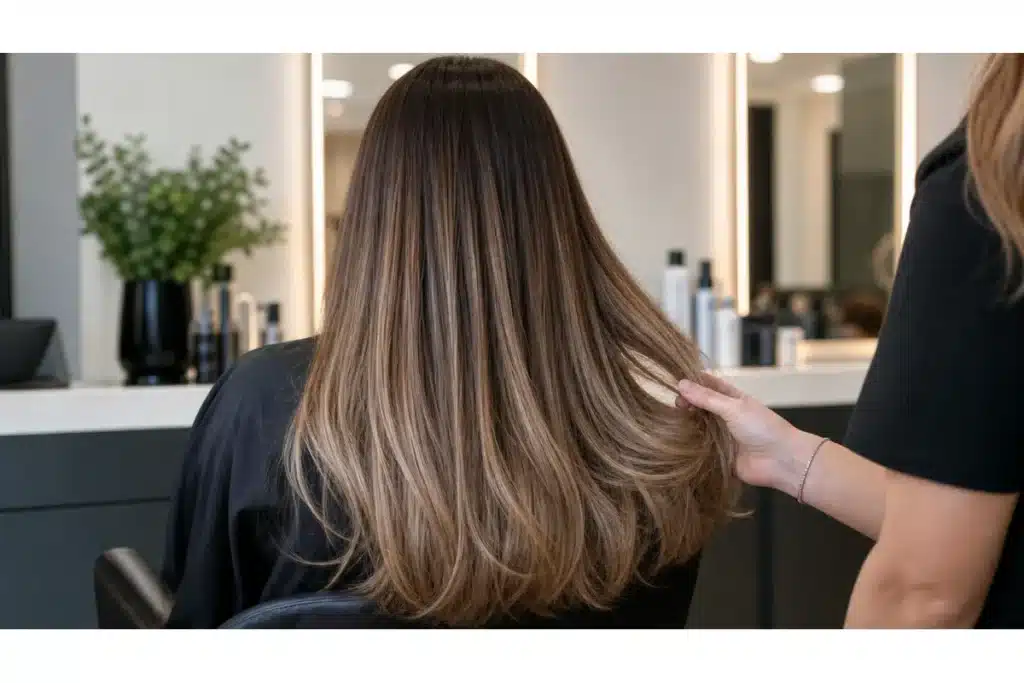
Wrong beaded weft placement can cause slipping, scalp tension, visible rows, and client complaints. For stylists, placement is not a small detail. It decides comfort, movement, and long-term results.
Beaded weft rows should sit below the crown, away from the front hairline and temples, with each bead placed slightly off the scalp. Correct row position, bead spacing, and balanced tension help prevent slipping, visible tracks, and discomfort.

At Hibiscus Hair, we manufacture premium hair extensions for salons, stylists, hair brands, and wholesale buyers. From a manufacturer’s view, good placement depends on both technique and weft quality.
What Are Beaded Weft Hair Extensions?
Beaded weft hair extensions are weft extensions installed with small beads instead of glue, tape, or heat fusion. The beads hold sections of the client’s natural hair and help support the weft.
This method is popular in salons because it offers natural volume, flexible movement, and easier maintenance. It can work well for clients who want fuller hair without adhesive methods.
The weft is usually installed in horizontal rows. The stylist sections the hair, places beads along the row, attaches the weft, checks tension, and blends the hair.
If you want to compare different salon weft options to find the perfect match for your clients, explore our factory-direct collections below:
Hair Weft Extensions
Standard versatile wefts for classic installations.View Collection →
Hand-Tied Wefts
Ultra-thin, invisible tracks perfect for fine hair.View Collection →
Machine Wefts
Durable and thick wefts for maximum volume.View Collection →
How Do Beaded Weft Extensions Work?
Beaded wefts work by using beads as attachment points. The stylist pulls a small section of natural hair through each bead, positions the bead along the row, and secures the weft.
| Step | Purpose |
|---|---|
| Section the hair | Create a clean base |
| Choose row position | Keep the weft hidden and balanced |
| Add beads | Build support points |
| Attach the weft | Secure the extension row |
| Check tension | Protect client comfort |
| Blend and style | Create a natural finish |
The method looks simple, but small mistakes can affect the final result. If the beads are too tight, the client may feel pulling. Tight hairstyles and extensions can increase the risk of traction-related hair loss when they create repeated tension. [1]
Where Should Beaded Weft Extensions Be Placed?
Beaded wefts should be placed where the natural hair can cover the row, support the weight, and move comfortably. Most rows should sit below the crown area and away from the front hairline, temples, and very visible areas.
A placement plan should consider:
- natural hair density
- head shape
- desired volume and length
- weft weight
- number of rows
- daily styling habits
For many clients, the first row is placed around the lower back section of the head. Extra rows can be placed higher, but they should stay hidden when the client moves, brushes, or ties the hair.
The goal is simple: the row should feel secure, lie flat, and remain invisible in normal styling.
How Far Should Beads Be From the Scalp?
Beads should not be clamped directly against the scalp. A small space is needed so the client can move, brush, and wear the extensions comfortably.
| Placement Issue | Result |
|---|---|
| Too close to scalp | Tension, pulling, irritation |
| Too far from scalp | Slipping and loose rows |
| Uneven bead line | Uneven tension and movement |
| Too much hair in one bead | Bulky attachment |
| Too little hair in one bead | Weak hold |
A professional stylist should always check comfort after clamping. If the client feels sharp pulling when moving the head, the row may be too tight.
The American Academy of Dermatology notes that tight hairstyles, including extensions or weaves, may contribute to traction alopecia when they repeatedly pull on the hair. [1]
How Should Stylists Section the Hair?
The hair should be sectioned into clean horizontal rows. Each section needs enough natural hair to cover and support the weft without creating too much pressure.
A good section should be clean, balanced, not too thin, not too thick, and suitable for the client’s hair density.
For fine hair, lighter rows and careful bead spacing are usually better. For thick hair, more support points may be needed to hold the row and blend the extensions.
Stylists should avoid placing rows too close to the crown, temples, or front hairline. These areas are easier to expose during daily styling.
Best Placement for Different Hair Types
Different clients need different placement plans. One placement map should not be used for every head.
| Hair Type | Placement Suggestion | Avoid |
|---|---|---|
| Fine hair | Lighter rows, careful bead spacing | Heavy wefts and tight beads |
| Medium hair | Standard horizontal rows | Rows placed too high |
| Thick hair | More support points | Too few beads for a heavy row |
| Short hair | Lower rows for better blending | Visible rows near the crown |
| Sensitive scalp | Lower tension | Tight clamping |
Comfort matters as much as the final look. A beautiful installation that feels tight will not create a good salon experience.
Common Beaded Weft Placement Mistakes
The most common mistakes are placing beads too close to the scalp, using messy sections, creating too much tension, choosing the wrong bead size, and failing to check comfort.
Placing beads too close to the scalp
This can cause pulling and discomfort. The beads should be secure, but the scalp should still feel relaxed.
Using uneven sections
Messy sections can make the row sit poorly. This may create bumps, uneven tension, or visible rows.
Using too much or too little hair in each bead
Too much hair can make the bead bulky. Too little hair can create weak support and slipping. Each bead should hold a stable amount of natural hair.
Using the wrong bead size
Beads that are too large may slip. Beads that are too small may create pressure or be difficult to clamp correctly.

How Does Weft Quality Affect Placement?
Weft quality affects how flat, comfortable, and stable the placement feels. Even good technique can be limited by poor weft construction.
| Quality Point | Why It Matters |
|---|---|
| Flat weft construction | Helps the row sit closer to the head |
| Stable stitching | Reduces shedding |
| Consistent hair direction | Helps reduce tangling |
| Soft texture | Improves movement and blending |
| Stable color | Supports repeat salon clients |
| Suitable weight | Reduces pressure on the row |
Lower-grade hair may look smooth before installation, but can become dry, matted, or tangled after just a few washes. This creates excessive correction work for stylists and leads to bad reviews from your loyal clients.
For professional salon use, full cuticle hair is the only safe choice to protect your salon’s reputation.
At Hibiscus Hair, we manufacture 100% Remy cuticle aligned hair wefts that ensure perfectly flat, seamless, and comfortable placement every single time.
🔗 Request a Free Sample Pack & Check Our Hair Quality First
How Long Do Beaded Weft Extensions Last?
Beaded weft extensions usually need maintenance every 6–8 weeks. Timing depends on hair growth, scalp oil, hair density, installation quality, and aftercare.
The hair itself may last longer if the quality is good. But the placement needs regular maintenance because the beads move down as natural hair grows.
When the row grows down too much, it may feel loose, twist, or create more tension during brushing. Research on traction alopecia has connected prolonged pulling force with hair loss risk. [2] This means stylists should control tension and keep maintenance appointments on schedule.

How Should Clients Care for Beaded Wefts?
Clients should brush gently, avoid pulling near the beads, wash carefully, dry the root area, and return for move-up appointments.
| Aftercare Step | Recommendation |
|---|---|
| Brushing | Use an extension-safe brush |
| Washing | Avoid rubbing the rows |
| Conditioner | Keep heavy conditioner away from beads |
| Drying | Dry the root and bead area |
| Sleeping | Tie hair loosely or braid |
| Maintenance | Return every 6–8 weeks |
You can also share this related guide with clients: How to Take Care of Beaded Hair Extensions.
Can Salons Source Beaded Weft Extensions from Hibiscus Hair?
Yes. Hibiscus Hair supplies premium hair extensions for salons, stylists, hair brands, and wholesale buyers who need stable quality and professional support.
Before ordering beaded wefts for salon use, check hair quality, weft construction, color consistency, weight options, and after-wash performance.
For professional buyers, sample testing is recommended before bulk orders. You can send us your required length, color, texture, weight, quantity, packaging needs, and destination country. Our team can help prepare sample options or wholesale details.
Conclusion
Beaded weft extension placement is about creating a secure, comfortable, and natural-looking result. The key points are clean sectioning, correct bead distance, balanced tension, suitable row position, proper bead size, and regular maintenance.
For stylists, good placement protects the client’s natural hair and improves the final look. For salons and hair brands, stable weft quality also matters because it affects shedding, tangling, comfort, and repeat client satisfaction.
If you are sourcing beaded weft extensions for salon installation, resale, or private label branding, Hibiscus Hair can support premium full cuticle hair extensions with professional quality control and wholesale supply.
FAQs
How far should beaded wefts be from the scalp?
They should not be clamped directly against the scalp. A small space is needed for comfort, movement, and brushing.
How many rows of beaded wefts does a client need?
Light volume may need one row. Full length and volume may need two or three rows, depending on natural hair and desired result.
Do beaded weft extensions damage natural hair?
They should not damage natural hair when installed and maintained correctly. Risk increases when the rows are too tight, too heavy, or not maintained.
How often should beaded wefts be moved up?
Most clients need a move-up every 6–8 weeks.
Are beaded wefts good for fine hair?
They can work for some fine-hair clients, but the stylist should use lighter rows, careful bead spacing, and lower tension.
References
- American Academy of Dermatology Association. “Hairstyles that pull can lead to hair loss.”
https://www.aad.org/public/diseases/hair-loss/causes/hairstyles
↩ - Billero, V., & Miteva, M. “Traction alopecia: the root of the problem.” Clinical, Cosmetic and Investigational Dermatology, 2018.
https://pmc.ncbi.nlm.nih.gov/articles/PMC5896661/
↩