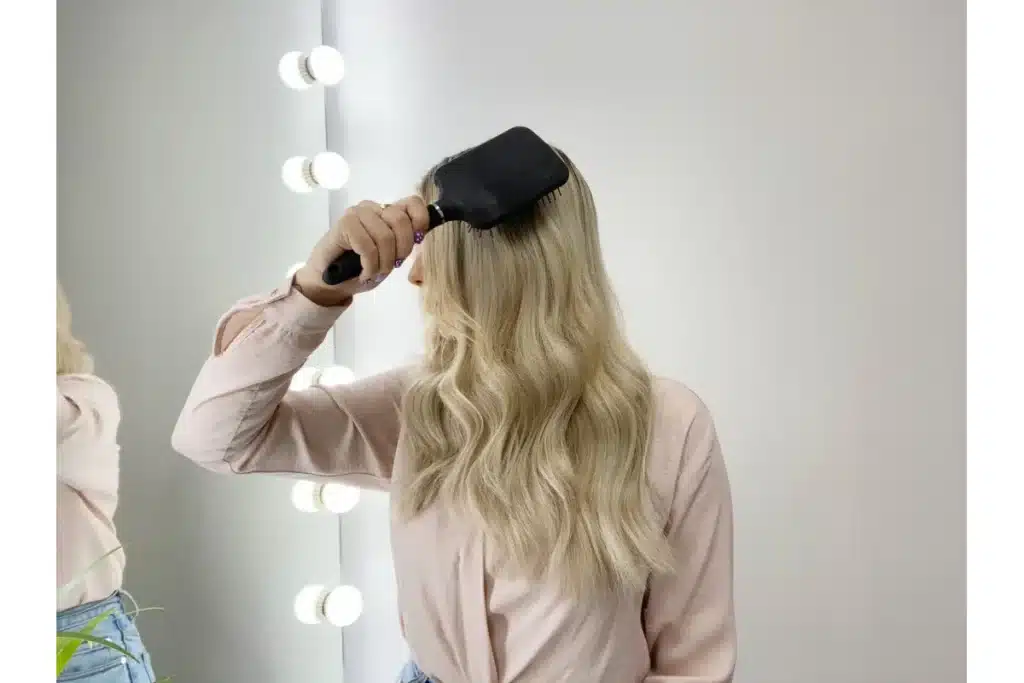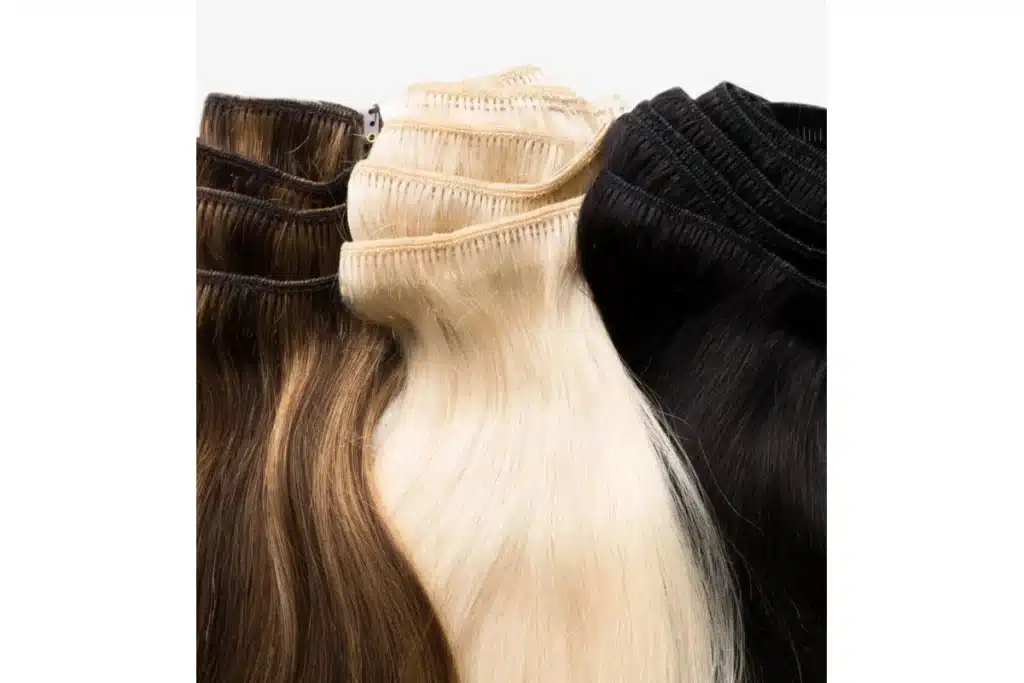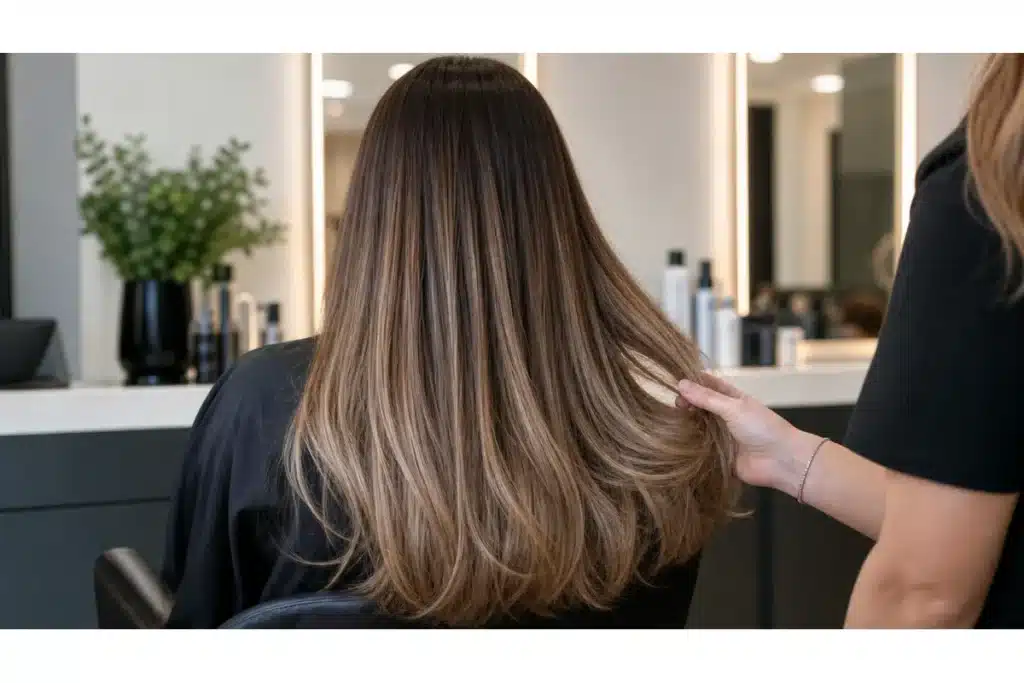
Many clients love I Tip extensions because they look natural, but poor hair quality or weak care can shorten their lifespan quickly.
I Tip extensions usually need a move-up every 6–8 weeks. Standard Remy I Tip hair may last 3–6 months. Premium full cuticle I Tip extensions can last 12–18 months with proper installation, regular maintenance, and correct aftercare.

From years of working with overseas salons, stylists, and hair brands, I find one common misunderstanding. Many clients think the 6–8 week move-up time means the hair only lasts 6–8 weeks. This is not correct. The beads need adjustment as natural hair grows, but good-quality I Tip hair can often be reused for much longer.
What Are I Tip Extensions?
Some clients want longer hair, but they do not want glue, tape, or heat fusion. I Tip extensions are one option for this need.
I Tip extensions are strand-by-strand hair extensions installed with small beads or micro rings. Each strand has a small tip at the top and is secured to natural hair without heat or glue.
Why Salons Use I Tip Extensions
I Tip extensions are popular because they allow flexible movement and natural-looking placement. The stylist can place strands where the client needs more volume or length.

| Benefit | Why It Matters |
|---|---|
| No heat installation | Reduces heat-related risk during application |
| No glue or tape | Good for clients who avoid adhesive methods |
| Strand-by-strand placement | Gives more control over density |
| Natural movement | Helps the hair fall more freely |
| Flexible styling | Allows ponytails, braids, and layered styles |
| Reuse potential | Good hair can be moved up or retipped |
I do not see I Tip as the fastest method. I see it as a controlled method. For salons, this control matters because every client has a different head shape, hair density, and styling habit.
A salon owner I work with in the United States once told me she prefers I Tip for clients who want movement instead of a flat weft feeling. Her concern was not only the installation. She wanted hair that could still look clean after move-up. This is why product quality and service technique must work together.
How Long Do I Tip Extensions Usually Last?
The biggest mistake is mixing up move-up time with hair lifespan.
I Tip extensions usually need a move-up every 6–8 weeks. The actual hair lifespan depends on the hair grade. Non-Remy hair may last 1–3 months, Remy hair may last 3–6 months, and full cuticle hair can last 12–18 months with proper care.

Move-Up Time vs Hair Replacement Time
Move-up means the beads need to be adjusted because natural hair has grown. It does not always mean the client needs new hair.
| Item | Common Time | Meaning |
|---|---|---|
| Move-up maintenance | 6–8 weeks | Beads are moved closer to the scalp |
| Non-Remy hair lifespan | 1–3 months | Short-term and lower-cost use |
| Remy hair lifespan | 3–6 months | Standard salon-grade use |
| Full cuticle hair lifespan | 12–18 months | Premium long-term use |
| Reuse potential | 2–4 times | Depends on hair condition and removal |
This difference is important for salons. If the client thinks she must replace all the hair every 6–8 weeks, she may feel the service is too expensive. A better explanation is simple: “You need maintenance every 6–8 weeks, but the hair replacement depends on the hair condition.”
This small explanation helps avoid confusion during consultation. It also helps salons sell better-quality hair with a clearer value.
What Impacts the Longevity of I Tip Extensions?
I Tip extensions do not last longer only because the stylist installs them well. They also need stable hair quality and correct daily care.
The main factors are hair quality, installation, maintenance, lifestyle, removal method, and the client’s natural hair condition.
Key Factors That Affect Lifespan
| Factor | How It Affects Lifespan |
|---|---|
| Hair quality | Controls softness, tangling, shedding, and reuse |
| Installation | Affects comfort, slippage, and natural hair safety |
| Bead size | Affects hold and pressure |
| Sectioning | Prevents too much weight on natural hair |
| Maintenance | Prevents root tangling and loose strands |
| Lifestyle | Swimming, sweat, oil, and heat can shorten wear |
| Removal | Gentle removal protects the strand for reuse |
In my experience with salon and brand buyers, early problems often come from more than one reason. For example, a client may have fine hair, wear extensions too long without move-up, and use heavy conditioner near the beads. In this case, the problem is not only the product or only the stylist. It is the full service chain.
That is why I suggest salons explain the care rules before installation. Good communication reduces complaints later.
Why Does Hair Quality Matter So Much?
Many I Tip extensions look smooth in the sample bag, but the real quality appears after washing and brushing.
Hair quality matters because it decides how long the extensions stay soft, how much they tangle, and whether they can be reused after removal.
Hair Quality and Expected Lifespan
| Hair Type | Typical Lifespan | My View |
|---|---|---|
| Non-Remy hair | 1–3 months | Suitable only for short-term low-cost use |
| Remy hair | 3–6 months | Can work for standard salon service |
| Full cuticle hair | 12–18 months | Better for premium salons and reuse |
Full cuticle hair usually lasts longer because the cuticle direction is better preserved. This helps reduce tangling and keeps the hair smoother with proper care.
Lower-grade hair may feel soft at first because of silicone coating. After several washes, that coating may fade. Then the hair may become dry, rough, or hard to brush.
For salons, this creates hidden cost. The stylist spends more time solving tangles. The client may complain. The salon may need to replace hair sooner.
This is why I do not suggest judging I Tip hair only by price or first touch. A better test is washing, drying, brushing, and checking the ends after use.
How Does Installation Affect I Tip Extensions?
Even high-quality I Tip hair can perform badly if the installation is wrong.
Correct installation means clean sectioning, proper bead size, balanced tension, and enough natural hair to support each strand.
Basic Installation Points
| Installation Point | Why It Matters |
|---|---|
| Sectioning | Helps each strand sit cleanly |
| Natural hair amount | Prevents too much pressure on one area |
| Bead size | Helps reduce slipping or tightness |
| Tension | Protects client comfort |
| Placement | Keeps extensions hidden and balanced |
| Final check | Finds pulling or discomfort before the client leaves |
The bead should not be too tight against the scalp. If it is too tight, the client may feel pulling. If it is too loose, the strand may slip.
Stylists also need to avoid sections that are too small or too large. If the section is too small, the natural hair may carry too much weight. If it is too large, the bead may not close securely.
Tight hairstyles and extensions can contribute to traction-related hair loss when they repeatedly pull on the hair. [1] This is why tension control is important in any bead-based method.
I do not install hair myself. My view comes from long-term feedback from stylists, salon owners, and wholesale clients. The feedback is very clear: good hair still needs good application.
How Should Clients Maintain I Tip Extensions?
Good maintenance can add months to the life of I Tip extensions. Poor care can ruin good hair quickly.
Clients should brush gently, wash correctly, avoid heavy products near the beads, dry the root area fully, and return for move-up service every 6–8 weeks.
Daily and Weekly Care Rules
| Care Step | Recommendation |
|---|---|
| Brushing | Brush from ends upward with an extension-safe brush |
| Washing | Use sulfate-free shampoo and wash downward |
| Conditioner | Keep conditioner away from beads |
| Drying | Dry the root and bead area fully |
| Sleeping | Wear a loose braid or use a silk pillowcase |
| Heat styling | Use heat protectant and avoid overheating the tip area |
| Swimming | Rinse after saltwater or chlorine |
| Move-up | Return every 6–8 weeks |
The client should not sleep with wet hair. She should not pull hard near the beads. She should not apply oil or heavy conditioner directly to the bead area.
One salon customer once told me her client loved the hair at first but came back with tangling after a few weeks. After checking the care routine, the problem was clear. The client often slept with wet hair and did not dry the root area. The salon changed the aftercare instruction sheet, and the same product performed much better for later clients.
This is why aftercare is part of product performance. A good product still needs correct use.
How Does Lifestyle Affect I Tip Extensions?
Lifestyle can change how long I Tip extensions last, even when the hair quality is good.
Clients who swim often, exercise heavily, use hot tools daily, or apply many styling products may need more careful maintenance.
Lifestyle Factors to Watch
| Lifestyle Factor | Possible Effect |
|---|---|
| Swimming | Chlorine and saltwater may dry the hair |
| Heavy exercise | Sweat and frequent washing may shorten wear |
| Daily heat styling | Can dry the hair and weaken tips |
| Heavy oils | May cause bead slippage |
| Sleeping with wet hair | Can increase matting |
| Rough brushing | Can cause shedding or pulling |
Clients do not need to avoid all these activities. They need to manage them properly.
If the client swims, she should braid the hair, rinse after swimming, and dry the bead area. If she styles with heat, she should use heat protectant. If she exercises often, she should keep the root area clean and dry.
For salons, this is also a consultation issue. A high-activity client may still wear I Tip extensions, but she needs realistic expectations. She may need more frequent maintenance than a client with a lower-maintenance lifestyle.

What Are the Signs That I Tip Extensions Need a Refit?
I Tip extensions should not stay in too long without adjustment.
The main signs that I Tip extensions need a refit are slippage, root tangling, loose beads, discomfort, poor blending, or dry and rough hair texture.
Common Refit Signs
| Sign | What It Means |
|---|---|
| Loose beads | The strand may need move-up |
| Root tangling | Maintenance may be overdue |
| Slippage | Bead size, oil, or sectioning may be wrong |
| Discomfort | Tension or placement may need checking |
| Poor blending | Hair may have grown out or lost shape |
| Dry texture | Hair quality or care routine may be weak |
| Excess shedding | Strand or hair quality should be checked |
Move-up should not be delayed too long. When the bead grows too far down, the strand can twist. This may cause root tangling and stress on the natural hair.
If the hair still feels soft and the tip condition is good, the stylist may be able to move up or reuse the same hair. If the hair is dry, tangled, or shedding heavily, replacement may be better.

Can I Tip Extensions Be Reused?
Reuse is one of the biggest differences between ordinary hair and premium hair.
I Tip extensions can be reused if the hair remains smooth, the shedding is low, the color still blends, and the tips can be retipped or secured again.
Reuse Checklist
| Checkpoint | Good Sign |
|---|---|
| Texture | Hair is still soft after washing |
| Tangling | No heavy matting |
| Shedding | No serious shedding |
| Tip condition | Tip can be reused or retipped |
| Color | Still matches the client’s hair |
| Removal | Hair was removed gently |
Full cuticle I Tip extensions usually have better reuse potential. The hair stays stronger and smoother for longer, so the salon can clean, check, and retip the strands when needed.
I often suggest wholesale buyers test reuse before judging a supplier. First-use softness is not enough. The better test is after one full wear cycle.
If the hair becomes rough after one removal, it may not be right for premium salon positioning. If it stays soft and manageable, it can create better value for both the salon and the client.
How Can Salons Extend the Life of I Tip Extensions?
Salons can help clients get better wear by choosing better hair and giving clearer instructions.
The best way to extend I Tip extension lifespan is to use high-quality hair, install with correct tension, schedule move-ups on time, and teach clients simple aftercare rules.
What Salons Should Do
| Step | Why It Helps |
|---|---|
| Use full cuticle hair | Improves softness, wear, and reuse |
| Choose correct bead size | Reduces slipping and pressure |
| Install with balanced tension | Protects comfort and natural hair |
| Explain maintenance timing | Prevents late move-up problems |
| Give aftercare instructions | Reduces client misuse |
| Check hair at refit | Decides move-up, retip, or replacement |
A salon should not only sell the installation. It should sell a complete wearing plan.
This is especially important for I Tip extensions because the method needs regular maintenance. If the client understands the process, she will usually have a better experience.
For B2B buyers, I suggest testing the product in real salon use before making a large order. Test washing, brushing, move-up, and reuse. This gives a much better picture than looking at a fresh sample only.

My View
I do not suggest salons judge I Tip extensions only by the supplier’s claimed lifespan.
In my view, salons should check after-wash softness, move-up condition, tip strength, and reuse value before choosing I Tip extensions for long-term service.
Based on years of cooperation with overseas salons and hair brands, I find that good I Tip hair must pass more than one test.
A new sample can look smooth. That does not prove enough.
The real test should include:
| Test | What It Shows |
|---|---|
| Wash test | Whether the hair depends on coating |
| Brush test | Whether the hair tangles easily |
| End check | Whether the ends stay smooth |
| Tip check | Whether the tip stays strong |
| Move-up check | Whether the hair still performs after wear |
| Reuse check | Whether the product has long-term value |
One wholesale buyer once asked me why two I Tip samples looked similar but had different prices. I suggested testing them after washing and brushing instead of judging by the first touch. After the test, the lower-priced sample became rough faster. The buyer understood the difference clearly.
This is the point I care about most. A premium salon client does not judge the hair only when it is new. She judges it after weeks of washing, styling, sleeping, and maintenance.
So, for salons and hair brands, the better question is not only “How long does it last?” The better question is: “How does it perform after real use?”
Conclusion
I Tip extensions need move-up service every 6–8 weeks. Good full cuticle I Tip hair can last 12–18 months with proper care, maintenance, and reuse.
FAQs
Can clients wash hair normally with I Tip extensions?
Yes. Clients can wash their hair, but they should use sulfate-free shampoo, wash downward, and avoid conditioner near the beads.
Can clients swim with I Tip extensions?
Yes, but frequent swimming may shorten wear. Clients should braid the hair, rinse after chlorine or saltwater, and dry the bead area fully.
Can I Tip extensions be heat styled?
Yes. Clients should use heat protectant and avoid applying too much heat near the tip and bead area.
How many I Tip strands are needed for a full head?
Many full-head installations use around 150–200 strands. The final amount depends on natural hair density, head size, desired volume, and strand weight.
What hair quality is best for I Tip extensions?
Full cuticle human hair is best for premium salon use because it stays smoother longer, tangles less, and has better reuse potential.
References
- American Academy of Dermatology Association. “Hairstyles that pull can lead to hair loss.”
https://www.aad.org/public/diseases/hair-loss/causes/hairstyles
↩
By investing in high-quality hair, ensuring proper installation, and following a regular maintenance schedule, your clients can enjoy their extensions for as long as possible. So, get ready to help them make the most of their beautiful new look!
Hibiscus Hair Manufacturer has been dedicated to producing high-quality I tip hair extensions(can last more than 12months with proper care) for 25 years and is a recognized leader in the industry. If you are interested in finding a reliable hair extensions supplier and wholesale for your brand, please visit our website for more information: