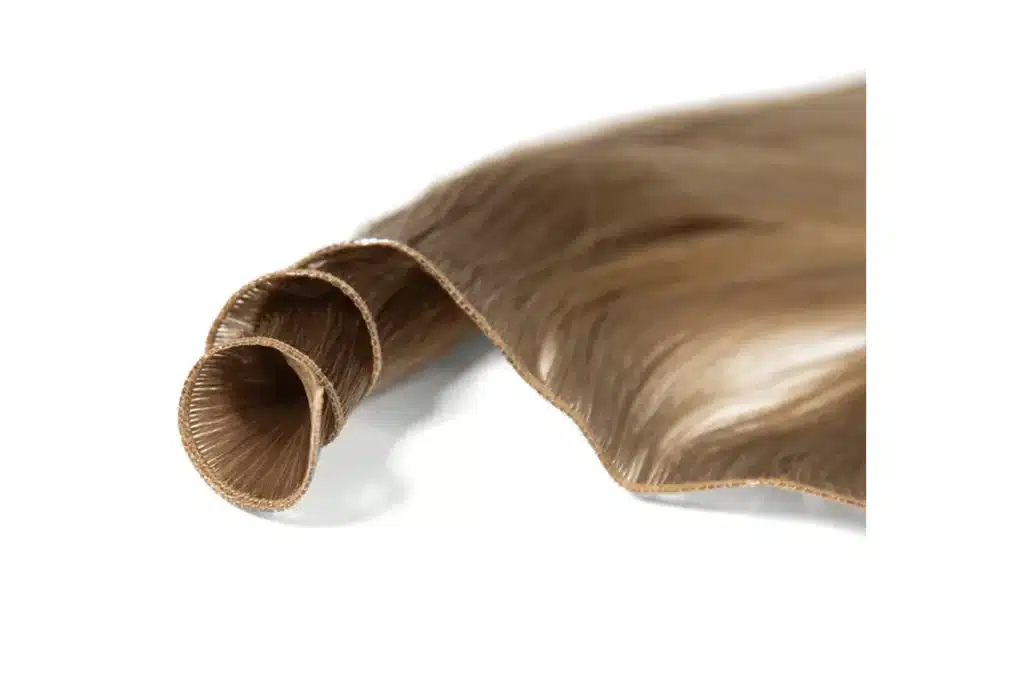
Tape-ins get blamed for hair damage all the time, but the method is usually not the real problem. In most cases, damage comes from poor installation, too much weight, late maintenance, product buildup at the base, or rough removal.
Tape-in hair extensions do not damage hair by default. Most damage comes from avoidable mistakes: too much tension, too much weight, overdue move-ups, oils at the adhesive, heat too close to the PU, and rough removal. When the install is light, clean, and maintained on time, tape-ins are usually safe.

So the real question is not just “Do tape-ins damage hair?” The better question is “What actually causes damage, and how do you stop it before it starts?”
Do Tape-In Extensions Ruin Your Hair?
This is the fear behind the search.
Tape-in extensions do not ruin your hair when they are installed and maintained correctly. Problems usually start when the section is too small, the tape is too heavy, the row stays in too long, or removal is rushed.
| Risk source | Early sign | Fix now | Rule next time |
|---|---|---|---|
| Traction | Tenderness at day 2–3 | Loosen or refit | Lighter tension, correct section |
| Slip | Tape edges feel tacky | Clarify base; replace tapes | Oil-free base care |
| Overdue move-up | Row sits far from scalp | Rebook now | 6–8 week cadence |
| Rough removal | Snapping strands | More remover + slow peel | Soak, sandwich split, support |
Why the Method Gets Blamed
Clients often say “the tape-ins damaged my hair,” but in real salon work, the method is only one part of the story. The bigger issue is usually execution.
Where Damage Usually Starts
Most problems come from a few very practical mistakes:
- too much tension at install
- too much weight on a weak section
- tape rows left in too long
- oil or conditioner at the base
- rough removal
The Method Itself Is Not Automatically Harmful
Tape-ins can actually be one of the cleaner methods when:
- the grams are light enough
- the section size is correct
- the maintenance cycle is on time
- the adhesive area stays clean
That is why I would not answer this with a simple yes or no. The method is not the enemy. Bad application logic is.
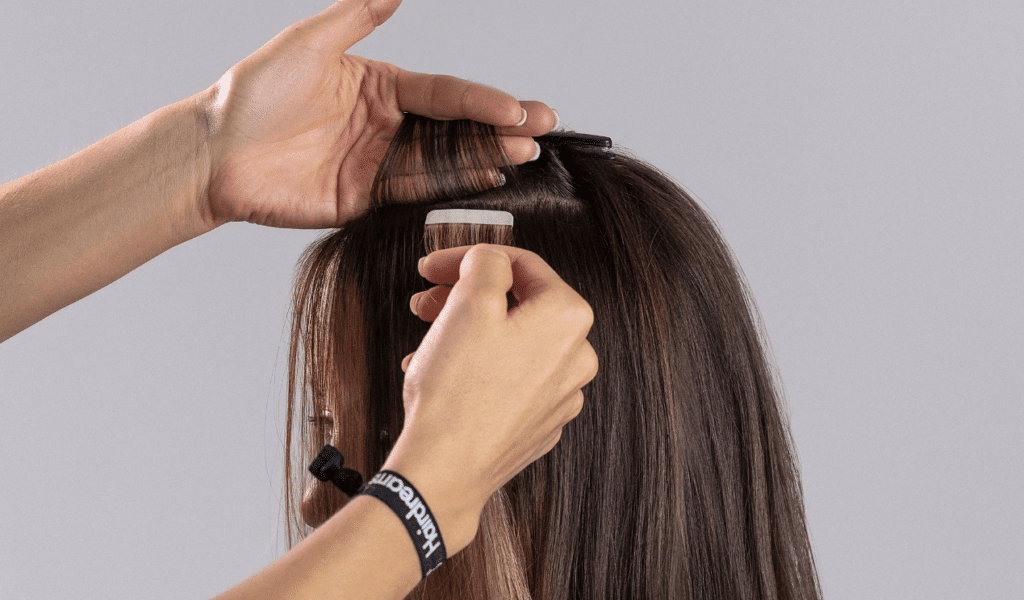
What Actually Causes Tape-In Hair Damage?
This is the real core of the topic.
Tape-in hair damage usually comes from traction, weight overload, adhesive slip, heat exposure near the PU, and rough removal.
1. Too Much Tension
If the tape is installed too tightly, the client may feel soreness early. If that pressure continues, the section stays under stress.
2. Too Much Weight
This is very common. A small natural section cannot safely support a heavy tape sandwich. The result may be:
- discomfort
- breakage
- weak regrowth areas
- poor long-term retention
3. Overdue Move-Ups
As the natural hair grows, the tape sits farther from the scalp. That increases leverage and makes brushing snag more easily.
4. Oils at the Base
Heavy oils, conditioners, masks, and some styling products can soften the adhesive area. When that happens, the tape may slide, catch, or become sticky.
5. Rough Removal
This is one of the biggest causes of avoidable breakage. If the remover has not softened the bond enough and the tape is pulled apart too early, the natural hair can snap.
| Damage Trigger | What It Causes |
|---|---|
| Tight installation | Root stress and soreness |
| Too much weight | Overload on weak sections |
| Late maintenance | Extra leverage and snagging |
| Oils at the adhesive | Slip and messy bond line |
| Rough removal | Breakage and hair loss |
Most tape-in damage is not random. It usually starts with one of these five mistakes.

Are Tape-In Extensions Safe for Fine or Thin Hair?
This is one of the most important real-life questions.
Yes, tape-ins can be safe for fine or thin hair, but only when the install is lighter, more spaced out, and kept away from weak edges or sparse hairlines.
Fine Hair Needs a Lighter Plan
Fine hair is not the same as thick hair, so the tape plan should not be the same either. This usually means:
- fewer sandwiches
- lighter grams
- more spacing
- careful placement
- no overload at the edge
Sparse Hairline Areas Need Extra Care
Temples, front edges, and naturally weak hairlines should not be packed heavily. This is where mistakes show up fastest.
Concealment Matters Too
On finer hair, invisible tape designs often work better because they hide the top more easily and reduce the chance of visible edges.
So yes, fine hair can wear tape-ins. But the plan needs to be lighter and smarter.
How to Prevent Tape-In Damage From Day One
This is where good results really begin.
The best way to prevent tape-in damage is to keep the install light, match the section size correctly, protect the adhesive area from oil and heat, and keep the move-up timing consistent.
Start With the Right Mapping
The tape width and the natural section need to match. The section should be even, flat, and clean.
Keep the Tension Light
A secure install should not feel painfully tight. If the client still has pain after the first 48 hours, the install should be checked.
Use Conservative Grams
In real work, lighter is often safer—especially on fine hair, weak edges, or sensitive scalps.
Protect the Adhesive Zone
Keep the base clear of:
- oils
- heavy conditioners
- masks
- strong buildup products
Book the Move-Up Early
Do not wait until the row has migrated too far down. Standard timing is often 6-8 weeks, but some clients need earlier maintenance.
The safest tape-in installs are usually the ones that look simple, light, and well-planned from the start.
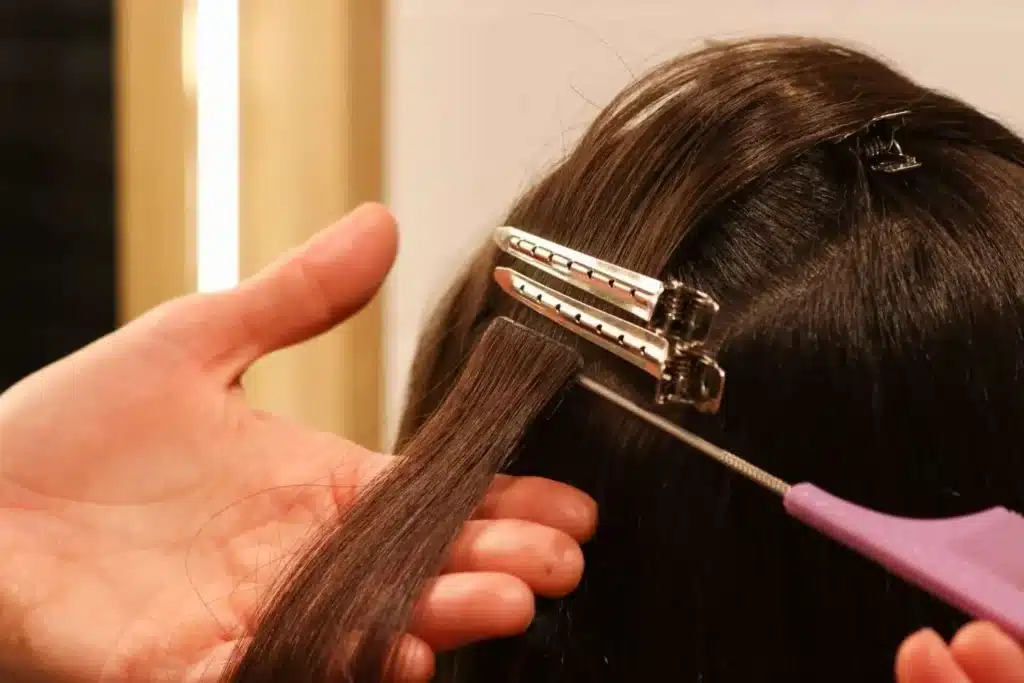
How Should Clients Care for Tape-Ins at Home?
Home care makes a big difference.
Tape-ins usually stay safer when clients brush gently, keep products off the base, dry the bond area fully, and avoid letting the rows stay damp or oily.
Brushing
Support the section while brushing. Start at the ends and move upward.
Washing
Shampoo the scalp carefully and rinse thoroughly. Conditioner should stay mainly on the mid-lengths and ends, not on the tape area.
Drying
The base should be dried fully after washing. Letting the tape area stay damp for too long often creates problems later.
Sleeping and Exercise
A loose braid or low ponytail helps reduce tangling. After heavy workouts, the base should not stay sweaty or damp for too long.
These habits sound basic, but they are often what decides whether tape-ins still look good at week six.
How Should Tape-Ins Be Removed Safely?
Removal is where many people make the biggest mistake.
Safe tape-in removal means using enough remover, waiting long enough for the bond to soften, separating the sandwich gently, and never forcing the tape apart while it is still resisting.
Use the Right Remover
The adhesive has to be softened properly before separation starts.
Be Patient
If the bond still feels tight, the answer is not to pull harder. The answer is to add more remover and wait longer.
Support the Natural Hair
The section should be supported while the tapes are separated. That reduces unnecessary stress on the root area.
Clean Before Reapplication
Before reinstalling, the base should be clarified and dried fully so the new tape can hold properly.
A lot of people think removal is simple. In reality, good removal is one of the biggest reasons tape-ins stay reusable and safe.
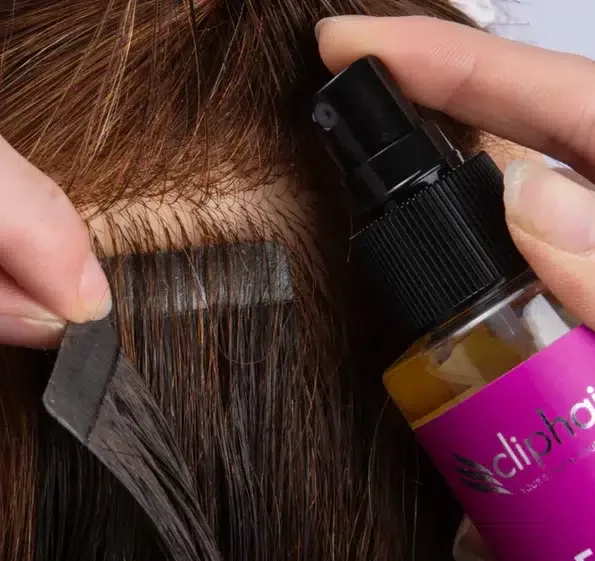
What Are the Early Warning Signs?
This is the part clients and stylists should watch closely.
The first warning signs are usually soreness after the first two days, visible migration, sticky edges, or tangling close to the root area.
Ongoing Tenderness
Mild settling pressure can be normal early on. Pain that keeps going is not.
Migration
If the tape sits too far from the scalp, the row is overdue for maintenance.
Sticky or Gummy Edges
This usually means oil, product buildup, or adhesive breakdown.
Root Tangles
Small tangles near the tape area can become much worse if ignored.
When these signs appear, early correction matters. Waiting usually makes the problem larger.
My View
From a factory and product point of view, tape-ins are not a high-damage method by default. But they are not a careless method either.
When I see tape-ins damage natural hair, the cause is usually very practical:
- the grams were too heavy
- the section was too small
- the row stayed in too long
- product reached the base
- removal was rushed
That is why I usually judge tape-ins this way: the method itself is fine, but the install plan has to match the client. If the mapping is light, the maintenance is on time, and the removal is slow and clean, tape-ins are usually a safe and very workable method.
FAQ
Do tape-ins ruin your hair?
No, not by default. Most damage comes from bad installation, too much weight, late move-ups, or rough removal.
Are tape-ins safe for fine hair?
Yes, if the grams are light, the placement is careful, and the fragile edges are protected.
How often should tape-ins be moved up?
Usually every 6-8 weeks, though some clients need earlier maintenance.
Why do tape-ins slip?
Most slipping happens because oil, conditioner, or product buildup reaches the adhesive area.
Can tape-ins cause permanent hair loss?
Permanent loss is uncommon. Most risk comes from long-term traction, repeated overload, or ignored warning signs.
How should removal be done?
With enough remover, enough waiting time, and a slow, supported separation.
Are tape-ins reusable?
Yes. Good-quality hair can usually be reused if the removal is clean and the tapes are replaced properly.
Conclusion
Tape-in hair extensions do not damage hair by default. Most problems come from avoidable mistakes like too much tension, too much weight, late maintenance, product at the base, and rough removal. When those parts are handled correctly, tape-ins are usually safe.