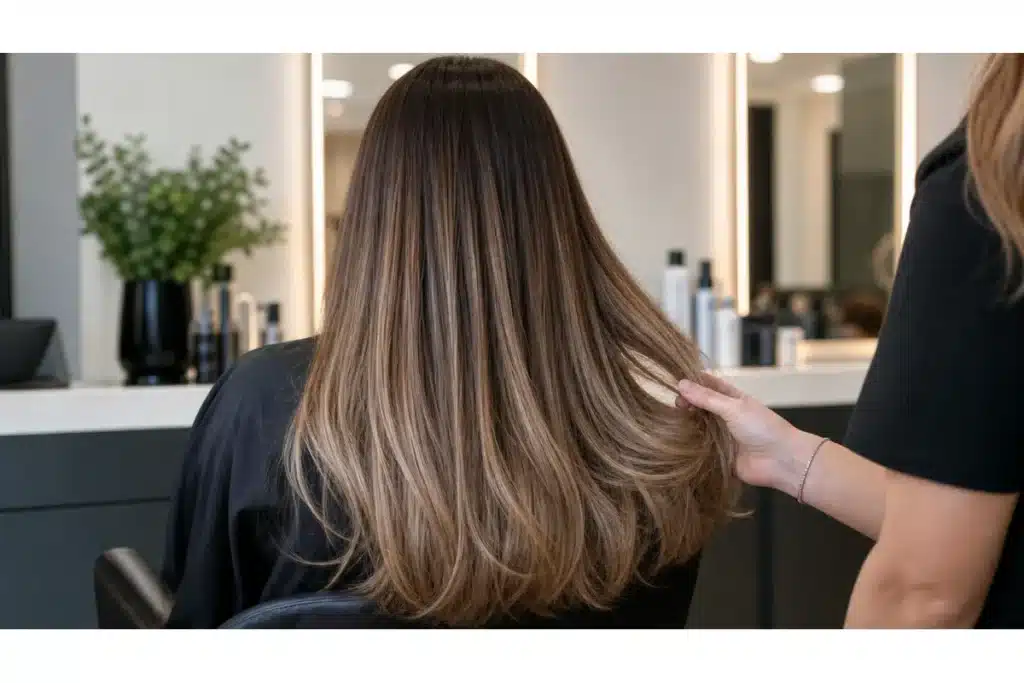
Thin hair can make extensions harder to hide. The wrong method may show tracks, feel bulky, or put too much pressure on fragile natural hair.
The most invisible hair extensions for thin hair are invisible tape-ins, genius wefts, hand-tied wefts, and V-light extensions. These methods are flatter, lighter, and easier to blend than bulky extension systems when the weight and placement are planned correctly.

For thin hair, invisibility is not only about appearance. It is also about comfort, weight control, scalp safety, and how naturally the hair moves after installation.
Why Does Thin Hair Need Invisible Hair Extensions?
Thin hair gives less coverage over extension bonds, seams, or rows. This makes method choice more important than it is for thick hair.
Thin hair needs invisible hair extensions because the base must stay flat, light, and easy to hide. A bulky weft, thick bond, or heavy section can show through the natural hair and may also create tension.
Common Problems With Thin Hair
| Problem | What Happens | Better Solution |
|---|---|---|
| Visible seams | Tracks show through the top layer | Use flat or transparent bases |
| Too much weight | Natural hair feels pulled | Use lighter grams |
| Bulky placement | Extensions do not move naturally | Use smaller or thinner sections |
| Weak blending | Ends look disconnected | Match density and length carefully |
| Scalp sensitivity | Client feels pressure or irritation | Avoid heavy rows and tight placement |
A salon client once asked why her fine-hair clients complained more often than thick-hair clients, even when the same extension method was used. The answer was not always the product itself. Thin hair simply gives less room for hiding mistakes.
For this type of client, the stylist needs to think about three things first: how flat the attachment is, how much weight the natural hair can support, and whether the client can maintain the method on time.

What Are the Most Invisible Hair Extensions for Thin Hair?
There is no single best method for every thin-hair client. The right choice depends on natural density, scalp sensitivity, styling habits, and how much coverage the client has around the crown, sides, and hairline.
The most invisible hair extensions for thin hair are invisible tape-ins, genius wefts, hand-tied wefts, and V-light extensions. Each method can work well, but each one solves a different problem.
Invisible Tape-In Extensions
What it is:
Invisible tape-in extensions use a flat PU tape base. Hair is injected or arranged into the tape area to create a softer, more natural root effect.

Why it works for thin hair:
The base lies flat against the head and does not create much bulk. This makes it easier to hide under fine hair. It is also faster to install than row-based methods.
Best for:
| Best For | Why |
|---|---|
| Fine to medium-thin hair | The tape base is flat and easy to hide |
| Clients who want simple maintenance | Tape-ins are easy to move up and reuse |
| Clients who want a natural scalp effect | The injected tape can mimic hair growth |
Watch out:
Tape placement must be clean. Heavy oils, conditioner, or masks near the tape can weaken the adhesive. If the tape quality is poor, the client may experience slipping even when the install is correct.
Genius Weft Extensions
What it is:
Genius wefts are thin, flexible, cuttable wefts. They are designed to give a flatter row than traditional machine wefts.

Why it works for thin hair:
The seam is thin, and stylists can cut the weft to fit the client’s head shape. This helps reduce unnecessary bulk and makes the row easier to customize.
Best for:
| Best For | Why |
|---|---|
| Fine to medium hair with enough coverage | The thin seam hides better than bulky wefts |
| Clients needing custom row width | The weft can be cut to fit placement |
| Salons wanting reusable row methods | Genius wefts can be reused with proper care |
Watch out:
Genius wefts still need enough natural hair to cover the row. If the client has very sparse hair near the crown or sides, even a thin weft may show. Weight control is also important.
Hand-Tied Weft Extensions
What it is:
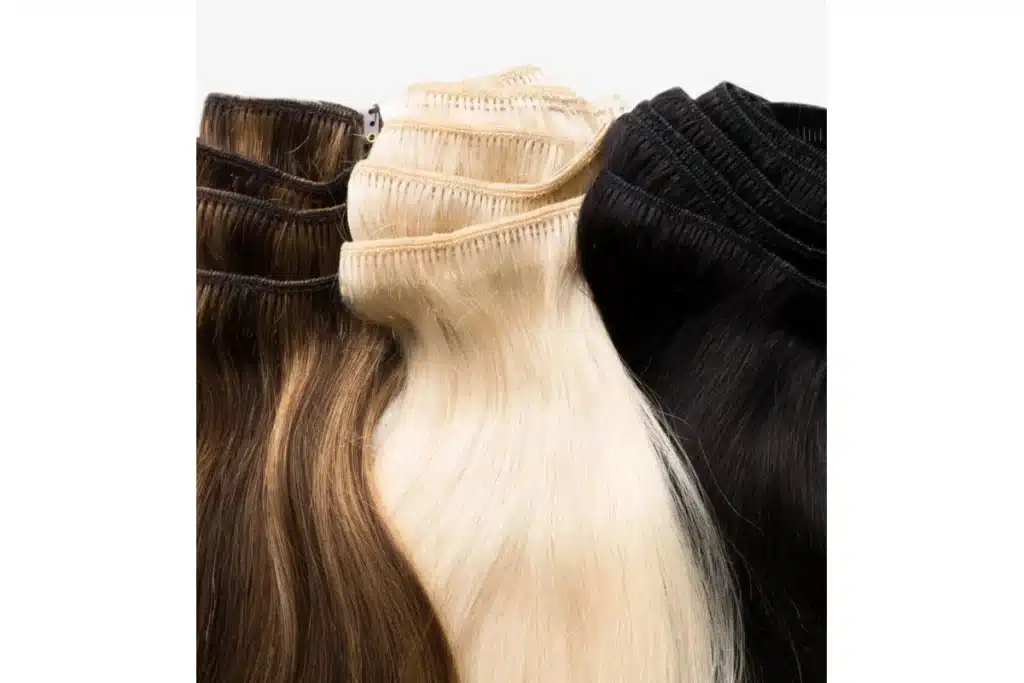
Hand-tied wefts are made by tying and stitching hair into a very thin seam. They are soft, flexible, and lightweight.

Why it works for thin hair:
The seam lies flat and can blend well under fine to medium hair. It can feel comfortable when the row is planned with the right weight.
Best for:
| Best For | Why |
|---|---|
| Fine to medium hair | The seam is soft and flat |
| Clients who want invisible rows | The weft can sit close to the head |
| Clients who prefer no adhesive | No tape or glue is needed |
Watch out:
Hand-tied wefts should not be cut through the seam. Some hand-tied wefts may also have short return hair near the seam, which can feel prickly for sensitive scalps. Buyers should check seam finishing and return hair control when comparing samples.
V-Light Extensions
What it is:
V-light extensions use small adhesive attachment points cured with a light tool. The bonds are tiny and can be placed in detailed areas.
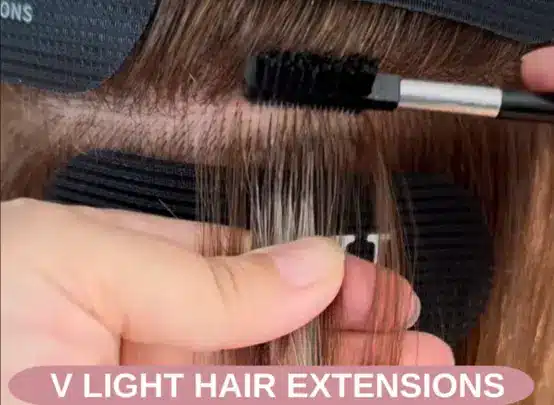
Why it works for thin hair:
The attachment points are small and discreet. This makes V-light useful for sparse sides, thin hairlines, or areas where tape and wefts may be too large.
Best for:
| Best For | Why |
|---|---|
| Very sparse areas | Small bonds are easier to hide |
| Thin sides or temples | Useful for detailed filling |
| Clients needing targeted coverage | Good for small gaps rather than heavy volume |
Watch out:
V-light is not always the best full-head solution. It can take more time and depends heavily on correct technique, adhesive quality, and careful removal.
Quick Comparison
| Method | Best For | Main Advantage | Main Caution |
|---|---|---|---|
| Invisible Tape-In | Fine to medium-thin hair | Flat and natural scalp effect | Keep oils away from tape |
| Genius Weft | Thin hair with enough coverage | Thin, cuttable, reusable | Still needs natural hair coverage |
| Hand-Tied Weft | Fine to medium hair | Soft, flat, lightweight | Cannot cut seam; may have return hair |
| V-Light | Very sparse areas | Tiny, discreet bonds | More technique-sensitive |
How Should Thin Hair Clients Choose the Right Method?
The best invisible method is not always the newest method. It should match the client’s real hair condition.
Thin hair clients should choose extensions based on natural coverage, scalp sensitivity, desired volume, styling habits, and maintenance ability. A flat method can still fail if the hair is too heavy or the placement is wrong.
Simple Selection Guide
| Client Situation | Better Option |
|---|---|
| Fine hair with enough coverage | Invisible tape-ins |
| Thin hair needing custom row width | Genius weft |
| Fine-to-medium hair wanting soft rows | Hand-tied weft |
| Very sparse sides or small gaps | V-light extensions |
| Client wants lower maintenance | Invisible tape-ins |
| Client wants reusable row method | Genius or hand-tied weft |
One wholesale buyer once asked which invisible method she should add first for her salon clients. My suggestion was not to choose only by trend. I suggested starting with the method that fits most of her clients’ real density.
If most clients have fine but not sparse hair, invisible tape-ins or genius wefts may be easier to sell and maintain. If many clients have very thin sides, V-light may be worth testing as an add-on service instead of a full-head solution.
How Should Thin Hair Clients Care for Invisible Extensions?
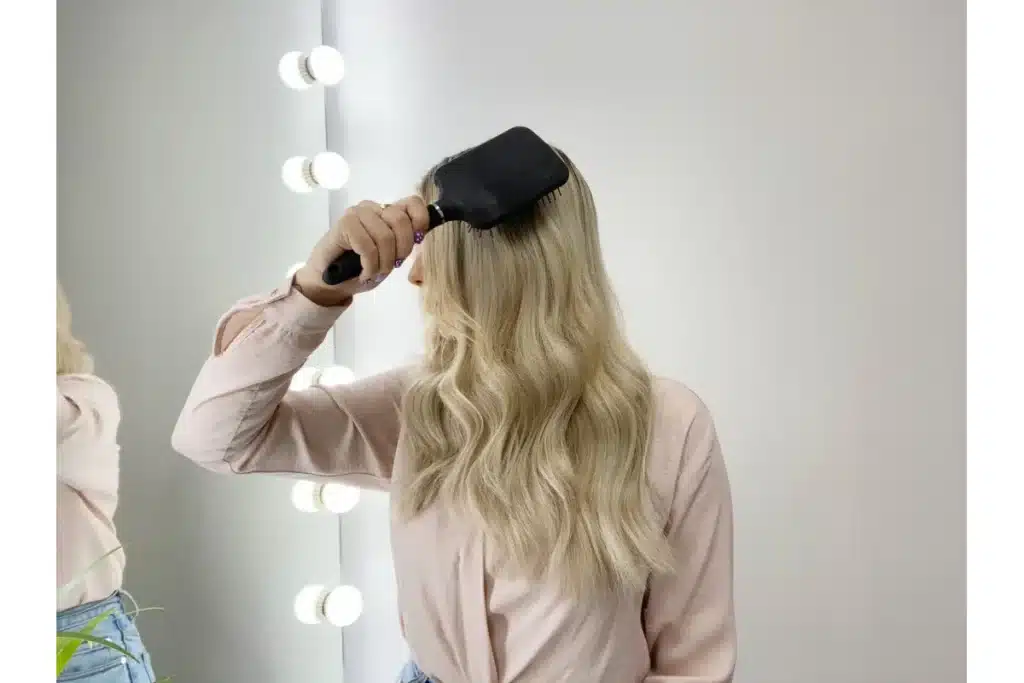
Even the most invisible method can fail if the client uses rough aftercare. Thin hair needs gentle handling because the natural hair supports less weight.
Thin hair clients should brush gently, avoid heavy oils near the attachment area, dry the roots fully, sleep with hair secured, and return for maintenance on time.
Basic Care Guide
| Care Area | Recommendation |
|---|---|
| Brushing | Brush from ends upward and support the base |
| Washing | Use gentle shampoo and rinse fully |
| Conditioner | Apply from mid-length to ends only |
| Drying | Dry roots and attachment areas fully |
| Styling | Avoid high-tension ponytails every day |
| Maintenance | Return every 6–8 weeks or as advised |
The American Academy of Dermatology explains that repeated pulling from tight hairstyles can contribute to traction-related hair loss [1]. This is why weight and tension matter so much for thin-hair extension clients.
A lightweight install is not only more comfortable. It is also easier to maintain. If the method is too heavy, the client may love the first photo but struggle with daily wear.
My View
From a factory and export point of view, I do not think “invisible” should only mean a thin seam or clear tape.
Real invisibility depends on the whole result: attachment thickness, hair direction, color match, weight, after-wash softness, and how the hair moves after styling. If the extension base is flat but the hair becomes dry after washing, the result will still look artificial. If the color is slightly wrong, even the best attachment method can show.
Many salon and brand buyers tell us that thin-hair clients are the most sensitive group. They notice weight faster. They notice bulk faster. They also complain faster when the hair feels dry, stiff, or uneven at the ends.
This is why I pay close attention to sample-to-bulk consistency, softness after washing, color accuracy, tape hold, weft seam finishing, and return hair control. For thin-hair clients, small quality differences are easier to see.
I also do not think every thin-hair client needs the newest method. Some clients need invisible tape-ins. Some need a thin weft. Some only need small V-light coverage around weak areas. A good recommendation should start from the client’s hair condition, not from the method name.
For salon owners, hair brands, or wholesale buyers comparing invisible extension methods, samples are still the safest starting point. Check the attachment base, hair softness after washing, color blend, and whether the bulk order can match the sample before making a larger decision.
You can review these related product pages for structure comparison:
Invisible Tape-In Hair Extensions
Hand-Tied Weft Hair Extensions
FAQs
What hair extensions are most invisible for thin hair?
Invisible tape-ins, genius wefts, hand-tied wefts, and V-light extensions are among the most invisible options for thin hair. The best choice depends on coverage, density, and styling needs.
Are tape-in extensions good for thin hair?
Yes, invisible tape-ins can work well for thin hair because they are flat and lightweight. They should be installed with proper spacing and controlled weight.
Are weft extensions too heavy for thin hair?
Some wefts can be too heavy, but thin wefts such as genius or hand-tied wefts may work when the client has enough natural hair coverage and the grams are controlled.
What is the best extension method for very sparse hair?
For very sparse areas, V-light extensions may be useful because the attachment points are small. However, the method should be applied carefully and maintained properly.
Conclusion
The most invisible hair extensions for thin hair are not chosen by trend. They are chosen by coverage, attachment size, weight, hair quality, and the client’s ability to maintain the method.
References
[1] American Academy of Dermatology Association: Hairstyles That Pull Can Lead to Hair Loss ↩

Hibiscus Hair Manufacturer has been dedicated to producing high-quality hair extensions for 25 years and is a recognized leader in the industry. If you are interested in finding a reliable hair extensions supplier and wholesale for your brand, please visit our website for more information: