Choosing between tape in and clip in extensions can create a difficult salon conversation when a client wants daily fullness but has a limited care routine. The wrong method can lead to discomfort, visible attachments, or a product that stays in the drawer.
Tape in extensions are often better for clients who want a low-profile result through regular wear, while clip in extensions suit clients who need flexible, temporary volume. The better option depends on natural density, lifestyle, installation skill, and whether the client can follow the required care and removal routine.
For salon owners and wholesale buyers, this choice should not be decided only by the word permanent or temporary. Product weight, hair coverage, service time, reuse expectations, and client habits all affect the result and the number of follow-up questions a salon receives.
Which method fits an everyday-wear goal?
Tape in extensions can fit everyday wear when the client wants a continuous, hidden result and can maintain the bonds carefully. Clip ins can fit everyday wear when the client prefers to remove the hair before sleep, exercise, or washing.
Tape ins remain in the hair between salon appointments. They can look more continuous because the client does not attach and remove them each day. Still, the client needs clean products near the roots and a planned move-up or reapplication visit. Clip ins put more control in the client’s hands. They can be useful for work events, weekends, or occasional volume, but they need careful placement each time.
| Decision point | Tape in extensions | Clip in extensions |
|---|---|---|
| Wear pattern | Continuous wear between salon visits | Removed after use in most cases |
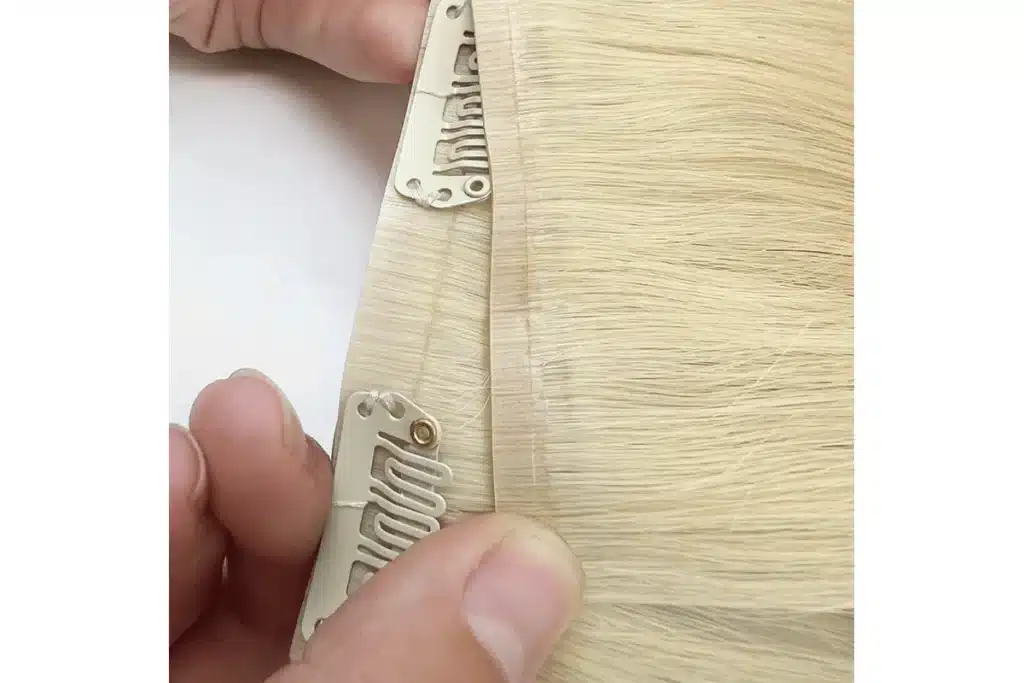
| Attachment profile | Flat adhesive tabs when placed correctly | Small clips that need enough natural hair for coverage |
| Daily routine | Requires root-product and washing discipline | Requires removal, storage, and reattachment practice |
| Best buyer check | Test tab size, tape hold, and client coverage | Test clip pressure, weft width, and blend at the crown |
For a salon menu, the key difference is not that one method is always easier. Tape ins can reduce daily styling steps for the client, but the salon carries more responsibility for consultation and reapplication. Clip ins can reduce salon maintenance work, but a poor clip layout may create a visible or uncomfortable result at home.
When can tape in extensions be the better choice?
Tape in extensions can be the better choice when a client wants consistent daily fullness, has enough hair to cover the tabs, and will follow the salon’s care instructions.
The low profile of a tape tab can work well around a natural parting when the stylist controls section size and leaves enough coverage at the perimeter. Fine hair does not automatically rule out tape ins. The client may need fewer tabs, lighter total grams, and a careful placement map. A related tape in extensions for fine hair guide explains why coverage and tab visibility should be checked before the service.
In after-sales conversations, we often see clients call a visible tab a product issue when the original placement was too close to the perimeter. Before changing the hair or tape, the salon should inspect the client’s normal parting, up-style habits, and the natural hair between rows. This can show whether a small correction is more suitable than a full replacement.
Tape in wear also depends on product habits. Root oils, heavy conditioners, dry shampoo buildup, and early moisture exposure can affect the attachment. Salons can set expectations with a clear tape in maintenance timeline rather than promising the same wear result for every client.

When do clip in extensions make more sense?
Clip in extensions often make more sense when a client wants occasional volume, does not want a salon attachment service, or prefers to remove the hair before sleep and activity.
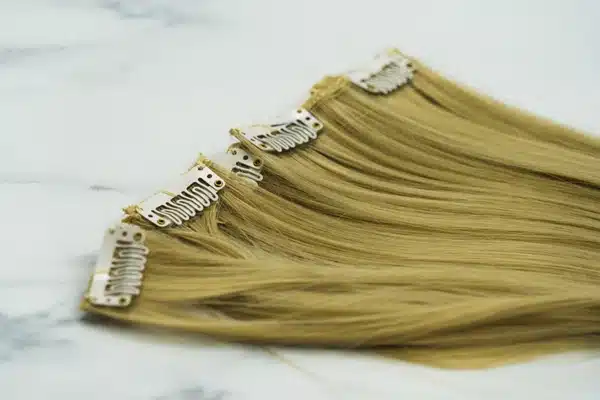
Clip ins can be a practical option for a client who changes styles often. The set should be chosen by weft width, clip count, total grams, and the client’s density. A client with fine hair may need a lighter set with fewer, well-spaced clips. A client with thick hair may need more width or more pieces to avoid a thin line between natural hair and extension ends.
The first home application matters. A client should not place every weft at the same height simply to use all pieces. The crown, side profile, and short layers need a layout that keeps the clips hidden. Salons can use this clip in set design guide to explain how clip count and weft width affect blending.
Clip pressure is also a real buyer check. A set that feels secure on a product display may feel heavy after several hours on fine hair. For sample testing, we recommend asking the wearer to move the head, brush lightly, and sit through a normal work period. This gives more useful feedback than a two-minute mirror check.
What daily-care risks should salons explain?
Both methods need clear daily-care guidance, but the risks are different: tape ins are affected by bond care, while clip ins are affected by handling, storage, and repeated clip placement.
With tape ins, the client should know where oils and conditioners can affect the bond. The salon should also explain brushing near the tabs and the need for professional removal. With clip ins, the client should remove the set carefully, detangle it before storage, and avoid sleeping in the clips. Repeatedly placing a clip in the same small section may create unnecessary stress.
For wholesale buyers, the aftercare message should match the product sold. A tape-in order needs compatible replacement tape and a simple care card. A clip-in collection needs a clear set map, storage guidance, and a realistic statement about who may need a lighter or fuller configuration. This helps a brand reduce returns that are caused by method mismatch rather than hair quality.
How should a salon choose stock for both methods?
A salon should choose tape in and clip in stock by client profile, not only by trend or unit price.
Tape in inventory should cover the tab size, length, color, and grams that fit the salon’s usual continuous-wear services. Clip-in inventory should cover common color blends and set weights that make sense for occasional-volume clients. Buyers should also consider whether the product will be sold as a service add-on, a retail item, or a private-label collection.
From our factory perspective, a small controlled sample order is usually safer than choosing one method for every client. We suggest testing the same color and length in the expected service conditions. Check whether the tape tab stays hidden after a normal day, and check whether the clip-in set stays comfortable after repeated placement. The product name alone does not show the full result.
My View
From our factory perspective, tape in and clip in extensions solve different client problems. Tape ins can support a more continuous service when the client has the right coverage and accepts a maintenance routine. Clip ins can give more flexibility when the client wants to remove the hair and control wear time. For salon and wholesale buyers, the safer choice is often to keep both options but define the suitable client for each one. We usually suggest recording density, intended wear pattern, desired volume, color target, and aftercare ability during consultation. This makes product selection more consistent and helps the salon explain why the same extension set or tape pack will not fit every client.
Frequently Asked Questions
Are tape in extensions more comfortable than clip ins?
They can be more comfortable during continuous wear when tabs are placed correctly and the client has enough coverage. Clip ins can feel lighter for a short event, but clip pressure may become noticeable after extended wear or on fine hair.
Can a client switch from clip ins to tape ins?
Yes, but the salon should complete a new consultation. The client’s density, scalp condition, routine, and willingness to follow attachment care should be checked before a tape-in service.
Which method is easier for a salon to sell?
It depends on the salon model. Clip ins can suit retail and occasional styling needs. Tape ins can suit a service-led menu with reapplication appointments. Both need clear buyer education.
Conclusion
Tape in extensions can suit a client who wants a consistent, low-profile result and can follow care guidance. Clip in extensions can suit a client who wants removable volume and more control over daily wear. Before ordering or installing either method, match the attachment system, total hair weight, and care plan to the client’s real routine.