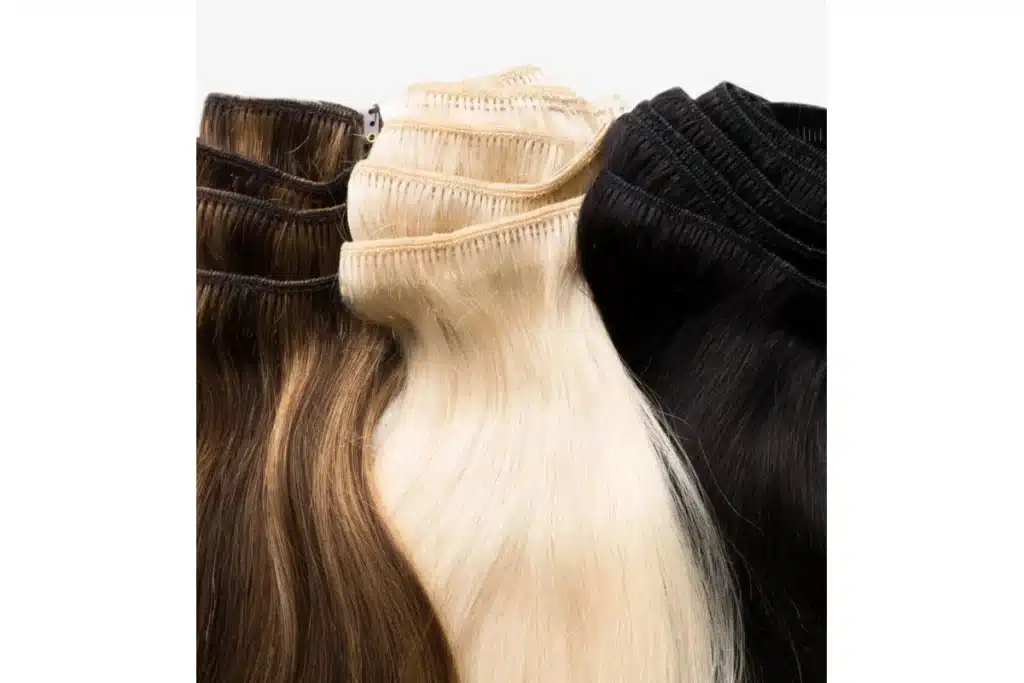
Retail buyers can choose a clip-in set that looks full in packaging but feels bulky, visible, or hard to blend after the first try-on.
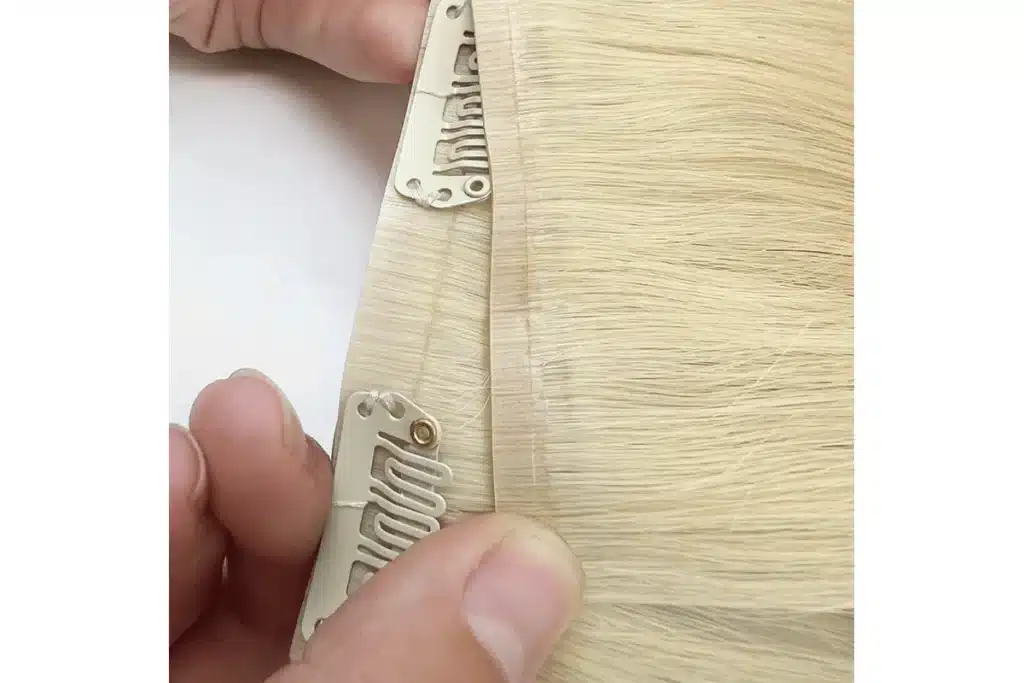
Seamless clip in hair extensions often use a thinner, flexible base that can sit flatter against the head, while regular clip ins usually use a fabric weft base. The right set depends on the client’s hair density, desired volume, clip pressure, and how much base coverage the natural hair can provide.
For salon retailers and private-label buyers, base construction affects more than appearance. It can change how a set is packaged, how clips sit, which customers can blend it comfortably, and what questions the sales team must answer before purchase.
What is the base difference between seamless and regular clip ins?
Seamless clip ins use a thin base designed for a flatter profile, while regular clip ins use a fabric weft that may provide a different feel and hair distribution.
The hair quality still matters in both styles. A flat base cannot correct an unsuitable shade, overly heavy set, or poor clip placement. However, the base can change how easy it is for a customer to hide the weft under their own hair.
| Retail check | Seamless clip in set | Regular clip in set |
|---|---|---|
| Base construction | Thin, flexible base designed to lie flatter | Fabric weft base with a more traditional structure |
| Potential fit | Clients who want lower-profile wefts under suitable coverage | Clients who want a familiar construction and planned volume sections |
| Key sample check | Base edge, clip pressure, and return hair coverage | Weft thickness, clip spacing, and hair distribution |
| Return-risk trigger | Base may still show if the client has very limited coverage | Set can feel bulky when too much weight is placed in one area |
In sales conversations, we often see that buyers focus on the number of clips first. Clip count matters, but the width of each weft and the base profile can change how that set actually feels on the head.
Compare base profile, clip spacing, weft width, set weight, and shade range before you build a retail clip-in collection.
Request a clip-in set specification check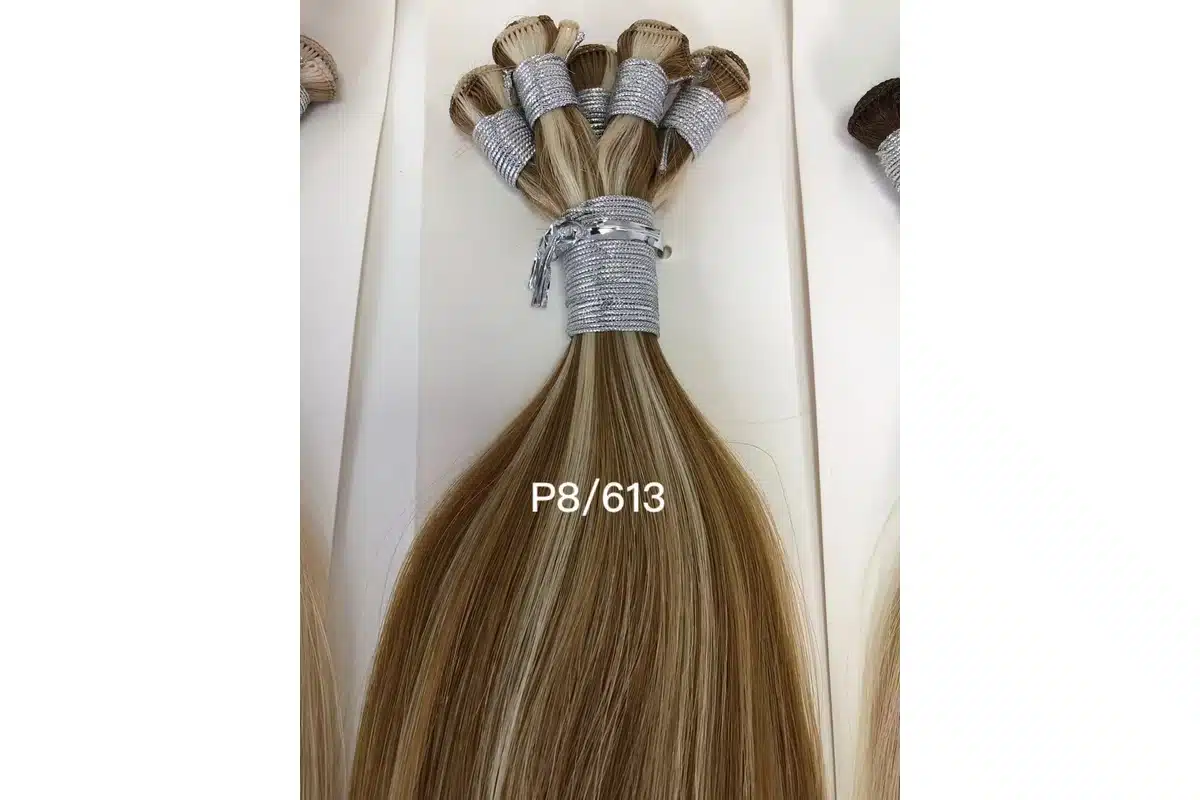
When can seamless clip ins be a better customer fit?
Seamless clip ins can be a better fit when a customer wants a flatter base and has enough natural hair to cover each weft cleanly.
Customers who notice weft edges easily
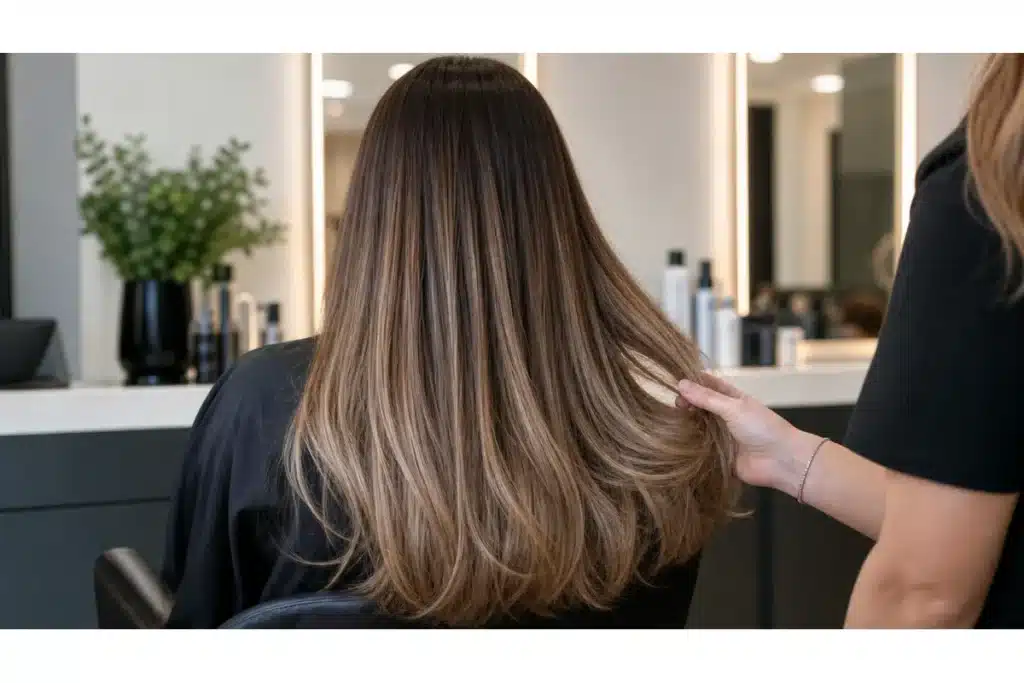
A thin base can help reduce the profile of a weft under a smooth top layer. This may be useful for customers who wear their hair straight or only lightly waved. The result still depends on where the weft sits and whether the natural hair covers the edge.
Customers who need controlled volume
Seamless sets are not always the right choice for maximum volume. A buyer should check how much hair is attached to each base and whether the full set weight fits the target customer. Fine hair may need fewer pieces, even when the base itself is flat.
For thin-hair retail planning, the clip in extensions for thin hair guide explains why weight, width, and clip pressure should be considered together.
When can regular clip ins be the more practical range?
Regular clip ins can be practical when buyers want a familiar set structure, clear weft sections, and product options for customers who need more volume.
Regular clip-in sets can give a straightforward retail offer. The customer can see the larger and smaller wefts, then follow a placement guide. The important point is set design. A heavy set with narrow placement options may not fit customers with fine hair, while a lighter set may not create enough volume for thick hair.
From the factory side, we usually recommend checking the full set on a scale and reviewing how the hair is distributed across each weft. This helps buyers avoid a set that looks dense at the top but feels thin at the ends, or a set that places too much pressure in one section.
The clip-in set design guide can help private-label buyers review clip count and weft width before they approve a product specification.
What should private-label buyers check before a bulk order?
Private-label buyers should check the base, clips, hair weight, shade plan, packaging, and customer instructions before they approve a bulk clip-in order.
Ask for a sample in the length and color family that the collection will sell most often. Lighter shades and longer lengths can show differences in end fullness and color processing more clearly. Check that clips open and close smoothly, then test whether the base stays flat after handling. Buyers should also confirm whether the product is designed for a full-head set, a volume set, or a single-piece add-on.
For color planning, the clip-in color matching guide can support clearer product descriptions and fewer shade-related returns.
How should retailers reduce avoidable returns?
Retailers can reduce avoidable returns by showing who the set fits, how much volume it provides, and where each weft should sit before the customer orders.
Do not describe a seamless base as invisible for every hair type. Explain the weight, number of pieces, length, and blend requirements. Add simple placement photos or a clear insert card. A customer with very short or sparse hair may need a different product or a salon consultation rather than a standard full set.
This guidance helps the sales team set honest expectations and gives customers a better reason to choose the right set the first time.
My View
From our factory perspective, seamless and regular clip ins should be compared as set designs, not only as two base names. We usually suggest that retail buyers test the base profile, clip pressure, hair distribution, and end fullness on the same sample. A seamless base can be useful for a flatter look when the customer has enough coverage. A regular base can be a practical choice when the collection needs clear sections and stronger volume options. Neither style should be presented as a solution for every customer. Before a bulk order, buyers should decide who the set is for, how the customer will install it, and what level of guidance the packaging will provide. This makes the range easier to sell and easier to support after purchase.
Frequently Asked Questions
Are seamless clip in extensions better for thin hair?
They can be helpful because the base may sit flatter, but thin-hair customers still need the right set weight, weft width, and placement plan.
Do regular clip ins cause more damage?
Not automatically. Clip pressure, installed weight, removal habits, and the customer’s natural hair condition matter more than the base name alone.
Can a retailer sell both seamless and regular clip-ins?
Yes. Many collections use both when each set has a clear role, such as a lower-profile option and a fuller volume-focused option.
Conclusion
Seamless clip in hair extensions and regular clip ins can both work in a retail collection. Compare base profile, client coverage, set weight, and placement needs before choosing stock. A clear product fit can reduce returns and help customers achieve a more natural blend.