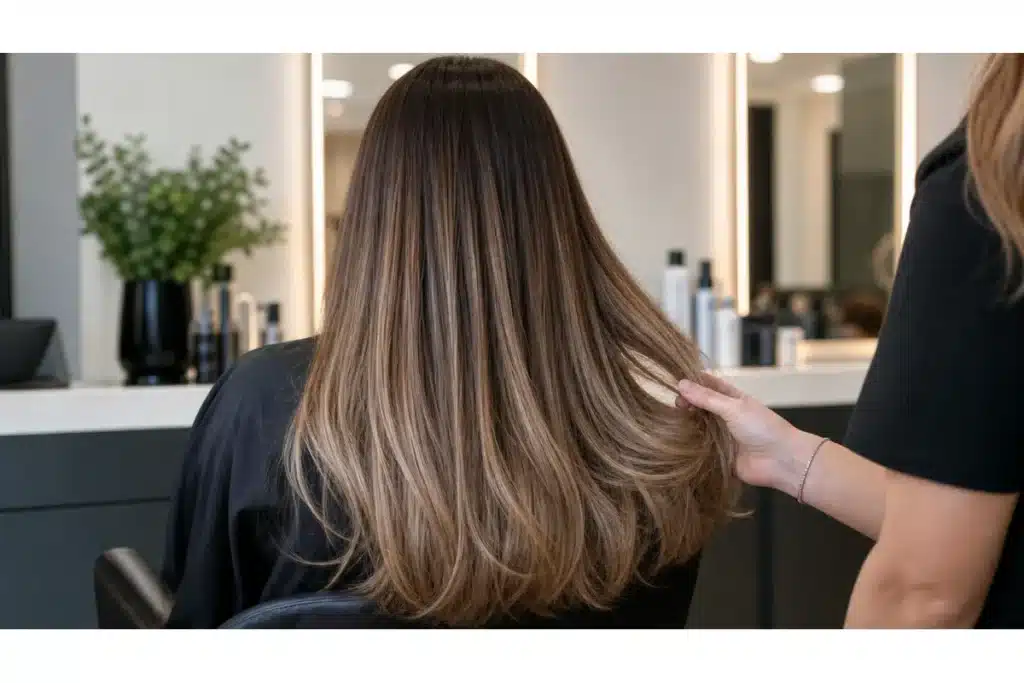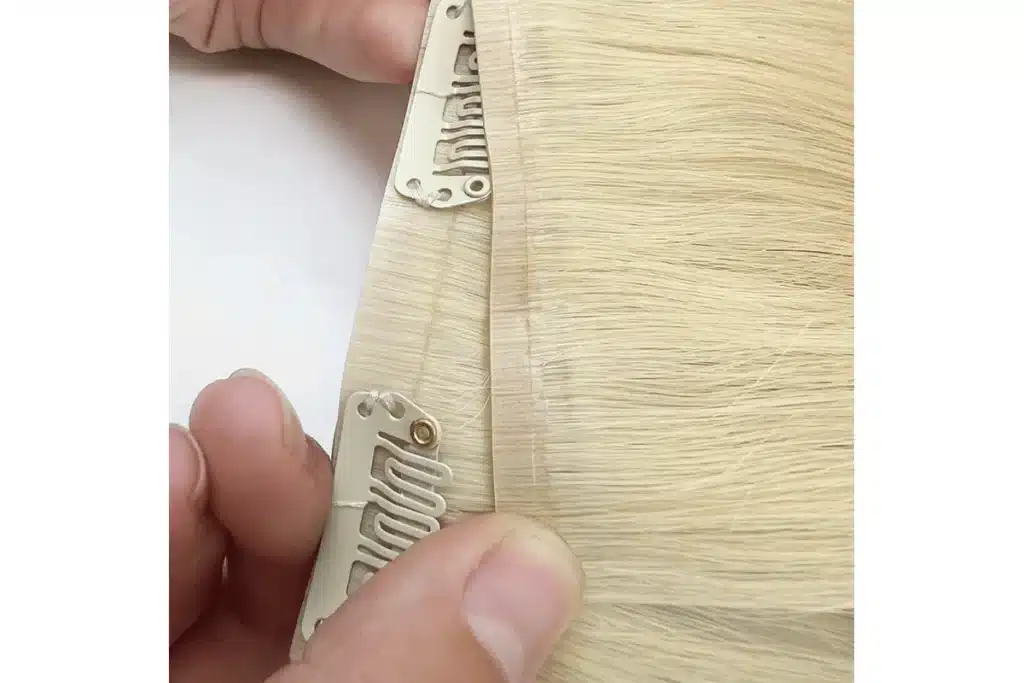
An “invisible” weft can still show through the hair, feel bulky at the seam, or place too much weight on one row. From a manufacturing point of view, we see this happen when buyers focus on the word invisible but overlook the actual construction of the weft and how it will be installed.
When we evaluate an invisible weft, we look at seam height, thickness, stiffness, grams per piece, width, cutting limits, and the density of the client’s natural hair. A lower-profile seam can make concealment easier, but it does not replace good installation planning. The stylist still needs to control row weight, coverage, placement, and maintenance.
For us, “invisible” is a visual result, not a single manufacturing standard. Two products can both be sold as invisible wefts and still behave very differently in the salon. That is why we prefer buyers to compare measured specifications and run a real test installation before deciding which construction fits their clients.
What Makes a Weft Look Less Visible?
A weft looks less visible when the seam is low profile, the row sits flat, the color blends, and enough natural hair covers the attachment.
Seam thickness matters, but stiffness and return hair also change how the top lies. A soft edge may follow the head more easily, while a rigid edge can lift in curved sections. Buyers should inspect the full width rather than one cropped close-up.
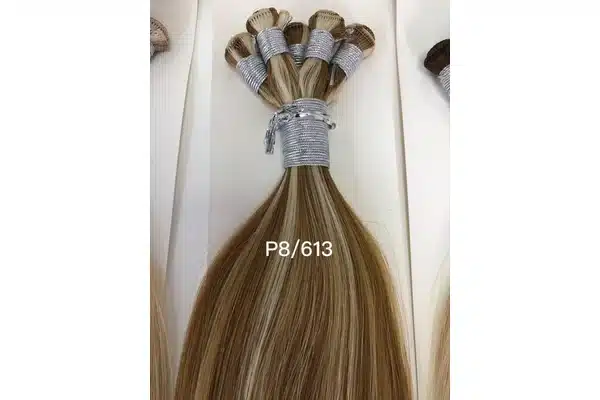
The hair weft collection gives salons a base for comparing available structures. Invisible weft claims should be measured against machine, hand tied, genius, and hybrid samples under the same lighting and row plan.
| Visibility factor | Buyer check | Client consequence |
|---|---|---|
| Seam profile | Measure height, thickness, and stiffness | Affects how flat the row sits |
| Coverage | Check natural density above the row | Controls whether the seam can stay hidden |
| Color | Match seam area and hair to the client’s mids | Reduces contrast near the attachment |
| Row weight | Calculate grams across all stacked layers | Affects comfort and maintenance |
Share the client density, row method, target grams, widths, and color before approving a sample.
Request an invisible weft reviewWhich Clients May Fit an Invisible Weft?
Clients need enough healthy hair at the planned row to support the weight and cover the attachment through normal movement.
Fine hair is not one condition. A client can have fine strands but good density, or coarse strands with sparse density. The stylist should assess the actual row, crown movement, hairline, scalp sensitivity, and service goal.
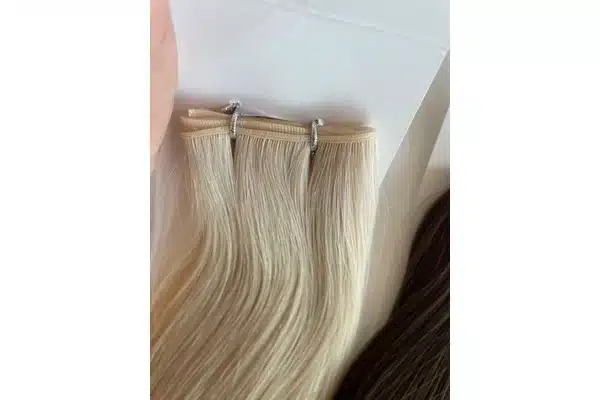
The weft extensions for fine hair guide explains why a thinner seam cannot correct an overloaded row. Fewer grams or a different method may be the better choice for some clients.
How Should Salons Plan Row Weight and Placement?
Salons should calculate the total grams in every layer, place the row on stable hair, and leave enough coverage above the attachment.
The American Academy of Dermatology notes that hairstyles that pull can contribute to hair loss. [1] A less visible seam does not remove this risk. Bead spacing, stitch tension, stacked layers, grow-out, and maintenance timing all matter.
The stylist should check the client while sitting, standing, and moving the crown. A row that disappears in one posed photo may show when hair is lifted or worn in a ponytail.
What Should Buyers Test Before a Bulk Order?
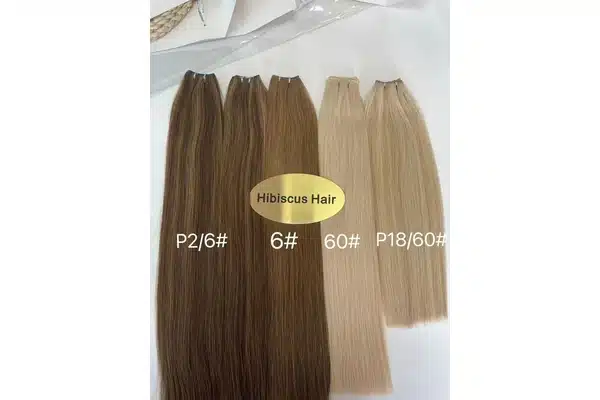
Buyers should test the full seam, cutability, grams, flexibility, return hair, shedding, washing, end density, color, and stacked-row feel.
In sample work, we often see buyers compare seam thickness with one strip lying flat on a table. We ask them to build the number of layers used in the real service. This can reveal a row that becomes firmer or thicker after stacking.
The wholesale weft sample guide adds repeat-order and wash checks. A clinical review identifies prolonged or repetitive tension as the cause of traction alopecia. [2] The test plan should therefore include client comfort and realistic row weight.
Is Invisible Weft the Same as Genius or Micro Weft?
Not always. These names can describe overlapping goals, but suppliers may use different seam structures and cutting rules.
Buyers should compare measured profiles, not marketing terms. The micro weft guide shows another low-profile category. A physical sample is needed when two names appear similar.
My View
From our factory perspective, invisible weft should describe the result the salon wants, while the specification explains how to reach it. We usually ask for the client’s density, planned row, total grams, number of layers, and required cutting widths. A fine seam can help concealment, but coverage and installation still decide whether the row stays discreet. Buyers should test the complete stack and move the hair in several directions. They should also record seam measurements and retain an approved sample for repeat orders. The safer product is the one that stays flat under the salon’s real service conditions, not the one with the strongest invisible claim.
Frequently Asked Questions
Is invisible weft suitable for every fine-hair client?
No. Some clients lack enough density or strength at the planned row. The stylist must assess the individual client.
Can invisible weft be cut?
It depends on construction. Confirm the supplier’s instruction and test the cut edge before client use.
Does a thinner seam mean less weight?
Not necessarily. Seam profile and total hair grams are different measurements.
Can an invisible weft show in a ponytail?
It can if placement, coverage, color, or row height is unsuitable. Test common hairstyles during consultation.
Conclusion
Invisible weft hair extensions need a measured seam, suitable client density, controlled row weight, and realistic movement test. Concealment depends on the complete service, not the product name alone.