Starting a hair extension supplier business looks simple from the outside, but most new suppliers fail because they begin with products, not with positioning. From a factory-side view, the real starting point is not “what hair can U buy?” It is “who will U sell to, what quality level will U stand for, and how will U control consistency?”
To start a hair extension supplier business, U need to choose a clear target market, define a product line that matches that market, find a reliable factory partner, test quality in stages, build a repeatable supply system, and sell with a clear quality position instead of random low-price products.

1
This business is not only about sourcing hair and making a logo. It is really about product judgment, factory selection, margin control, and building a supplier model that customers can trust long term.
A lot of new sellers enter this business with the wrong assumption. They think success comes from finding “cheap hair with good pictures.” That is not enough. In reality, a hair extension supplier business becomes stable only when five parts work together:
- target customer
- product positioning
- supply stability
- quality consistency
- repeat sales logic
If one of these parts is weak, the business may still start, but it usually does not scale well.
What Kind of Hair Extension Supplier Business Do U Actually Want to Build?
This is the first question, and it is the one most beginners skip. They say they want to “sell hair extensions,” but that is too broad to be useful.
The first step is to decide what kind of supplier U want to be: low-price volume seller, premium salon supplier, private label brand partner, online retail supplier, or professional wholesale distributor.

Not All Supplier Models Work the Same Way
A low-price seller and a premium salon supplier do not need the same products, the same factory, the same sales message, or the same margins.
Product Strategy Must Follow Customer Type
If U want to sell to luxury salons, U cannot build the business around unstable low-grade hair. If U want to sell online to price-sensitive buyers, U may not need the same product depth as a salon-focused wholesaler.
Clear Positioning Reduces Future Waste
A lot of failure in this business comes from mixed positioning. The seller buys random products, targets random buyers, and sends mixed messages.
| Supplier Model | Main Customer | Main Focus |
|---|---|---|
| Low-price reseller | Price-sensitive market | Cost and turnover |
| Premium salon supplier | Salons and stylists | Quality and consistency |
| Private label supplier | Brands | OEM / ODM and repeatability |
| Online extension store | End users | Presentation and convenience |
| Wholesale distributor | Stores and resellers | Supply stability and margin |
From a factory-side angle, this is the most important first decision because it affects every later decision: what hair U buy, what quality U accept, what MOQ U can handle, what packaging U need, and how U speak to buyers.

Which Products Should U Start With?
Many beginners want to sell everything at once. That usually creates inventory confusion and weak positioning.
A new hair extension supplier should usually start with a small, focused product line built around the target market, instead of trying to carry every extension type immediately.
Start With Products the Market Already Understands
It is usually smarter to start with product types that already have stable demand and clear use cases.
Choose Products Based on Buyer Type, Not Personal Preference
A founder may personally like one extension type, but the business should start with what the target customer actually buys.
Keep the First Line Focused
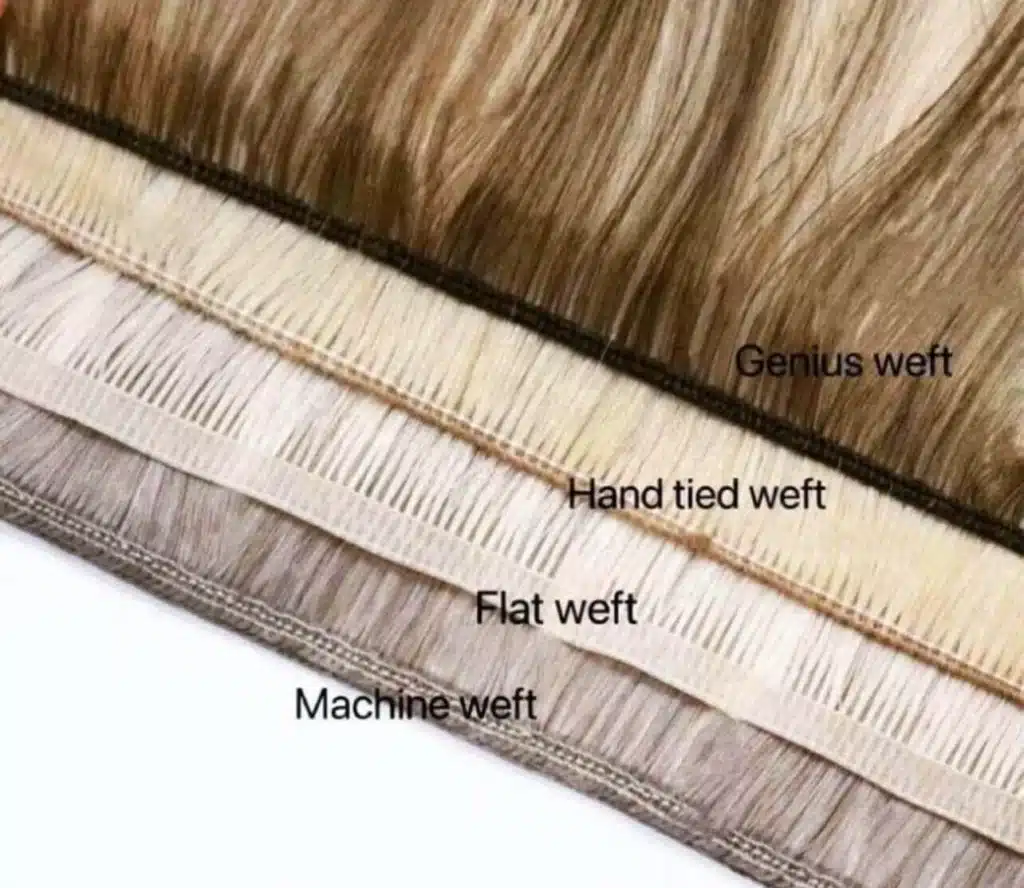
For example, a premium salon-focused supplier may start with:
- hand tied wefts
- genius wefts
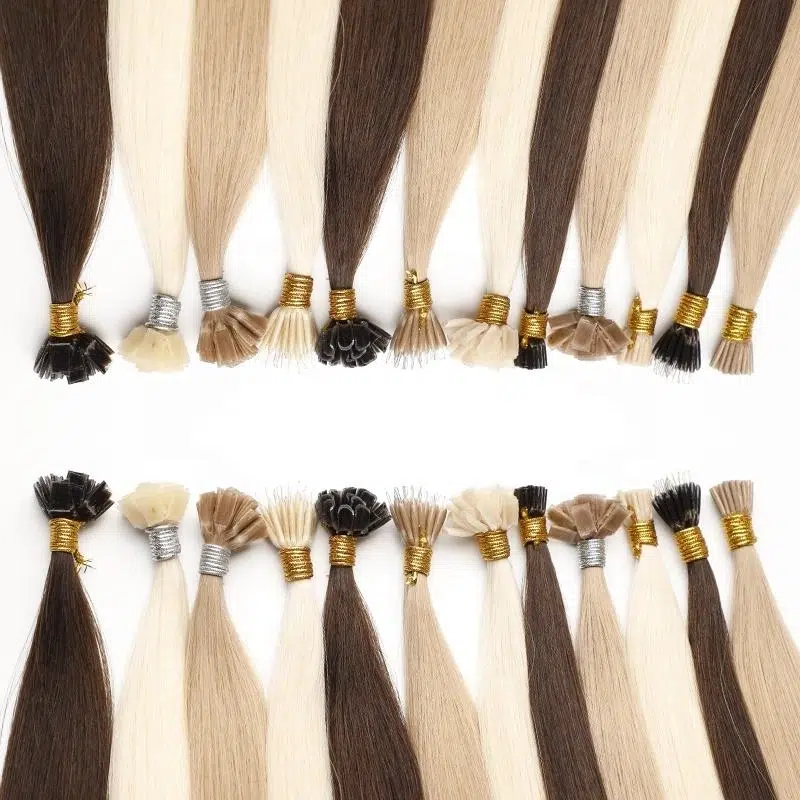
- tape-in hair
- keratin tip extensions
An online store may start with:
- clip-ins
- halo hair
- tape-ins
| Product Type | Better for Which Starting Model |
|---|---|
| Hand tied wefts | Premium salons, brands |
| Genius wefts | Premium salons, educators |
| Tape-ins | Broad salon demand |
| Keratin tips | Professional salon use |
| Clip-ins | Online retail |
| Halo hair | Online retail |
From a business angle, the goal of the first product line is not to look big. The goal is to look clear and sellable.
How Should U Choose a Factory Partner?
This is where many new suppliers make their most expensive mistake. They compare only price and sample appearance.
A good factory partner should be judged by product consistency, communication quality, customization ability, and whether the factory’s real strength matches your planned market position.
A Nice Sample Is Not Enough
One good sample does not prove stable bulk production.
Communication Quality Matters as Much as Product Quality
If the factory cannot explain hair quality, raw material logic, color control, or production limits clearly, the business will become difficult later.
U Need a Factory That Matches Your Business Level
A factory that is good at low-cost volume may not be right for a premium salon supplier. A factory that is strong in OEM support may be more useful if U want to build your own brand line.
| Factory Check Point | Why It Matters |
|---|---|
| Raw hair quality | Determines product ceiling |
| Product consistency | Determines repeat sales quality |
| Communication clarity | Determines working efficiency |
| Customization ability | Determines brand flexibility |
| MOQ and scaling ability | Determines growth fit |
From a factory-side perspective, the right partner is not the cheapest one. It is the one that can support your business model without creating quality instability later.
Why Does Raw Material Quality Decide the Future of Your Business?
This is the core truth of the business. Many supplier businesses fail because they try to market around weak product reality.
Raw material quality decides customer satisfaction, complaint rate, repurchase rate, and long-term reputation. A supplier business built on weak hair usually becomes unstable, even if the initial pricing looks attractive.

Price Can Help U Start, but Quality Decides Whether U Stay
Cheap hair can move fast in some channels, but weak quality usually brings more complaints, shorter wear life, and lower trust.
Premium Buyers Usually Care About Consistency More Than Price Alone
Salons, educators, and brands often need:
- stable color
- stable weight
- stable softness
- stable wear performance
Full Cuticle Hair Creates a Stronger Premium Business Base
From my point of view, the best premium hair extension business should aim at full cuticle quality. Remy hair is a useful foundation because cuticles are aligned, but full cuticle hair is the stronger premium standard because the cuticles are aligned and still truly intact.
| Quality Level | Business Effect |
|---|---|
| Low-grade mixed hair | Easier complaints, weaker loyalty |
| Standard Remy hair | Better start, but not highest level |
| Full cuticle hair | Strongest premium positioning |
If U want to build a serious long-term business, the quality level must match the customer promise. This is not just a product issue. It is a business survival issue.

How Should U Test Before Selling at Scale?
New suppliers often rush from supplier contact to selling. That is dangerous.
Before selling at scale, U should test samples, test repeat samples, test small batches, and only then expand. The goal is not to confirm that one sample looks good. The goal is to confirm that quality can be repeated.
First Test the Product
Check:
- softness
- tangling
- shedding
- thickness consistency
- color consistency
- top construction quality
Then Test Repeatability
Ask for repeat production or another sample round. See whether the product stays close to the first approved result.
Then Test in Real Use
Before full market push, put the product into:
- salon testing
- user trial
- small batch sales
- limited customer feedback cycle
| Test Stage | Main Goal |
|---|---|
| Sample test | Basic product judgment |
| Repeat sample test | Consistency check |
| Small batch test | Real use validation |
| Controlled sales | Early market feedback |
This stage protects U from building a brand message on top of unstable supply.

How Will U Actually Make Money?
A supplier business does not survive on sales volume alone. It survives on correct margins and repeat sales.
A healthy hair extension supplier business usually makes money through controlled product margins, repeat orders, and customer retention, not through random one-time sales.
Margin Must Be Planned Before U Launch
If U only check factory price and ignore:
- shipping
- payment costs
- packaging
- content creation
- sample cost
- replacements
- customer service
then the real margin may be much weaker than U expect.
Repeat Orders Matter More Than First Orders
A one-time sale brings revenue. A repeat buyer builds a business.
Better Positioning Usually Creates Better Pricing Power
If U can explain clearly why your hair is better, more stable, or more suitable, U are less trapped by pure price competition.
| Revenue Driver | Why It Matters |
|---|---|
| Product margin | Keeps the business alive |
| Repeat orders | Creates stability |
| Better positioning | Supports stronger pricing |
| Lower complaint rate | Protects profit |
This is why I usually tell new suppliers not to start by asking, “How cheaply can I buy?” I tell them to ask, “What kind of margin can my market support if my quality is actually repeatable?”
What Sales Channels Should U Start With?
Many beginners also spread themselves too thin here. They try to be everywhere at once.
The best starting sales channel depends on the business model, but new suppliers usually do better when they focus on one or two strong channels first instead of trying to cover every platform.
For B2B Supplier Models
Good starting channels often include:
- direct outreach to salons
- Instagram or TikTok content for salon traffic
- Google search traffic
- trade platforms
- referrals
For Online Retail Models
Good starting channels often include:
- Shopify or independent website
- social media content
- influencer partnerships
- paid traffic after product-market fit
Focus Beats Spread
A weak presence in ten channels is usually worse than a strong presence in two channels.
| Channel | Better For |
|---|---|
| Direct outreach | B2B salon and brand sales |
| Search-intent traffic | |
| Instagram / TikTok | Visual trust building |
| Website | Brand control and conversion |
| Trade platforms | Early B2B lead generation |
The strongest early move is usually to choose the channels that match your positioning instead of chasing all possible traffic.

What Makes a Hair Extension Supplier Business Grow Long Term?
This is the question that matters most. Starting is easier than staying.
A hair extension supplier business grows long term when it has clear positioning, stable quality, repeatable supply, and customers who come back because the product performs consistently.
Stable Supply Creates Trust
A buyer can forgive a small delay more easily than repeated quality inconsistency.
Clear Positioning Creates Better Customers
If U are too vague, U attract the wrong buyers. If U are clear, U attract buyers whose expectations match your product level.
Strong Product Truth Beats Loud Marketing
In this business, weak product quality eventually destroys even good marketing. Strong product quality can support growth much longer.
| Growth Factor | Why It Matters |
|---|---|
| Clear customer focus | Better product fit |
| Stable factory cooperation | Better repeat quality |
| Strong quality level | Better customer retention |
| Clear message | Better market trust |
This is the point where the supplier business stops being just a buying-and-selling game and becomes a real brand or real B2B supply system.
My View
From my point of view, starting a hair extension supplier business is not mainly about finding hair. It is about building a stable business logic around hair.
The strongest supplier businesses usually do these things well:
- choose a clear customer type
- choose a focused product line
- work with the right factory
- test before scaling
- build around repeatable quality, not cheap price
That is the difference between a short-term reseller and a real supplier business.
Conclusion
To start a hair extension supplier business well, U need more than products. U need clear positioning, stable factory support, disciplined testing, and a quality level that matches your market promise.

1