A weft installation can look polished on the day of service and still create discomfort or visible rows later. The usual problem is not one product detail. It is often a mismatch between the row method, natural hair density, and service goal.
Stylists can install weft hair extensions with beaded, sewn, or hybrid methods. The right method depends on the weft construction, client density, desired volume, scalp comfort, and maintenance plan. A lighter flat weft may suit a fine-hair client, while a stronger construction may fit a volume-focused service.
For salon owners and wholesale buyers, the installation method affects more than appointment time. It can change row visibility, tension, move-up needs, product selection, and the type of after-sales questions a salon receives.
Which weft installation method fits the service goal?
Beaded, sewn, and hybrid installations can all work, but they place the support and tension in different areas of the row.
The method should start with the client consultation. A client who wants moderate fullness with a low-profile row may need a different plan from a client who wants more length and dense ends. The stylist should also decide whether the selected weft can be cut, whether the top seam needs a particular fold, and how much natural hair will cover the row.
| Installation method | Core product parameter | Buyer and salon check |
|---|---|---|
| Beaded row | Bead size, row tension, and weft seam thickness | Confirm the beads stay hidden and the row does not feel tight when the client moves. |
| Sewn row | Thread path, anchor stability, and usable weft width | Check that the stitching supports the weft without pulling on a small natural section. |
| Hybrid row | Combined anchor method, total row weight, and seam profile | Test the complete row because a flexible method can still become bulky on fine hair. |
| Any method | Hair direction, end fullness, and wash response | Use a sample install before a repeat or bulk order, especially for a new supplier or color. |
Why the weft construction still matters
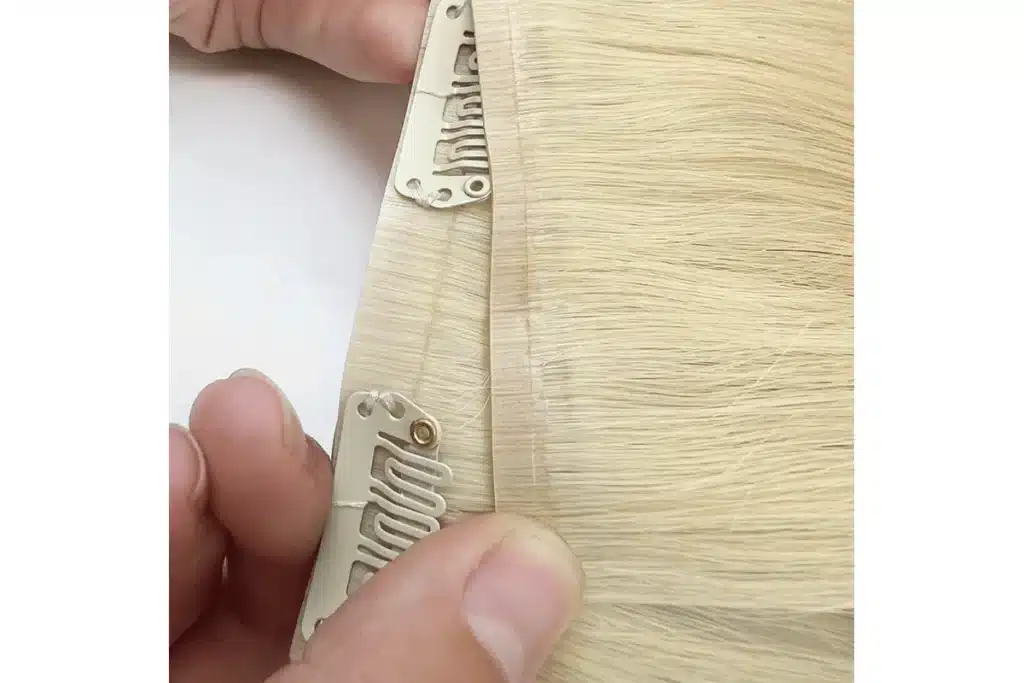
A well-planned row cannot fully correct an unsuitable weft. A machine weft can be useful when a salon needs a stronger seam and flexible cutting. A hand tied weft can sit flatter, but the stylist should not treat it as freely cuttable. A genius weft may give a flat profile with more customization options, depending on the actual seam construction.
For wholesale buyers, this is why a human hair weft buyer checklist should include construction and wash checks, not only softness at first touch.

How should a stylist plan a beaded weft row?
A beaded row should use clean sections, controlled bead pressure, and enough natural hair between the row and the perimeter for coverage.
The stylist normally maps the row before attaching the weft. The row should sit where it supports the service goal without showing when the client moves the hair. A bead placed too close to the scalp can feel tight. A bead placed too far from the scalp may move sooner and make the row feel less stable.
Bead size matters for fine hair. A large bead may be harder to hide. A very small bead may not give the intended support when the row carries more weight. The exact choice depends on the natural hair section and the weft grams planned for that row.
In salon troubleshooting, we often see discomfort traced to uneven tension rather than to the hair itself. A quick check is to ask the client to look down, turn the head, and lift the top layers before leaving the chair. If one point pulls while the rest of the row feels normal, the stylist should correct it at the appointment rather than wait for a complaint.

When does a sewn weft method make more sense?
A sewn method can make sense when the stylist needs a secure row and has planned the stitching path around the client’s density and scalp comfort.
The term sewn does not describe one identical service. Some stylists sew the weft to a beaded foundation. Others use a different anchor plan. What matters is whether the thread carries the weft evenly and whether the natural hair sections are large enough to support the service.
For a salon menu, a sewn row can be practical when the client wants substantial volume. Still, more volume is not always better. If the seam is thick or the client has limited coverage near the crown, the result may show even when the installed hair looks full through the ends.
Salons can compare the service fit of different constructions in this machine weft vs hand tied weft guide. The comparison is useful because it links seam profile and cutability to a real installation decision.
What does a hybrid method change?
A hybrid method can add flexibility, but the stylist still needs to control total weight, seam thickness, and the number of attachment points.
Hybrid can mean different combinations in different salons. Some methods combine beads with a sewn weft. Others use varied row sections to suit the client’s head shape. The method should not become a reason to add more hair than the natural hair can support.
From the factory side, a hybrid service is a useful reason to request a controlled sample. The salon can test whether the weft stays flat after the chosen method, whether the ends remain full after washing, and whether the seam behaves as expected when the stylist customizes the width. The test gives the buyer better information than a product photo alone.

Which installation mistakes increase complaint risk?
Complaint risk rises when row weight, tension, coverage, and maintenance expectations are not discussed before installation.
The most common issue is not necessarily a defective product. A row may feel uncomfortable because it is too tight, too close to the perimeter, or too heavy for the client’s density. A row may show because the client has short layers, a visible crown, or less coverage than expected. These conditions should change the service plan before the weft is installed.
Another risk is skipping the move-up explanation. The client needs to know when the row should be checked, what a slipping bead feels like, and why sleeping, brushing, and washing habits can affect the result. A salon should explain these points in direct language rather than promise that every method will suit every client.
How should wholesale buyers test a weft before offering installation?
Wholesale buyers should test the hair and the installation system together before making a product part of a salon’s regular menu.
Start with a sample that represents the intended length, color, and weight. Check the seam by touch, inspect the ends, brush the hair after a light wash, and ask the stylist to install one planned row. The buyer should record the row method, total grams, bead or thread choice, and any adjustment that improved comfort.
This record helps with repeat orders. It also gives the supplier a clearer specification if the salon needs a different seam profile, a different pack weight, or a color adjustment later. For a related placement-focused discussion, buyers can review the existing beaded weft extension placement guide.
My View
From our factory perspective, the strongest weft installation is rarely the one with the most hair or the most attachment points. It is the one where the salon has matched the weft construction and row method to the client’s coverage, density, and maintenance ability. We usually suggest that buyers test one full service before they standardize a new weft for repeat orders. The sample should include the same row method the salon intends to offer, not only a loose hair inspection. That check can show whether the seam stays hidden, whether the selected weight feels balanced, and whether the hair remains manageable after washing. It also gives the salon a practical basis for deciding whether machine, hand tied, or genius construction fits its service menu.
Frequently Asked Questions
Can a stylist cut a weft before installation?
It depends on the construction. Machine wefts are often cuttable, while hand tied wefts may need a pre-planned width because cutting can affect the tied edge. Buyers should confirm the specific product instruction through a sample before a salon changes the width.
How many rows does a client need?
The number of rows depends on natural density, desired volume, length goal, and the weft weight used per row. A salon should avoid setting one standard row count for every client.
When should a client return for a move-up?
The timing depends on growth, the chosen method, and how the row feels. Clients should return when the row has moved enough to affect comfort, coverage, or brushing rather than waiting until it becomes difficult to manage.
Conclusion
The right weft installation method depends on the client’s hair and the salon’s ability to control placement, weight, and maintenance. Before adding a method to a service menu, test the full system with a representative sample and document the conditions that produce a comfortable, hidden row.