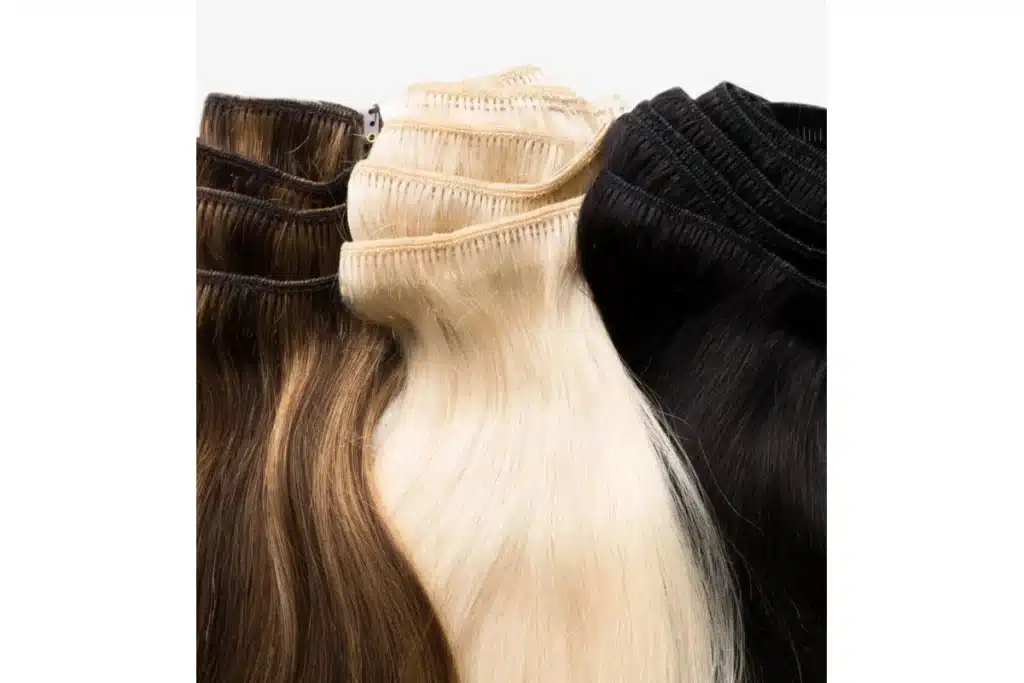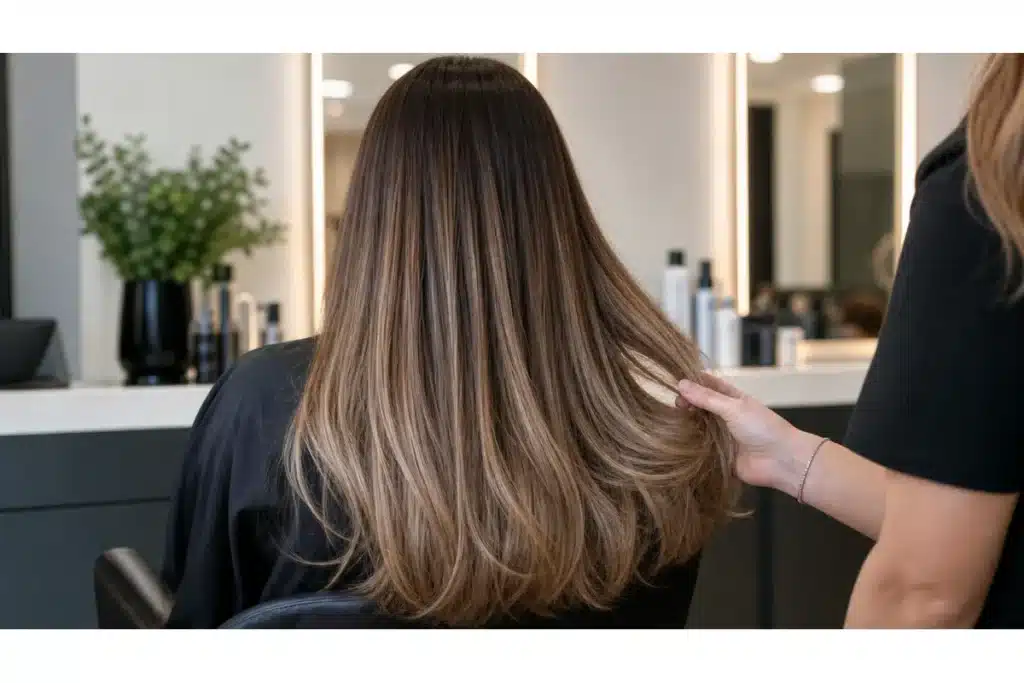
Clip-in extensions are usually one of the lower-risk extension methods, but they can still cause pulling, breakage, or discomfort when they are too heavy, placed on weak hair, or worn too often.
Clip-in extensions should not damage natural hair when they are lightweight, placed on strong sections, removed before sleeping, and used with proper care. The risk increases when clients clip them into fragile areas, overload the head with too many wefts, sleep in them, or wear heavy sets every day.
For salons and hair brands, this is not only a client education topic. Clip-in safety also depends on clip strength, weft weight, hair quality, end fullness, and whether the product is suitable for fine or fragile hair.

Can Clip-In Extensions Really Damage Hair?
Clip-in extensions are usually lower risk than many semi-permanent methods because they do not use glue, tape, beads, heat, or sewn rows. They can be removed daily, which gives the natural hair a break.
But “lower risk” does not mean “no risk.” Clip-ins can cause problems when the clips are too heavy, attached to weak sections, pulled out roughly, or worn during sleep.
The safest way to explain clip-ins is this: they are temporary and gentle when used correctly, but they still need proper weight, placement, removal, and storage.
Possible Causes of Clip-In Extension Damage
Most clip-in damage comes from repeated pulling, poor placement, heavy wefts, or sleeping with the clips attached.
The clips themselves are not usually the problem. The problem is how much weight they hold, where they are placed, and how often they are worn.
| Possible Cause | What Can Happen | What Stylists Should Check |
|---|---|---|
| Heavy wefts | Root pulling or discomfort | Weight of the full set |
| Weak placement area | Breakage near clips | Hair density and section strength |
| Daily long wear | Repeated stress on the same areas | Wearing schedule and client habits |
| Sleeping in clip-ins | Tangling, pulling, and matting | Client aftercare education |
| Rough removal | Natural hair pulled with clips | Removal method |
| Poor clip quality | Snagging or slipping | Clip teeth, coating, and tension |
| Dry or tangled hair | Harder brushing and pulling | Hair quality after washing |
Clip-ins are safer when the set is light enough, the clips hold securely, and the client removes them before sleeping.
How to Wear Clip-In Extensions Without Damaging Hair
Clip-ins should be treated as a temporary styling product, not a 24-hour extension method.
1. Prep the natural hair
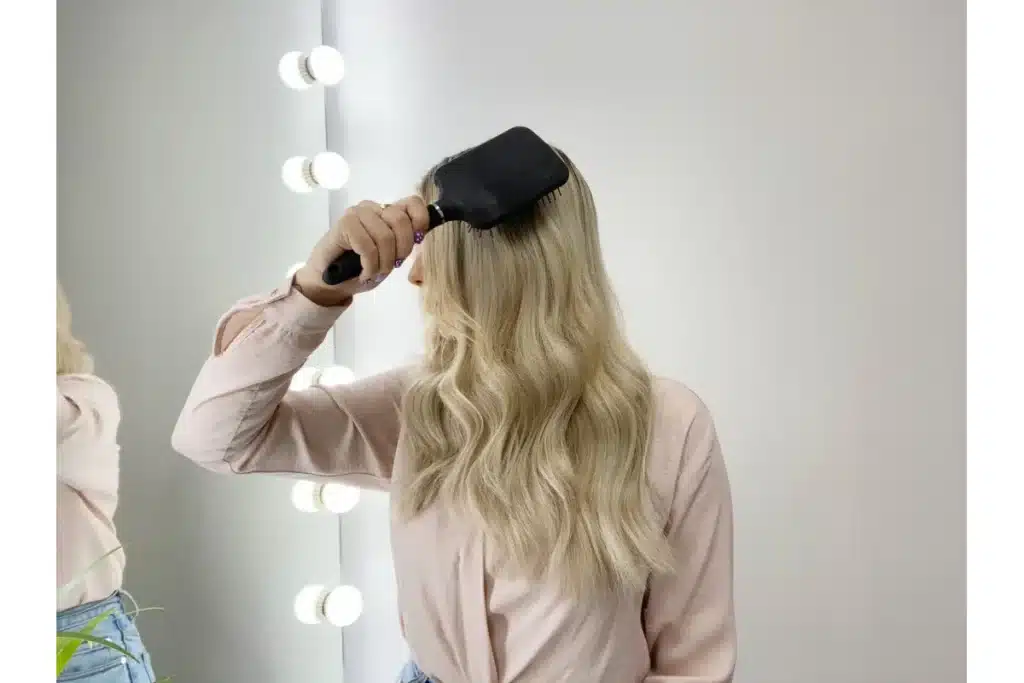
Brush the natural hair first and remove tangles before clipping in the extensions. Clip-ins should be applied to dry hair, not wet or oily hair.
2. Place clips on strong sections
Do not attach clips to very fine, weak, or broken areas. The section should be strong enough to hold the clip without pulling.
3. Keep clips away from fragile hairlines
The front hairline and crown area are easier to stress and easier to expose. Use lighter side pieces and avoid heavy wefts near fragile zones.
4. Remove clip-ins before sleeping or showering
Clients should not sleep, shower, swim, or heavily exercise with clip-ins. These habits can cause tangling, pulling, and breakage.
5. Give the natural hair breaks
Clip-ins can be worn often, but daily long wear on the same placement areas may create repeated stress. Rotate placement slightly when possible and give the natural hair rest.
What Stylists Should Check Before Recommending Clip-Ins
Clip-ins are easy to sell because clients understand them quickly. But they are not the same for every client.
Before recommending clip-ins, the stylist should check the client’s hair density, hairline strength, scalp sensitivity, styling habits, and whether the client wants daily wear or occasional use.
| Client Condition | Clip-In Suitability | Safer Recommendation |
|---|---|---|
| Healthy medium-density hair | Good | Standard clip-in set |
| Fine but healthy hair | Possible | Lightweight set and smaller side pieces |
| Very thin hairline | Use caution | Avoid heavy front clips |
| Active shedding | Not ideal | Pause and use lower-stress alternatives |
| Sensitive scalp | Use caution | Test clip comfort first |
| Event styling only | Good | Temporary wear with correct placement |
For salons, this consultation reduces complaints. A product that works well for one client may feel too heavy for another.
Pro Tips to Prevent Clip-In Damage
1. Choose lightweight, high-quality clip-ins
Good clip-ins should not only look soft in the package. They should have secure clips, smooth stitching, balanced weight, and hair that stays soft after washing and brushing.
2. Distribute the weight evenly
Do not place too many wefts in one area. A secure result should feel balanced, not heavy or tight.
3. Use the right brush
Use a soft extension brush or loop brush and detangle gently from the ends upward. Rough brushing can pull both the extension hair and the natural hair.
4. Keep both natural hair and extensions conditioned
Dry hair tangles faster. Tangling leads to harder brushing, and harder brushing creates more pulling. Use lightweight conditioning products on the ends, not heavy products near the clips.
When Should Clients Stop Wearing Clip-Ins?
Clients should stop wearing clip-ins or reduce use if they feel pain, pulling, scalp soreness, breakage around the clip areas, or increased shedding after repeated wear.
Clip-ins should feel secure, not tight. If the clips hurt, the set may be too heavy, the placement may be wrong, or the natural hair may not be strong enough in that area.
For clients with active shedding, very fragile hairlines, or scalp irritation, salons should be careful. A temporary product can still create stress if it is too heavy or used too often.
Product Quality Risks for Salons and Hair Brands
Clip-in safety is not only about how the client wears them. Product quality also matters.
If the clips are weak, they may slide and pull. If the clips are too stiff, they may feel uncomfortable. If the weft is too heavy, fine hair clients may feel tension. If the hair is low quality and tangles after washing, clients brush harder and create more pulling.
| Product Factor | Why It Matters | What Buyers Should Test |
|---|---|---|
| Clip strength | Affects hold and comfort | Open, close, and wear-test clips |
| Clip coating | Reduces snagging and slipping | Check teeth, silicone, and grip |
| Weft weight | Affects root stress | Compare grams per set and per piece |
| Weft stitching | Affects shedding and durability | Brush and inspect seams |
| Full cuticle hair | Helps softness after washing | Wash, brush, and heat-style samples |
| End fullness | Affects premium result | Check density from top to ends |
| Color stability | Affects reviews and repeat orders | Wash and compare under daylight |
Buyers who care about long-term softness can read our guide to full cuticle hair.
Frequently Asked Questions
Do clip-in extensions damage your hair?
Clip-in extensions should not damage natural hair when they are lightweight, placed correctly, removed before sleeping, and used with proper care. Damage risk increases when they are too heavy, worn too often, or clipped onto weak areas.
Can clip-ins cause hair loss?
Clip-ins may contribute to shedding or breakage if they repeatedly pull on the same areas or are worn during sleep. They are safer when used as a temporary styling product.
Are clip-ins safe for fine or thin hair?
They can be safe for fine hair when the set is lightweight and the clips are placed on strong sections. Heavy wefts or tight clips near fragile hairlines should be avoided.
Can I wear clip-ins every day?
Daily wear is possible for some clients, but long daily wear in the same placement areas can create repeated stress. Removing them at night and giving the hair breaks is safer.
How do I remove clip-ins without damage?
Open each clip fully before removing the weft. Do not pull the weft downward or slide it out while the clip is still closed.
What should wholesale buyers test before ordering clip-ins?
Buyers should test clip strength, clip coating, weft weight, stitching, hair softness after washing, shedding, color stability, and packaging quality.
Why Clip-Ins Are Still a Strong Option for Salons and Brands
Clip-ins are still one of the easiest extension products for clients to understand. They are temporary, removable, and useful for events, bridal styling, photoshoots, online retail, and clients who want to test extensions before choosing a semi-permanent method.
For salons, clip-ins can support consultation and styling services. For hair brands, they are a good entry product because clients can apply them without a salon appointment.
The risk is quality. If the set feels heavy, the clips pull, or the hair tangles quickly, the client will not see it as a small product issue. She will see it as a brand trust issue.

Conclusion
Clip-in extensions should not damage natural hair when they are lightweight, placed on strong sections, removed before sleeping, and used as a temporary styling product.
For salons, hair extension brands, and wholesale buyers, the safer decision is to test product quality before making promises to clients. Check clip strength, weft weight, stitching, hair softness after washing, end fullness, color stability, and packaging quality.
You can contact Hibiscus Hair to request clip-in hair extension samples, low-tension product recommendations, or wholesale price guidance before placing a larger order.