Curly tape-ins can disappoint clients when the curl loosens, the tabs show, or the texture stops matching after washing.
Curly tape in hair extensions work best when the curl pattern, tab size, hair density, and after-wash behavior match the client. Salons should test a washed sample, inspect the roots and ends, and plan placement around curl movement before ordering stock.
A curl label is only a starting point. Salon buyers still need to compare pattern size, shrinkage, processing, attachment visibility, and the client’s styling routine.
What Should Salons Check in Curly Tape In Hair Extensions?
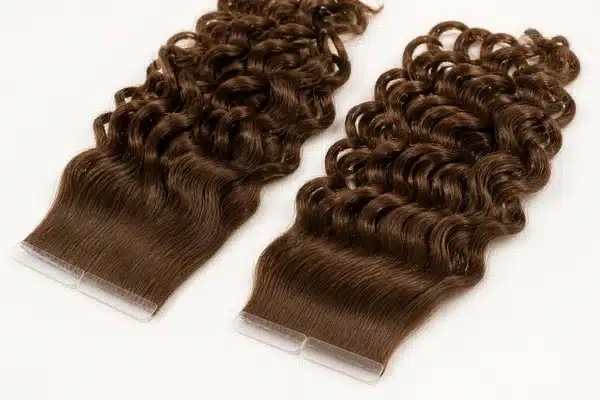
Salons should check the curl pattern before and after washing, the tab finish, strand density, end fullness, and how easily the texture returns after gentle styling.
Two products called “loose curl” may behave differently. One may form a soft wave after washing. Another may keep a smaller, more defined pattern. The buyer should compare the sample with the client’s natural hair in its normal dry state, not only with a styled supplier photo.
Repeated tension from extensions can contribute to traction-related hair loss, especially when an attachment is heavy or painful. The American Academy of Dermatology advises people to change a style when it causes pain or irritation. [1] A medical review also identifies the weight of added hair and prolonged pulling as relevant traction factors. [2]
| Product check | What to compare | Buyer consequence |
|---|---|---|
| Curl pattern | Dry sample and washed sample | Shows whether the texture may blend after salon washing |
| Tape tab | Width, color, flexibility, and edge finish | Affects visibility and local weight |
| Hair density | Weight through roots, mids, and ends | Changes blending and pack planning |
| Texture recovery | Air-dry result and low-heat restyling | Affects maintenance advice and complaint risk |
Send the target curl photo, natural density, length, and planned service weight before confirming a salon order.
Request a curly tape-in specification reviewHow Does Curl Pattern Change Pack Planning?
Curl pattern changes visible length, volume, and end coverage, so salons should plan grams from the finished dry result rather than the stretched strand length.
Curly hair can look shorter than straight hair with the same measured length. A tighter pattern also creates more visible volume. This does not always mean the salon needs fewer grams. The natural haircut, perimeter density, target length, and desired fullness still control the order.
Salons should record whether the supplier measures the hair stretched or in its natural curl. The written order should also state the pack weight, piece count, tab width, and curl name. The tape in hair extensions range gives buyers a starting point for available formats, but a physical curl sample remains important.
Where Can Tape Tabs Become Visible in Curly Hair?
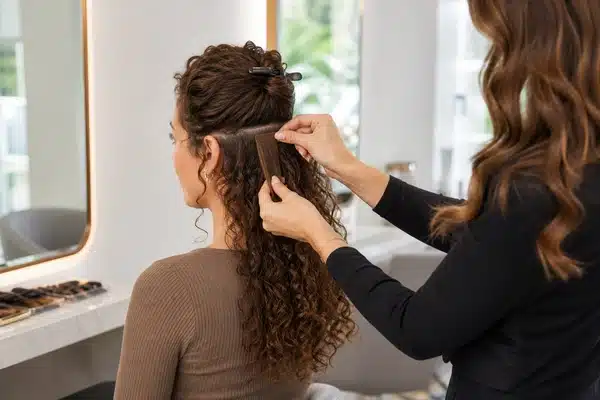
Tabs are most likely to show near sparse temples, high side sections, exposed partings, and areas where curl separation opens the natural hair.
Curly hair moves in groups rather than falling as one flat sheet. A section can look covered while the hair is still, then open when the client lifts or refreshes the curls. The stylist should check visibility from the side, back, and during movement.
Smaller tabs can help in narrow sections, but they do not remove the need for enough natural hair above the attachment. The invisible tape in hair extensions page shows a lower-visibility format that salons can compare with regular tape. The final choice should still match the client’s section strength and service plan.
In buyer discussions, we often ask whether the client wears the curls defined, brushed into waves, or heat-styled straighter. The same texture may separate differently in each routine. That answer changes both tab placement and aftercare guidance.
What Should Buyers Test Before a Bulk Order?
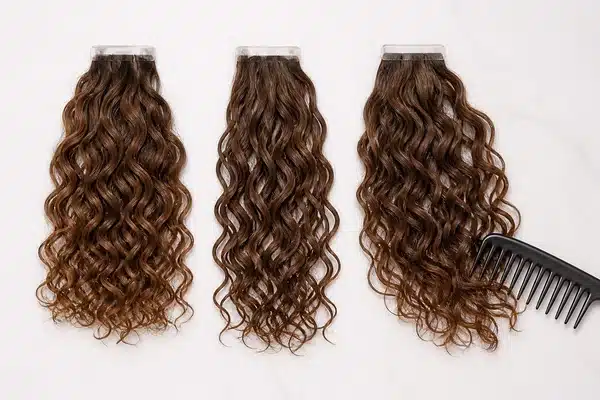
Buyers should wash, air-dry, detangle, restyle, and compare the sample before approving a bulk curly tape-in order.
The first-touch finish does not show how the curl will behave after product residue is removed. A simple sample record should include the wash products, water temperature, drying method, detangling time, pattern change, shedding observation, and end feel.
The tape also needs a separate check. Buyers should confirm adhesion, removal behavior, replacement tape compatibility, and residue under the salon’s normal process. The wholesale tape-in sample testing guide explains how a salon can document these checks before a larger order.
Very light curly colors may feel different from darker shades because the processing history can change dryness and pattern response. Buyers should test the actual target shade and length when possible.
How Should Salons Explain Maintenance to Clients?
Salons should explain gentle detangling, controlled washing, low-tension styling, tape-safe products, and realistic curl refreshing before the client leaves.
Clients should support the roots while detangling and work from the ends upward. Heavy oils and conditioners should stay away from the tape area. The stylist should also explain whether the purchased curl is designed to air-dry, diffuse, or need light restyling.
Not every client wants the same routine. A client who straightens the hair often may need a different texture choice from a client who always wears defined curls. The consultation should connect the product to the actual weekly routine.
My View
From our factory perspective, a curly tape-in order should never be approved from one dry product photo. We usually suggest checking a washed sample in the intended shade and length. The buyer should record the natural dry pattern, stretched length, pack weight, tab dimensions, and end density. Salons should also test how the curl returns after gentle detangling and low-heat styling. A beautiful first sample can still create after-sales pressure if the pattern loosens sharply or if the client expects a wash-and-go result that the product cannot provide. Placement matters just as much as texture. Curly separation can expose tabs that stay hidden in straight hair. A clear sample record, realistic maintenance advice, and client-specific placement plan usually create a safer bulk-order decision.
Frequently Asked Questions
Do Curly Tape In Extensions Stay Curly After Washing?
They can keep their pattern when the texture is stable and the care routine fits the product. Buyers should wash-test the actual shade and length because processing can affect curl recovery.
Can Curly Tape Ins Be Straightened?
Many human hair products can be straightened with controlled heat, but frequent heat may affect dryness and pattern return. The supplier’s temperature guidance should be confirmed first.
Are Small Tape Tabs Better for Curly Hair?
Small tabs can help in narrow or visible areas. The stylist still needs enough natural hair to carry the attachment without pain or excess tension.
Should a Salon Stock Several Curl Patterns?
A small tested range is often easier to manage. The salon can add patterns based on consultation demand instead of stocking similar curls with unclear differences.
Conclusion
Curly tape in hair extensions suit salons that can match the real washed texture, control tab visibility, and give clear maintenance advice. Buyers should approve curl behavior, tape construction, grams, shade, and length on a documented sample before placing a bulk order.