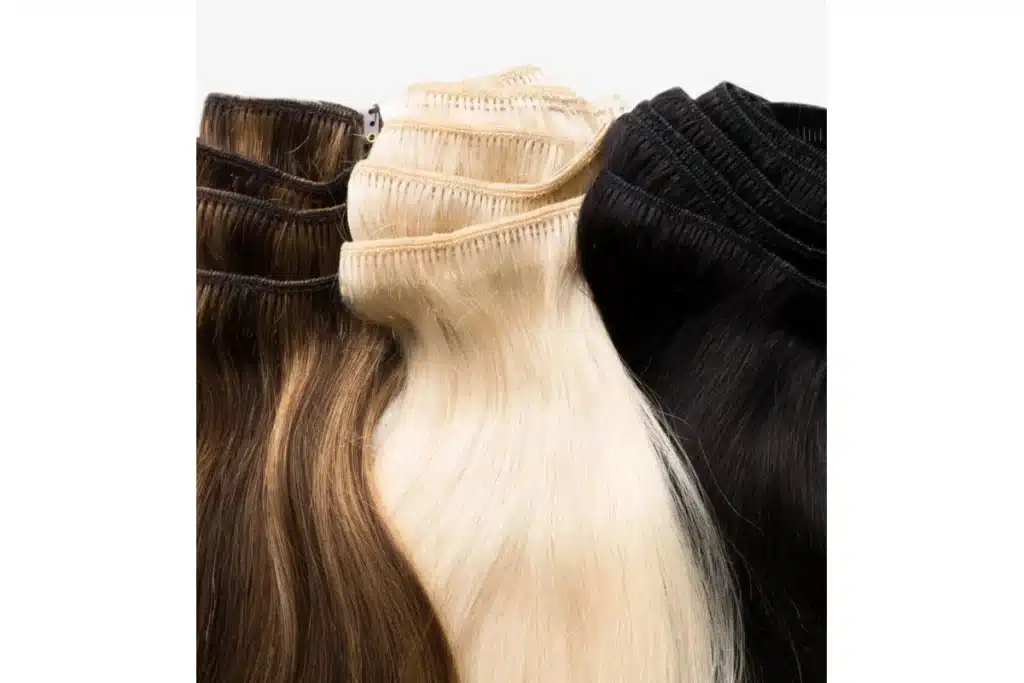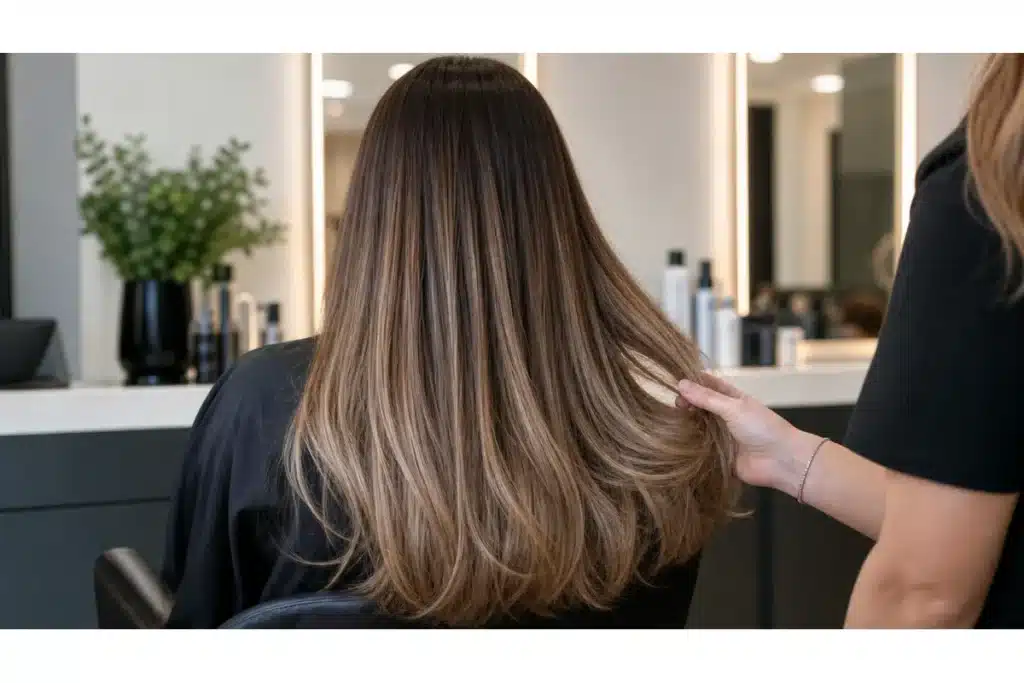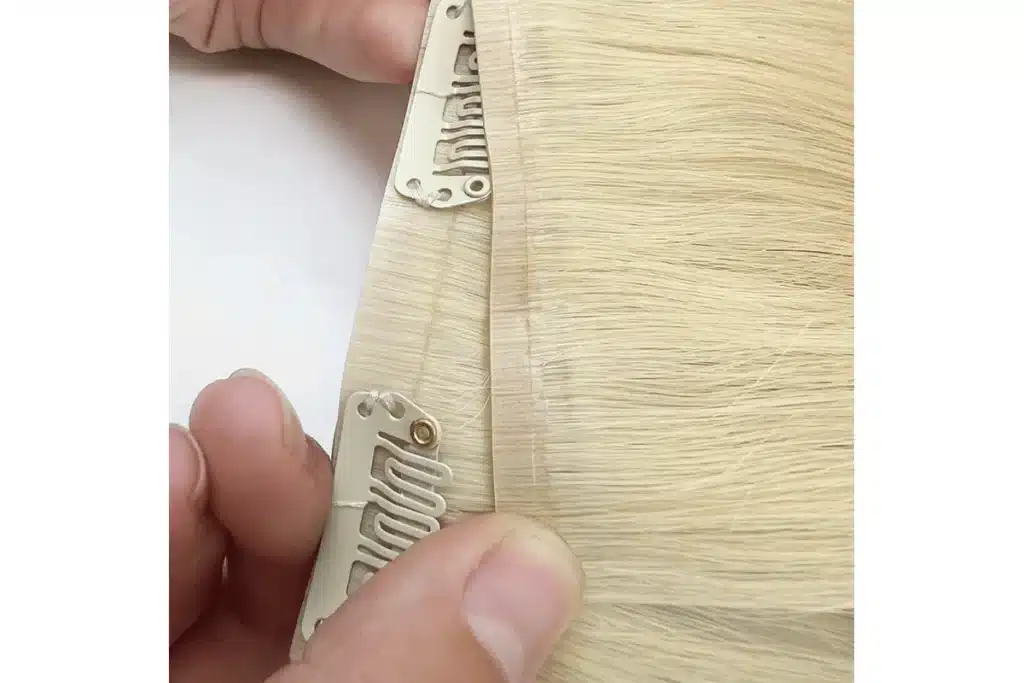
Achieving a natural blend between natural hair and weave extensions can be difficult when the hair quality, texture, density, or weft structure does not match the client’s real hair.
The best weave for blending natural hair is usually a full cuticle genius weft or hand-tied weft, matched with the right curl pattern, color, thickness, and length.
For salons and hair brands, the goal is not only a beautiful first install. The weave should also stay smooth after washing, reduce tangling, support reuse, and help stylists avoid blend complaints from clients.

Quick Answer: What Is the Best Weave for Blending Natural Hair?
For most salon clients, the best weave for blending natural hair is:
- Full cuticle genius weft for flat roots, custom cutting, and flexible placement
- Full cuticle hand-tied weft for soft, natural rows and premium salon installs
- Texture-matched weft hair for clients with wavy, curly, or thicker natural hair
- Lightweight density for clients with fine or low-volume natural hair
The best option depends on the client’s natural hair texture, density, length, color, and how invisible the final install needs to be.
Why Does Full Cuticle Hair Matter?
Full cuticle hair helps solve one of the biggest blending problems: low-quality hair often becomes dry, tangled, or puffy after washing.
Because full cuticle hair is aligned from root to tip, it behaves closer to natural hair in movement, styling, and daily wear. This makes it a strong choice for clients who want a softer and more seamless blend.
Why Quality Impacts Blendability
What Makes Full Cuticle Hair Different?
| Hair Type | Cuticle Direction | Reusable | Styling Performance | Typical Wear Value |
|---|---|---|---|---|
| Non-Remy Hair | Mixed direction | Low | Poor, often tangles faster | Short-term use |
| Remy Hair | Partly aligned | Medium | Better than non-Remy, but quality varies | Medium-term use |
| Full Cuticle Hair | Fully aligned root to tip | High | Smoother, stronger, easier to blend | Best for premium salon clients |
Full cuticle hair behaves closer to natural hair because the strands stay aligned in the same direction. This helps reduce friction, tangling, and frizz during washing, brushing, curling, or straightening.
For blending work, this matters. If the hair becomes dry, puffy, or tangled after a few washes, even a good installation will start to look obvious.
This is why many professional salons and hair brands choose full cuticle hair for premium clients who care about natural movement and long-term wear value.
Why Are Genius Weft and Hand-Tied Wefts Best for Blending?
Blending is not only about hair quality. Weft construction also affects how flat, natural, and comfortable the final install looks.
Genius wefts and hand-tied wefts are often preferred for natural blending because they create a flatter finish and reduce bulk near the root area.
What Sets These Weaves Apart?
Genius Weft
- No return hair, so there are no short stubs near the track
- Ultra-thin machine-made structure
- Can be cut for customized placement
- Suitable for clients who want a flat, discreet, and flexible install

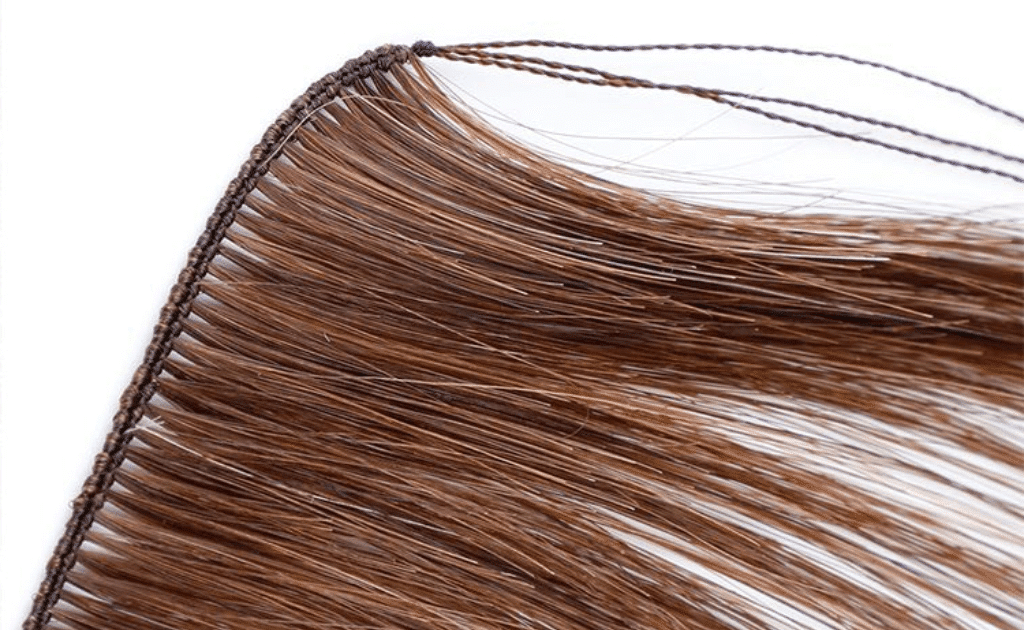
Hand-Tied Weft
- Manually tied with an ultra-thin seam
- Soft, flexible, and comfortable for row installs
- Should not be cut, as it may unravel
- Suitable for premium full-row installs with a natural finish
Compare with Other Weaves:
| Weft Type | Cuttable | Seam Thickness | Return Hair | Best For |
|---|---|---|---|---|
| Genius Weft | Yes | Very thin | No | Custom blending, flat installs, fine-to-medium hair |
| Hand-Tied Weft | No | Ultra-thin | Yes | Premium full-row installs and soft natural movement |
| Machine Weft | Yes | Thicker | Yes | High-volume installs where flatness is less critical |
| Clip-In Weft | Yes | Medium | Yes | Temporary styling and occasional wear |
For natural blending, genius wefts and hand-tied wefts are usually stronger choices because they reduce bulk near the root area. Machine wefts can still work for volume-focused installs, but they are not always the best option when the client wants an invisible finish.
For Salons and Hair Brands: How to Choose the Right Weave Type
For professional buyers, the best weave is not always the one that looks the fullest in product photos. It is the one that fits the client type and reduces service problems after installation.
Use the table below as a quick product direction guide.
| Buyer Need | Better Weave Choice | Why It Works |
|---|---|---|
| Invisible root area | Genius weft or hand-tied weft | Both reduce bulk and sit flatter |
| Custom cutting and placement | Genius weft | It can be cut without unraveling |
| Premium full-head install | Hand-tied weft | Soft, flexible, and natural in rows |
| Thick natural hair | Genius weft or machine weft | Can support stronger density needs |
| Fine natural hair | Lightweight genius weft | Less bulk and easier flat placement |
| Salon retail or private label | Full cuticle weft hair | Better long-term client satisfaction and reuse value |
If clients often complain that extensions look bulky, dry, or hard to blend after washing, review both the weft construction and the hair quality before changing your installation method.
How to Match the Right Weave to Client Hair
Even the best weave will not blend well if the color, length, curl pattern, and density are wrong.
Before choosing the weft type, stylists should look at the client’s natural hair as the base. The extension should support that base, not fight against it.
Blend Factors You Can’t Ignore
Color Match
Even one level off in tone or undertone can ruin the blend. Natural black hair has red or ash undertones—choose accordingly. For custom installs, use lowlights or root shadows for depth.
Length Match
Length difference between real hair and weaves should be within 3–4 inches. Otherwise, it creates an obvious shelf. Blend with layering techniques or use staggered weft rows.
Curl or Wave Pattern
Match curl pattern carefully. At Hibiscus Hair, we offer custom curl patterns to match natural wave hair up to curly.
Density/Thickness
Match the thickness of the weft to the density of the natural hair. Too thick and the weave will bulge. Too thin and it will look sparse.
| Blend Factor | What to Match | Why It Matters | Common Risk |
|---|---|---|---|
| Color | Level and undertone | Creates a seamless visual transition | One wrong undertone can make the weave obvious |
| Length | Close to the client’s real hair length | Prevents a hard shelf line | Too much length difference looks unnatural |
| Curl Pattern | Wave or curl shape | Helps the extension move like natural hair | Wrong curl pattern separates from real hair |
| Density | Natural hair volume | Keeps the install flat and balanced | Too much density creates bulk |
| Hair Quality | Cuticle alignment and softness | Supports smooth blending after washing | Poor hair tangles and loses shape faster |
Blending is technical—but once matched right, even trained eyes can’t detect the extension line.
Sample Testing Before Wholesale Orders
For salons and hair brands, sample testing is the safest way to check whether a weave can truly blend with natural hair.
Do not judge the product only by how it looks in the package. Test the hair after washing, brushing, curling, straightening, and reinstalling.
A good sample test should check:
- Whether the hair stays smooth after washing
- Whether the texture still matches natural hair after styling
- Whether the weft lies flat during installation
- Whether the ends stay full enough for blending
- Whether the hair can support reuse for salon clients
If you are sourcing for salon use or private label sales, you can request samples or wholesale support before placing a larger order.

Professional Note
When a weave does not blend, many stylists first look at the installation. That is important, but it is not the full answer.
Blending problems often start before the stylist opens the package. If the hair quality is unstable, the texture is too processed, or the weft is too bulky for the client’s natural hair, the final result will be harder to control.
For premium salon work, check three things before buying in bulk: full cuticle quality, weft flatness, and texture consistency after washing. These details affect the client’s result more than product photos ever will.
FAQ
What is the most invisible weave for blending natural hair?
Genius weft is often one of the most discreet options because it has no return hair, a flat seam, and can be cut for custom placement. For full-row installs, hand-tied weft can also create a very natural result.
Is Remy hair enough for blending?
Remy hair can blend better than non-Remy hair, but quality can vary a lot between suppliers. For premium salon clients, full cuticle hair is usually a safer choice because the strands are fully aligned and tend to stay smoother with proper care.
Can I blend weaves into short natural hair?
Yes, but the length gap should be small. Use layering and proper weft placement to prevent harsh lines between lengths.
How long does a properly blended weave last?
A high-quality full cuticle genius weft or hand-tied weft can support multiple wears with proper care and professional reinstallation. Actual lifespan depends on hair quality, client aftercare, styling habits, and maintenance routine.
What type of weave is best for fine natural hair?
A lightweight genius weft is often a good choice for fine natural hair because it lies flat and can be customized during installation. The stylist should still check the client’s density and avoid adding too much weight.
Should salons test weave samples before buying wholesale?
Yes. Salons and hair brands should test samples before bulk orders. Check how the hair blends after washing, styling, and wearing, not only how it looks when new.
Conclusion
The best weave for blending natural hair is usually a full cuticle genius weft or hand-tied weft, matched carefully to the client’s color, length, texture, and density.
For salons and hair brands, blending is not only an installation skill. It is also a product selection decision. Hair quality, weft flatness, and sample testing all affect how natural the final result looks after real wear.
If you are sourcing premium weave hair extensions for salon clients or private label sales, you can contact Hibiscus Hair to request samples, wholesale pricing, or product recommendations.