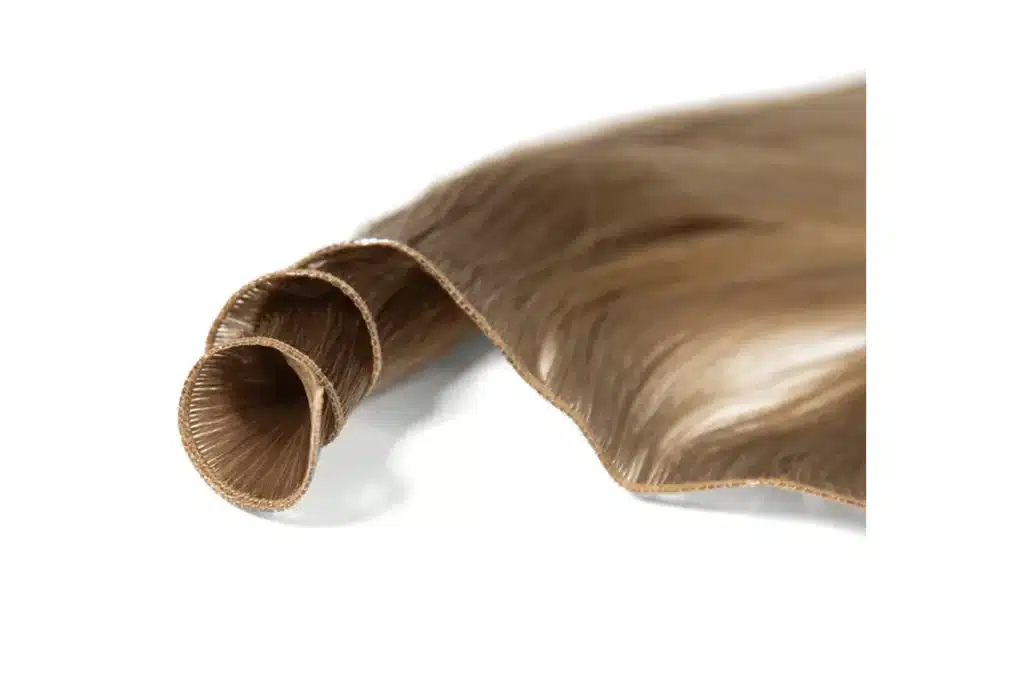
Clients often want hair that looks natural, feels light, and does not show at the seam. But the wrong weft choice can cause bulk, tension, scalp discomfort, or early complaints.
Hand tied hair extensions are thin, hand-sewn wefts used in row-based installs. The main pros are a very flat seam, light feel, natural blend, and strong comfort for fine to medium hair. The main cons are higher cost, no cutting at the seam, delicate stitching, short return hair near the seam, and strict move-up timing.
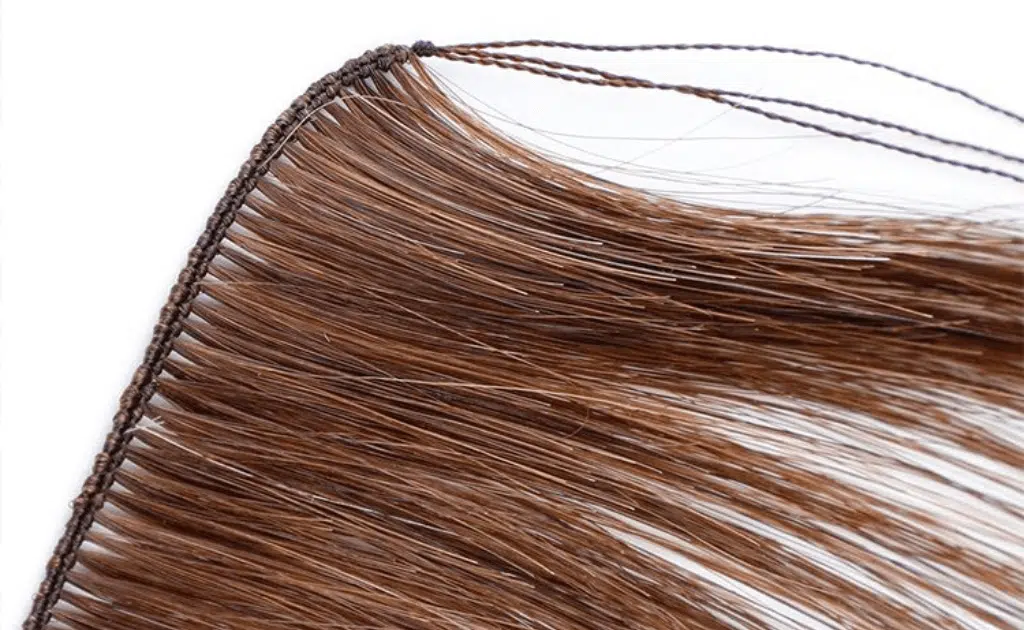
Hand tied wefts can be a strong option for salons that serve clients who care about invisible results. But they are not the right choice for every head of hair. The stylist still needs to plan weight, row placement, natural hair density, and maintenance timing carefully.
What Are Hand Tied Hair Extensions?
Many clients want fuller hair, but they do not want thick seams or visible rows. Hand tied wefts solve this problem with a thinner construction.
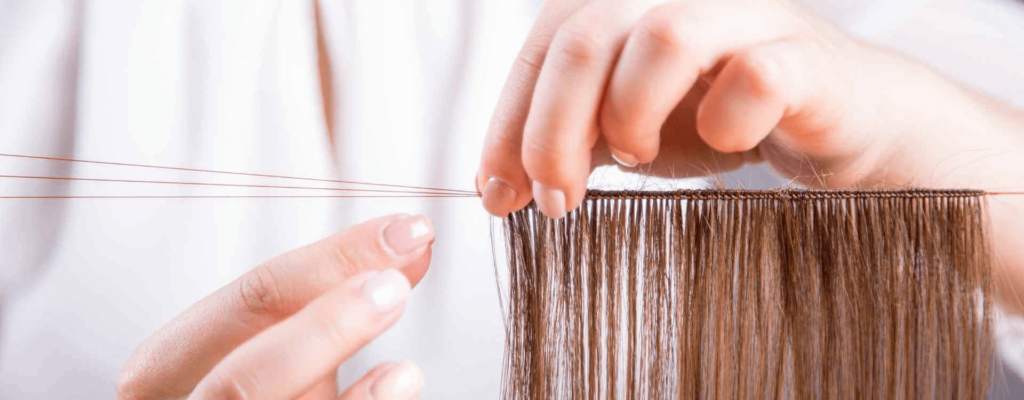
Hand tied hair extensions are wefts made by tying and stitching small sections of hair by hand into a thin seam. The seam lies flatter than many machine wefts and can blend well under fine or medium hair.
How Hand Tied Wefts Work
A hand tied weft is usually sewn onto a beaded or stitched row. The weft is thin and flexible, so it can sit close to the scalp without creating too much bulk.
| Feature | Why It Matters |
|---|---|
| Thin seam | Helps reduce visibility |
| Flexible row | Feels softer on the head |
| Lightweight structure | Works well for fine to medium hair |
| No glue or tape | Avoids adhesive maintenance |
| Row-based install | Good for controlled volume |
One important point is that hand tied wefts should not be cut through the seam. If the seam is cut, the stitching can unravel and shedding can increase. When a custom width is needed, stylists usually fold the weft or order a better size.
If you are comparing weft types, you can also review Genius Weft Hair Extensions and Machine Weft Hair Extensions for structure differences.
What Are the Pros of Hand Tied Hair Extensions?
Hand tied wefts are popular because they can give a very natural result without a thick seam. This matters most for clients with fine or medium hair.

The main advantages of hand tied hair extensions are flat seams, light comfort, clean blending, flexible movement, and a premium salon result when the rows are installed and maintained correctly.
Main Advantages
| Advantage | Client Benefit | Salon Benefit |
|---|---|---|
| Flat seam | Less visible under natural hair | Fewer visibility complaints |
| Light feel | More comfortable daily wear | Better client retention |
| Natural blend | Works well with fine hair | Better before-and-after photos |
| Flexible row | Softer movement | Easier premium positioning |
| No adhesive | No tape residue | Cleaner maintenance routine |
From feedback shared by salon clients, the biggest reason they like hand tied wefts is not only the look. It is also the comfort. A flatter seam can make the install feel less bulky, especially when the client sleeps, wears the hair up, or moves often.
For salons, this comfort can help with repeat bookings. Clients who feel the rows are light and hidden are more likely to return for move-ups and replacement hair.
But the advantage only works when the hair weight is planned well. A thin seam does not mean the stylist can add unlimited grams. Too much weight can still create tension.
What Are the Cons of Hand Tied Hair Extensions?
Hand tied wefts are not difficult to understand, but they do require discipline. Most problems come from wrong cutting, too much weight, rough aftercare, short return hair, or late maintenance.
The main disadvantages of hand tied hair extensions are higher cost, no cutting through the seam, delicate stitching, possible scalp irritation from short return hair, longer install time, and possible tension if the rows are too heavy or move-ups are missed.
Common Limitations
| Limitation | What Can Happen | How to Reduce Risk |
|---|---|---|
| Cannot cut seam | Weft may unravel | Fold or order correct width |
| Higher cost | Client may hesitate | Explain comfort and lifespan |
| Delicate stitching | Edge can fray | Use gentle brushing and proper tools |
| Short return hair near the seam | May feel prickly on sensitive scalps | Check seam finishing and return hair control |
| Maintenance needed | Roots can mat | Book 6–8 week move-ups |
| Weight risk | Scalp tension | Match grams to density |
A long-term salon buyer once told us that her hand tied complaints were rarely about the first-day result. The problems appeared later, when clients delayed move-ups, brushed too roughly near the seam, or felt irritation from the base area.
That feedback is important. Hand tied wefts can look beautiful, but they are not a low-responsibility method. The client must understand brushing, drying, sleeping, and move-up timing.
Another point is return hair. Some hand tied wefts may have short return hair near the seam. For sensitive clients, this can feel slightly prickly against the scalp. It is not always a serious problem, but buyers should still check seam finishing and return hair control when comparing samples.
From a supplier side, the weft construction also matters. The seam should be clean, flat, and stable. The hair should stay soft after washing. If the hair becomes dry quickly, or if the seam feels rough, the flat construction alone will not save the client experience.
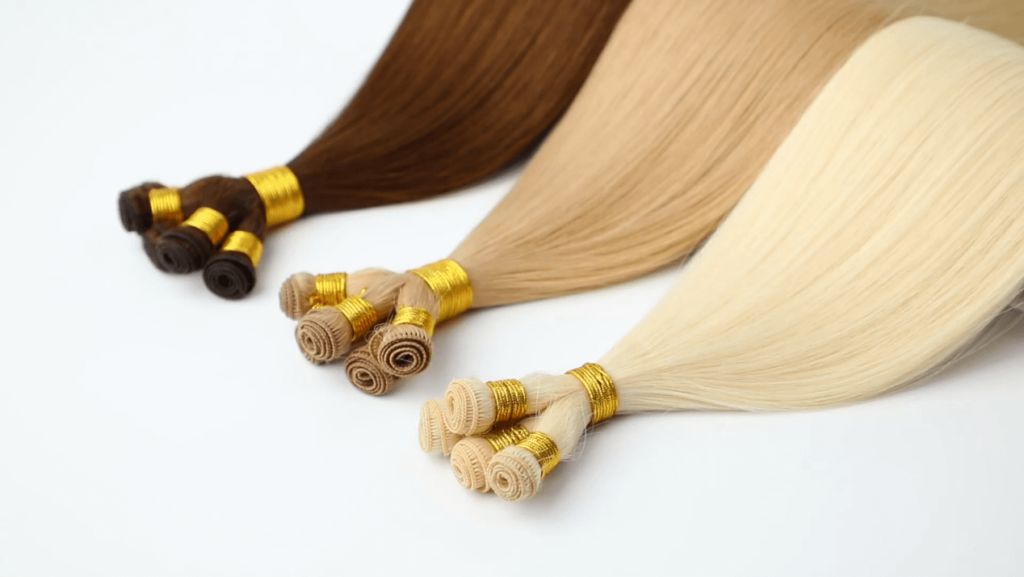
Are Hand Tied Extensions Bad for Your Hair?
Clients often ask this question because they worry about pulling, thinning, or scalp stress. The honest answer depends on weight and maintenance.
Hand tied extensions are not bad for natural hair when the rows are installed with proper weight, clean sectioning, and correct tension. They can cause problems if they are too heavy, too tight, or left in too long without move-up.
What Creates Risk?
Any row method can create stress if the install is not planned well. The risk usually comes from force on the natural hair over time. Heavy grams, tight beads, high ponytails, and overdue move-ups can all increase pulling.
| Risk Factor | Why It Matters |
|---|---|
| Too much weight | Adds pressure to natural hair |
| Tight rows | Can create scalp discomfort |
| Late move-ups | Shed hair can mat near the base |
| Poor brushing | Pulls on the row and seam |
| Wet roots | Can increase tangling and odor |
The American Academy of Dermatology explains that repeated pulling and tight hairstyles can contribute to traction-related hair loss [1]. The same basic logic is useful when thinking about extensions. If the row pulls too much, the natural hair can suffer.
Good planning is the protection. Fine hair usually needs lighter rows. Medium hair can support more options. Thick hair may need more grams, but the rows still need clean placement and regular maintenance.
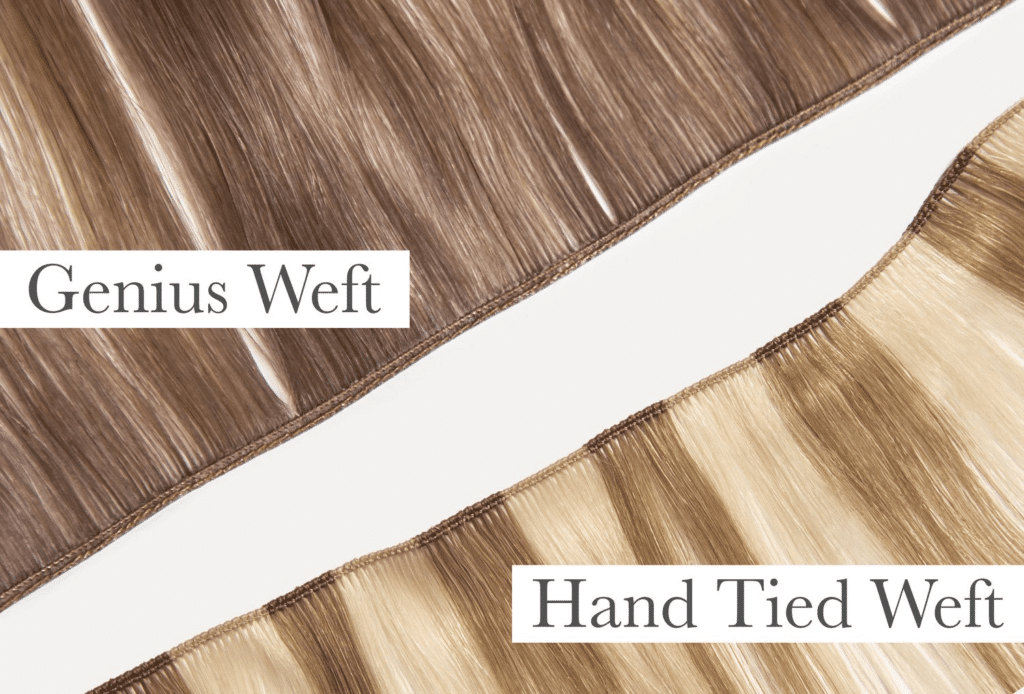
No single weft type is best for every salon client. The right choice depends on hair density, style goal, budget, and maintenance behavior.
Hand Tied vs Genius vs Machine Wefts: Which Should You Choose?
Choose hand tied wefts for a very flat seam and fine-to-medium hair. Choose genius wefts when you need cuttable custom widths. Choose machine wefts when the client needs more volume at a more practical cost.
Weft Comparison
| Weft Type | Best For | Main Advantage | Main Limitation |
|---|---|---|---|
| Hand Tied Weft | Fine to medium hair | Very flat and soft | Cannot cut seam |
| Genius Weft | Custom mapping | Cuttable and thin | Higher cost than machine |
| Machine Weft | Medium to thick hair | Durable and cost-effective | Thicker seam |
A smart salon menu does not need only one weft. Some stylists use hand tied wefts on the top row for invisibility, genius wefts where custom widths are needed, and machine wefts lower down when more volume is required.
From product feedback, different markets need different price levels and construction types. A premium salon may prefer hand tied or genius wefts. A wholesale buyer may need a mix of hand tied, genius, and machine wefts to cover different customer groups.
How Should Clients Care for Hand Tied Extensions?
Hand tied extensions need simple care, but the routine must be consistent. Poor home care can damage even a good install.
Clients should brush from the ends upward, avoid pulling near the seam, dry the roots fully, sleep with hair secured, avoid heavy oils near the row, and return for move-ups every 6–8 weeks.
Basic Aftercare Guide
| Care Step | Recommendation |
|---|---|
| Brushing | Start from ends and move upward |
| Washing | Clean scalp gently and rinse well |
| Conditioner | Apply from mid-length to ends |
| Drying | Dry roots and row area fully |
| Sleeping | Wear a loose braid or low ponytail |
| Move-up | Return every 6–8 weeks |
The most common aftercare problem is not one big mistake. It is repeated small stress. Rough brushing, sleeping with loose tangled hair, heavy products near the row, and late move-ups can slowly create problems.
A simple care card helps. Several salon buyers have told us that clients follow aftercare better when the rules are short and clear. Long instructions often get ignored. Simple rules work better.
My View
From a factory and export point of view, I see hand tied wefts as a premium product, but not a product that should be sold to every client without selection.
The flat seam is valuable. It helps the row sit closer to the head and gives stylists more room to create an invisible result. But a flat seam is only one part of the quality. If the hair becomes dry after washing, if the seam frays too quickly, if short return hair feels rough near the scalp, or if the bulk order does not match the sample, the salon still faces complaints.
Many salon and brand buyers tell us that the first sample is not their only concern. Their real concern is whether the second, third, and fourth order can keep the same softness, color, seam quality, density, and finish. This is where production consistency matters more than marketing words.
From the supplier side, I pay close attention to after-wash softness, color stability, seam strength, return hair control, end fullness, and sample-to-bulk consistency. These details decide whether a buyer can confidently use the product in a premium salon service or private label line.
For hand tied wefts, I also think weight control is very important. Some clients want more hair, but more hair is not always a better result. If the natural hair cannot support the grams, the row may look full at first but create tension later. Good product quality and good salon planning must work together.
FAQs
Can hand tied hair extensions be cut?
No. Hand tied wefts should not be cut through the seam because the stitching can unravel. If custom width is needed, the stylist can fold the weft or choose genius wefts.
How long do hand tied extensions last?
The install usually needs move-up every 6–8 weeks. The hair lifespan depends on hair quality, aftercare, and how many times the weft is reused.
Are hand tied extensions good for fine hair?
Yes, hand tied wefts can work well for fine to medium hair because the seam is thin and flat. The stylist still needs to control weight carefully.

What is better, hand tied or genius weft?
Hand tied wefts are very flat and soft, but they cannot be cut. Genius wefts are also thin and can be cut to custom width, which makes them easier for detailed mapping.
Conclusion
Hand tied hair extensions work best when flat seam design, stable hair quality, controlled return hair, careful weight planning, and regular move-ups work together.
If you are building a hand tied weft product line for a salon, hair brand, training academy, or wholesale business, Hibiscus Hair can support full cuticle hand tied wefts, genius wefts, machine wefts, custom colors, different lengths, textures, weights, and private label packaging.
References
[1] American Academy of Dermatology Association: Hairstyles That Pull Can Lead to Hair Loss ↩