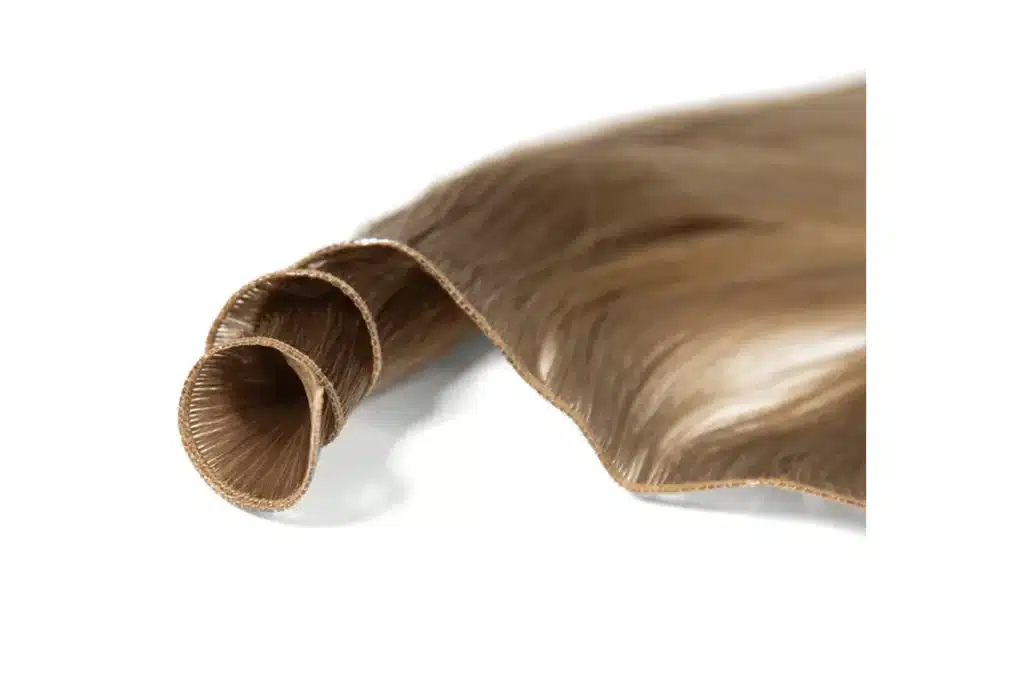
A client wants thicker hair for an evening, not a full new length. A large clip-in set can feel like too much for that simple request.
One-piece clip-in hair extensions can add fullness in one area when natural hair covers the weft and clips. One piece rarely gives a balanced full-head length change. Check width, weight, clip positions, and the client’s ends before choosing it over a multi-piece set.
“One piece” sounds straightforward, but two pieces with the same label can be very different. A wide weft may fill the back nicely and leave the sides empty. Start with the part of the hair the client wants to change.
When Do One Piece Clip In Hair Extensions Make Sense?
They fit a small, targeted volume change or a quick trial better than a full-head transformation. The client’s haircut and coverage decide whether the single weft blends.
Put the piece where the gap is
Ask the client to point to the area that looks thin. If it is the back at mid-length, a single piece may add enough fullness. If the sides are also thin or the client wants a much longer outline, one back weft can create a full center and empty edges.
Hold the proposed piece against the head before clipping it in. Check the width against the section available for clips, and look at how much natural hair will fall over the attachment. Our clip-in set-design guide explains how several widths can be combined; here we are deciding whether one width can do the job alone.
| Product detail | One wide clip-in piece | Multi-piece clip-in set |
|---|---|---|
| Coverage | Mainly one planned section | Back and sides can be filled separately |
| Clip weight | All hair hangs from one weft and clip line | Hair can be divided across several lines |
| Blending | Works best with a modest change | More options around layers and the face |
| Fitting time | Fewer clips to place | More sections to check and balance |
A set is not automatically better. If the client needs only one area filled, extra pieces can add work and weight without improving the result.
How Do We Check Width and Weight Before Ordering?
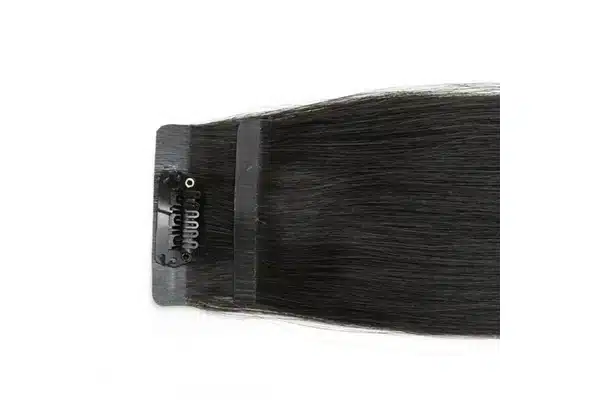
Compare the finished weft, not only the gram label. The width, hair distribution, and clip positions affect how it feels and blends.
Use a finished sample
Two one-piece products can weigh the same but put that hair across different widths. A narrower piece may look fuller in the center, whereas a wider piece may appear flatter but cover more of the back. Ask for photos of the full piece from clip line to ends, then test a finished sample on a model or fitting head.
Imagine a client who wants more fullness for an evening updo. The salon holds one wide sample across the back. The clips fit, but the side hair is thin, so the added back section looks separate. The sensible next step is not another identical wide piece. Try smaller side pieces or discuss a different temporary format. This is an example of how to test fit, not a recorded client outcome.
For fine hair, lift the overlay hair in the client’s usual part. If the clips show or the weft feels heavy in one line, a lighter design may help. A different layout may help more. Never push a single heavy piece into a narrow, weak section just to keep the fitting quick.
Is a One Piece Clip In the Same as a Halo?
No. A clip-in extension attaches via clips on its weft, while a halo extension sits on a wire or similar support and needs a different fit check.
Both can be quick to put on, and both can look like one main piece when held in a hand. On the head, they distribute support differently. Ask the client whether they prefer clips, how they part their hair, and where they want volume. Our halo versus clip-in guide compares the formats in more detail.
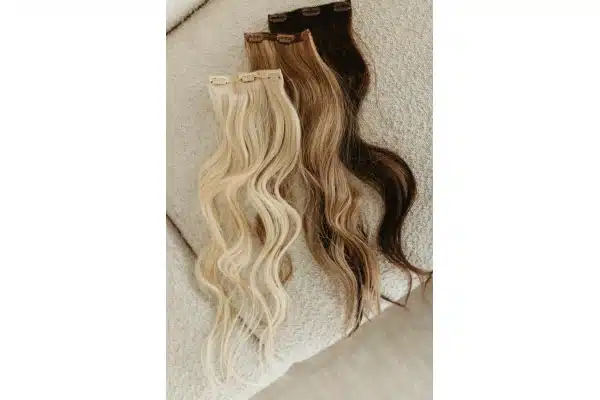
For a salon’s first sample order, request a clear description of the attachment: number and placement of clips, usable weft width, total weight, and length. “One piece” alone is not enough to repeat a good order.
What If One Piece Looks Obvious After Fitting?
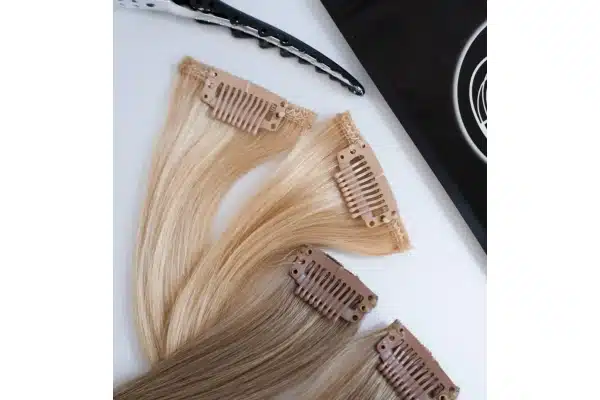
Look for the visible gap: at the sides, along the natural end line, or above the clips. Each gap suggests a different change.
If the sides look empty, add targeted side pieces rather than forcing the main weft higher. If the natural hair stops well above the extension ends, compare a shorter piece or a fuller set before cutting away most of the new hair. If the clips show at the top, try another placement or format with enough overlay hair.
We ask buyers to keep the first approved clip in hair extensions sample and note which problem it solved. “One piece for side volume” and “one piece for back fullness” may need different widths. That note is more useful for the next order than a photo with only the word “natural” under it.
My View
We would start with the client’s requested change, not the promise that one piece is faster. A wide clip-in can be a simple answer when the back needs a little volume and the natural hair can cover the clips. It is a poor shortcut when the sides, layers, and lower outline all need help.
The sample tells the truth quickly. Place it at the intended height, let the hair fall, and look from the front and both sides. If the back looks full but the face frame looks empty, try a set with smaller pieces. If the client feels too much weight at one clip line, do not keep adding hair to that line. For a repeat salon order, write down width, total weight, clip layout, length, and color. That is how a useful one-piece product stays repeatable instead of becoming a vague catalog name.
Frequently Asked Questions
Can one piece add length as well as volume?
It can add subtle length, but a dramatic increase in length may leave the sides looking thin or a blunt ends. Test it against the client’s haircut before promising a full-head effect.
Is one piece easier for fine hair?
It may be quicker to fit, but the weight sits on one clip line. Check coverage and comfort. A lighter multi-piece layout may distribute hair better for some clients.
What should a salon request in a one-piece sample?
Ask for the finished width, grams, clip count and locations, length, shade, and a photo showing the ends. Try the piece on a fitting head before stocking several colors.
Conclusion
One piece clip in hair extensions are useful when one area needs a modest change and the weft stays comfortable and hidden. For a balanced full-head length change, several pieces may fit better. Compare a finished sample on the head before deciding which format to stock.