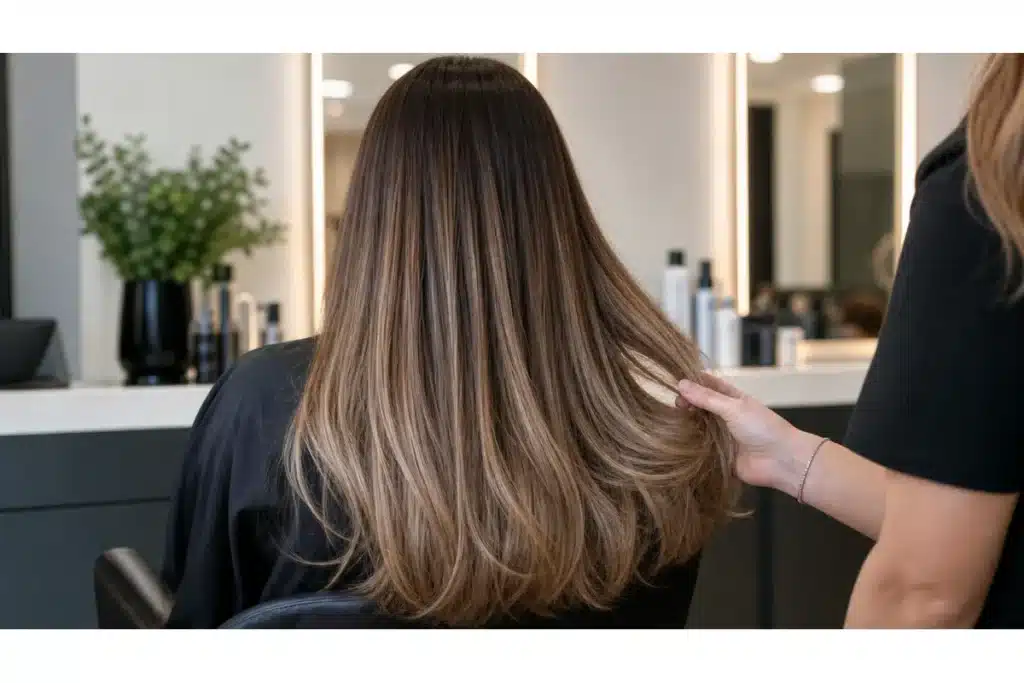
We often hesitate to pay a premium for those vaguely defined “fill percentages” or “fullness ratings.” Behind these seemingly precise figures, the underlying standards often lack transparency. Savvy consumers should always ask the supplier before making a purchase: exactly what standard was used to measure this figure?
Compared to unsorted bundles of the same specification, Double Drawn (DD) hair extensions have more short hairs removed and a higher proportion of long hairs, giving the ends a fuller appearance. However, a “fullness percentage” is meaningless unless the supplier clearly defines three things: the length cutoff threshold, the counting or weighing method, and the sample condition. We must compare these details line by line before treating two quotes as equivalent.
The hardest part isn’t asking the factory to make the ends thicker; it’s agreeing on a process that the factory can reliably replicate in future production runs. Our workflow starts by analyzing the actual internal length distribution of the hair bundle, then translating sales buzzwords into a usable Sample Inspection Sheet.
What Does “Double Drawn” Actually Tell Buyers?
The term “Double Drawn” describes only the length-sorting process and the final silhouette of the hair bundle. It does not verify cuticle condition, color stability, or longevity.
Separate length distribution from overall quality
A bundle can contain many shorter strands alongside its longest strands. Removing more of those shorter lengths can make the lower part look fuller. That is a different question from whether the hair tangles after washing or whether its attachment is suitable for the client.
A natural bundle of hair contains a mix of short and long strands. Removing more short strands makes the bottom half look significantly thicker, but that is entirely separate from whether the hair tangles after washing or whether the texture suits your client.
It is also vital to distinguish between Double Drawn hair and Double Weft construction:
- Double Drawn refers to the length distribution throughout the hair bundle.
- Double Weft refers to the structural sewing at the top seam (a thicker seam does not mean fuller ends).
We never assume “Double Drawn” represents a fixed 80% or 90% specification. Even with this label, suppliers must still clarify acceptable lengths, tolerances, and measurement methods.
When negotiating a purchase, compare these core parameters individually:
| Product parameter | What the label may suggest | What we ask the supplier to confirm |
|---|---|---|
| Length distribution | The ends contain more long strands. | The supplier defines the length groups and acceptance method. |
| Finished length | The bundle matches its stated length. | The buyer agrees the measuring start point and any trimming allowance. |
| Net hair weight | The pack contains the quoted amount of hair. | The supplier states whether clips, tape, or the seam are included. |
| End profile | The bottom looks dense rather than tapered. | The buyer approves a dry physical sample under agreed viewing conditions. |
Ask what changed in the quote
Our training FAQ uses an 18-inch order to explain this point. It contrasts a mix of 18-, 16-, and 14-inch hair with a mix containing only the longer two groups. The explanation is about using more long material, not simply adding another quality label.
We would use that example to ask a buyer what they want to change: fewer short strands, more total hair, or a different finished outline. Those are separate requests. The old training example is not a current recipe or percentage guarantee for every Hibiscus Hair product.
How Should Salons Interpret “80%” or “90%” Fullness Claims?
When faced with these marketing claims, the first question should be: What is the denominator, and where is the length cutoff? Without a clear baseline, these percentages cannot be meaningfully compared.
Numbers Require Standardized Measurement Methods
Imagine a sample of 100 strands. If 80 of those strands meet the agreed length cutoff, the sample is 80% full by strand count. However, that does not mean the bottom of the bundle weighs 80% of the total weight, nor does it mean the finished pack is 80% heavier overall.
The dry weight method answers a completely different question: longer or thicker strands naturally weigh more than shorter or finer ones. Therefore, strand-count percentages and weight-based percentages can never be treated as equivalent.
Before accepting any percentage claim, ask these five questions:
- How long must a strand be to meet the “qualifying length”?
- Is the percentage calculated by strand count, dry hair weight, or another metric?
- Was the sample measured before or after final end-trimming?
- Are the hair strands evaluated separately from attachments (clips, tape, seams)?
- How was the sample drawn from the production run?
Standard RFQ Template Specification: “Please state whether the percentage is calculated by strand count or dry weight, provide the qualifying length cutoff, specify if attachments are excluded, state the sample size, and define the acceptance tolerance.”
Keep the retail claim within the evidence
For US brands, the wording also matters when a supplier specification becomes consumer-facing advertising. FTC guidance says advertisers need evidence for objective claims before the advertising runs. We therefore avoid turning an unexplained supplier percentage into a precise consumer-facing promise. [1]
A product photograph can show an end profile. It cannot establish an exact fiber percentage. The same limit applies to a close-up taken against a dark background or a bundle folded over to appear thicker.
How Buyers Can Inspect Samples Without Guesswork
The correct approach is to establish a repeatable visual comparison procedure first, and agree on a destructive testing workflow if numerical ratios are contractually required.
Conduct True Apples-to-Apples Comparisons
When evaluating samples side by side, ensure they share identical length, color, texture, net hair weight, and attachment type. The hair should be dry, neatly laid out, and stretched consistently under uniform lighting against a neutral background.
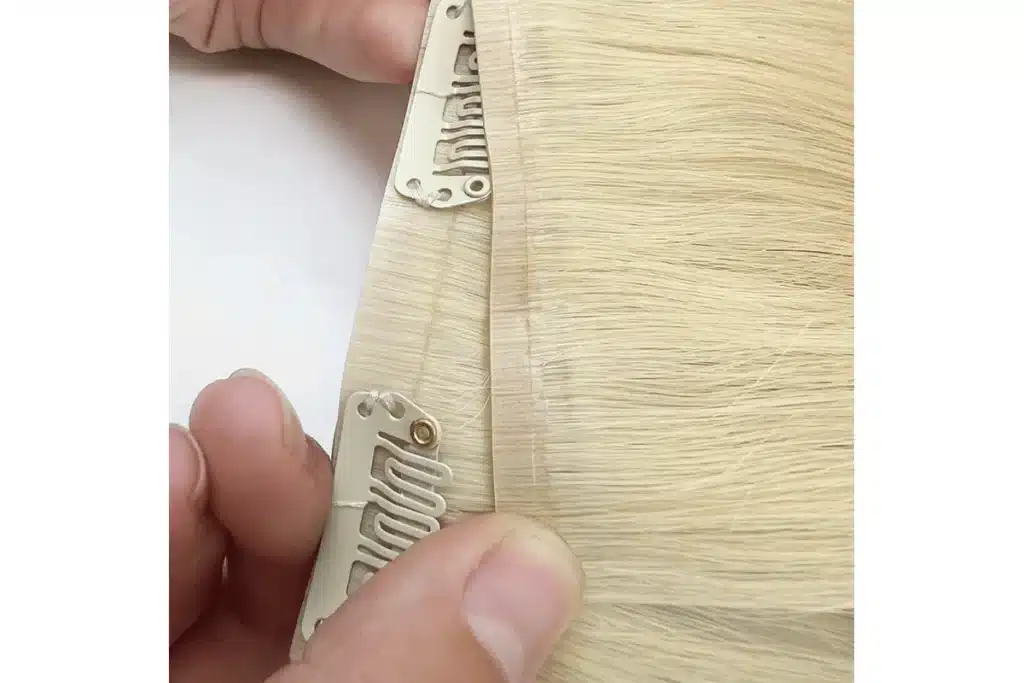
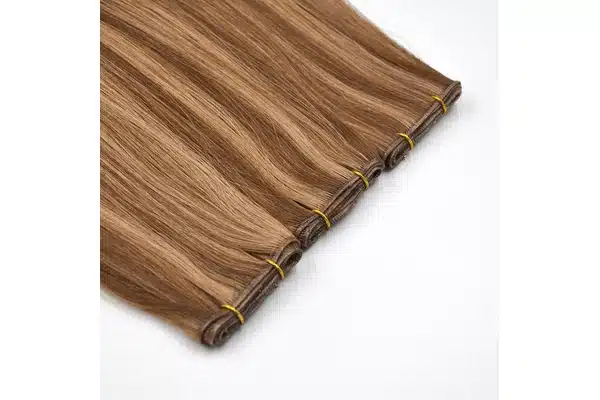
When inspecting wefts, always measure and record the seam width. Spreading the exact same amount of hair over a wider weft seam will naturally make the hair ends look thinner.
Don’t Confuse Visual Screening with Strand Counting
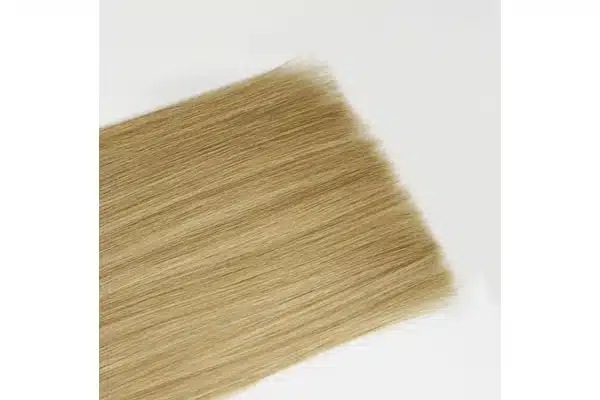
A full weft can be visually evaluated for taper, but visual inspection is not a quantitative measurement. Truly sorting and weighing every strand by length usually requires dismantling a sample.
Keep physical approved samples together with written specification sheets. Neither memory nor digital photos can replace a physical reference sample.
Agree in advance whether destructive testing is permitted.
Always retain a second, untouched golden sample (counter-sample) to evaluate future repeat orders.
Specify testing procedures, sampling methods, acceptance criteria, and non-conformance protocols in written purchasing contracts.
Is Fuller Always Better for the Salon Client?
Not necessarily. Fuller ends support dramatic, thick profiles, but stylists must balance the extension density with the client’s natural hair capacity and scalp health.
Fullness is not permission to add more weight
Achieving a fuller silhouette does not always require adding overall weight. Often, salons simply adjust the ratio of hair lengths within the bundle rather than increasing the total grammage. Stylists should evaluate the realistic movement of the hair and ensure the client’s natural hair can safely support it.
The American Academy of Dermatology (AAD) warns that repeated, overly tight pulling from hair extensions can cause traction alopecia, noting pain as a key warning sign. High-quality extensions should never be an excuse for clients to endure uncomfortable tension. [2]
Match the Extensions to the Desired Profile
For our clip in hair extensions range, we ask buyers to check piece widths and clip positions alongside the end profile. A client may need fewer pieces or a different layout, not the fullest available set.
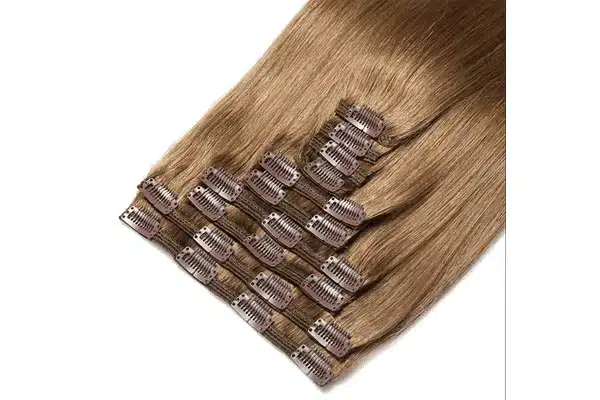
A salon planning soft layers may not need the same end profile as a salon creating a blunt finish. We recommend sending the desired finished shape with the sample request, rather than asking only for the highest percentage.
Request a Hair Sample and Fullness Specification
My View
From our factory perspective, the useful part of a drawn-grade discussion is the specification behind it. We want the buyer and supplier to describe the same finished product before they compare prices. A more impressive number does not solve a disagreement about how that number was measured.
We would rather work from a retained sample, a stated net hair weight, and a clear end-profile requirement than a long list of grade names. Those details give a salon something it can check when the next shipment arrives.
For a private-label buyer, we also suggest separating purchase specifications from retail promises. A supplier’s shorthand may help start a conversation, but the brand still needs to know what it can support publicly. That is where careful sample approval earns its place: it reduces guesswork without pretending that one label proves every aspect of quality.
Frequently Asked Questions
Does double drawn mean every strand has exactly the same length?
We would not assume that from the name alone. Ask for the actual length-distribution specification and check the finished sample rather than treating the label as a count result.
Is double drawn hair the same as Remy hair?
No. We use drawn terminology to discuss length sorting. Remy terminology concerns hair alignment. Neither label replaces checks of processing, washing performance, or attachment quality.
Can we verify a percentage from a photograph?
No. A photograph can help compare visible taper under controlled conditions, but it cannot establish the number or weight of fibers meeting a length cutoff.
Conclusion
We judge double drawn hair by the specification and sample behind the label. Define the percentage, compare equivalent products, and keep the approved reference for repeat orders. The right choice is the end profile the salon can use, not simply the largest number on a quote.