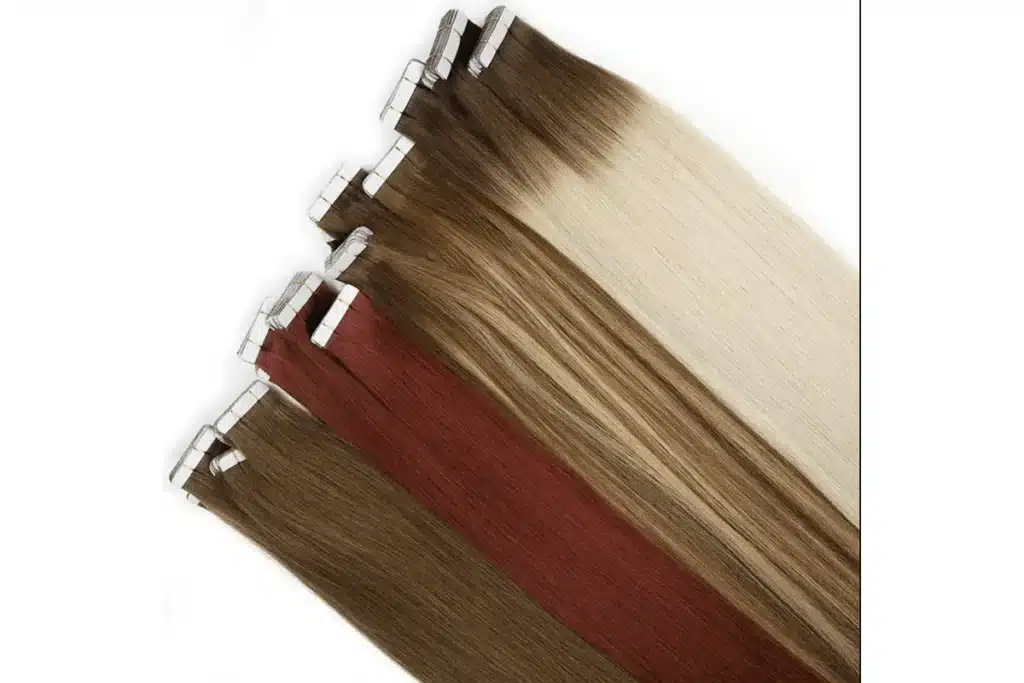
Washing a clip-in set while it is already tangled can make the knots tighter and pull on the wefts. The result may be frizz, thin ends, or a set that no longer blends well with the client’s natural hair.
Clip in hair extensions should be detangled before washing by removing the set, laying it on a clean surface, supporting the weft, and brushing from the ends upward in small sections. The exact approach depends on texture, length, product buildup, and how much tangling is present. Do not pull through a dense knot or brush the set while clipped into the hair.
For salons, retailers, and wholesale buyers, this care step protects more than the appearance of the set. It can affect clip security, end fullness, customer satisfaction, and whether a client thinks the product is reusable.
Why should clip in extensions be detangled before washing?
Detangling first can reduce unnecessary pulling because water and cleanser may tighten loose knots, especially in long, wavy, or lightly processed hair.
The extension set should be removed before the process begins. Brushing a tangled clip-in while it is attached can pull on the client’s natural hair and place uneven pressure on the clips. Once the set is removed, the stylist or client can see where the tangles sit and work through them without adding tension to the scalp.
| Hair condition | Detangling approach | Risk if rushed |
|---|---|---|
| Loose end tangles | Brush from ends upward in small passes | Ends may thin from repeated pulling |
| Product buildup near weft | Separate sections and support the top seam | Clips or stitching may receive extra stress |
| Long wavy texture | Use wide, controlled sections and minimal force | Wave pattern can become frizzy or stretched |
| Dense knot | Work at the edges before washing | Pulling through can tighten the knot further |
For a set that tangles repeatedly, the salon should consider more than brushing technique. Heat use, product buildup, storage, color processing, and the natural direction of the hair can all affect the result.

What tools and handling method are suitable?
A suitable method uses a clean wide-tooth comb or extension brush, one hand to support the weft, and short strokes that start at the ends.
The clip-in set should lie flat on a clean towel or be held securely by the weft. Start with the ends, remove loose tangles, then work gradually toward the top. The person brushing should not begin at the root area and force the tool downward. That approach can tighten knots and put pressure on the clip base.
For a salon retail sale, a simple care card should tell the customer not to use the set while sleeping or swimming. These habits can increase tangling and make the first detangling step much harder. The clip in extension lifespan guide gives buyers a wider view of how use and care affect the set over time.
In after-sales communication, we often ask whether the client stores the set loose in a drawer or keeps it clean and secured after removal. Storage can be the hidden cause when a good set starts tangling more quickly between wears.

When should a client use extra care around the weft?
Extra care is needed around the weft when tangles reach the clip base, when product buildup is close to the seam, or when the set has long hair with lighter processed ends.
A brush should not pull the clip base. Hold the weft close to the section being brushed, then work below that hand. If a knot sits near the seam, work from the outside edges and do not force the brush through the center. The goal is to separate the hair gradually without stressing the attachment area.
For a blonde or very light color, the ends may need more gentle handling after frequent heat or color services. This does not mean every light shade will tangle. It means the salon should set realistic care expectations and encourage the client to address tangles before they become dense.
For buyers building a retail range, clip in set design can help explain why weft width, clip count, and set weight should match the intended client use.
How should the set be washed after detangling?
After detangling, the set should be washed gently with the clips closed, without rubbing the hair into a ball or soaking it in a way that twists the lengths together.
The hair should be handled in the natural direction from the top toward the ends. Cleanser should be worked through carefully and rinsed without twisting. Conditioner can be applied through the mid-lengths and ends, but a client should avoid leaving heavy product around the clip base or weft area.
After washing, press out excess water with a towel instead of rubbing. Lay the set flat or use a controlled drying method that does not stretch the weft. Brush only when the hair has reached a manageable damp or dry condition for its texture. The exact step depends on the hair type and the client’s normal styling method.
What should retailers tell customers about recurring tangles?
Retailers should tell customers that recurring tangles need a simple check of wear habits, storage, heat use, product buildup, and whether the set still suits the intended use.
One soft first touch does not prove that a set will stay easy to manage through repeated wear. Buyers should test a representative sample after brushing, a gentle wash, and normal storage. For wholesale orders, this gives a more useful picture of repeat-order quality than a short product demonstration.
From the factory side, we usually suggest that buyers separate a hair-quality concern from a care issue before they make a conclusion. Ask when the tangling began, where it appears, how the set is stored, what products are used, and whether the hair is worn during sleep or activity. This gives the salon a clearer basis for an after-sales response.
My View
From our factory perspective, detangling before washing is a small step with a large effect on clip-in care. We usually suggest that salons demonstrate the end-to-top brushing method when they sell a set, especially to first-time users. The client should understand that clip-ins are removable and should be treated as a separate hair piece, not washed and brushed while attached. For wholesale buyers, a clear care card can reduce avoidable returns because it tells the customer how to protect the clips, ends, and weft before the first wash.
Frequently Asked Questions
Can a client detangle clip in extensions while wearing them?
Light brushing can be done carefully during wear, but dense tangles should be handled after the set is removed. Removing the set reduces pulling on natural hair and makes it easier to support the weft.
Should clip in extensions be brushed when wet?
The safest approach depends on texture and the size of the tangle. Avoid force. For many sets, it is better to detangle before washing and then use minimal handling while the hair is wet.
Why do clip in extensions tangle near the ends?
Ends can tangle from friction, heat, storage, product buildup, or repeated wear. The salon should check the client’s routine before assuming that one cause explains every set.
Conclusion
Detangle clip in extensions before washing by removing the set, supporting the weft, and working from the ends upward with controlled strokes. This simple process can protect the hair, clips, and seam while giving salons and buyers a clearer way to manage care and recurring tangles.