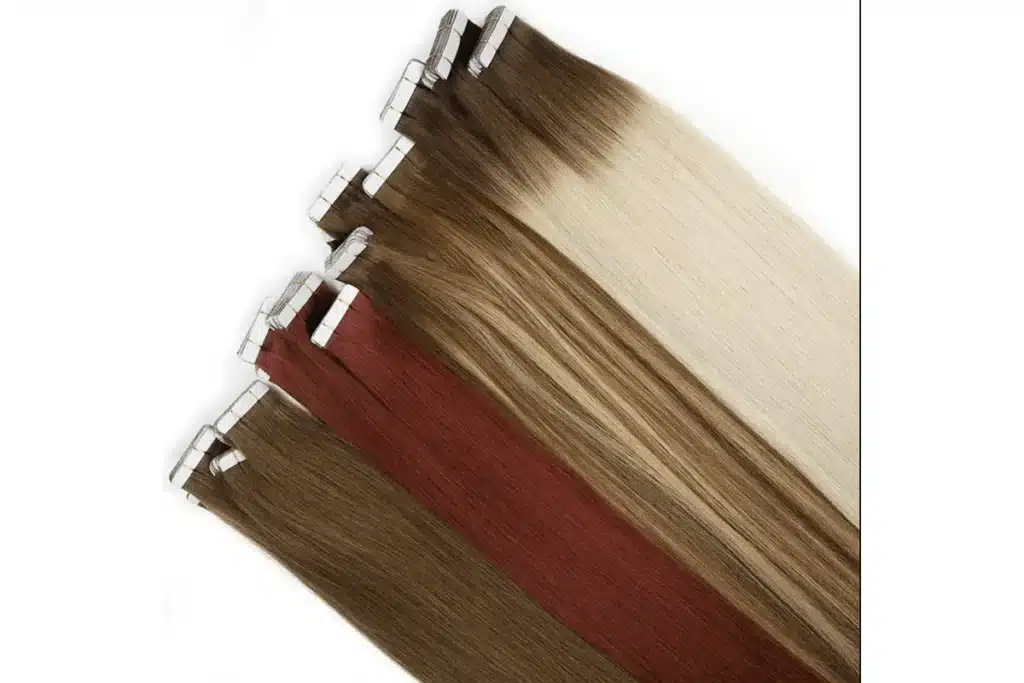
Short hair can make clip in extensions look obvious when the client uses a full set without changing the placement plan. A visible shelf at the ends or clips that show near the crown can turn a simple volume service into a return risk.
Clip in hair extensions can look natural on short hair when the set weight, weft width, placement height, and blend cut match the client’s layers and density. Most short-haired clients need selective placement rather than every weft in the set, and a trim may be needed to soften the line between natural hair and added length.
For salons and retailers, this topic is not only about choosing a longer set. The practical question is how to create enough density through the lower sections while keeping the clips covered and the natural ends blended into the extension hair.
What makes clip ins harder to blend with short hair?
Short hair is harder to blend because the natural ends can sit above the extension hair and create a visible horizontal line when the added hair is too long, too heavy, or placed too high.
The client’s layer pattern matters as much as the overall length. A blunt bob can need a different plan from a textured lob with soft layers. Very short crown layers may limit how high the stylist can place a weft. The salon should assess the side profile and back view before selecting a set.
| Short-hair condition | Clip-in adjustment | Blend risk if ignored |
|---|---|---|
| Blunt lower edge | Use controlled lower-row volume and a blend trim | A hard line can show above the extensions |
| Fine density | Choose lighter grams and fewer clips | Clips may show or feel heavy |
| Short crown layers | Keep upper wefts lower and leave coverage | Top clips may become visible |
| Dense natural hair | Add enough width through lower sections | Natural hair may look thin against extension ends |
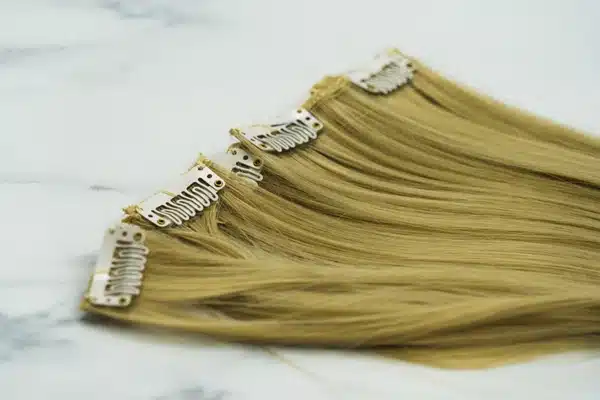
A set can have soft hair and still be the wrong choice for short hair. The buyer should check whether the wefts can be placed low enough to hide the clips while still carrying enough hair to blend with the natural ends.
Where should a stylist place clip in wefts on short hair?
A stylist should usually start with lower, controlled rows and keep enough natural hair above each clip to cover the attachment during normal movement.
The lowest row should not sit so close to the neckline that the weft becomes visible when the client turns the head. The upper rows should remain below the area where short layers separate. A stylist may use fewer wide pieces and more side-focused pieces rather than forcing every weft into the head.
In salon fitting, we often see a client use a top weft because the package includes it, even though the crown has too little length to hide the clip. The better choice can be to leave that piece out. A natural-looking result is more valuable than using every component in the set.
For set selection, this clip in hair extension set design guide helps buyers compare clip count and weft width before they choose a standard retail configuration.
How do length and density change the result?
The result changes when the extension length or total grams exceed what the client’s natural hair can blend into comfortably.
Long extensions can make short natural ends more visible because the difference in length becomes more dramatic. A moderate length increase often gives a more believable result than a very long set. Density also needs balance. Too little added hair can create thin ends. Too much hair can make the client’s top layers look flat by comparison.
For an online order, salons should ask for back and side photos in natural light. The client’s root color alone is not enough. End color, highlight placement, and the texture of the natural hair should be considered. A related clip in color matching guide is useful when the client has dimension through the ends.
Buyers should treat the listed grams as a starting point. The usable fullness at the ends and the width of each weft affect the actual blend. This is why a sample set should be tested on the client type the salon expects to serve, not only held against a mannequin.
When does a blend cut become necessary?
A blend cut can become necessary when the natural hair has a blunt edge, very short layers, or a clear length line that remains visible after the clips are placed.
A trim can soften the transition between natural hair and added hair. It should be planned as part of the service, not treated as a correction after a poor product choice. The stylist should first place the set and assess the movement. Then the stylist can decide whether light point cutting or soft layering will improve the connection.
The cut should not be used to hide an unsuitable set. If the set is much too long, too thick, or the wrong color, trimming may reduce the problem but not fully solve it. For repeat services, record the approved length, grams, color, and clip layout. This helps a salon keep the result stable across reorders.
What should retailers explain before selling a set?
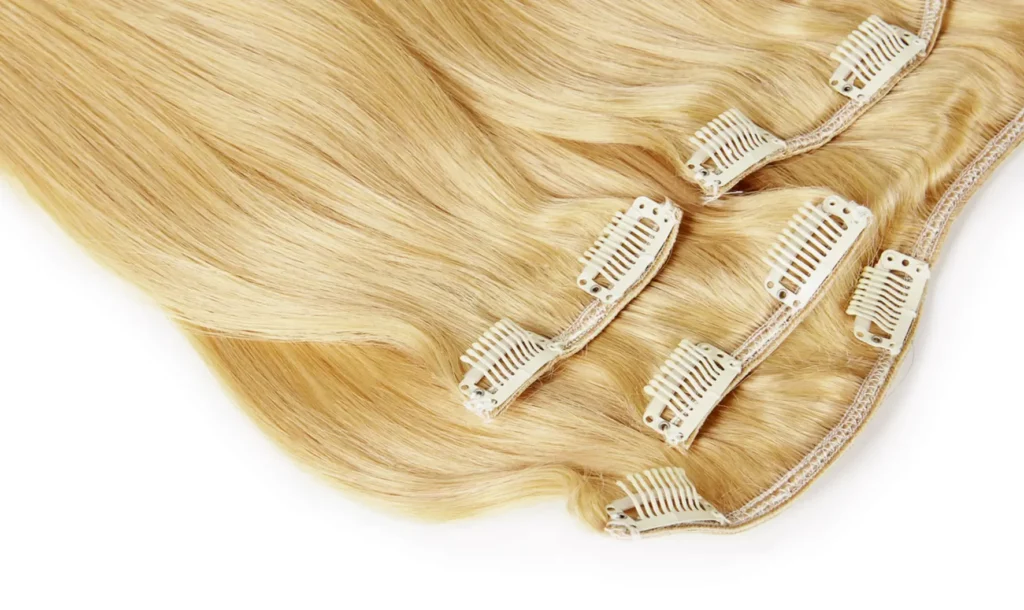
Retailers should explain that short hair often needs a placement plan, a compatible set weight, and sometimes professional blending rather than a one-size-fits-all full set.
The product page or sales message should state the total grams, number of pieces, weft widths, and the natural-hair conditions that can make clips more visible. Buyers should also provide simple care guidance: detangle before storage, avoid sleeping in clips, and rotate clip placement when possible.
For wholesale buyers, this information is important because a return can come from fit rather than from hair defects. A clear set specification supports better customer expectations. A retail buyer who understands that fine short hair may need fewer pieces is less likely to force a bulky install.
My View
From our factory perspective, short-hair clip-in success depends on restraint. We usually suggest that salons begin with the client’s shortest layers and lower coverage area, then choose the set that can blend into those limits. A heavier or longer set is not automatically better. In sample reviews, a controlled amount of hair with the right weft width often gives a cleaner result than a full set placed too high. For brands and distributors, it is useful to offer a clear set map and state the intended client density. This gives buyers a practical way to choose between lighter, standard, and fuller options before they expect a short haircut to blend into a long extension set.
Frequently Asked Questions
Can clip in extensions work with a short bob?
They can work when the bob has enough length to cover the clips and the stylist uses a lower placement plan. A blend trim may be useful when the natural ends are very blunt.
Should a short-haired client use every piece in a clip-in set?
Not always. Some clients get a more natural result by leaving out an upper or wide weft that their short layers cannot cover.
What length is easiest to blend with short hair?
A moderate length increase is often easier to blend than a dramatic change. The right choice depends on the natural layers, density, and whether the client accepts a professional blend cut.
Conclusion
Clip in extensions can look natural on short hair when the set is selected by layers, density, and coverage rather than by length alone. Use controlled lower placement, avoid clips that the client cannot hide, and test the final blend before deciding that every weft belongs in the service.