
Many hair brands fail online because they sell beautiful hair without a clear product system, trust story, or repeat-order plan.
To sell hair extensions online, you need the right product range, clear hair quality standards, strong photos, simple product pages, reliable shipping, honest marketing, and a supplier who can support repeat orders. Premium buyers also need stable color, weight, softness, and aftercare guidance.

I am from Hibiscus Hair Manufacturer. I work with salon owners, hair brands, educators, and wholesale buyers. From my factory view, selling hair extensions online is not only about opening a store. It is about building trust before the customer touches the hair.
What Products Should You Sell First?
Many new sellers want to launch every product at once. This can create stock pressure and weak product focus.
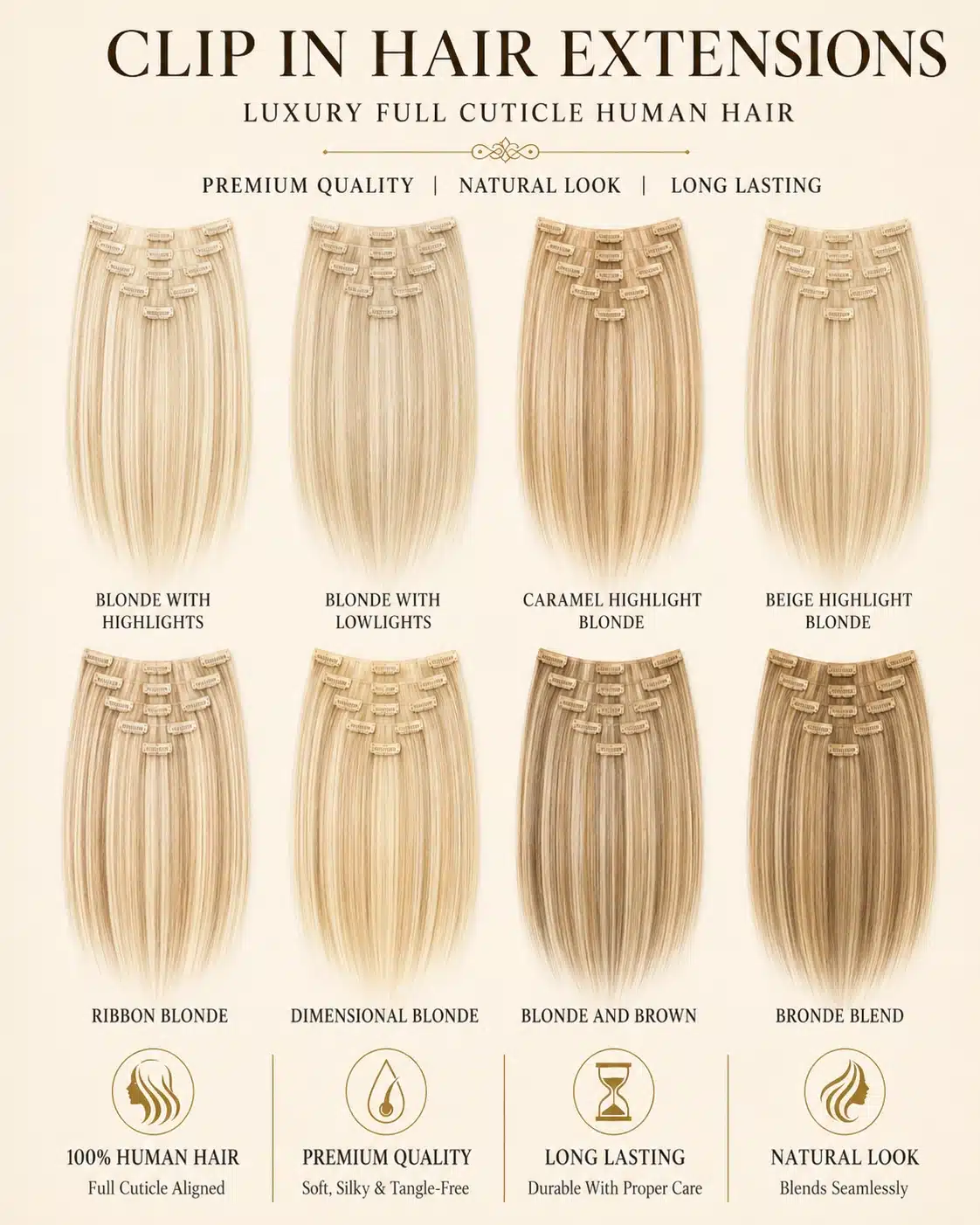
A new online hair extension business should start with products that are easy to explain, easy to photograph, and easy for the customer to understand. Clip ins, halo hair, tape ins, and wefts are often better starting points than a very large product range.
Start With Simple Products
Clip in hair extensions and halo hair extensions are easier for online buyers to understand. The customer can see how the product works. The customer can use it without a full salon appointment.
This makes these products useful for online retail.
Professional buyers can review our clip in hair extensions when building a simple online product line for temporary use.
Add Salon Products Carefully
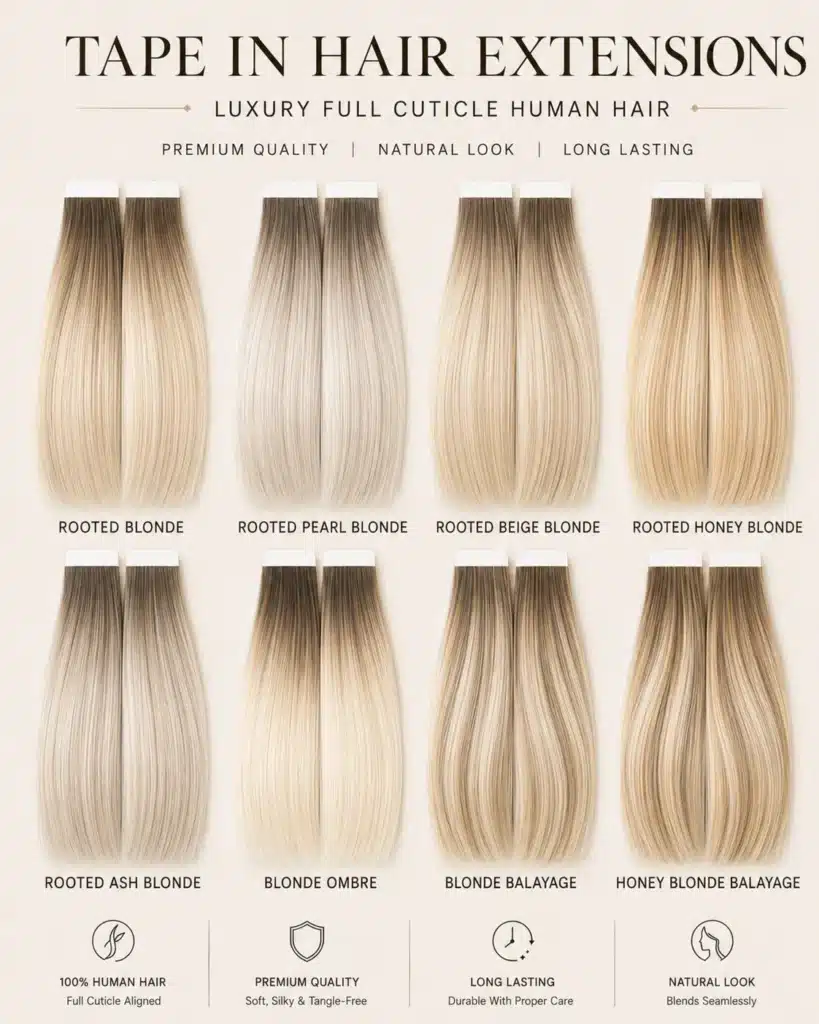
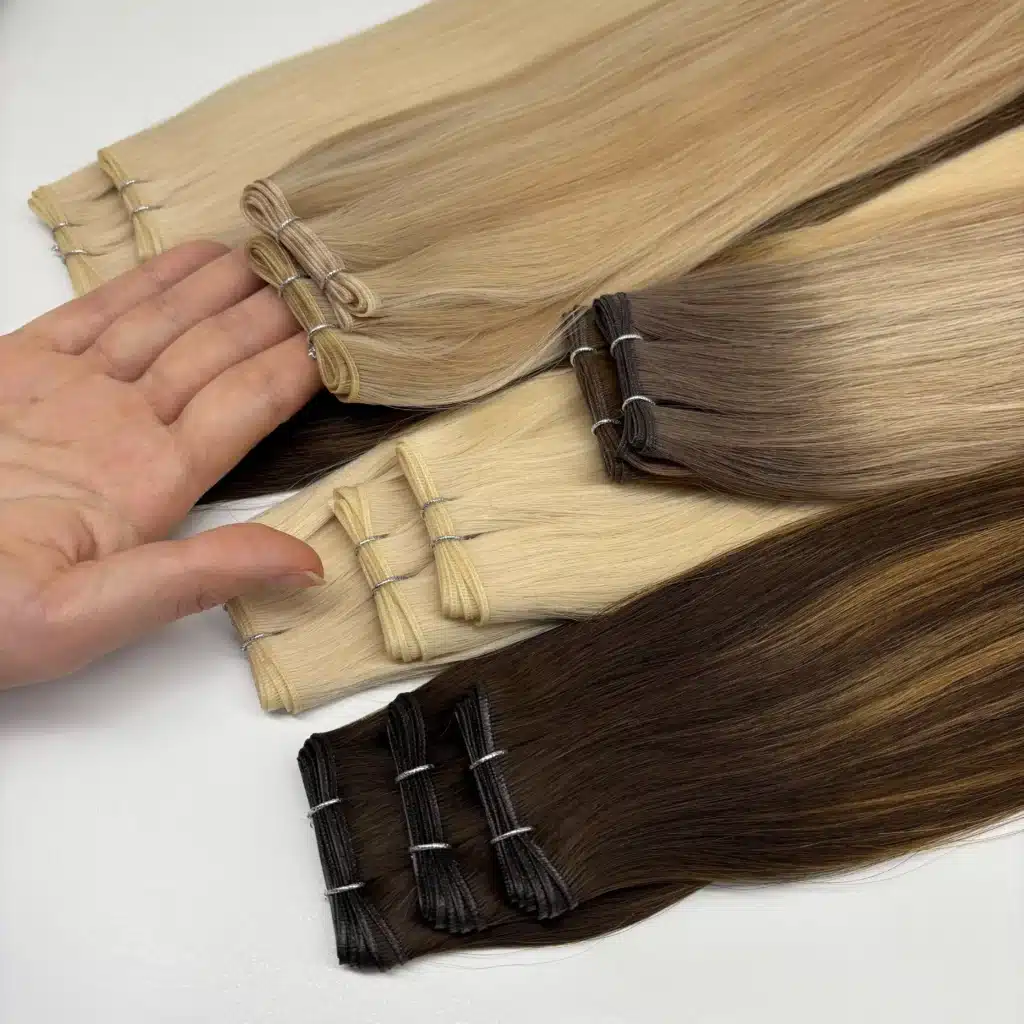
Tape in hair extensions and weft hair extensions are strong products for salons and professional brands.
But these products need clearer education. The customer should understand installation, maintenance, removal, weight, length, and color matching.
A brand can review our tape in hair extensions options before choosing tape sizes, shades, and packaging plans.
Avoid Too Many SKUs At The Beginning
Too many lengths, colors, and methods can make the store hard to manage.
A small but clear product line is safer. It helps the seller manage stock, photos, product pages, and customer questions.
| Product Type | Online Selling Difficulty | Best Use |
|---|---|---|
| Clip in hair extensions | Lower | Beginner online retail |
| Halo hair extensions | Lower | Easy temporary styling |
| Tape in hair extensions | Medium | Salon and professional buyers |
| Weft hair extensions | Medium | Salon brands and stylists |
| Keratin tips | Higher | Professional installation market |
E-commerce means selling products or services through online platforms or over the Internet. [1] This sounds simple. But hair extensions need more explanation than many normal products. The buyer wants to know color, length, grams, texture, hair quality, return policy, and care steps. A good online store should not only show products. It should help the buyer choose. If the customer cannot understand the difference between clip ins, tape ins, wefts, and keratin tips, she may choose the wrong product. This creates returns, complaints, and weak trust. A focused product line helps the brand sell with more clarity.
How Should You Build Trust Before Customers Buy?
Hair extensions are hard to judge online. The customer cannot touch the hair before buying. This creates trust problems.
You should build trust with clear hair quality claims, real product photos, color guidance, gram details, installation notes, aftercare advice, and honest product descriptions.
Explain Hair Quality Clearly
Not all human hair performs the same.
Full cuticle hair usually gives better softness, color result, styling result, and long-term wear. Single donor hair helps improve consistency. Lower-grade hair may look soft at first, but it may fail after washing.
A brand should explain these differences in simple words.
Show Real Product Details
Online buyers need visual proof.
A good product page should show:
- color in natural light
- hair ends
- top construction
- pack weight
- length view
- texture view
- before and after use if available
These details reduce doubt.
Be Honest About Limits
A strong brand should not promise too much.
Hair extensions still need care. Blonde hair needs careful maintenance. Tape ins need proper installation and removal. Wefts need correct row planning. Keratin tips need trained application.
| Trust Element | Why It Helps |
|---|---|
| Real photos | Buyers can judge product better |
| Clear grams | Buyers can avoid under-ordering |
| Color guide | Buyers can reduce mismatch |
| Care guide | Buyers can protect hair lifespan |
| Honest claims | Buyers can trust the brand |
The FTC explains that sellers must ship orders when they say they will, and if no shipping time is promised, they generally must ship within 30 days after receiving the order. [2] This rule shows why online trust is not only about marketing. It is also about operation. A hair brand should set clear expectations before the customer pays. The store should explain delivery time, processing time, refund rules, and support options. If the brand sells premium hair, the customer expects premium service too. Good hair and poor communication do not build a strong brand. Clear information makes the online buying process safer.
How Should You Price Hair Extensions Online?
Many sellers price hair by looking at competitors. This can lead to weak margins and poor positioning.
You should price hair extensions by hair quality, grams, length, method, processing cost, packaging, shipping, marketing cost, and target customer level. Low price alone is not a safe online strategy.
Price By Grams First
Pack count can confuse buyers.
One pack may be 25g, 50g, 100g, or 200g. A seller should calculate the real cost per gram first.
This makes pricing more accurate.
Price By Quality Level
Premium full cuticle hair should not be priced like low-grade processed hair.
The buyer should understand why better hair costs more. Better raw hair, better processing, stable color, and longer wear all affect price.
Include Hidden Costs
Online selling has extra costs.
A seller may need to pay for photos, ads, packaging, returns, platform fees, payment fees, samples, customer support, and influencer content.
| Cost Area | Why It Matters |
|---|---|
| Hair cost | Main product cost |
| Packaging | Affects brand value |
| Shipping | Affects customer decision |
| Ads | Affects traffic cost |
| Returns | Affects real profit |
| Support | Affects repeat buyers |
The U.S. Small Business Administration lists several ways to sell online, including your own ecommerce store, hosted ecommerce platforms, marketplace sites, social media, and ecommerce add-ons. [3] Each channel has a different cost structure. A brand that sells through its own site may need more marketing work. A marketplace may bring traffic but may also create stronger price competition. Social media can help build attention, but it still needs a clear checkout system. This is why pricing should include channel cost. A cheap price may win one order, but it may not support long-term business.
What Marketing Helps Sell Hair Extensions Online?
Many brands post product photos and wait for orders. This is not enough.
Hair extension marketing should educate buyers, show real results, explain product differences, and help customers choose the right hair. Content, SEO, short videos, email, and customer photos can all support online sales.
SEO Builds Long-Term Traffic
Search traffic can bring buyers who already have a problem.
A customer may search “how many packs of hair extensions do I need” or “tape in extensions vs weft extensions.” If your article answers the question clearly, the buyer may trust your brand more.
Social Content Builds Visual Trust
Hair extensions need visual proof.
Short videos, color comparisons, before-and-after photos, and installation clips can help buyers understand the product faster.
Email Helps Repeat Buyers
Hair extensions are not always a one-time product.
A customer may need replacement hair, new colors, care tips, or seasonal promotions. Email can help the brand stay connected.
| Marketing Channel | Best Use |
|---|---|
| SEO blog | Answer buyer questions |
| Product photos | Show texture and color |
| Short video | Show movement and real use |
| Support repeat sales | |
| Customer photos | Build trust |
| Buyer guides | Reduce wrong orders |
FTC guidance on endorsements, influencers, and reviews explains that advertising and endorsements should be honest and that material connections should be disclosed. [4] This matters for hair extension brands because influencer photos can affect buying decisions. A brand should avoid fake claims, fake reviews, and unclear paid promotions. Honest marketing may grow slower, but it protects the brand. A professional buyer wants real information. She wants to know what hair quality she will get, how long the hair can last, and how to choose the right product. Education can sell better than hype.

How Should You Choose A Supplier For Online Hair Extension Sales?
A weak supplier can damage an online brand fast. One bad batch can create many complaints.
You should choose a hair extension supplier by checking hair quality, repeat-order consistency, color stability, packaging support, MOQ, production time, and communication speed.
Check Hair Quality Before Scaling
A seller should test samples before a large order.
The test should include washing, brushing, heat styling, color checking, shedding checking, and end quality checking.
Check Repeat-Order Stability
One good sample is not enough.
A brand needs stable quality across future orders. This is very important when the online store starts to grow.
Check OEM And Packaging Support
Online brands need packaging.
Good packaging helps the customer feel value. Private label support also helps the seller build a stronger brand identity.
Professional buyers can learn more about our factory background through Hibiscus Hair Manufacturer before choosing a long-term supplier.
| Supplier Check | Why It Matters |
|---|---|
| Hair quality | Protects customer satisfaction |
| Color stability | Reduces mismatch complaints |
| Weight consistency | Protects product page accuracy |
| Packaging support | Builds brand value |
| Production time | Supports delivery promises |
| Communication | Solves problems faster |
Online selling makes customer feedback visible. If the hair tangles, sheds, or dries fast, customers may leave reviews. If the supplier cannot repeat the same color or weight, the brand may lose trust. This is why supplier choice is not only a cost decision. It is a brand decision. At Hibiscus Hair Manufacturer, we focus on luxury-grade, full cuticle, single donor hair for salons, brands, and serious wholesale buyers. For online brands, stable quality is the base of long-term growth.
My View
From my factory view, selling hair extensions online is not only a website project. It is a product system.
A strong online hair brand needs clear products, stable hair quality, honest photos, correct grams, simple explanations, and reliable fulfillment.
My father, John Wang, started from raw hair materials in 1997. This taught us that hair quality starts before the product page. In 2003, we moved into full cuticle hair extension production. In 2008, we started international trading and OEM / ODM service. We have seen many online hair brands grow. The strongest brands usually do not sell the cheapest hair. They sell clearer value.
They explain hair quality.
They help buyers choose.
They control color and weight.
They work with stable suppliers.
This is why I suggest online sellers start with a focused product line and a strong quality base. A beautiful store can bring traffic. But only stable hair can bring repeat orders.
Conclusion
To sell hair extensions online, you need clear products, trusted hair quality, honest marketing, reliable delivery, and a supplier who supports repeat growth.
Hibiscus Hair Manufacturer has been dedicated to producing high-quality hair extensions for 25 years and is a recognized leader in the industry. If you are interested in finding a reliable hair extensions supplier and wholesale for your brand, please visit our website for more information
References
[1] E-commerce ↩
[2] FTC Consumer Advice: Online Shopping ↩
[3] U.S. Small Business Administration: 5 Ways to Start Selling Online ↩