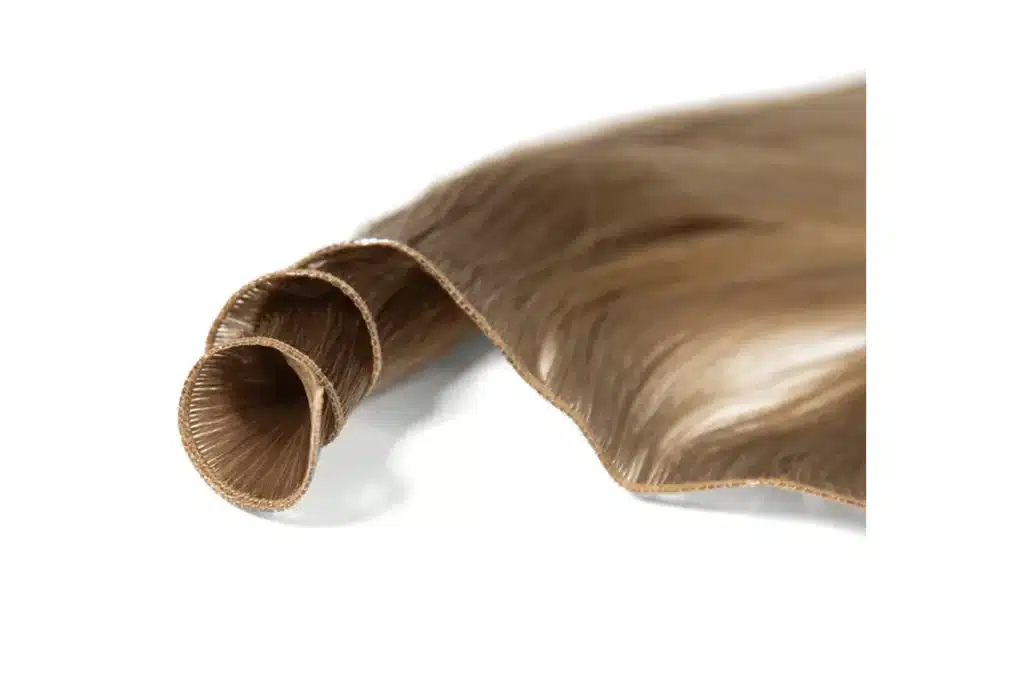
Long tape weft hair extensions can save salon service time, but they can also create complaints if the tape, weight, sectioning, or aftercare is wrong.
Long tape weft hair extensions are wider tape-based wefts designed to add length and volume with faster placement than many small tape tabs. They can work well for salons that need efficient installs, flat roots, and a natural finish, but the result depends on adhesive strength, hair quality, PU flexibility, and correct client selection.
For salon owners and hair extension brands, this is not just another tape-in method. It is a product structure decision. A long tape weft can improve service speed, but only if the hair remains soft after washing and the tape holds cleanly through wear, removal, and reapplication.

What Are Long Tape Weft Hair Extensions?
Long tape weft hair extensions are wider tape-based weft pieces. They use adhesive tape to attach the weft to natural hair, usually through a sandwich-style application or a similar tape placement method.
Compared with many small tape-in pieces, long tape wefts can cover more area faster. This makes them useful for salons that want efficient volume work, faster service time, and a flatter finish than some bulky weft methods.
But the wider structure also means the stylist must control weight and placement carefully. If the section is too thin, the weft may feel heavy. If the tape is poor, slipping can happen. If the PU or tape base is too stiff, the client may feel bulk near the root.
Long Tape Weft vs Regular Tape-In Extensions
Many buyers confuse long tape wefts with regular tape-in extensions. They are related, but they are not the same product structure.
Regular tape-ins usually come as smaller individual tabs. Long tape wefts are wider strips that can cover more area with fewer pieces. This can save time in salon service, but it also requires better control over sectioning and weight.
| Feature | Regular Tape-In Extensions | Long Tape Weft Hair Extensions |
|---|---|---|
| Piece size | Smaller individual tape tabs | Wider tape weft strips |
| Installation speed | Slower, more individual placement | Faster coverage |
| Best use | Detailed placement and fine adjustment | Efficient volume and length work |
| Weight control | Easier to customize piece by piece | Needs careful section planning |
| Risk | Too many tabs can create bulk | Wide strip may feel heavy if misused |
| Buyer check | Tape hold, PU thickness, hair quality | Tape hold, strip flexibility, weight balance |
A long tape weft is not automatically better. It is better when the salon needs faster coverage and the client’s natural hair can safely support the wider tape structure.
When Should Salons Choose Long Tape Wefts?
Long tape wefts are best for salons that need faster installation, flat attachment, and efficient volume. They are useful when the client has enough natural hair to hide and support the weft.
Faster service time
Long tape wefts can reduce placement time because each strip covers more area. This can help busy salons improve service efficiency.
But speed should not replace judgment. The stylist still needs clean sections, correct placement, and enough natural hair to support the tape.
Flatter finish than some bulky methods
A good long tape weft can sit flatter than some traditional weft systems. This helps clients who want volume without heavy beads, clips, or raised rows.
The tape base must stay flexible. If the base feels stiff, the client may notice bulk near the root.
Good option for volume-focused clients
Long tape wefts can be useful for clients who want visible volume improvement without a long installation session.
They are not always the best option for very thin or fragile hair. In those cases, smaller tape pieces or lighter methods may be safer.

How to Apply Long Tape Weft Hair Extensions
Now, let’s get into the actual installation. Applying long tape wefts is straightforward, but attention to detail is key to ensuring a secure, long-lasting result.
Step 1: Prep the client’s hair
Start with clean, dry hair. Remove oil, conditioner residue, and styling product before installation. The tape needs a clean surface to hold properly.
Do not install long tape wefts on damp hair. Moisture can weaken the adhesive result and increase slipping risk.
Step 2: Section the hair carefully
Create clean horizontal sections starting near the nape. The section should be thin enough for the tape to seal, but strong enough to support the weft weight.
Too much hair inside the sandwich can reduce hold. Too little hair can create tension.
Step 3: Apply the Tape Wefts
Place the first tape weft under or along the prepared section, depending on the product design and salon technique. Align it evenly and avoid placing it too close to the scalp.
Then apply the matching tape piece to secure the natural hair between the adhesive surfaces. The section should lie flat without pulling.
Step 4: Press and Seal the Bond
Press the tape firmly with a tape extension tool or sectioning clamp. Even pressure helps the adhesive bond cleanly.
Do not overheat the tape unless the product instructions require heat. Many tape systems are pressure-based, and unnecessary heat can affect adhesive behavior.
Step 5: Blend and check comfort
After installation, blend the extensions with the client’s natural hair. Check the root area, movement, and comfort before the client leaves.
If the weft feels heavy, pulls, or creates a ridge, adjust the placement. A clean result should feel flat, secure, and comfortable.
Here is a quick salon installation checklist:
| Check Point | What to Confirm | Why It Matters |
|---|---|---|
| Hair is clean and dry | No oil, conditioner, or styling residue | Better tape hold |
| Section is balanced | Not too thick, not too thin | Prevents slipping or tension |
| Placement is flat | No folding or raised edge | Improves comfort |
| Tape is sealed evenly | Full adhesive contact | Reduces early slipping |
| Weight feels safe | Client feels no pulling | Protects natural hair |
| Blend looks natural | No visible tape or ridge | Improves client satisfaction |
For salons, this table can reduce installation mistakes and after-sales complaints.
How Long Do Long Tape Weft Hair Extensions Last?
Long tape weft hair extensions usually need maintenance every 6–8 weeks. The exact timing depends on the client’s hair growth, scalp oil, aftercare habits, tape quality, and how much weight was installed.
The hair itself may last longer than one installation cycle if the quality is good. Full cuticle human hair can often be reused when the tape is replaced correctly and the hair is cared for well.
For salons, it is better to explain two timelines clearly: the wear time of the tape installation and the total lifespan of the hair. These are not the same thing.
Benefits of Long Tape Wefts for Salons
Long tape wefts can help salons improve service efficiency, but the benefit depends on correct client selection and product quality.
| Benefit | What It Means for Salons | What Must Be Controlled |
|---|---|---|
| Faster application | Larger strips can reduce placement time | Sectioning and weight balance |
| Flat finish | Tape base can sit close to the scalp | PU flexibility and placement |
| Volume efficiency | Good for clients needing fuller results | Natural hair must support the weft |
| Reapplication potential | Hair can be reused with new tape | Hair quality and removal care |
| Service menu value | Adds another method for consultation | Clear client education |
The safest sales message is not “long tape wefts are damage-free.” A better message is: they can be low-tension when the client is suitable and the installation is controlled.

What Product Quality Risks Should Buyers Check?
Long tape wefts expose product quality problems quickly because each strip covers more area than a small tape tab.
If the adhesive is weak, the client may experience early slipping. If the PU base is stiff, the root area may feel bulky. If the hair is heavily coated, it may feel soft at first but become dry after washing. If the strip weight is not balanced, the client may feel pulling.
| Product Factor | Why It Matters | What Buyers Should Test |
|---|---|---|
| Full cuticle hair | Helps softness and reuse after washing | Wash, brush, and heat-style samples |
| Tape adhesive | Affects hold, residue, and reapplication | Test wear, removal, and re-taping |
| PU flexibility | Affects comfort and flatness | Bend and press the tape base |
| Strip weight | Affects tension on natural hair | Compare grams per strip |
| Color stability | Affects salon matching and repeat orders | Wash and compare color under daylight |
| End fullness | Affects premium finish | Check density after blow-drying |
Buyers who care about long-term softness can read our guide to full cuticle hair.
Maintenance Tips for Long Tape Wefts
Good maintenance protects both the tape hold and the hair quality.
1. Avoid oil near the tape
Heavy conditioners, oils, masks, and serums near the roots can weaken adhesive. Clients should use nourishing products only from mid-lengths to ends.
2. Wash gently
Clients should use lukewarm water and avoid scrubbing the tape area. The hair should be washed in a downward direction to reduce tangling.
3. Dry the root area
Clients should not sleep with wet long tape wefts. Moisture near the tape area can create tangling and stress around the attachment.
4. Brush with care
Clients should use an extension brush and support the root area while detangling. Pulling through knots can stress both natural hair and tape.
For more detailed aftercare, salons can read our guide on how to care for tape in hair extensions.
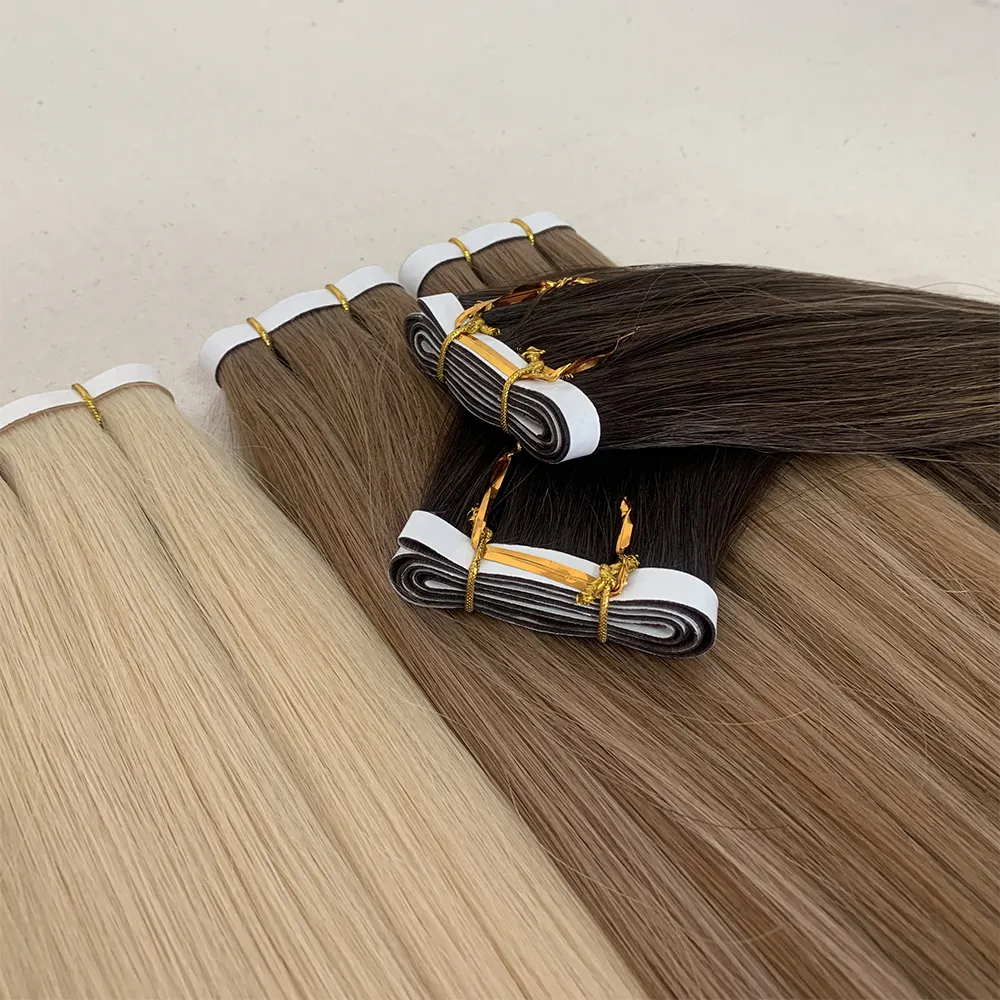
FAQs About Long Tape Weft Hair Extensions
What are long tape weft hair extensions?
Long tape weft hair extensions are wider tape-based hair extension strips designed to add length and volume with faster coverage than many small tape-in pieces.
Are long tape wefts the same as regular tape-ins?
No. Regular tape-ins usually come in smaller tabs, while long tape wefts use wider strips. Long tape wefts can save time, but they need careful weight and section control.
How long do long tape weft hair extensions last?
The tape installation usually needs maintenance every 6–8 weeks. The hair itself may last longer if the quality is strong and the extensions are removed and re-taped properly.
Are long tape wefts good for thin hair?
They can work for some fine-to-medium hair clients, but they are not always the first choice for very thin or fragile hair. Smaller tape pieces may offer better weight control.
Can long tape wefts be reused?
Yes, they can often be reused when the hair quality is good and the tape is replaced properly. Buyers should test removal, cleaning, and re-taping before bulk orders.
What should wholesale buyers test before ordering long tape wefts?
Buyers should test tape hold, PU flexibility, residue, removal, re-taping, hair softness after washing, color stability, and end fullness.
Professional Notes for Salons and Hair Brands
Long tape wefts are attractive because they make volume work faster. But faster service does not remove the need for judgment.
For salons, the main questions are simple: can the client’s natural hair support the strip weight, will the tape stay flat, and can the client follow aftercare?
For hair extension brands and wholesale buyers, the main questions are different: can the supplier keep adhesive quality stable, can the hair survive washing and reuse, and will repeat orders match the sample?
This is where product testing matters. A beautiful sample is not enough. Buyers should test washing, brushing, removal, re-taping, color stability, PU flexibility, and end fullness before larger orders.
Conclusion: Are Long Tape Weft Hair Extensions Right for Your Salon?
Long tape weft hair extensions can be a strong option for salons that want faster volume services, flat attachment, and reusable tape-based products. They work best when the client has enough natural hair to support the strip weight and follow aftercare.
For salon owners, hair extension brands, and wholesale buyers, the safer decision is to test the product before building it into a service menu or product line. Check tape hold, PU flexibility, hair softness after washing, color stability, removal, and re-taping performance.
You can contact Hibiscus Hair to request long tape weft samples, color matching support, or wholesale price guidance before placing a larger order.