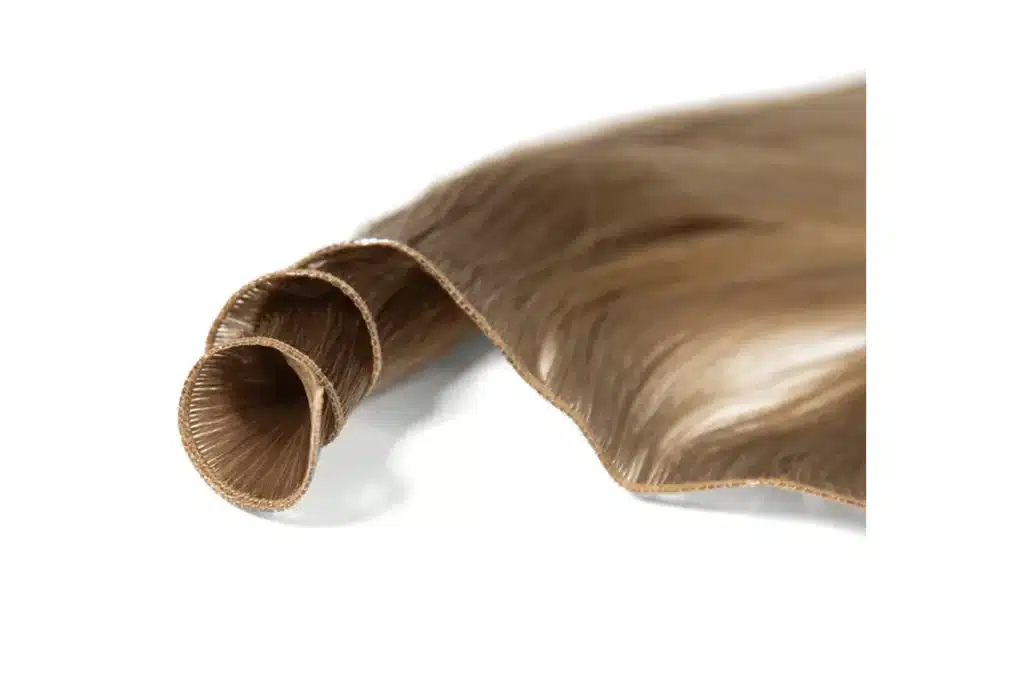
Do hand-tied extensions cause hair loss? They should not cause hair loss when they are installed with proper tension, maintained on schedule, and used on suitable natural hair.
The real risk comes from poor installation, overloaded rows, tight bead placement, skipped maintenance, matting, or applying extensions to hair that is already weak or thinning.
For salons, stylists, and hair brands, this topic is not only about reassuring clients. It is about choosing the right weft, using safe placement, checking hair density, and explaining maintenance clearly before installation.
This guide explains when hand-tied extensions are safe, when they may create hair loss risk, and how professional buyers can reduce complaints through better product and service decisions.
| Situation | Hair Loss Risk | Stylist Note |
|---|---|---|
| Correct tension and regular maintenance | Low | Usually safe for suitable clients |
| Rows installed too tight | High | Can create pulling and scalp stress |
| Too many wefts on one row | Medium to high | May overload natural hair |
| Fine or thinning natural hair | Higher caution needed | Client may need a lighter method |
| Skipped move-up appointments | Medium to high | Can lead to tangling, matting, and root stress |
| Healthy medium to thick hair | Lower | Often a better fit for hand-tied rows |
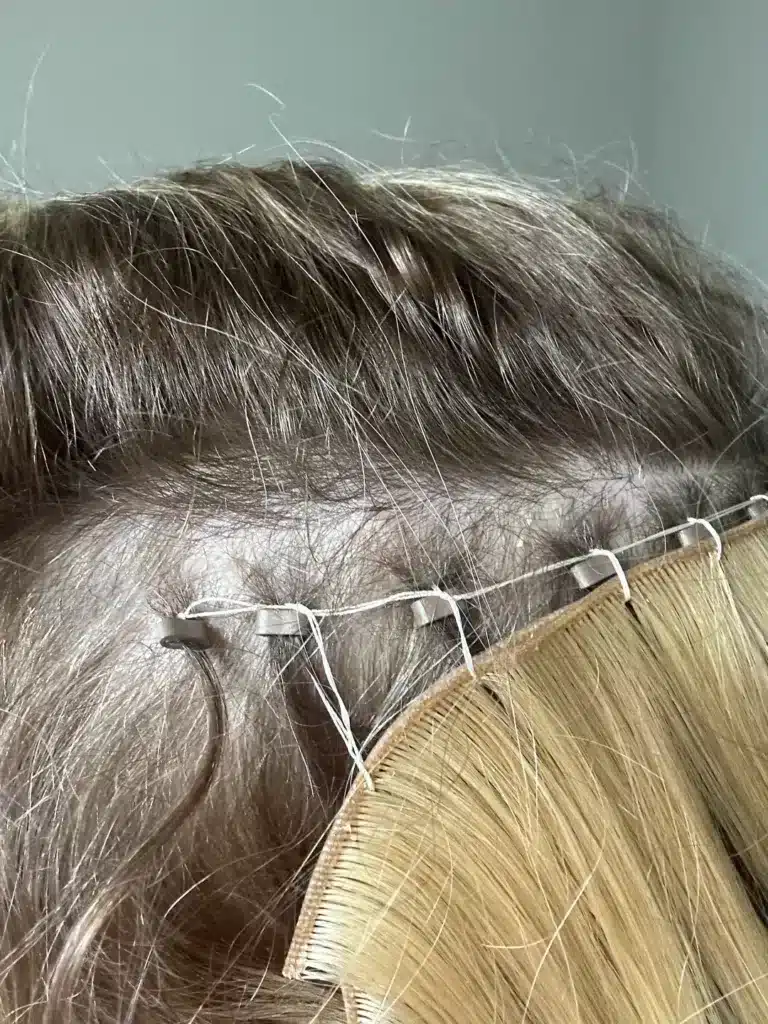
How Hand-Tied Extensions Work
Hand-tied extensions are made with thin weft tracks that are sewn onto a row foundation created with beads and thread. The stylist places the row along suitable sections of the client’s natural hair, then attaches the weft to create volume and length.
This method does not use glue, tape, or heat during installation. That is one reason many clients see it as a comfortable salon method.
But the safety of hand-tied extensions depends on three things: the client’s natural hair condition, the stylist’s row placement, and the weight of the weft being installed.
A hand-tied weft that is too heavy for the client’s natural hair can still create stress, even if the method itself is clean.
Why They’re Safe:
Even Weight Distribution: The wefts are lightweight and spread out, reducing strain on the hair.
No Harsh Chemicals: Unlike glue or tape-in methods, hand-tied extensions don’t involve adhesives that can damage the hair or scalp
Potential Risks
However, improper practices can lead to issues such as:
Excessive Tension: Overly tight bead rows can pull on the hair, leading to traction alopecia.
Skipping Maintenance: Extensions left in for too long can cause matting and stress at the roots.
Fragile Hair Types: Hair that is already weak or thinning may struggle to support even the lightest extensions.
Can Hand-Tied Extensions Cause Hair Loss?
Hand-tied extensions may cause problems when they create repeated pulling on the same areas of natural hair.
The main issue is not the weft itself. The issue is tension, weight, maintenance, and client suitability.
When They Are Usually Safe
Hand-tied extensions are usually safe when:
- The client has enough natural hair density to support the rows
- The beads are not placed too tightly
- The weft weight is balanced
- The stylist does not overload one row
- Maintenance is done every 6–8 weeks
- The client brushes and washes the hair correctly at home
When Hair Loss Risk Increases
Hair loss or breakage risk increases when:
- The rows feel painful or too tight
- The client sees redness or irritation near the beads
- The wefts feel too heavy
- The extensions are left in too long
- The natural hair starts matting near the roots
- The client already has thinning, shedding, or weak hair
- The installation is placed too close to fragile hairline areas
Signs Your Hand-Tied Extensions Are Too Tight
Clients should not feel constant pain after hand-tied extensions are installed. Some awareness of a new install can be normal, but sharp pulling, headache, scalp tenderness, or visible redness should not be ignored.
Common signs of too much tension include:
- Scalp pain after installation
- Redness around bead rows
- Small bumps or irritation near attachment areas
- Hair pulling at the roots
- Difficulty sleeping because the rows feel tight
- Natural hair breaking near the row
- Extensions feeling heavy or uncomfortable
If these signs appear, the client should contact the stylist instead of waiting until the next maintenance appointment.
How to Prevent Hair Loss with Hand-Tied Extensions
Preventing hair loss with hand-tied extensions starts before installation.
The stylist should check the client’s natural hair density, scalp condition, shedding history, lifestyle, and maintenance ability. Not every client is a good candidate for hand-tied rows.
1. Choose an Experienced Stylist
A trained stylist should understand row placement, bead spacing, weft weight, and tension control.
The stylist should avoid:
- Pulling sections too tightly
- Placing rows too close to fragile areas
- Adding too many wefts to one row
- Installing on hair that is too weak
- Ignoring scalp sensitivity during fitting
2. Use the Right Weft Weight
Hand-tied wefts are known for being thin and flexible, but they still add weight.
For fine or fragile hair, fewer rows or lighter density may be safer. For thicker hair, the stylist may be able to use more volume, but placement still matters.
3. Keep a Regular Maintenance Schedule
Most clients need move-up maintenance every 6–8 weeks.
As natural hair grows, the row moves farther away from the scalp. If the client waits too long, the hair can tangle near the root and create more stress during brushing or removal.
4. Teach Correct Home Care
Clients should brush gently, support the row with one hand while detangling, avoid sleeping with wet hair, and keep heavy oils or conditioners away from bead areas.
Home care is part of the safety plan, not an optional extra.
Pro Tips for Stylists and Salon Buyers
Hand-tied extensions are not one-size-fits-all. The same weft that works beautifully on one client may be too heavy or too wide for another.
Before recommending hand-tied extensions, check:
- Natural hair density
- Hairline strength
- Scalp sensitivity
- Current shedding or thinning
- Desired length and fullness
- Maintenance commitment
- Lifestyle and daily styling habits
For salons, the safest service menu often includes more than one method. Some clients may be better suited to tape-ins, I-tips, nano extensions, or lighter weft options.
For hair brands, clear product descriptions also matter. Buyers need to understand weft thickness, return hair, weight, length, color options, and whether the hair can support reuse.
| Client Type | Hand-Tied Fit | Better Direction |
|---|---|---|
| Medium to thick healthy hair | Good fit | Hand-tied weft or other weft methods |
| Fine but healthy hair | Possible with caution | Light rows and careful placement |
| Very thin or fragile hair | Higher risk | Lighter methods or no extensions until hair improves |
| Sensitive scalp | Needs caution | Lower tension and fewer rows |
| Client wants volume only | Often suitable | Fewer rows may be enough |
| Client wants major length | Depends on density | Check weight and blending carefully |
Frequently Asked Questions
Can hand-tied extensions pull out hair?
They should not pull out hair when installed with correct tension and maintained properly. If hair is being pulled out, the rows may be too tight, too heavy, poorly placed, or overdue for maintenance.
Are hand-tied extensions suitable for thin hair?
Hand-tied extensions are not always the best choice for very thin or fragile hair. Some fine-hair clients can wear them with lighter rows, but stylists should check density and scalp condition first.
How long can you wear hand-tied extensions?
The hair itself may last several months or longer depending on quality and care. However, the rows usually need maintenance every 6–8 weeks as the natural hair grows.
What are signs that hand-tied extensions are damaging the hair?
Warning signs include scalp pain, redness, tight pulling, root breakage, matting near the rows, unusual shedding, or discomfort that does not improve after installation.
Can hand-tied extensions help with hair loss?
Hand-tied extensions do not treat hair loss. They can make hair look fuller for suitable clients, but they should not be installed on areas with active shedding, severe thinning, or weak natural hair.
Are hand-tied extensions safer than tape-ins?
Not always. Both methods can be safe when installed correctly. Hand-tied extensions may suit clients who want weft-based volume, while tape-ins may be better for some fine-hair clients because the weight is distributed differently.
Why Hand-Tied Extensions Can Be a Safe Choice
Hand-tied extensions can be a safe choice for the right client when they are installed by a trained stylist and maintained correctly.
The benefit of this method is that it avoids glue, tape, and heat during installation. The thin weft can also create a soft, natural-looking result when the row is placed well.
But no extension method is risk-free for every client.
The safest result comes from matching the method to the client’s natural hair, using a suitable weft weight, avoiding excessive tension, and keeping maintenance on schedule.

Product Quality Also Affects Long-Term Wear
Even with a good installation, poor-quality weft hair can create client complaints.
If the hair becomes dry, rough, tangled, or heavy after washing, the client may brush more aggressively. That can add stress near the row and make maintenance harder.
For professional buyers, full cuticle hair is usually a stronger direction because aligned cuticles help the hair stay smoother and easier to manage with proper care.
If you are sourcing weft-based products, hair weft extensions should be checked for hair quality, weft thickness, return hair, shedding control, and after-wash performance.
For clients who may not be suitable for hand-tied rows, salons can also compare lighter options such as tape-in hair extensions or strand-by-strand methods depending on the client’s natural hair.
Conclusion
Hand-tied extensions do not usually cause hair loss when they are installed correctly, maintained on schedule, and matched to suitable natural hair.
The main risks come from tight rows, overloaded wefts, skipped maintenance, matting, fragile hair, or poor placement. If a client feels pain, redness, or pulling, the extensions should be checked by a stylist.
For salons and hair brands, safe results depend on both technique and product quality. A good hand-tied weft should be lightweight, smooth after washing, low-shedding, and suitable for the client’s natural hair density.
If you are sourcing hand-tied wefts or other professional hair extension products, you can contact Hibiscus Hair to request samples, wholesale pricing, or product recommendations.