Country labels can hide a complex supply chain. Buyers who confuse donor origin with manufacturing location risk inconsistent quality, weak traceability, and avoidable customer complaints.
Human hair extensions may use hair collected in India, Southeast Asia, China, Eastern Europe, and other regions. The hair can then be sorted, processed, colored, and manufactured in another country, so the package label does not always confirm donor origin.
To source with confidence, buyers need to separate donor origin, collection channel, processing history, manufacturing location, and finished-product quality. The sections below explain how to verify each stage and test whether a supplier can reproduce the same result in bulk production.

Hair Origin and Manufacturing Location Are Not the Same
A finished hair extension product may pass through several countries before it reaches a salon.
The supply chain can include:
- Donor origin: Where the hair was originally collected
- Collection channel: Temple donation, ponytail sale, salon collection, or loose-hair collection
- Sorting location: Where hair was separated by length, color, texture, and condition
- Processing location: Where hair was cleaned, colored, lightened, textured, or blended
- Manufacturing location: Where it became wefts, tape-ins, keratin tips, clip-ins, or wigs
- Distribution market: Where the finished product was packaged and sold
A product can therefore be manufactured in China using raw hair collected elsewhere. “Made in China” identifies the manufacturing location, not necessarily the donor’s country.
When evaluating a supplier, ask which parts of this chain they can document and which claims are based only on commercial product names.Buyer Resource: 12-Point Hair Origin and Quality Verification Checklist
Use this checklist to compare donor-origin claims, collection channels, cuticle alignment, processing history, batch consistency, and sample performance before placing a wholesale order.
Request the checklist, wholesale sample plan, and pricing
Indian Hair, Temple Hair, and Collection Channels
India is one of the best-known raw human hair sourcing regions. Temple tonsuring is a recognized collection channel in which donated hair may be sold through organized auctions.
However, not all Indian hair is temple hair.
Raw material may also come from individual ponytail sellers, salons, regional collectors, and loose-hair collection networks. These channels can produce very different grades of hair.
Professional buyers should ask about:
- Ponytail hair versus loose collected hair
- Cuticle alignment
- Previous chemical processing
- Single-drawn or double-drawn grading
- Short-hair percentage
- Gray-hair percentage
- Lot separation
- Repeat-order consistency
The words “Indian hair” do not confirm that every strand has intact cuticles or the same processing history.

Does “Brazilian Hair” Confirm Brazilian Donor Origin?
Not necessarily.
In the extension market, “Brazilian hair” may describe a fuller texture, thicker strand feel, curl pattern, or commercial product category. The name alone should not be treated as proof that the donor hair was collected in Brazil.
If geographic origin is important to your brand, ask what documentation supports the claim.
If “Brazilian” is being used as a texture category, the product specification should clearly describe:
- Strand diameter
- Natural or processed texture
- Curl pattern
- Hair density
- Color history
- End fullness
- Cuticle condition
- Performance after washing
A popular country name is not a substitute for traceability or sample testing.

European and Slavic Hair
Hair marketed as European or Slavic is generally associated with a finer strand diameter, softer texture, and naturally lighter color range.
Because genuine supply is limited, buyers should verify whether “European” describes documented donor origin, a fine-hair texture category, or a processed product designed for European clients.
For salons serving fine-haired clients, evaluate:
- Strand diameter
- Natural base color
- Lightening history
- Cuticle condition
- Texture after washing
- End density
- Repeat-order consistency
A premium origin name has little commercial value if the supplier cannot reproduce the same texture and color in the next order.

China’s Role in Hair Extension Manufacturing
China is a major processing, manufacturing, and product-development center for the global hair extension industry.
A factory may work with locally collected hair, imported raw hair, or material purchased through international trading networks. The material can then be turned into finished salon products through:
- Raw-hair sorting
- Cleaning and preparation
- Color development
- Texture processing
- Hair blending
- Weft production
- Tape-tab attachment
- Keratin-tip production
- Clip-in construction
- Quality inspection and packaging
This is why manufacturing country and donor origin must be recorded separately.
China can produce entry-level, mid-range, and premium extensions. Product quality depends on the selected raw material, cuticle condition, chemical processing, worker skill, attachment construction, and factory quality controls—not the country name alone.
For buyers targeting premium reuse value, full cuticle hair is an important specification to verify. The supplier should be able to explain cuticle direction, processing history, and after-wash performance.
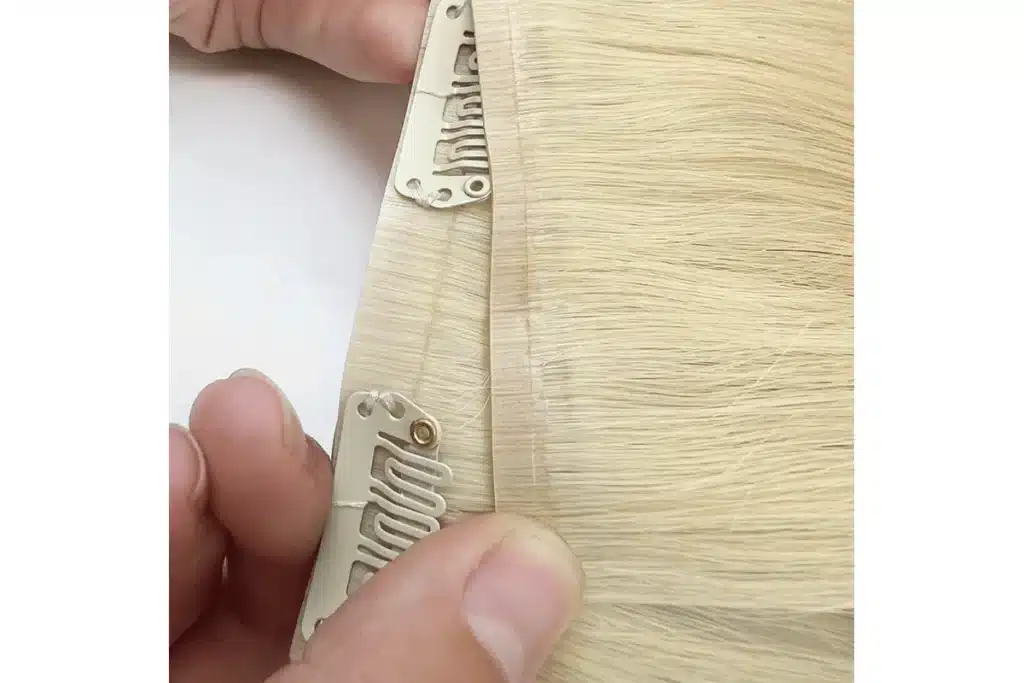
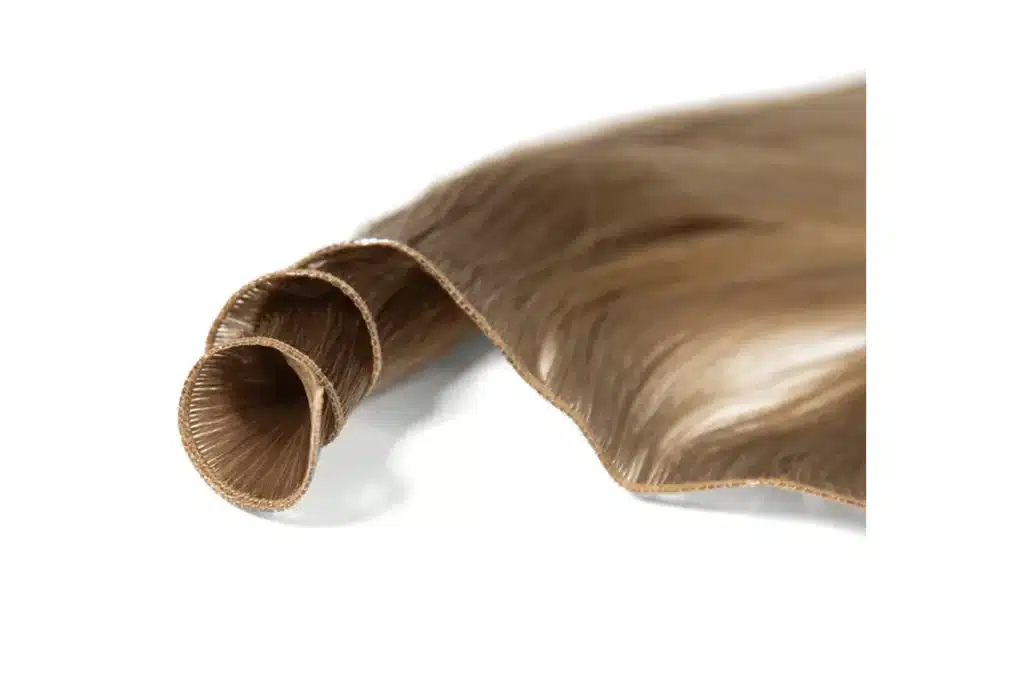
Finished categories such as hair weft extensions and tape-in hair extensions should also be tested separately because stitching, tape construction, gram weight, and attachment stability affect the final result.
Key Hair Sourcing Terms Buyers Should Separate
| Term | What It Actually Describes | Buyer Verification Question |
|---|---|---|
| Donor Origin | Where the hair was collected | What documentation supports the stated origin? |
| Collection Channel | Temple, ponytail seller, salon, household, or loose-hair collection | Was the hair kept root-to-tip during collection? |
| Remy Hair | Hair intended to remain aligned in one direction | How is cuticle direction controlled during sorting? |
| Full Cuticle Hair | Hair with intact, aligned cuticles | How is the claim verified after coloring and processing? |
| Single-Drawn Hair | A lot containing a wider mix of strand lengths | What percentage of short hair is allowed? |
| Double-Drawn Hair | Hair sorted for greater length consistency and fuller ends | What end-density standard is used? |
| Manufacturing Origin | Where the finished extension was produced | Which production and inspection steps happen at this factory? |

Factory QC Checklist for Wholesale Buyers
Before approving bulk production, compare the supplier’s sourcing story with measurable product performance.
Check:
- Whether sample and bulk orders use the same written specification
- Net hair weight without packaging or attachment hardware
- Cuticle direction and processing history
- Short-hair and gray-hair allowances
- Color consistency between bundles
- Texture after three wash cycles
- Shedding during a controlled brush test
- End fullness after washing
- Heat-styling response
- Tape, tip, clip, or weft construction
- Consistency across at least three samples
- Ability to reproduce the approved standard in repeat orders
Estimated Cost of a Wrong Quality Decision
One failed full-head installation can require replacement hair, a refund, and approximately two to four hours of removal and reinstallation work, depending on the method and density.
For a wholesale brand, the larger risk is batch-level failure. If several customers receive hair from the same inconsistent lot, complaint handling, replacements, shipping, and lost repeat orders can cost more than the original product savings.
A written specification and repeatable sample test are cheaper than correcting a failed production lot.
Conclusion: Where Do Human Hair Extensions Come From?
Human hair extensions may use hair collected in India, Southeast Asia, China, Eastern Europe, and other regions. Sorting, processing, manufacturing, packaging, and distribution may then happen in different countries.
This is why donor origin, commercial texture name, and manufacturing location should not be treated as the same claim.
For professional buyers, country names provide context but do not prove quality. Cuticle alignment, collection channel, processing history, batch consistency, attachment construction, and after-wash performance offer stronger purchasing evidence.
Before placing a wholesale order, request clear specifications and test several samples from the same production lot.
You can contact Hibiscus Hair to request the buyer verification checklist, full cuticle hair samples, wholesale pricing, or a product recommendation for your salon or brand.