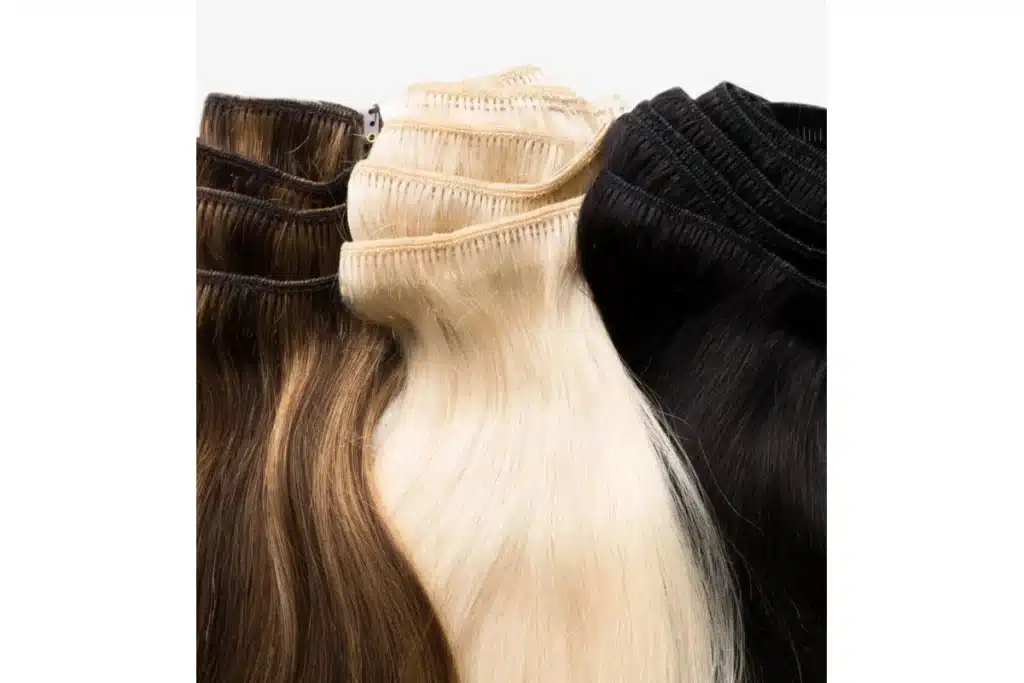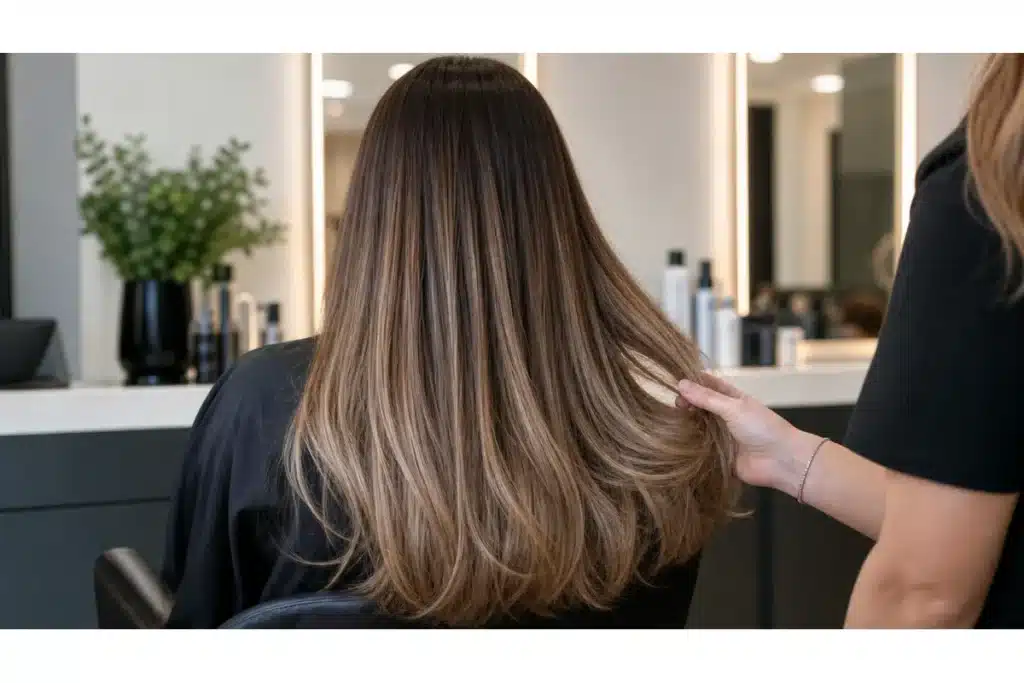
Every professional stylist has seen this problem: hair looks soft in the package, but after a few washes it starts to feel dry, rough, tangled, or dull. Very often, the problem starts with the cuticle layer.
The hair cuticle is the outermost protective layer of the hair shaft. It is made of overlapping scale-like cells that protect the inner cortex, control shine and smoothness, and affect how well the hair resists tangling, dryness, and breakage.
For hair extensions, the cuticle matters even more. Once hair is cut from the donor, it no longer receives natural scalp oil. If the cuticle is stripped, damaged, or mixed in different directions, the hair may feel good at first but fail much faster in real salon use.

What Is Hair Cuticle?
The hair cuticle is the outside layer of each hair strand. It is made of flat, overlapping cells that sit like tiny scales around the hair shaft.
A healthy cuticle protects the inner cortex of the hair. When the cuticle lies flat, the hair usually feels smoother, reflects more light, and has better resistance against friction. When the cuticle is raised, broken, or removed, the hair often becomes rough, dull, dry, and easier to tangle.
For natural growing hair, the scalp can still provide oil and some protection. For hair extensions, that protection is gone. This is why cuticle condition becomes one of the most important signs of extension quality.
What Does the Hair Cuticle Do?
The cuticle protects the inner part of the hair and affects how the hair looks, feels, and performs.
| Cuticle Function | What It Means in Real Hair |
|---|---|
| Protection | Helps shield the inner cortex from friction and chemical stress |
| Smoothness | Flat cuticles make hair feel softer and easier to brush |
| Shine | Smooth cuticles reflect light better |
| Tangle control | Aligned cuticles reduce friction between strands |
| Color performance | Healthier cuticles can hold color more evenly |
| Extension lifespan | Better cuticle condition usually supports longer wear |
When the cuticle is damaged, the hair may still look good under factory lighting or after silicone coating. The real test comes after washing, brushing, coloring, heat styling, and repeated wear.
Why Does Cuticle Direction Matter?
Cuticle direction matters because hair strands naturally have a root end and a tip end. When the cuticles all face the same direction, the hair moves more smoothly and creates less friction.
In high-quality hair extensions, the strands should stay aligned from root to tip. This is often called cuticle alignment. When the direction is mixed, the cuticle scales rub against each other. That friction can lead to tangling, matting, roughness, and shorter lifespan.
This is one reason some low-cost hair feels soft at first but becomes difficult after washing. The surface may be coated, but the cuticle direction is not stable underneath.
For salons and hair brands, cuticle alignment is not just a technical term. It affects client complaints, brushing experience, reuse value, and repeat orders.
What Damages the Hair Cuticle?
The hair cuticle can be damaged by strong chemical processing, rough handling, heat, friction, and poor maintenance.
| Damage Cause | What Happens to the Cuticle | Result in Hair Extensions |
|---|---|---|
| Acid processing | Cuticle is partly or fully stripped | Hair may feel soft at first but tangle sooner |
| Excessive bleaching | Cuticle becomes weak and lifted | Dryness, breakage, color instability |
| Rough manufacturing | Cuticle surface becomes damaged | More friction and shedding complaints |
| High heat | Cuticle loses smoothness | Dullness and rough texture |
| Poor brushing | Cuticle gets scratched and lifted | Tangling near mid-lengths and ends |
| Wrong aftercare | Product buildup or dryness increases friction | Shorter extension lifespan |
Not all processing is bad. Color work and texture work can be controlled carefully. The real problem is aggressive processing that makes the hair look good quickly but weakens the cuticle for long-term salon use.
What Is Full Cuticle Hair?
Full cuticle hair means the hair cuticle is still intact and aligned in the same direction from root to tip.
This is different from hair that has been heavily acid-washed to remove the cuticle. Full cuticle hair keeps more of its natural surface structure, so it usually has better movement, smoother brushing, lower tangling risk, and stronger reuse potential.
For hair extensions, full cuticle hair is especially important because the hair must perform without the support of the scalp. Once installed, the hair has to handle washing, brushing, heat styling, sleeping friction, and repeated wear.
High-quality full cuticle hair can often last much longer than lower-grade hair when processing and aftercare are controlled properly.
Full Cuticle Hair vs Remy Hair
Many buyers confuse full cuticle hair with Remy hair. They are related, but they are not always the same standard.
| Hair Type | Cuticle Direction | Cuticle Condition | Typical Performance |
|---|---|---|---|
| Non-Remy hair | Mixed direction | Often stripped or heavily processed | Higher tangling and shorter lifespan |
| Remy hair | Usually aligned | May still be acid-washed or coated | Better than non-Remy, but quality varies |
| Full cuticle hair | Aligned root to tip | Cuticle remains intact | Better smoothness, reuse, and long-term value |
Remy usually means the strands are kept in the same direction. But some Remy hair can still be processed strongly. Full cuticle hair goes further because the cuticle layer is not only aligned but also preserved.
For professional buyers, this difference matters. A product label can say “Remy,” but the real question is how much of the cuticle is still intact after processing.
What Is Full Cuticle Hair Extensions?
You’ve probably seen the term “Remy hair” or “cuticle hair”—but full cuticle hair goes one step further.
Full cuticle hair extensions are made from 100% human hair where the cuticle layer is intact, unstripped, and aligned from root to tip.
Features of Full Cuticle Hair
- Cuticle Direction: All strands face the same direction
- Longevity: Can last 1–2 years with proper care
- Appearance: Smooth, soft, and naturally shiny
- Performance: Tangle-free, minimal shedding, heat-style friendly
How It’s Different From Remy
While Remy hair also refers to aligned strands, some Remy products are acid-washed, which removes parts of the cuticle. Full cuticle hair is untouched. This is why premium factories like Hibiscus Hair only offer full cuticle hair.
Ideal Clients
- Professional stylists
- Hair extension educators
- Salon owners who need quality, consistent products
Why Hair Cuticle Matters in Hair Extensions
Cuticle condition matters across every hair extension method. The attachment method may change, but the hair still needs to stay smooth, manageable, and stable after washing and daily wear.
| Extension Type | Why Cuticle Quality Matters |
|---|---|
| Tape-in hair extensions | Reduces tangling and helps the hair stay soft through re-taping |
| Keratin hair extensions | Supports smoother strand movement and longer wear |
| I tip / nano extensions | Reduces brushing friction near small bonds or beads |
| Clip-in hair extensions | Helps temporary pieces blend better with natural hair |
| Hair wefts | Improves reuse value through sew-in or beaded row maintenance |
| Genius weft / flat weft | Supports premium comfort, movement, and lower tangling risk |
Full cuticle hair does not make every method perfect. Installation, weight, color processing, and aftercare still matter. But better cuticle condition gives the hair a stronger foundation for salon use.
For related product categories, salons can compare tape-in hair extensions, hair weft extensions, and keratin hair extensions.

I Tip Hair
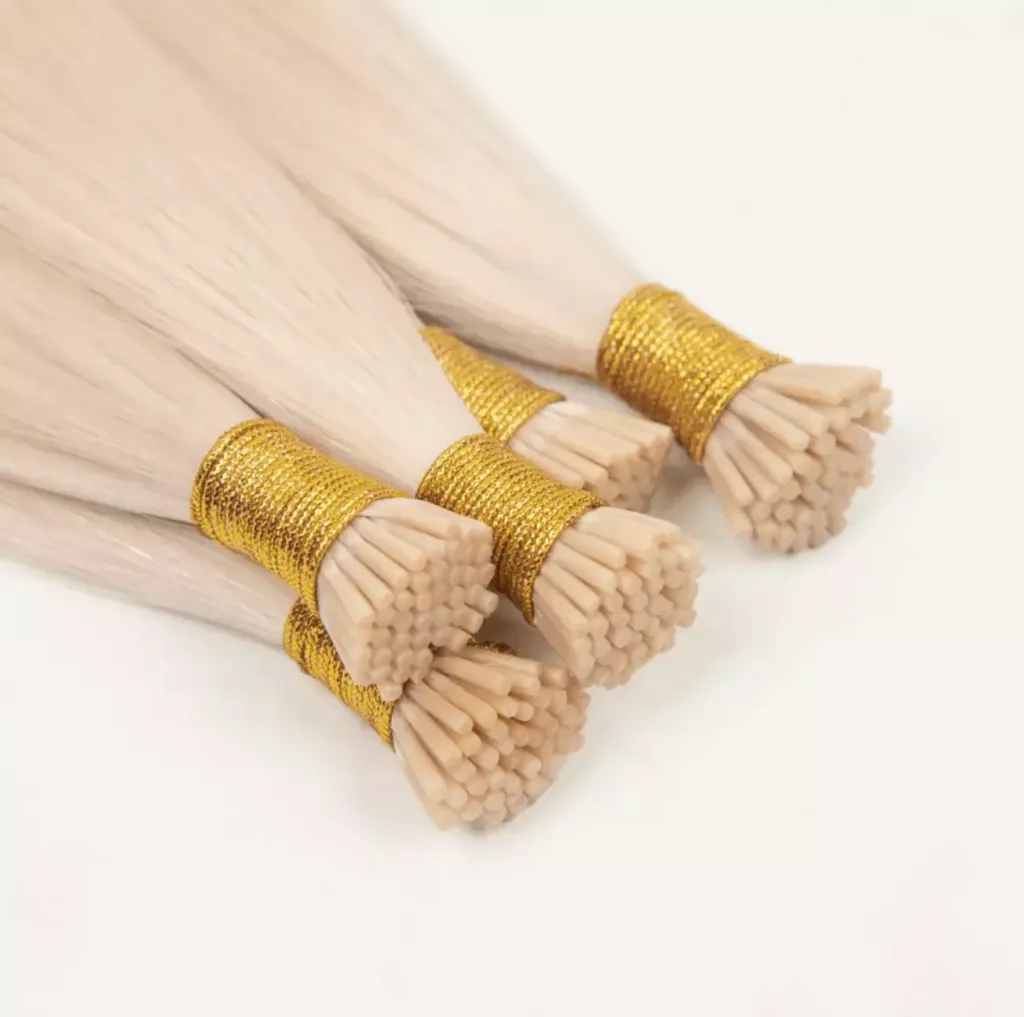
I tip extensions have a cylindrical keratin bond that is applied using beads or rings. No heat is needed. It’s a strand-by-strand method ideal for clients with thinner hair or those avoiding heat.
V Tip Hair
V tip extensions have a pointed “V” shape at the tip, offering a slightly different bond area than U tips. They are also applied with heat and suitable for those needing discrete attachment points.

Flat Tip Hair
Flat tips are hybrid extensions combining the benefits of I tip and tape-ins. They are flat like tape but installed with beads like I tips. Great for comfort and flexibility.

Clip In Hair
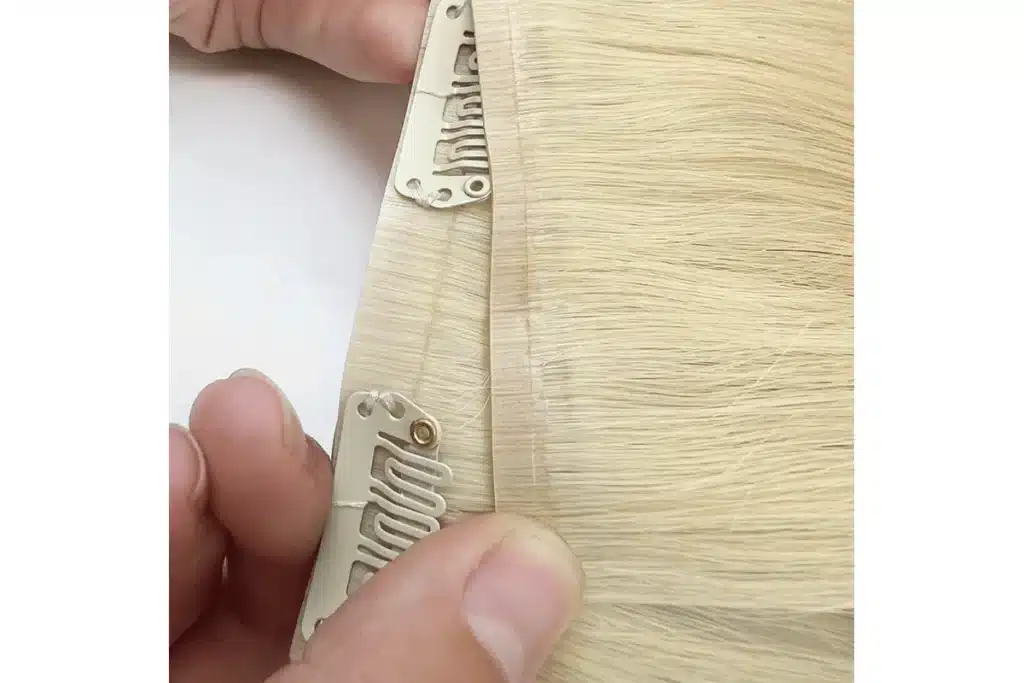
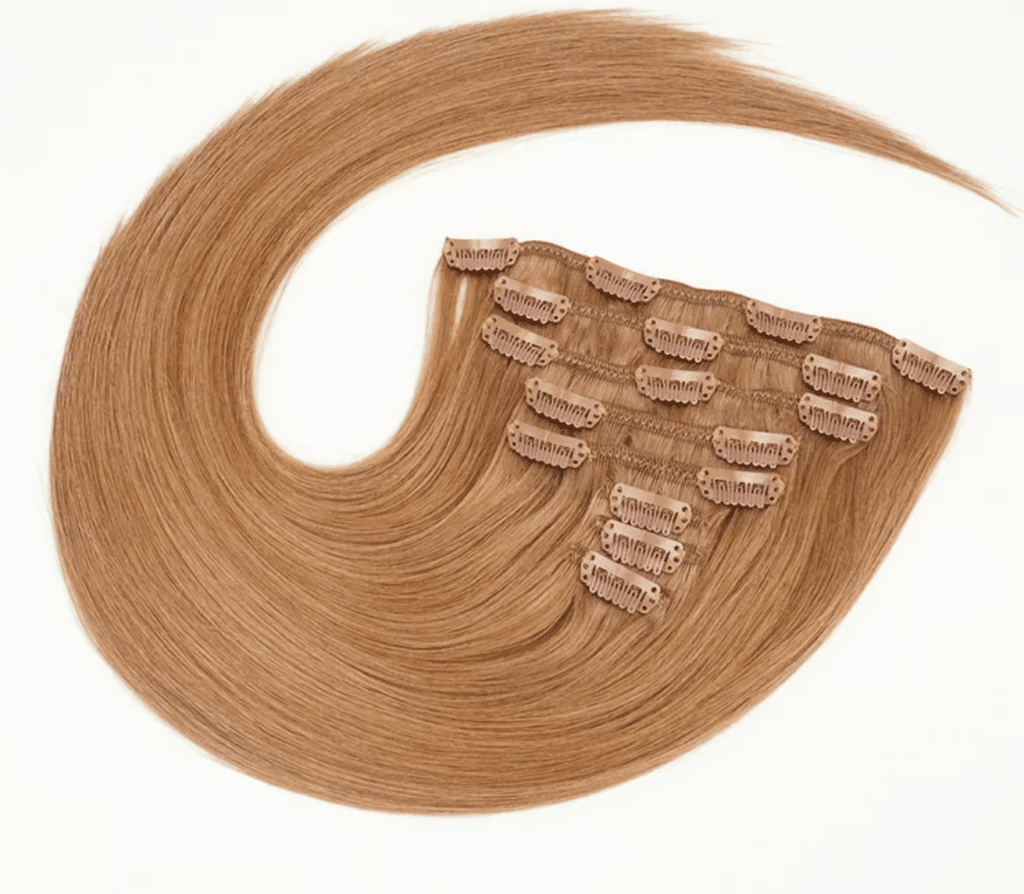
Clip-in extensions are temporary and designed for easy, do-it-yourself application. Full cuticle clip-ins offer longer wear and a more natural blend.
Classic Clip-Ins
These come in pieces or “wefts” of various widths with small, secure clips sewn onto the top. They’re easy to install and remove in minutes.
Seamless Clip-Ins
These use a silicone or PU base instead of fabric, creating a flatter appearance. Full cuticle versions feel softer and look more natural even in fine hair.

Lace Clip-Ins
Designed to add Lace to achieve neat and comfortable. Full cuticle hair ensures it blends flawlessly with the client’s natural hair.

Hair Weft
Wefts are continuous tracks of hair used in sew-in or beaded row methods. Full cuticle wefts stay tangle-free, smooth, and reusable.
Hand-Tied Weft
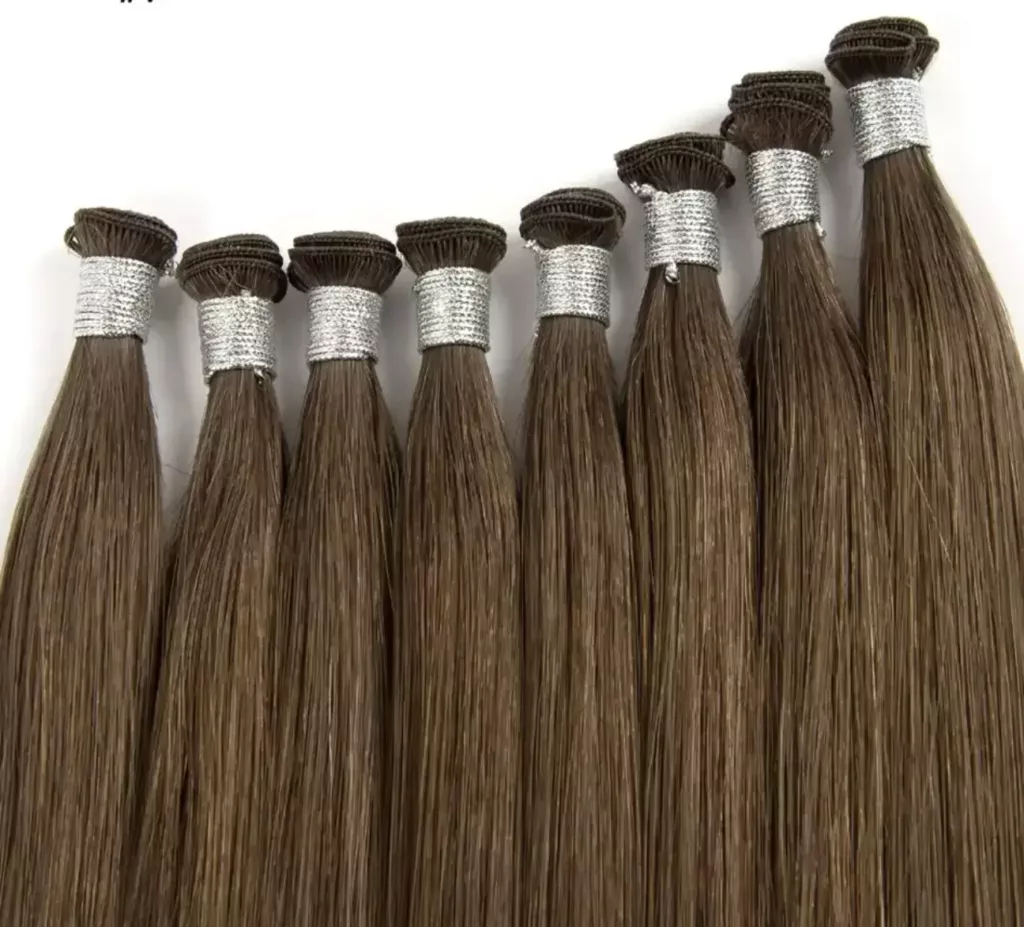
These are thin, lightweight wefts tied by hand. Ideal for clients with fine or thin hair. Cannot be cut without unraveling, but offer the most natural finish.
Machine Weft
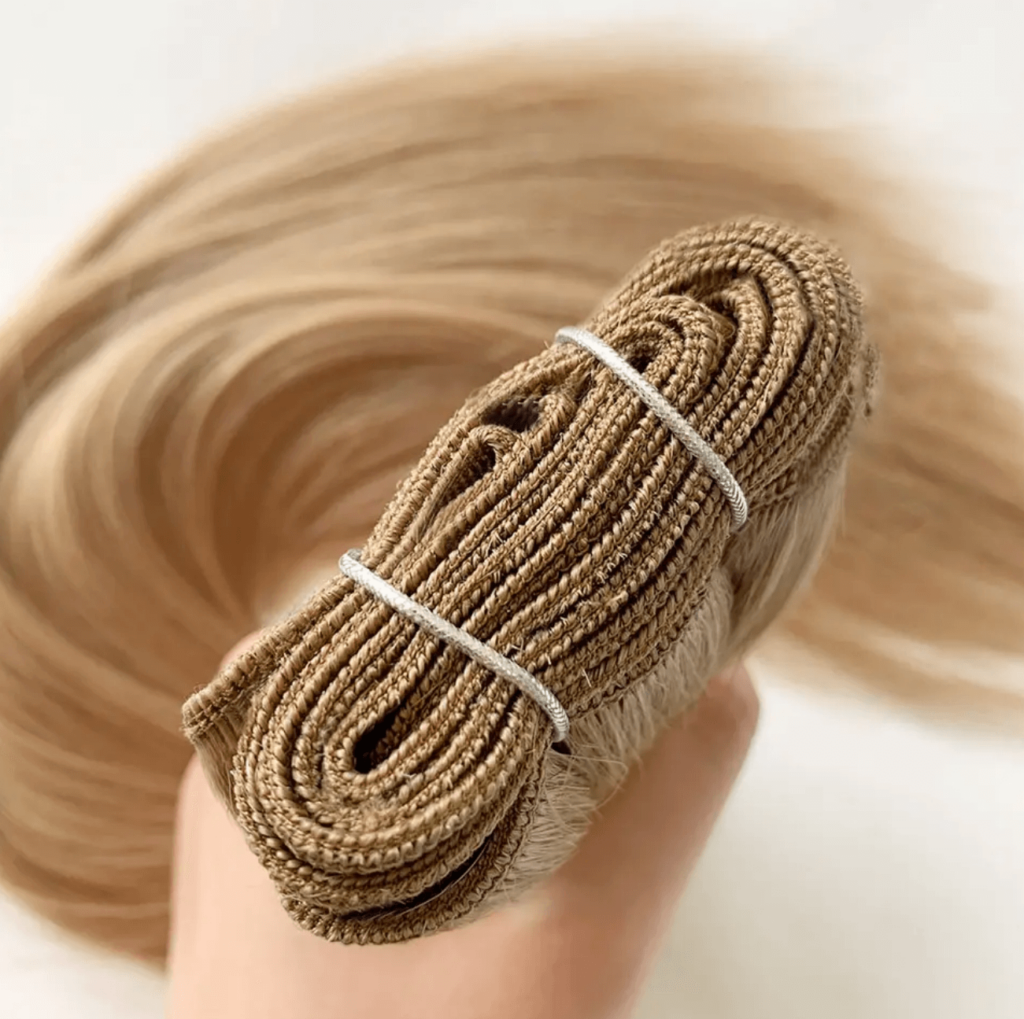
These are thicker and more durable, made by sewing hair into a track with a machine. They can be cut to fit and hold up well in thicker hair installs.
Genius Weft
Also called hybrid weft. Combines the thinness of hand-tied with the cuttable flexibility of machine wefts. Full cuticle genius wefts offer premium comfort and high reuse value.

Flat Weft
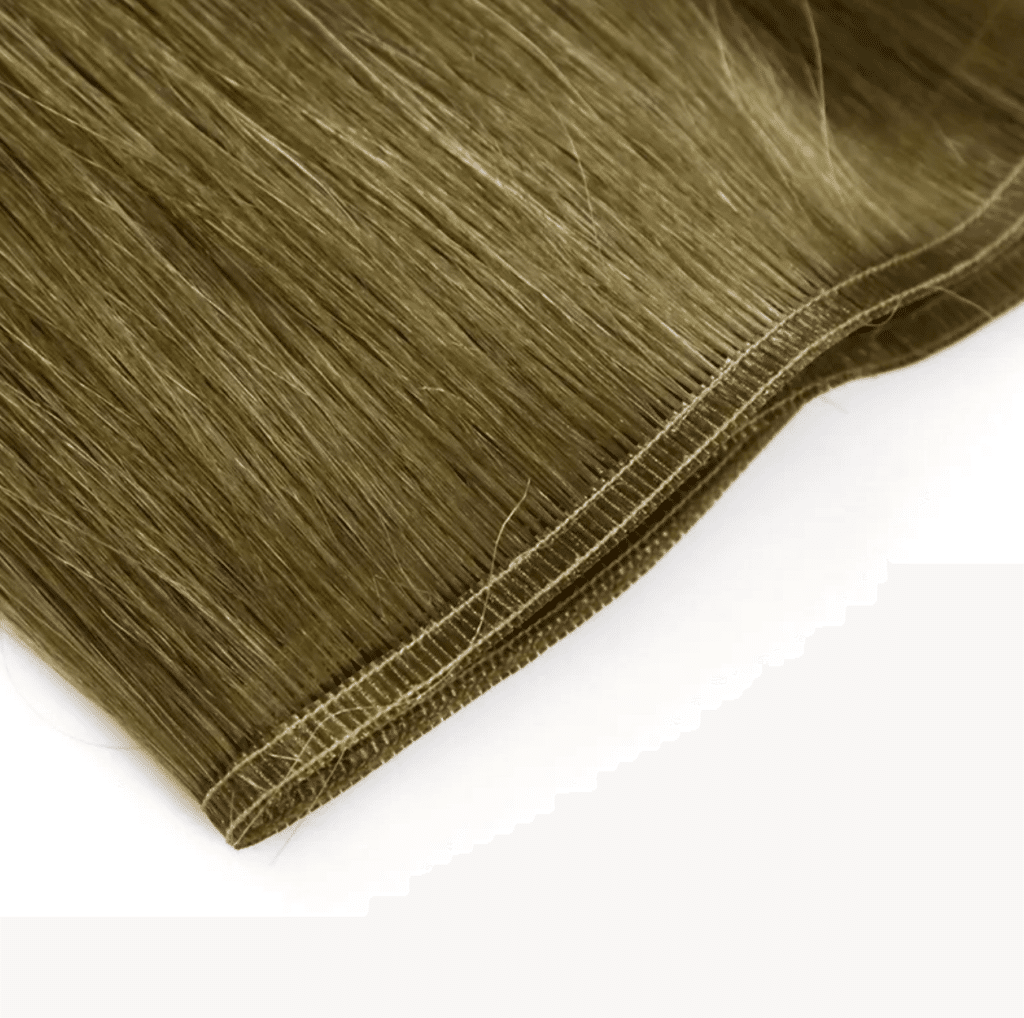
Flat wefts are sealed with PU tape instead of sewing thread, creating a flatter and more flexible base. Suitable for both sew-in and beaded methods.
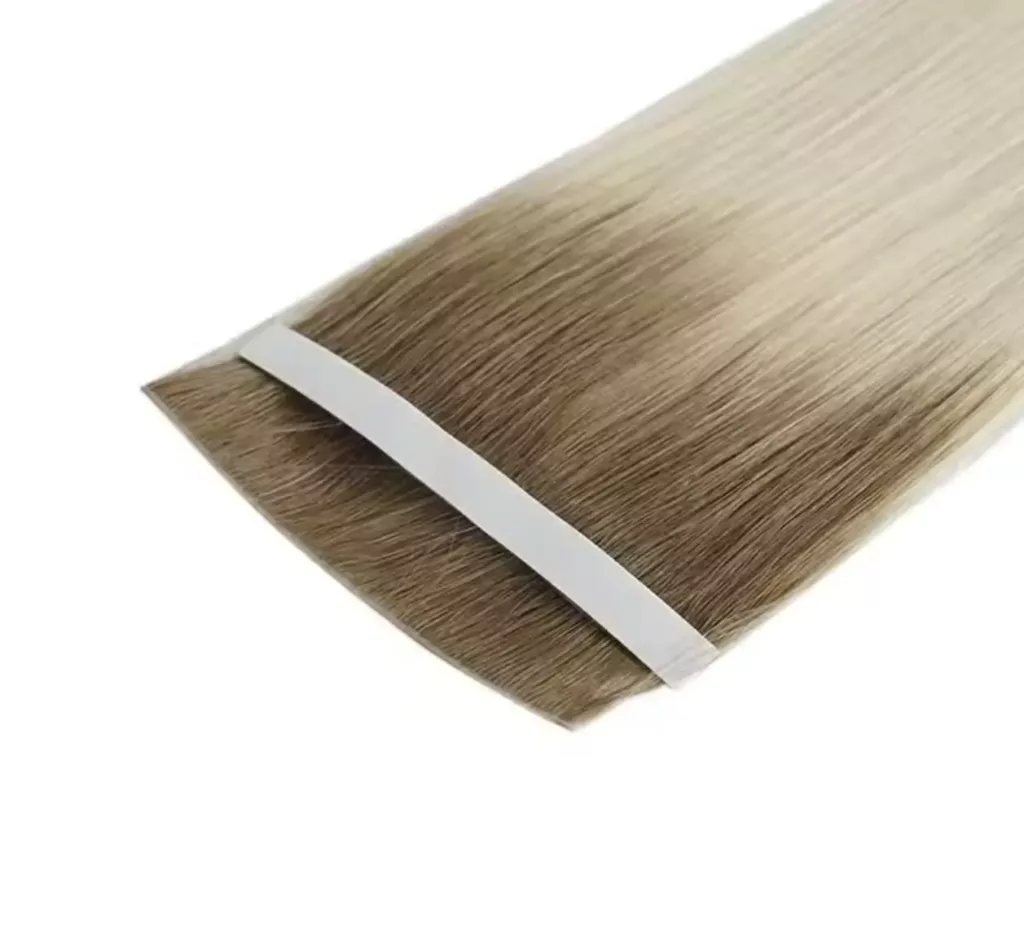
Tape In Hair
Tape-in extensions are one of the most popular semi-permanent methods. They involve sandwiches of adhesive tabs placed on natural hair.
Classic Tape-Ins
These use a traditional PU strip with hair stitched on top. Full cuticle versions stay soft and are ideal for most hair types.

Injection Tape-Ins
Hair is injected into a transparent PU base, mimicking natural scalp appearance. Offers the most invisible finish—perfect for fine-haired clients.

Micro Tape-Ins
Narrower versions of classic tape, designed for hairline and temple areas. They reduce weight and bulk, and with full cuticle hair, blend seamlessly even in thin sections.

Wide Tape-Ins
Often used wider tape in to achive faster installation. Full cuticle makes a big difference in durability and appearance.
| Extension Type | Sub-Type | Best For | Notes |
|---|---|---|---|
| Keratin Hair | U Tip | Thick to medium hair | Heat-bonded |
| I Tip | Thin to medium hair | Bead-installed | |
| V Tip | Similar to U tip | More pointed bond | |
| Flat Tip | Versatility and comfort | Hybrid style | |
| Clip-Ins | Classic | Daily wear, easy removal | Multiple widths |
| Seamless | Fine hair, discreet finish | PU base | |
| Volumizer | Extra volume in crown or back | Single piece | |
| Weft Hair | Hand-Tied | Lightweight installs | Cannot be cut |
| Machine Weft | Durable and cuttable | Thicker track | |
| Genius Weft | Thin + cuttable hybrid | Premium choice | |
| Flat Weft | Low-profile installs | PU sealed base | |
| Tape Hair | Classic | Standard tape install | Reliable and reusable |
| Injection Tape | Invisible installs | Premium finish | |
| Micro Tape | Hairline installs | Lightweight and narrow | |
| Wide Tape | Fast installation | Classical or injection |
Each of these extension types offers a unique benefit depending on your client’s hair type, lifestyle, and styling habits. But one thing remains the same—using full cuticle hair ensures a higher return on investment, better client satisfaction, and fewer headaches post-installation.
How Salons and Buyers Can Check Cuticle Quality
Do not judge hair cuticle quality only by first-touch softness. Silicone coating can make weak hair feel smooth in the package.
A better test is to check how the hair behaves after washing, drying, brushing, and heat styling.
| Buyer Check | What to Look For |
|---|---|
| Wash test | Does the hair stay smooth after shampooing? |
| Brush test | Does it tangle when brushed from ends to roots? |
| Direction test | Does the hair feel rougher when rubbed upward? |
| Heat test | Does the hair become dry or dull after styling? |
| Color test | Does the shade stay stable after washing? |
| Reuse test | Does the hair still feel manageable after repeated wear? |
For salons and hair brands, cuticle quality is not only a product detail. It affects service results, client satisfaction, after-sales complaints, and repeat orders.
A reliable supplier should be able to explain hair source, processing method, cuticle condition, color control, and sample-to-bulk consistency before asking for a large order.
How to Maintain Full Cuticle Hair Extensions
Even full cuticle hair needs proper care. Better hair gives you a stronger base, but poor aftercare can still damage the cuticle.
| Care Step | Better Practice |
|---|---|
| Washing | Use sulfate-free shampoo and wash gently |
| Conditioning | Apply conditioner from mid-lengths to ends, not near bonds or tapes |
| Drying | Pat with a towel and avoid rough rubbing |
| Blow drying | Use low to medium heat with heat protectant |
| Styling | Keep heat tools controlled and avoid repeated high heat |
| Sleeping | Braid or secure the hair before bed |
| Storage | Store clip-ins or halo pieces in a silk bag or clean package |
With proper care, premium full cuticle hair extensions can offer better long-term value for salons and clients. The key is to protect the cuticle from friction, dryness, heat stress, and rough handling.

My View
From a manufacturer’s side, I do not judge hair quality only by softness. Softness can be created with coating. Real quality shows after washing, brushing, coloring, and repeated wear.
The cuticle is one of the biggest reasons two hair samples can perform so differently. One sample may feel beautiful at first but tangle after a few washes. Another may feel less coated at first but stay stable much longer.
For professional salons and hair brands, full cuticle hair is not just a premium label. It is a way to reduce complaints, protect client trust, and build repeat orders. But the supplier still needs to control sorting, processing, color work, and batch consistency.
FAQs About Hair Cuticle
What is the definition of hair cuticle?
The hair cuticle is the outermost layer of the hair shaft. It is made of overlapping scale-like cells that protect the inner cortex and affect shine, smoothness, strength, and tangling.
Why is the hair cuticle important?
The cuticle protects the hair and controls how smooth the strand feels. Healthy, aligned cuticles help hair reflect light, resist friction, and stay easier to brush.
What happens when the hair cuticle is damaged?
Damaged cuticles can make hair feel rough, dry, dull, and prone to tangling or breakage. In hair extensions, damaged cuticles often shorten the usable lifespan.
Is full cuticle hair the same as Remy hair?
Not always. Remy usually means the strands are aligned in the same direction. Full cuticle hair means the cuticle is aligned and still intact. Some Remy hair may still be heavily processed.
How can buyers check if hair is full cuticle?
Buyers should test the hair after washing, brushing, drying, and heat styling. Real full cuticle hair should stay smoother and tangle less after the coating is washed away.
Does full cuticle hair last longer?
Usually yes, when processing and aftercare are controlled properly. Full cuticle hair often has better reuse value because the surface structure is more stable.
Conclusion
The hair cuticle is the outer protective layer of the hair shaft. It controls much of what clients notice first: smoothness, shine, softness, tangling, and long-term wear.
For hair extensions, cuticle condition is even more important because the hair no longer receives natural oil from the scalp. If the cuticle is stripped, damaged, or mixed in direction, the hair may fail faster after washing and daily use.
For salons, educators, and hair brands, understanding cuticle quality helps you choose safer products, explain value to clients, and reduce after-sales complaints. You can learn more about full cuticle hair or contact Hibiscus Hair to request samples for testing.
Where to buy Full Cuticle Hair Extensions?
Hibiscus Hair Manufacturer has been dedicated to producing high-quality Full Cuticle hair extensions for 25 years and is a recognized leader in the industry. If you are interested in finding a reliable hair extensions supplier and wholesale for your brand, please visit our website for more information: