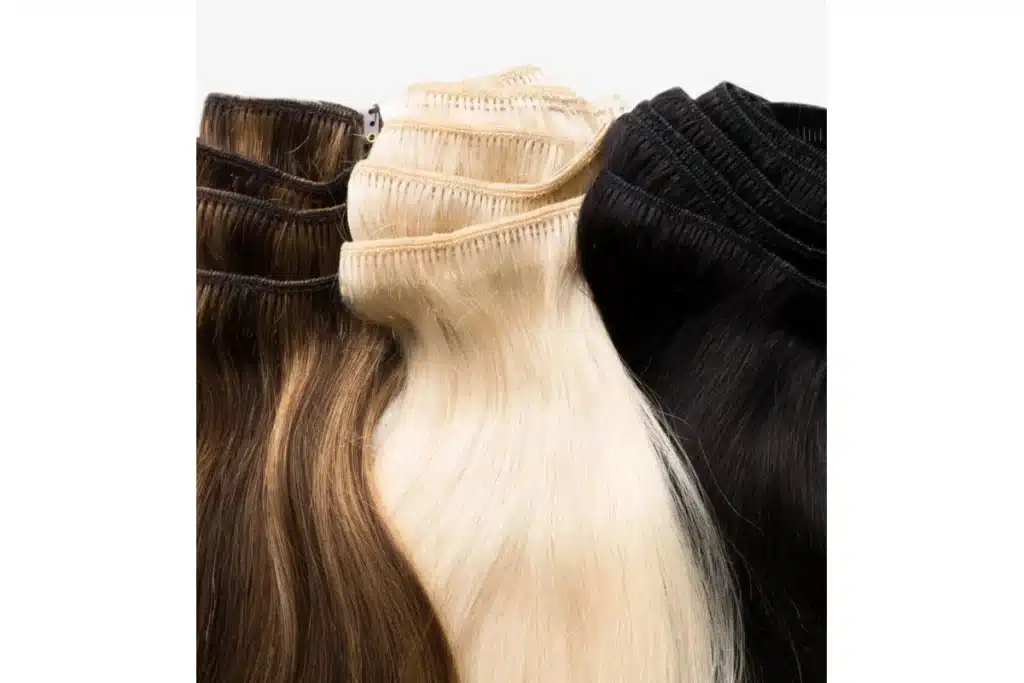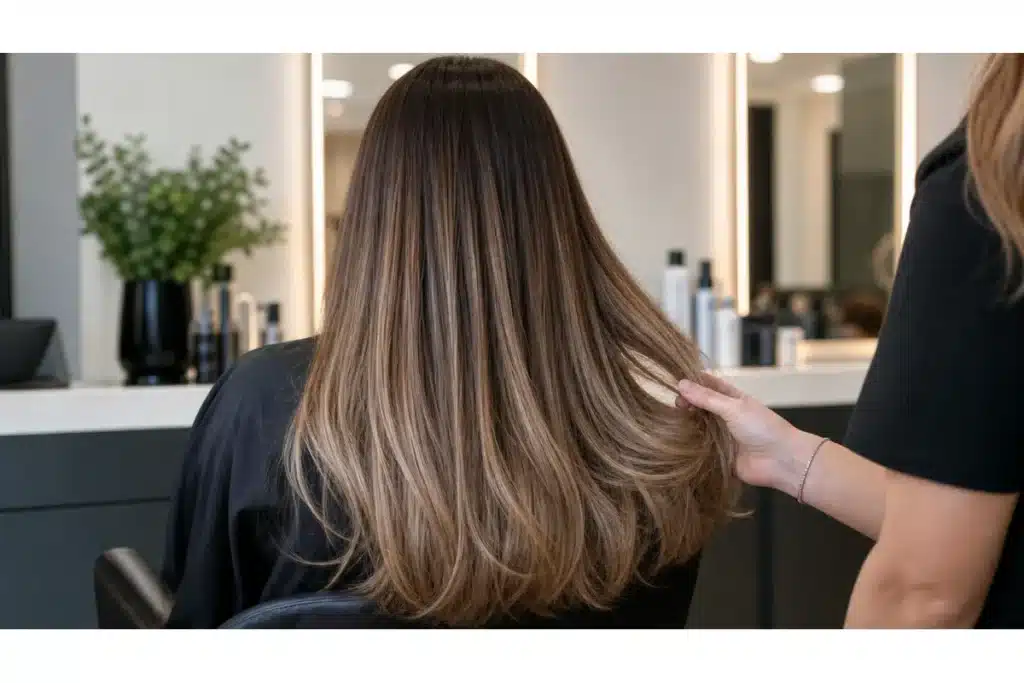
Confused by the word “Remy” on hair extension product pages? You are not alone. This label affects tangling, shine, color behavior, and how long the hair can stay smooth after washing.
Remy hair means human hair with cuticles kept aligned in the same direction from root to tip. This alignment helps reduce friction, matting, and roughness, so the hair usually brushes, styles, and wears better than non-Remy hair.
But here is the part many buyers miss: Remy is not the same as virgin hair, single-donor hair, or full cuticle hair. It is mainly about cuticle direction. The real quality still depends on collection, processing, sorting, color work, and whether the supplier keeps the standard stable in bulk orders.

Marketing often blurs these terms. I build extensions at the factory each day, so I keep it practical. Use this guide to match material to client expectations, service menus, and margins.
What Is Remy Hair?
Remy hair is human hair collected and processed with the cuticles kept in the same direction. When the cuticles are aligned, the strands glide more smoothly against each other instead of catching and matting.
Remy describes cuticle direction. It does not describe country, texture, color, or whether the hair is virgin.
The working definition
The cuticle is the outer layer of human hair. When the cuticles are aligned root-to-tip, the hair usually feels smoother, brushes easier, and has lower tangling risk.
A simple friction check can help buyers notice direction. Slide your fingers along a small bundle from root to tip, then from tip to root. Aligned hair usually feels smoother in one direction and slightly rougher in the other. This is only a basic check, not a full quality test.
What buyers should remember
A Remy label alone does not prove premium quality. The hair may still be heavily colored, mixed from many donors, or coated with silicone. For salons and brands, the real question is whether the hair stays smooth after washing, brushing, coloring, and repeated wear.

The working definition, signs, and quality signals
Remy describes a cuticle condition, not a country or texture. The outer scales line up like roof shingles. When strands rub, scales glide instead of hook. This small detail drives combing force, frizz level in humidity, and tone behavior during color. You can feel it. Pinch a small bundle and slide fingers both ways. True Remy gives more drag going tip-to-root than root-to-tip.
On our line, we preserve direction the moment a ponytail is cut. We band root ends, tag bundles, and keep orientation through washing and color work. We do not flip packets. We do not strip cuticles in harsh acid. We avoid heavy silicone shells that look glossy for a week and then wash off.
Many listings mix “Remy,” “virgin,” and “single-donor.” These are different. Virgin means no chemical color. Single-donor means one person’s hair per pack. Multi-donor Remy is still stable if sorting is tight and direction is kept. For salons, cuticle direction drives daily experience: fewer aftercare complaints, cleaner move-ups, and fewer early replacements.
I also check return hair at weft tops. Short “mustache” lengths can poke. Precise machine settings and newer weft formats (for example, genius wefts) reduce this. Return hair does not cancel Remy status, but neat finishing improves comfort and slip control.
Is Remy Hair Human Hair?
Yes. Remy hair should be human hair. The word “Remy” refers to human hair cuticles kept in the same direction.
Synthetic fibers do not have human cuticles, so “Remy synthetic hair” is usually a misleading phrase.
Within human hair, you may see several grades: non-Remy, Remy, full cuticle hair, virgin hair, and single-donor hair. These terms are not the same. Remy mainly describes cuticle alignment. Full cuticle hair focuses more on preserving the cuticle condition. Virgin hair means the hair has not been chemically colored or processed. Single-donor hair means the hair in one bundle comes from one donor.
Human Hair: Anatomy, Chemistry, and Why Precision Wording Matters
Human hair is keratin fiber with a cuticle shell and a cortex. Directional scales create directional friction. When aligned, strands slide. When mixed, strands snag. Synthetic fibers like PET or modacrylic lack this natural cuticle geometry and behave differently under heat, water, and color.
Within human categories you will see non-Remy, Remy, and full cuticle single-donor. Non-Remy often comes from floor/brush mixes. Directions are random. Many factories strip the cuticle in acid, then add silicone to fake slip. It feels slick new, but tangles once the coating fades. Remy keeps the natural cuticle and alignment. Full cuticle single-donor goes further: one ponytail per pack, no acid bath, no silicone coat, controlled color. It costs more and lasts longer.
For buyers, simple checks help: wet-strand elasticity, even porosity under toner, and normal “protein” smell and ash on a safe burn test. These quick screens protect your brand and reduce warranty tickets.

Where Does Remy Hair Come From?
Remy hair usually comes from cut ponytails where the root and tip direction is preserved during collection and processing.
The country of origin may affect natural color, strand diameter, and texture. But origin alone does not prove Remy quality. Indian hair, Southeast Asian hair, European hair, and Chinese hair can all be processed well or badly.
The real quality comes from handling.
| Control Point | Why It Matters |
|---|---|
| Collection | Ponytails should be cut and tied in one direction |
| Sorting | Length and tone should be sorted without flipping direction |
| Washing | Cleansing should not disturb root-to-tip orientation |
| Coloring | Gentle processing helps preserve the cuticle surface |
| Construction | Wefting, taping, or tipping should keep direction stable |
| QA testing | Wet combing, friction, porosity, and shade checks reduce risk |
For professional buyers, geography is less important than processing honesty. A well-handled Remy bundle from one origin can outperform a poorly processed “premium origin” label.
Is Remy Hair Good Quality?
Remy hair is usually better than non-Remy hair because the cuticles are aligned. This helps reduce friction, tangling, and roughness during daily wear.
But Remy is not automatically luxury hair. A Remy bundle can still be over-bleached, acid-treated, mixed from many donors, or coated with silicone. That is why professional buyers should not judge quality by the word “Remy” alone.
For salons, good Remy hair should stay smooth after washing, brush without heavy resistance, hold color more evenly, and create fewer matting complaints between maintenance appointments.
| Quality Signal | What It Means for Salons |
|---|---|
| Cuticle alignment | Less friction and lower tangling risk |
| Gentle processing | Better softness after washing |
| Stable color | Fewer shade mismatch complaints |
| Clean construction | Better tape, weft, or tip performance |
| Low silicone masking | More honest long-term feel |
| Sample-to-bulk consistency | Safer repeat orders |

Remy vs Non-Remy Hair: What Is the Difference?
Labels decide day-to-day behavior and cost of ownership.
Remy has aligned cuticles. Non-Remy has mixed or removed cuticles with silicone masking. This core difference drives tangling, color results, lifespan, and price.
Side-by-side realities and a fast buyer checklist
| Attribute | Remy Hair | Non-Remy Hair |
|---|---|---|
| Cuticle direction | Aligned in one direction | Mixed direction or stripped |
| Source | Usually collected from controlled ponytails | Often mixed sources or fallen hair |
| Processing | Can be light to moderate | Often requires acid treatment or silicone coating |
| Feel after washing | Usually stays smoother longer | May become rough when coating fades |
| Color work | More predictable when processing is gentle | Higher risk of uneven porosity |
| Tangling risk | Lower when cuticles are preserved | Higher due to friction |
| Lifespan | Longer when cared for well | Usually shorter |
| Best use | Premium salon and repeat clients | Short-term or price-sensitive use |
The biggest difference appears after washing. Many low-grade bundles feel soft when new. The real test is how the hair behaves after 5–10 washes.

Remy Hair vs Virgin, Single-Donor, and Full Cuticle Hair
Many buyers confuse Remy, virgin, single-donor, and full cuticle hair. These terms are related, but they do not mean the same thing.
| Term | What It Means | What It Does Not Guarantee |
|---|---|---|
| Remy hair | Cuticles are kept aligned in one direction | Not always virgin, single-donor, or premium |
| Virgin hair | Hair has not been chemically colored or processed | Direction may still be lost if handled badly |
| Single-donor hair | Hair in one bundle comes from one donor | Still needs careful processing |
| Full cuticle hair | Cuticle surface is better preserved | Still needs proper aftercare |
| Non-Remy hair | Cuticle direction is mixed or removed | Usually lower cost, but higher tangling risk |
For professional buyers, full cuticle single-donor hair is usually positioned above ordinary Remy hair because it requires stricter sourcing, sorting, and processing control.
Buyers who want a deeper explanation can read our guide to full cuticle hair.
How Long Does Remy Hair Last?
Remy hair can last several months or longer, depending on processing level, color work, aftercare, water quality, heat habits, and installation method.
Ordinary Remy hair may last around 4–8 months with regular wear. Better processed Remy or full cuticle hair can last longer when the cuticle is protected and aftercare is consistent.
| Hair Type | Typical Use Window | Main Condition |
|---|---|---|
| Standard Remy hair | Several months | Depends heavily on processing and care |
| Better processed Remy hair | Longer reuse potential | Needs stable cuticle alignment and gentle color |
| Full cuticle hair | Longest salon reuse potential | Requires stricter sourcing and processing |
| Light blonde Remy | Shorter if over-processed | Needs lighter raw hair and careful toning |

How to Care for Remy Hair Daily
Remy hair lasts longer when clients reduce friction, protect moisture, and avoid heavy buildup near attachment areas.
| Care Step | Better Habit | Why It Matters |
|---|---|---|
| Brushing | Brush from ends upward while supporting roots | Reduces pulling and matting |
| Washing | Use gentle shampoo and rinse well | Removes buildup without roughening hair |
| Conditioning | Apply from mid-lengths to ends | Keeps hair soft without weakening attachments |
| Sleeping | Loose braid or silk pillowcase | Reduces friction |
| Heat styling | Use heat protectant and moderate heat | Protects cuticle surface |
| Swimming | Rinse and condition after pool or sea water | Reduces dryness and mineral buildup |
For tape, bead, weft, or keratin installations, clients should keep attachment areas clean and product-light. Heavy oils near tapes, beads, or bonds can cause slipping or buildup.
My View
I do not judge Remy hair by how it feels on opening day. I judge it after washing, brushing, coloring, installing, and wearing.
The word “Remy” is useful, but it is not enough. A serious salon or brand should ask how the hair was collected, whether direction was protected, how much processing was used, and whether the sample matches the bulk order.
For premium extension lines, I would rather choose honestly processed, cuticle-aligned hair than a beautiful label with poor control behind it.
FAQs About Remy Hair
Is Remy hair the same as virgin hair?
No. Remy means the cuticles are aligned in one direction. Virgin means the hair has not been chemically colored or processed.
Is Remy hair always human hair?
Yes, Remy should refer to human hair. Synthetic fibers do not have human cuticles, so they cannot truly be Remy.
Is Remy hair better than regular human hair?
Usually, yes, if the cuticle direction is preserved. But Remy quality still depends on sourcing, processing, coloring, and supplier control.
Is Remy the same as full cuticle hair?
No. Remy focuses on cuticle direction. Full cuticle hair usually means the cuticle surface is better preserved with stricter processing control.
Why does some Remy hair tangle quickly?
It may have been flipped during processing, acid-treated, heavily coated with silicone, or mixed poorly. The Remy label alone does not prove long-term performance.
How long does Remy hair last?
Remy hair can last several months or longer depending on processing, color level, installation method, water quality, heat use, and aftercare.
Conclusion
Remy hair means human hair with cuticles aligned in one direction. This alignment helps reduce friction, tangling, and roughness, but the Remy label alone does not prove premium quality.
For salons, hair extension brands, and wholesale buyers, the safer decision is to test the hair after washing, brushing, coloring, and installation. Check cuticle behavior, color stability, softness after washing, and sample-to-bulk consistency before placing larger orders.
You can contact Hibiscus Hair to request Remy hair extension samples, full cuticle hair guidance, or wholesale price support for your salon or brand.