Hand-tied extensions are popular because they can create a thin, natural-looking row. But they are not the right method for every client or every salon.
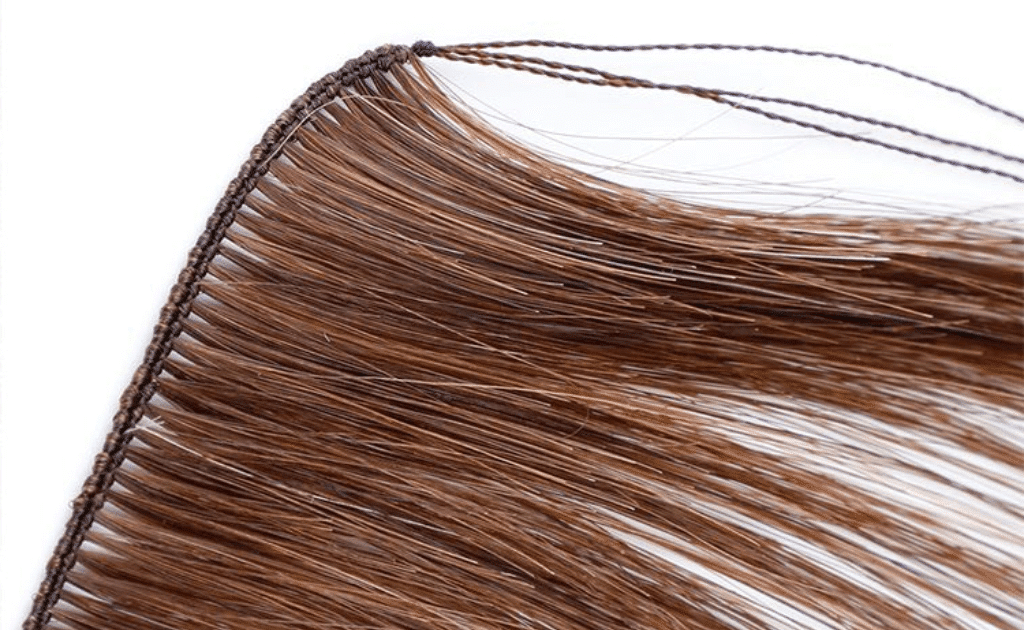
Hand-tied hair extensions are thin wefts made by tying hair by hand onto a fine base thread. During installation, a stylist usually creates a beaded row or track, then sews the hand-tied wefts onto that foundation. The method does not use heat or glue, but it still requires correct tension, weight control, and professional placement.
For salons and hair extension buyers, the key question is not only “what are hand-tied extensions?” The better question is whether the client has enough natural hair to support the row, whether the weft can be handled correctly, and whether the product quality stays consistent after washing, wearing, and move-ups.
What Are Hand-Tied Hair Extensions?
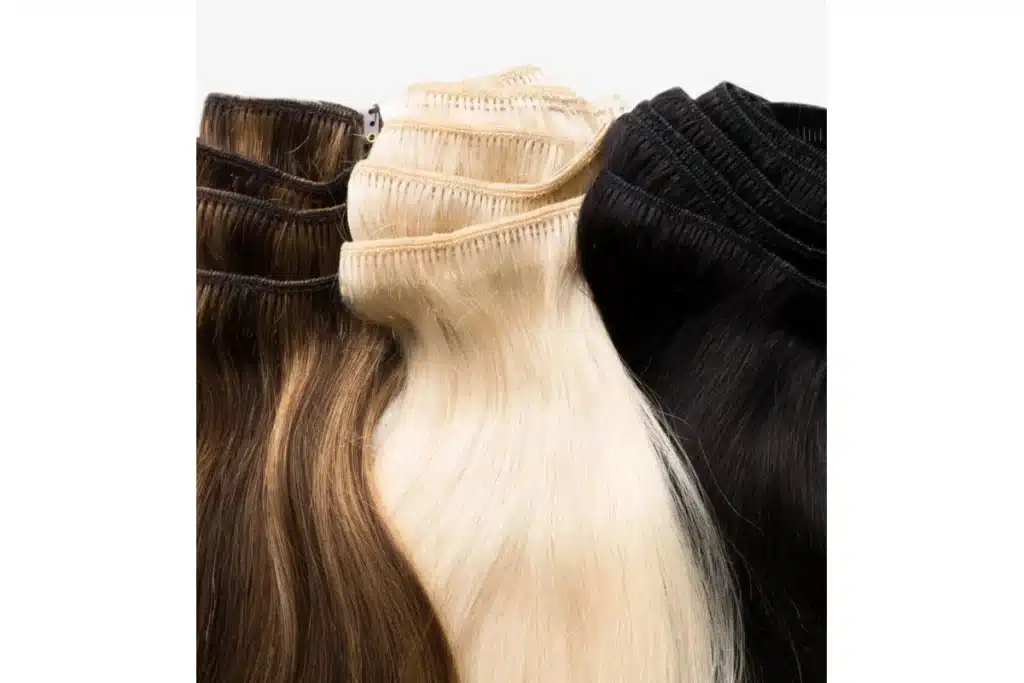
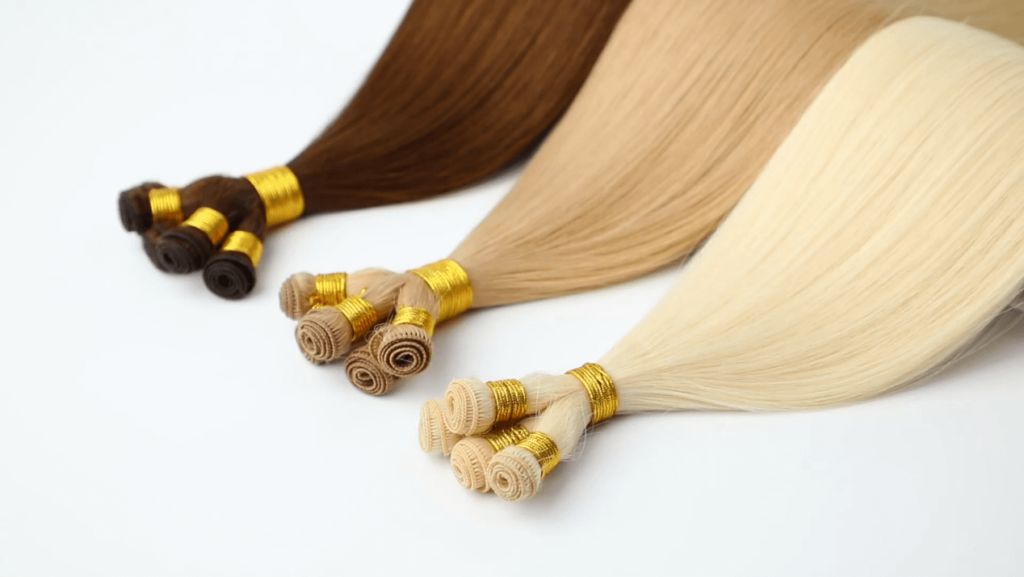
Hand-tied hair extensions are thin wefts made by tying small groups of hair by hand onto a fine base thread. The finished weft is usually lighter and flatter than a traditional machine weft.
The term “hand-tied” mainly describes the weft construction. It does not mean the hair is automatically higher quality. Hair quality still depends on whether the hair is full cuticle, Remy, heavily processed, or coated.
During salon installation, hand-tied wefts are usually sewn onto a beaded row or track. The result can look very natural when the row placement, hair weight, and color match are correct.
One important limitation: many hand-tied wefts should not be cut freely. Cutting the wrong area can cause unraveling or shedding. Some hand-tied wefts also have short return hair near the top, which may irritate sensitive scalps.
How Are Hand-Tied Hair Extensions Installed?
Installing hand-tied extensions requires clean sectioning, correct bead placement, controlled tension, and careful sewing.
1. Creating the Beaded Foundation
The stylist sections the natural hair and places beads along the row. This foundation must be secure but not tight. If the beads are too close to the scalp or too heavy for the client’s hair, discomfort and tension can happen.
2. Placing the Hand-Tied Wefts
The stylist lays one or more hand-tied wefts over the beaded row. The number of wefts depends on the client’s density, desired volume, and natural hair strength.
3. Sewing the Wefts
The wefts are sewn onto the foundation with thread. The stitching should be firm enough to hold, but not so tight that it pulls on the scalp.
4. Blending and Finishing
After installation, the stylist blends the extensions with the client’s natural hair. Good cutting and color matching are just as important as the installation itself.
Why Choose Hand-Tied Hair Extensions?
Hand-tied extensions are popular because they can create a thin, flexible, natural-looking row when installed correctly.
Natural Look and Feel
The weft top is thin, so it can lie flatter against the head than many thicker wefts. This helps create a more discreet result.
No Heat or Glue During Installation
Hand-tied wefts are usually sewn onto a beaded foundation, so the method does not require fusion heat or tape adhesive. This can be helpful for clients who want to avoid heat or glue-based methods.
Lightweight Row Structure
Hand-tied wefts can feel light when the correct number of wefts is used. But too many rows or too much weight can still create tension.
Premium Salon Finish
For salons, hand-tied extensions can work well as a premium row method. The result depends on hair quality, row placement, stitching, color match, and maintenance timing.
Who Are Hand-Tied Extensions Best For?
Hand-tied extensions are best for clients who have enough natural hair density to support a beaded row and hide the weft.
| Client Type | Suitability | Salon Note |
|---|---|---|
| Medium-density hair | Good fit | Usually enough hair to support and hide the row |
| Thick hair | Good fit | May need more rows or wefts for balance |
| Fine hair | Needs caution | Use lighter weight and careful placement |
| Very thin or weak hair | Often not ideal | Row weight may create tension |
| Sensitive scalp | Needs testing | Return hair or bead tension may cause discomfort |
| Clients wanting no heat or glue | Good option | Still needs professional installation |
| Low-maintenance clients | Not ideal | Move-ups and home care are still required |
A good consultation should happen before installation. The stylist needs to check natural hair density, scalp sensitivity, lifestyle, and maintenance habits.

Hand-Tied Extensions: Pros and Cons
Hand-tied extensions can create a beautiful result, but they also have limits. Salons should explain both sides before installation.
| Pros | Why It Matters |
|---|---|
| Thin weft structure | Helps the row lie flatter |
| Natural-looking volume | Good for soft, blended results |
| No heat or glue | Useful for clients avoiding fusion or tape |
| Comfortable when installed well | Lightweight rows can feel natural |
| Premium salon service | Good for clients wanting a higher-end method |
| Cons | What Salons Should Watch |
|---|---|
| Cannot usually be cut freely | Cutting may cause unraveling |
| Return hair may irritate | Sensitive scalps may feel short hairs near the top |
| Not ideal for very thin hair | The row needs enough natural hair support |
| Requires skilled installation | Poor tension control can cause discomfort |
| Needs regular move-ups | Usually around 6–8 weeks |
| Higher service cost | Labor and product quality increase the price |
Hand-Tied Weft vs Machine Weft and Genius Weft
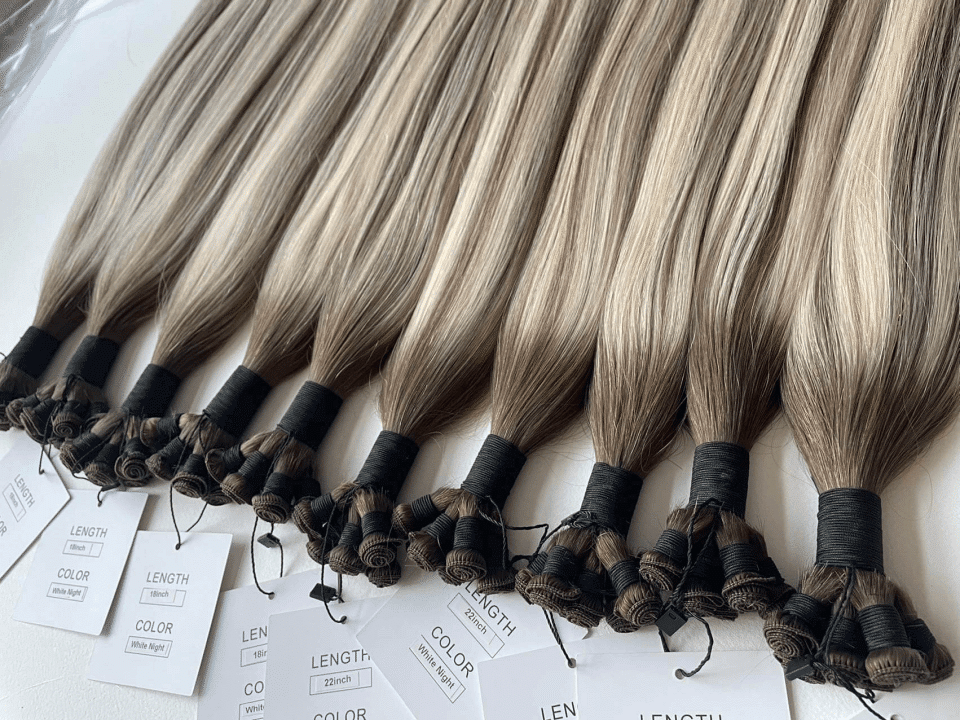
Hand-tied wefts are only one type of weft extension. Salons should compare them with machine wefts and genius wefts before choosing.
| Weft Type | Main Strength | Main Limitation |
|---|---|---|
| Hand-tied weft | Thin, soft, flexible row | Usually cannot be cut freely; may have return hair |
| Machine weft | Strong, durable, lower cost | Thicker top seam and more bulk |
| Genius weft | Thin, cuttable, usually no return hair | Higher cost and quality varies by supplier |
| Flat weft | Lower-bulk structure | Edge strength and shedding should be tested |
Hand-tied wefts are a good option when the stylist wants a thin row and knows how to handle the weft correctly. Genius wefts may be better when the salon needs a thin weft that can be cut more freely.Professional buyers can compare more hair weft extensions when choosing between hand-tied, machine, genius, flat, and other weft types.
What Salons and Buyers Should Check Before Ordering
For salons and hair extension brands, hand-tied weft quality should be tested before bulk orders.
| Check Item | Why It Matters |
|---|---|
| Hair quality after washing | Shows whether the hair stays soft |
| Full cuticle condition | Helps reduce dryness and tangling |
| Weft thickness | Affects comfort and concealment |
| Return hair length | Affects scalp comfort |
| Shedding control | Affects client satisfaction |
| Edge strength | Affects durability |
| Color stability | Protects salon matching |
| Sample-to-bulk consistency | Protects repeat orders |
A hand-tied weft that looks beautiful in a photo may still fail if it sheds, feels itchy, has too much return hair, or does not match the bulk order.
Buyers who care about long-term softness can read our guide to full cuticle hair.
FAQs About Hand-Tied Extensions
What are hand-tied extensions?
Hand-tied extensions are thin wefts made by tying hair by hand onto a fine base thread. They are usually sewn onto a beaded row during installation.
Are hand-tied extensions damaging?
They should not damage natural hair when installed with proper tension, correct weight, and regular maintenance. Damage risk increases when the row is too tight, too heavy, or left in too long.
Can hand-tied wefts be cut?
Most hand-tied wefts should not be cut freely because the weft may unravel. Stylists should follow the supplier’s cutting instructions.
Are hand-tied extensions good for thin hair?
They can work for some fine hair clients, but very thin or weak hair may not support the row well. Lighter wefts or other methods may be safer.
How long do hand-tied extensions last?
The row usually needs move-up maintenance around 6–8 weeks. The hair itself can last longer depending on quality, aftercare, and removal.
What is the difference between hand-tied and genius wefts?
Hand-tied wefts are thin and flexible but usually cannot be cut freely. Genius wefts are also thin but are designed to be cuttable and usually have no short return hair.
Conclusion
Hand-tied hair extensions are thin wefts made by tying hair onto a fine base thread. They can create a soft, natural-looking row when installed by a trained stylist and matched to the right client.
They work best for clients with enough natural hair density to support the row. They are not ideal for every fine or weak hair client, and they do require regular move-ups. Salons should also understand the limits of hand-tied wefts, especially cutting restrictions and possible return hair comfort issues.
You can contact Hibiscus Hair to request hand-tied weft samples, compare weft types, or get wholesale guidance for salon and brand orders.