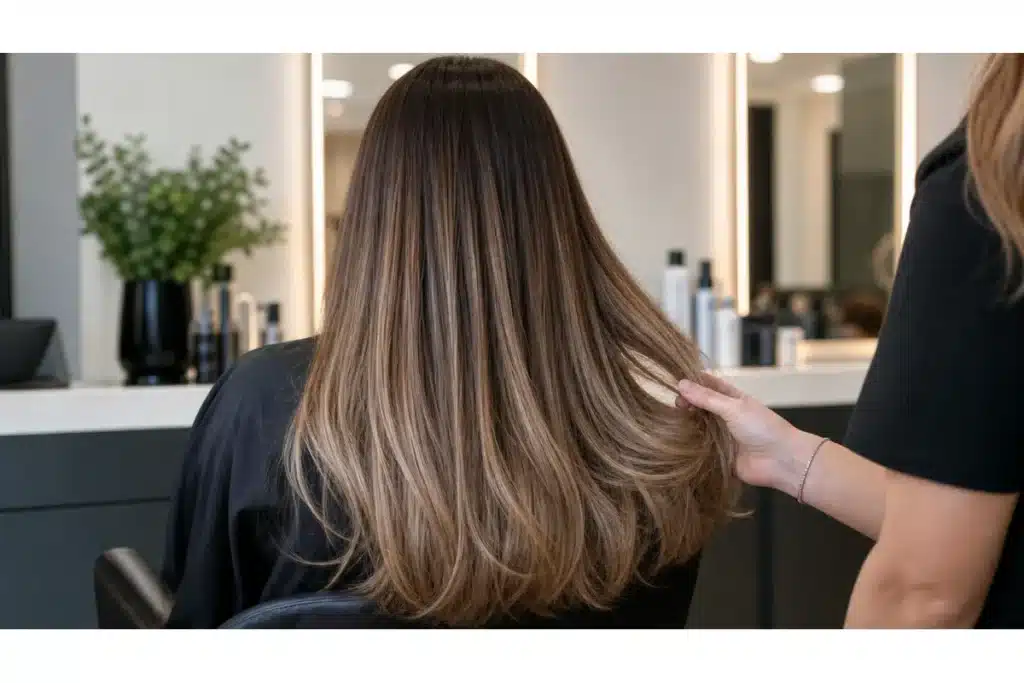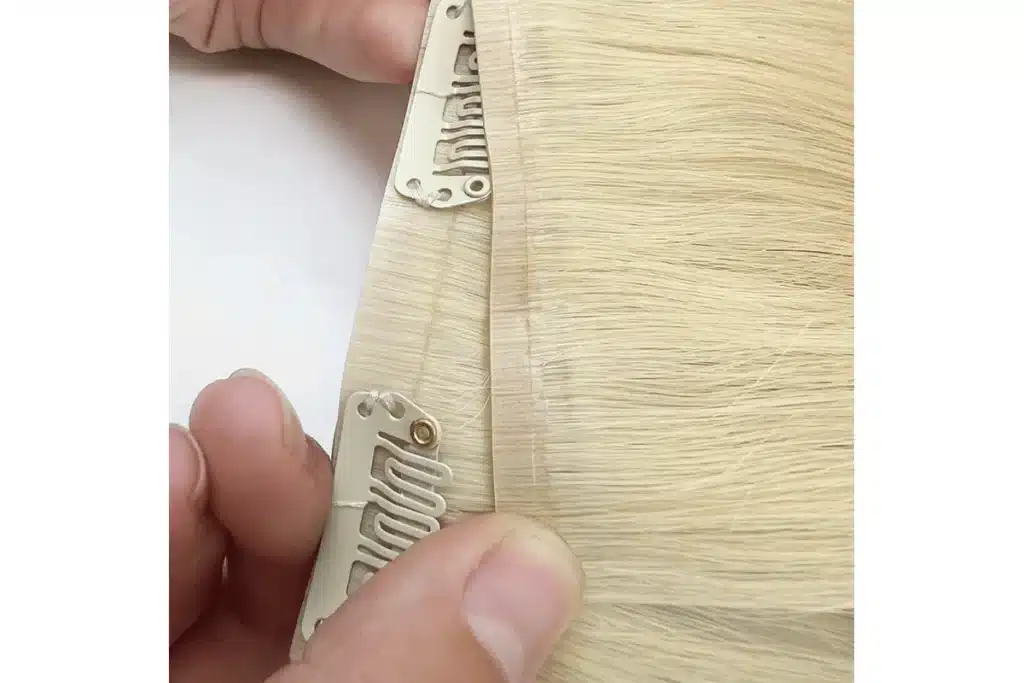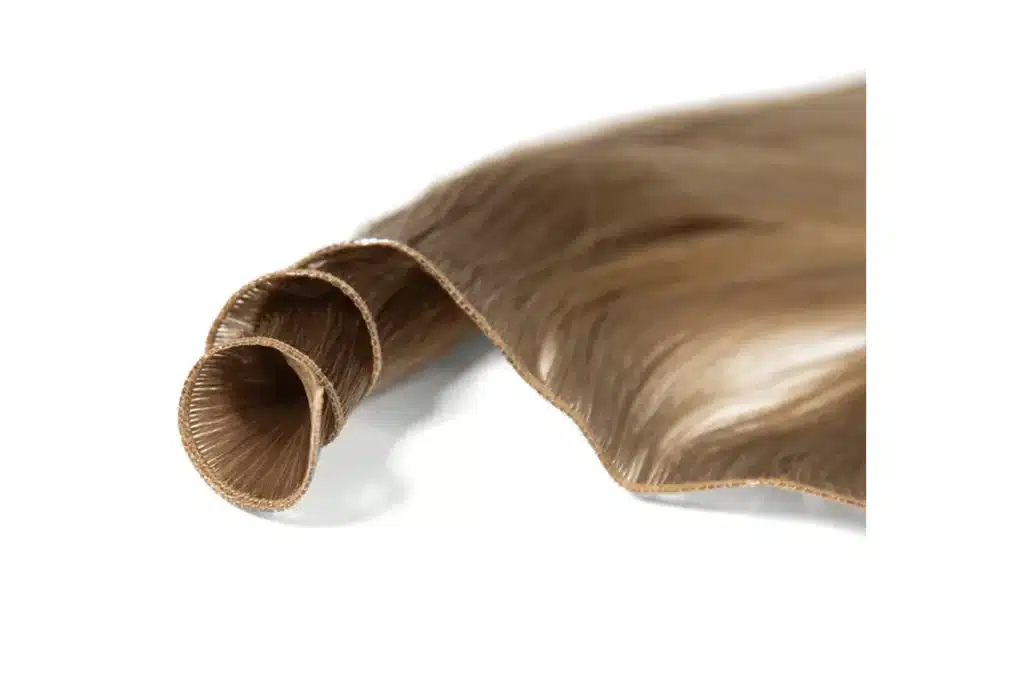
Flat tip hair extensions can be a strong choice for stylists who want the hold of a keratin method with a flatter, more comfortable bond shape.
The best flat tip hair extensions are not defined by the brand name alone. They depend on hair quality, keratin bond stability, strand weight consistency, bond shape, color match, installation control, and clean removal.
For salons and hair extension buyers, flat tips work best when the client needs discreet strand-by-strand movement without a bulky bond. But they are not the right answer for every client. Fine hair, weak roots, high shedding, or poor aftercare can still create problems if the method is not matched correctly.

What Makes the Best Flat Tip Hair Extensions?
When choosing flat tip hair extensions for your salon, you need to ensure they meet high standards of quality and performance. Here’s what makes the best flat tip hair extensions stand out.
High-Quality Hair
Flat tip extensions are worn strand by strand, so hair quality matters every day. If the hair becomes dry, rough, or tangled, clients will brush harder and create more stress near the bond area.
The best flat tip hair extensions should use well-aligned, full cuticle human hair when the goal is premium salon performance. Full cuticle hair usually gives better softness, smoother movement, and stronger reuse potential when processing and aftercare are controlled.
Standard Remy hair can still work, but quality varies by supplier. Heavily processed or coated hair may feel soft at first and then become dry after several washes.
Buyers who want to understand the difference can read our guide to full cuticle hair.
Seamless Blend
Flat tip extensions are designed with a flatter keratin bond than traditional rounded tips. This helps the attachment sit closer to the head and reduces visible bulk.
A seamless result still depends on more than bond shape. The stylist must match strand weight, color, texture, and section size to the client’s natural hair. If the strand is too heavy or the color match is off, even a flat bond will not look natural.
Comfortable Fit
The flat bond shape can feel more comfortable for some clients because it spreads the attachment flatter against the hair section.
Comfort still depends on placement. If the bond is too close to the scalp, too heavy for the section, or placed on weak natural hair, the client may still feel pulling or irritation. Flat tip does not replace proper mapping and tension control.
Long-Lasting Results
Flat tip extensions can offer several months of wear when installed and maintained correctly. Many clients need professional maintenance or removal around the normal fusion wear window, depending on hair growth, bond condition, lifestyle, and aftercare.
The hair itself may last longer than one installation if it is high quality and removed carefully. The bond, however, must be checked for comfort, residue, and clean removal.
Styling Versatility
Flat tip extensions offer natural strand movement, which can help with styling flexibility. They can support straight, wavy, or curled looks when the hair quality and color match are right.
Stylists should still be careful with high ponytails, tight updos, and direct heat near the bond area. Styling freedom depends on placement and client education.

Flat Tip Hair Extensions: Pros and Cons
Flat tip extensions are useful because they combine a discreet bond shape with strand-by-strand movement. But they still require correct client selection, installation, and removal.
| Pros | Why It Matters |
|---|---|
| Flatter bond shape | Reduces bulk compared with some rounded bonds |
| Natural strand movement | Helps extensions move more like natural hair |
| Good for customized placement | Stylists can control density by section |
| Long-wear potential | Suitable for clients wanting a semi-permanent method |
| Discreet finish | Useful for clients who want lower-profile bonds |
| Cons | What Stylists Should Watch |
|---|---|
| Requires professional heat application | Poor heat control can affect natural hair |
| Not ideal for very weak hair | Strand weight may stress fragile roots |
| Removal must be careful | Rough removal can cause breakage |
| Application takes time | Full-head installs require patience |
| Bond quality varies | Poor keratin can crumble, feel hard, or leave residue |
Flat Tip Hair Extensions: Pros and Cons
Flat tip extensions are useful because they combine a discreet bond shape with strand-by-strand movement. But they still require correct client selection, installation, and removal.
| Pros | Why It Matters |
|---|---|
| Flatter bond shape | Reduces bulk compared with some rounded bonds |
| Natural strand movement | Helps extensions move more like natural hair |
| Good for customized placement | Stylists can control density by section |
| Long-wear potential | Suitable for clients wanting a semi-permanent method |
| Discreet finish | Useful for clients who want lower-profile bonds |
| Cons | What Stylists Should Watch |
|---|---|
| Requires professional heat application | Poor heat control can affect natural hair |
| Not ideal for very weak hair | Strand weight may stress fragile roots |
| Removal must be careful | Rough removal can cause breakage |
| Application takes time | Full-head installs require patience |
| Bond quality varies | Poor keratin can crumble, feel hard, or leave residue |
Flat Tip vs U Tip, I Tip and Nano Ring Extensions
Flat tip is not always better than other tip methods. It is better for certain clients and salon goals.
| Method | Attachment | Best For | Main Watch Point |
|---|---|---|---|
| Flat Tip | Flat keratin bond with heat | Lower-profile fusion attachment | Needs heat and careful removal |
| U Tip / K Tip | Rounded keratin bond with heat | Strong long-wear installs | Can feel bulkier than flat tips |
| I Tip | Bead or ring, no heat | No-heat strand-by-strand installs | Bead size and strand weight matter |
| Nano Ring | Very small bead system | More discreet no-heat placement | Not ideal for every fragile hairline |
Flat tip is often a good choice when the stylist wants a flatter keratin bond but still needs secure fusion attachment. I Tip or Nano Ring may be better when the client wants no heat.
Who Are Flat Tip Extensions Best For?
Flat tip extensions are best for clients who want strand-by-strand movement with a flatter bond shape.
| Client Type | Flat Tip Suitability | Reason |
|---|---|---|
| Medium-density hair | Good fit | Natural hair can support the bond |
| Fine to medium hair | Possible with care | Use lighter strands and careful placement |
| Thick hair | Possible | May need more strands for fullness |
| Sensitive scalp | Depends | Bond size and placement must be tested |
| Very weak or shedding hair | Not ideal | Any fusion bond may create stress |
| Clients wanting no heat | Not ideal | I Tip or Nano may be better |
Flat tip extensions should always be matched to the client’s natural hair strength. A flat bond does not automatically make the method safe for every hair type.
Tips for Application and Maintenance
Even the best flat tip hair extensions can fail if the installation or aftercare is poor.
Application Tips
Use clean, dry hair. Product buildup near the bond can affect attachment quality.
Control section size. The natural hair section should support the extension weight. Too little hair can create tension. Too much hair can prevent a clean bond.
Use proper heat control. The keratin should soften evenly and form a compact bond without burning, spreading too wide, or becoming brittle.
Place bonds with enough movement. Bonds should not sit too close to the scalp. Clients need comfort and natural movement.
Maintenance Tips
Avoid oils near the bonds. Oils, heavy conditioners, and masks near the attachment area can weaken the bond or create buildup.
Brush gently. Clients should support the bond area and brush from ends upward.
Avoid direct heat on bonds. Styling tools should not press directly on the keratin bond.
Schedule professional removal. Flat tip extensions should be removed with the right remover and tool. Pulling or cracking the bond roughly can damage natural hair.

What Salons and Buyers Should Test Before Ordering Flat Tips
Flat tip quality should be tested before bulk orders because small bond problems become client complaints in salon service.
| Test Item | Why It Matters |
|---|---|
| Hair softness after washing | Shows real hair quality after coating fades |
| Full cuticle condition | Reduces tangling and dryness risk |
| Bond shape consistency | Helps stylists install evenly |
| Keratin melt behavior | Affects heat application |
| Bond hardness after cooling | Affects comfort and removal |
| Strand weight consistency | Helps with head mapping |
| Color stability | Protects salon color matching |
| Removal behavior | Shows whether the bond breaks down cleanly |
Professional buyers can compare our keratin hair extensions when checking flat tip, U tip, V tip, and other fusion methods.
FAQs About Flat Tip Hair Extensions
What are flat tip hair extensions?
Flat tip hair extensions are strand-by-strand extensions with a flat keratin bond shape. They are usually applied with heat and designed to sit flatter than some rounded fusion tips.
Are flat tip extensions better than U tip extensions?
Not always. Flat tips have a flatter bond shape, while U tips can offer strong traditional fusion hold. The better choice depends on the client’s hair density, comfort needs, and stylist preference.
Are flat tip extensions good for fine hair?
They can work for some fine hair clients when lighter strands and careful placement are used. They are not ideal for very weak, fragile, or heavily shedding hair.
How long do flat tip hair extensions last?
Flat tip extensions can last several months with proper installation, aftercare, and professional removal. The exact wear time depends on hair quality, bond quality, client lifestyle, and maintenance.
Can flat tip hair extensions be reused?
The hair may be reused if the quality remains soft and full after removal. The keratin bond usually needs professional re-tipping before another installation.
Conclusion
The best flat tip hair extensions are not defined by one brand name. They are defined by hair quality, bond shape, keratin behavior, strand weight consistency, installation comfort, and clean removal.
Flat tips can be a strong choice for stylists who want a discreet keratin method with a flatter bond profile. They work best when the client’s natural hair can support the method and the product has been tested beyond the first touch.
You can contact Hibiscus Hair to request flat tip hair extension samples, keratin bond testing support, or wholesale price guidance for your salon or brand.