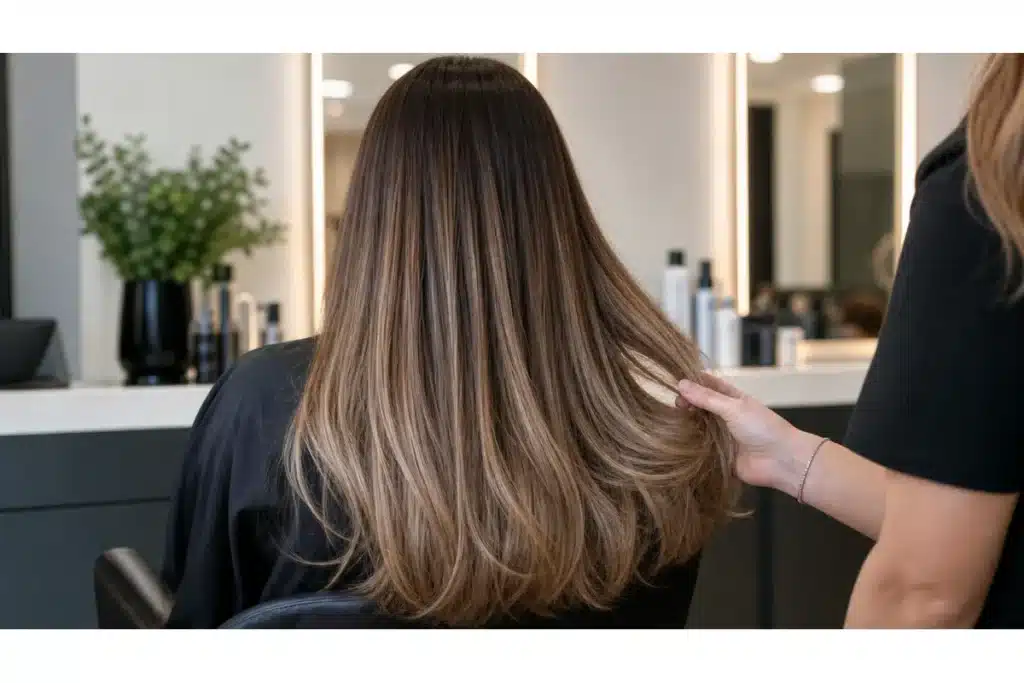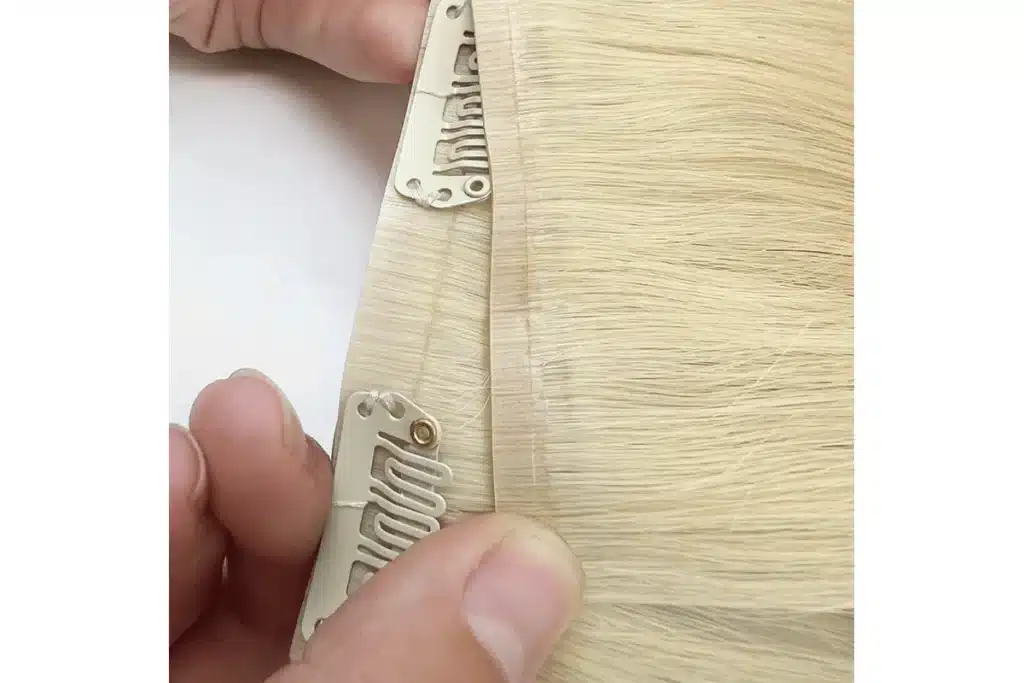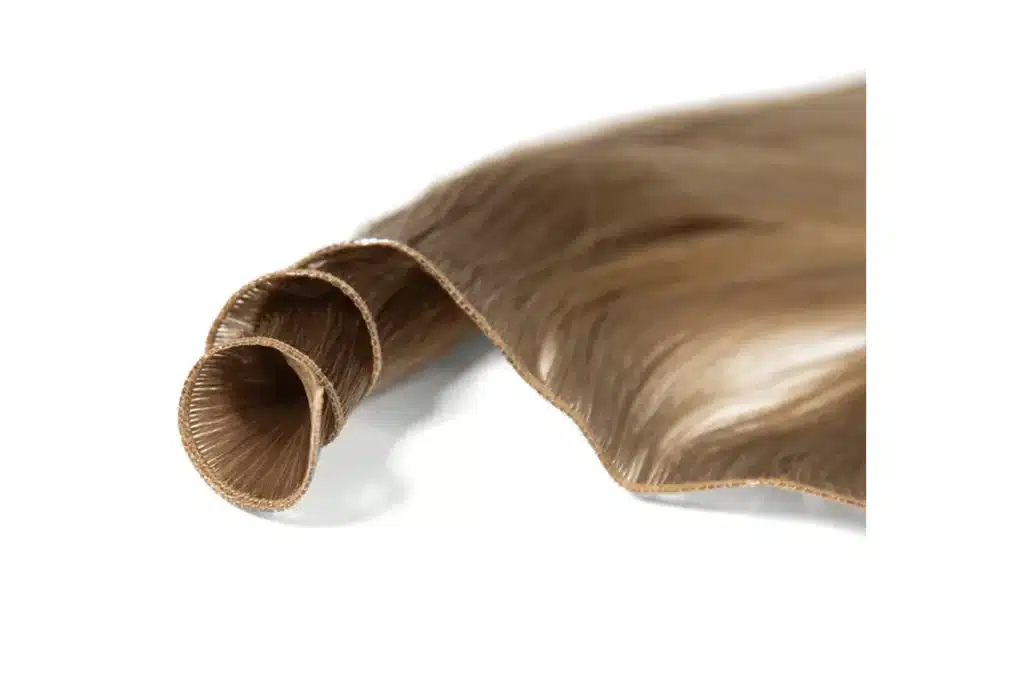
You want length and fullness, but you also want to protect your natural hair. You may also worry about edges, dryness, and visible tabs. That is why tape ins feel confusing for black hair.
Tape in extensions can work well for black hair when your stylist chooses the right tape size, places tabs in safe zones, controls tension, and follows a moisture-safe routine. Tape ins can also cause breakage if tabs are too heavy, too close to edges, or removed the wrong way.
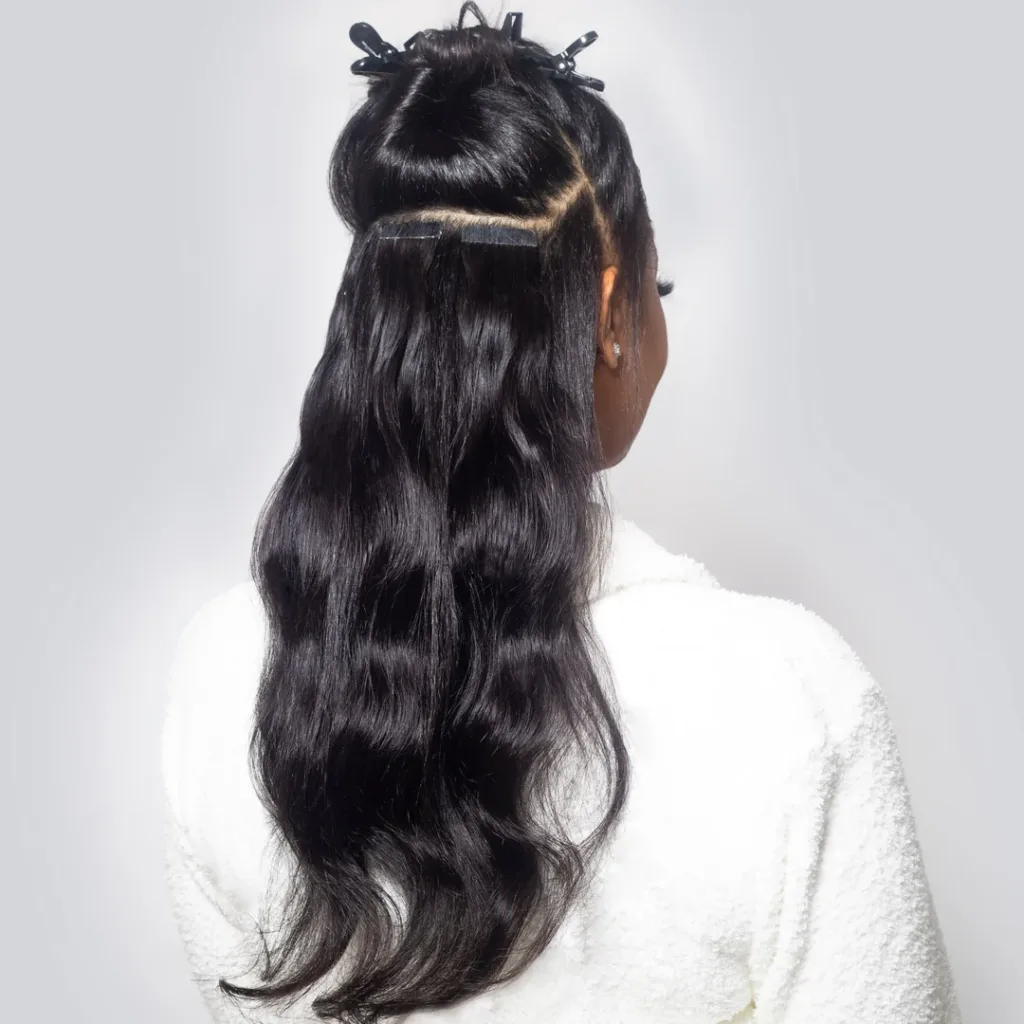
If you want the truth without fear, you need to look at hair type, density, edges, and routine. The sections below break down damage risk, real pros and cons, what “best tape” means, and how to make tape work with textured hair care.
Are Tape In Extensions Damaging for Black Hair?
You may hear two opposite claims. Some people say tape is safe for everyone. Some people say tape always damages black hair. Both claims miss the real point.
Tape in extensions are not automatically damaging for black hair. Damage usually happens when the tabs are too heavy for your density, placed on fragile edges, installed with high tension, or removed by pulling. When placement and removal are correct, tape can be a low-stress option for many clients.
Dive deeper
Black hair is not one hair type. You can have loose curls, tight coils, dense hair, fine strands, or a delicate perimeter. Still, many clients share a few care realities: moisture matters, edges are sensitive, and protective styling is often part of life. Tape ins must fit those realities.
1) The biggest risk is the perimeter, not the crown
Many black hair clients have the most fragile area at the hairline and temples. Tape tabs can pull if they are placed too close to the edge. The tab can also show when you wear hair up. A safe install keeps tape away from the edge and uses strong internal “safe zones” for hold.
2) The second risk is weight mismatch
Tape pieces can be light or heavy. If the stylist uses too many grams on fine strands, the tabs pull. If the stylist uses very wide tabs on low-density areas, the tension spreads in the wrong way. A correct plan matches:
- your strand thickness
- your density
- your desired volume
- your lifestyle
3) The third risk is removal shortcuts
Black hair can tangle faster if it is dry or if shed hair is trapped. When a tape install is left too long, shed hair collects around the tab line. Then removal can feel harder. If someone pulls, breakage happens. Safe removal needs proper remover and patience. It should never be “rip and go.”
4) Moisture routines need one adjustment
Many black hair routines include oils and heavy creams. Those products are great for lengths, but they can weaken adhesive bonds if they touch the tape area. You do not need to stop moisturizing. You only need to keep oils away from the tape seam and focus them on mid-lengths and ends.
This table shows what causes damage and what prevents it:
| Risk point | What causes the problem | What prevents it |
|---|---|---|
| Edges | tabs placed too close | keep tape in safe zones |
| Tension | too heavy per section | match weight to density |
| Removal | pulling before adhesive dissolves | proper remover + slow separation |
| Wear time | leaving too long | refit on schedule |
| Moisture | oil on tape seam | oil on ends, not on seam |
If you want tape to feel safe on black hair, you should choose a stylist who plans for edges and tension first.
Tape In Extensions for Black Hair: Pros and Cons
You might love tape ins because they are flat, fast, and natural-looking. You might hate tape ins because you heard about residue and slipping. Both experiences can be true. The difference is method and routine.
Tape ins can give black hair a smooth finish, quick install, and easy daily styling. Tape ins can also struggle with heavy oils near the root, high humidity routines, and edge sensitivity if the install is not mapped well.
Dive deeper
A fair pros and cons list should match real life, not only salon photos. You should think about how you wash, how you sleep, and how you style. You should also think about whether you want silk press looks, curly blending, or protective styling.
Pros that matter most for many black hair clients
1) Flat bond for a sleek look
Tape tabs sit flat. This helps when you want a smooth base for a blowout or silk press style. You often get less bulk at the root compared with beads.
2) Fast install and fast refit
Many tape installs are quicker than strand methods. If you like shorter chair time, tape can fit.
3) Good option for add-on volume
Tape can be used for filling sides, adding density, or building length without a full head. A partial install often protects edges better because the stylist can stay in safe zones.
4) Flexible styling when placement is smart
You can wear hair down, half-up, and low ponytails. The key is placement that matches your most common styles.
Cons you should take seriously
1) Adhesive does not love oil at the seam
If your routine uses scalp oils, thick creams near roots, or frequent product layering, tape can slip or feel gummy. You can still moisturize. You just need control around the seam.
2) Removal and cleanup require skill
Tape needs a clean removal. If removal is rushed, breakage can happen. If cleanup is weak, residue can cause tangles.
3) Edges can be a weak point
If tape is placed near the perimeter, it can pull or show. That is why edge mapping is a must.
4) Curl pattern blending can be tricky
If you wear natural curls, you need the right texture match and the right cut. If you choose straight tape hair but wear curly natural hair, the blend can look obvious unless you style daily.
This table gives you a clean comparison:
| Topic | Why it is a pro | Why it can become a con |
|---|---|---|
| Flatness | sleek root finish | tabs show if placed wrong |
| Speed | quick installs | rushed removal causes damage |
| Daily styling | easy wear-down looks | high ponytails can expose tabs |
| Moisture care | you can still moisturize | oils at seam weaken bond |
| Texture match | great when matched | obvious if mismatch |
If you choose tape ins for black hair, you should choose them with a plan, not as a random install.
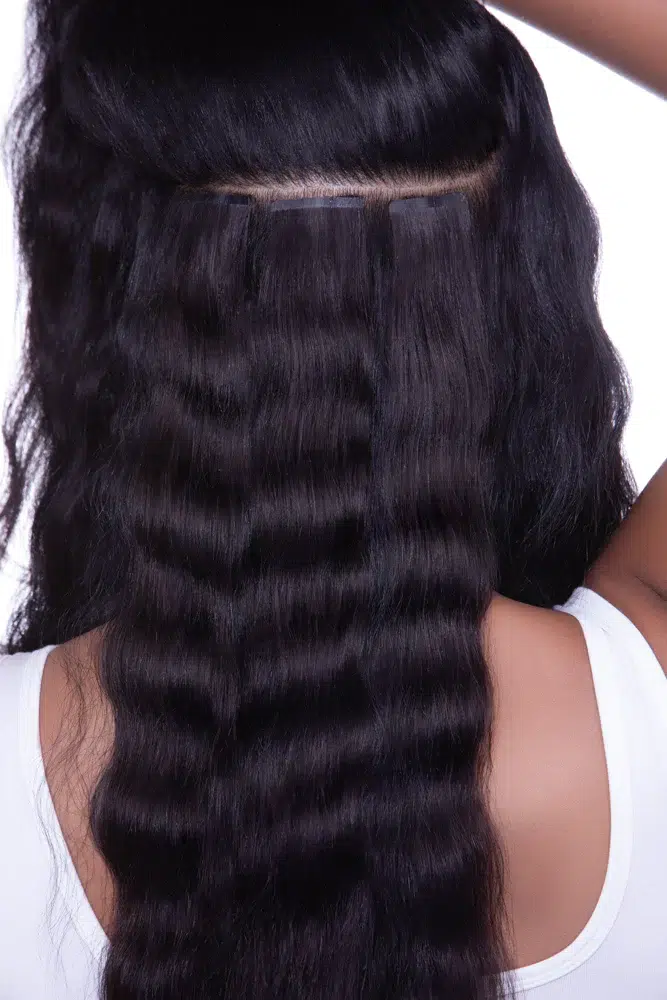
Best Tape In Extensions for Black Hair
You may ask “what is the best tape?” Some people think the best tape is only about the adhesive. The truth is that “best tape” is a mix of hair quality, tape top design, and texture match.
The best tape in extensions for black hair are the ones with strong full cuticle hair, consistent density from root to ends, a thin flexible tape top, and a texture that matches your natural style plan. You also need the right width and weight so the install stays light on your hair.
Dive deeper
To choose the best tape for black hair, you should start with the hair goals. Are you wearing straight looks most of the time? Are you wearing curls most of the time? Are you doing heat often? Your answers decide the hair type you should buy.
1) Hair quality matters more for black hair routines
Many black hair routines include:
- more detangling steps
- more hydration products on ends
- heat styling cycles for silk press looks
- protective sleep habits
Low quality hair breaks down fast under these realities. That is why full cuticle hair is important if you want softness and reuse value. Full cuticle hair usually tangles less and keeps shine longer.
2) Texture match is not optional
“Black hair” is not one texture. You should choose based on your own styling plan:
- If you wear silk press and straight styles, straight tape hair can work well.
- If you wear natural curls daily, you need curl texture that matches your curl size and frizz level.
- If you switch between straight and curly often, you need hair that handles heat without becoming dry.
3) Tape top design should be thin and flexible
A thick tape top can look bulky in finer areas. A thin tape top lays flatter and feels softer. Flexibility matters for comfort and invisibility.
4) Width and weight should match your density
Wide tabs are not always better. A smaller width can fit safe zones better and reduce visibility. Weight matters too. If the piece is too heavy, edges and finer strands suffer.
Use this buyer table as a quick checklist:
| What to check | What “best” looks like | Why it matters for black hair |
|---|---|---|
| Hair quality | full cuticle, stable softness | less tangling, longer life |
| Density | full ends, not thin | blending and fullness |
| Tape top | thin and flexible | less bulk, more comfort |
| Texture | matches your plan | natural look, less daily work |
| Tab width | fits your safe zones | edges stay protected |
| Color | consistent tone | fewer “two-tone” installs |
If you want premium results, you should buy tape hair like you buy a long-term solution, not like a one-time style.
What Installation Plan Works Best for Black Hair?
You might think tape ins are a “one layout fits all” method. That is not true. For black hair, layout decides safety and look.
A good installation plan for black hair keeps tape away from edges, uses internal safe zones, and balances weight across rows. A partial install is often the safest first step because it reduces tension and makes blending easier.
Dive deeper
A good tape install for black hair starts with mapping. Mapping means the stylist decides where tape can sit without stress and without showing. Many issues come from skipping this step.
1) Safe zones vs edge zones
Safe zones are areas with stable density, usually behind the hairline and away from fragile corners. Edge zones are temples, baby hairs, and perimeter areas that you may slick down or style often. Tape should usually avoid edge zones.
2) Section size matters
Tape needs the right amount of natural hair between tabs. If the section is too thick, the tape does not hold evenly. If the section is too thin, tension increases. A correct section keeps the bond stable and comfortable.
3) Partial installs can be a smart first choice
If you are new to tape, a partial install can:
- add fullness and length where you need it
- protect edges by staying away from the perimeter
- reduce total weight on your head
- reduce removal stress
4) Style plan should be discussed before install
You should tell your stylist how you wear your hair:
- Do you do high ponytails?
- Do you do middle parts?
- Do you wear your natural curls?
- Do you do silk press looks?
This helps the stylist place tape in a way that stays hidden.
Here is a simple planning table:
| Your common style | What the install should prioritize | Why |
|---|---|---|
| Hair down | flatness and blend | easiest to hide tabs |
| Middle part | clean crown mapping | seams stay covered |
| Ponytails | perimeter planning | tabs do not show |
| Natural curls | texture match + cut | blend stays real |
If your install matches your style habits, you feel more confident daily.

How Do You Care for Tape Ins on Black Hair?
You may ask, “Can I keep my moisture routine?” Yes, but you need to change where products go. Tape bonds need a clean seam.
You can care for tape ins on black hair by cleansing the scalp gently, keeping heavy oils away from the tape seam, conditioning lengths and ends, drying the root area after washing, and protecting hair at night with low friction sleep habits.
Dive deeper
Many black hair clients have a strong routine, and that is a good thing. The goal is not to remove your routine. The goal is to keep the adhesive area clean while still feeding moisture to the lengths.
1) Washing and scalp care
You should wash based on your scalp needs. A clean scalp helps the tape bonds stay stable. You should avoid rough scrubbing at the tape seam. You can use your fingertips and let shampoo rinse through.
2) Conditioning and moisturizing
You should condition mid-lengths and ends. You should keep conditioner and oils away from the tape seam. If you need scalp oil for comfort, you should use a very small amount and keep it off the tabs.
3) Drying is a big deal
You should dry the root area after washing. Damp roots create tangles and friction near tabs. This matters for every texture, but it matters more when hair is naturally prone to shrinkage and knotting.
4) Night protection reduces breakage
Satin bonnet, satin scarf, or satin pillowcase reduces friction. A loose braid or low ponytail keeps hair from rubbing and tangling.
Use this care table as a simple routine:
| Routine step | What you do | What you avoid |
|---|---|---|
| Cleanse | gentle scalp wash | rough scrubbing at seam |
| Condition | mid-lengths and ends | conditioner on tape seam |
| Moisturize | light on ends as needed | oils near tabs |
| Dry | dry roots and seams | sleeping with wet roots |
| Sleep | satin + loose style | loose hair friction all night |
If you follow this, tape ins can stay neat and soft longer, even with a moisture-focused routine.
When Should You Avoid Tape Ins for Black Hair?
Tape ins are not the best choice for every situation. You should avoid tape if your edges are already weak, or if your routine uses heavy oils at the root every day, and you do not want to change that.
Tape ins may not be ideal if you have very fragile edges, active traction alopecia concerns, or strong scalp oil routines that will touch the seam. In those cases, you can consider other methods that fit your habits better.
Dive deeper
Choosing “not now” can be a smart decision. The goal is long-term hair health, not a quick install.
1) If edges are already stressed
If you already see thinning at temples, you should prioritize low tension and protective options. Tape can be safe in internal safe zones, but edge risk stays real if you want ponytails and slick styles.
2) If you love heavy scalp oils and do not want to adjust
Tape bonds do not like oil at the seam. If your routine includes frequent scalp oiling and product layering, tape can slip and collect residue. You can still moisturize ends, but seam contact is the issue.
3) If you need long wear without refits
Tape needs refits. If you do not want regular maintenance, you may end up leaving tape in too long. That is when matting and breakage risk rises.
4) If you want very high ponytails every day
High ponytails can expose seams. If your daily style is a sleek high pony, you need a method and placement plan built for that.
This table helps you decide quickly:
| Situation | Tape ins may be risky because | Better approach |
|---|---|---|
| fragile edges | tension and visibility | safer internal zones or other methods |
| heavy root oils daily | seam contamination | change routine or choose non-adhesive |
| long gaps between appointments | overgrowth and matting | choose method you can maintain |
| daily high ponytail | seam exposure | placement planning or alternative methods |
If you want a method that fits you, you should match your method to your habits, not only to your goal photo.
My opinion
I think tape ins can be a great option for black hair when the plan protects edges and the routine keeps the seam clean. I also think most negative stories come from two issues: tension near the perimeter and rushed removal. You can avoid both with the right stylist and the right maintenance timing.
FAQ
Can tape in extensions work on natural 4C hair?
Yes, they can, but texture match and blending plan matter. Many clients choose to wear stretched styles or pressed styles for smoother blending. Safe placement and moisture routine control are key.
Are tape ins safer than sew-ins for black hair?
Both can be safe. Safety depends on tension, placement, and maintenance. Tape can be lower bulk, but it requires seam-safe product habits and careful removal.
Can you oil your scalp with tape ins?
You can, but you must keep oil off the tape seam. You can apply small amounts to the scalp between rows and keep it controlled.
Do tape ins cause traction alopecia?
Tape ins do not automatically cause it. Traction risk increases when tabs are placed near edges, when weight is too heavy, or when you wear tight styles daily.
How long can you leave tape ins in on black hair?
Many clients do well with refits around 6–8 weeks. Some need earlier refits if scalp oil is high or if tangling increases faster.
What texture tape hair blends best with black hair?
The best blend depends on your daily style. Straight works for pressed looks. Curly textures work for natural wear. Your goal style decides the best texture.
Can you swim with tape ins?
Yes, but you should rinse after, detangle, and dry the seam area. Chlorine and salt can dry out hair, so conditioning the ends helps.
How do you remove tape ins safely?
Removal should use proper remover and patience. Tabs should never be pulled off dry. Clean removal protects natural hair.
Conclusion
Tape in extensions can work well for black hair when edges are protected, weight is matched, and seam care is correct. The best results come from smart mapping, clean removal, and a moisture routine that avoids the tape seam.
Hibiscus Hair Manufacturer has been dedicated to producing high-quality hair extensions for 25 years and is a recognized leader in the industry. If you are interested in finding a reliable hair extensions supplier and wholesale for your brand, please visit our website for more information: