Importing wholesale genius weft hair extensions from China sounds easy when people only look at product photos and prices. In real business, most problems start much earlier. They usually come from unclear specifications, weak sample testing, unstable production, or rushed bulk orders. If the goal is a smooth import result, the work has to be done in the right order.
To import wholesale genius weft hair extensions from China safely, first confirm the exact product specifications, then test samples carefully, verify the factory’s real production and quality-control ability, confirm MOQ, price, packaging, lead time, and payment terms, and only then move into bulk production and shipping. The safest import result comes from controlling the details before the order is placed.
A lot of buyers focus on price first and shipping second. That is usually backwards. A better import process starts with product clarity, then sample approval, then supplier confirmation, and only after that the shipping plan.
Why Buyers Import Genius Weft Hair Extensions from China
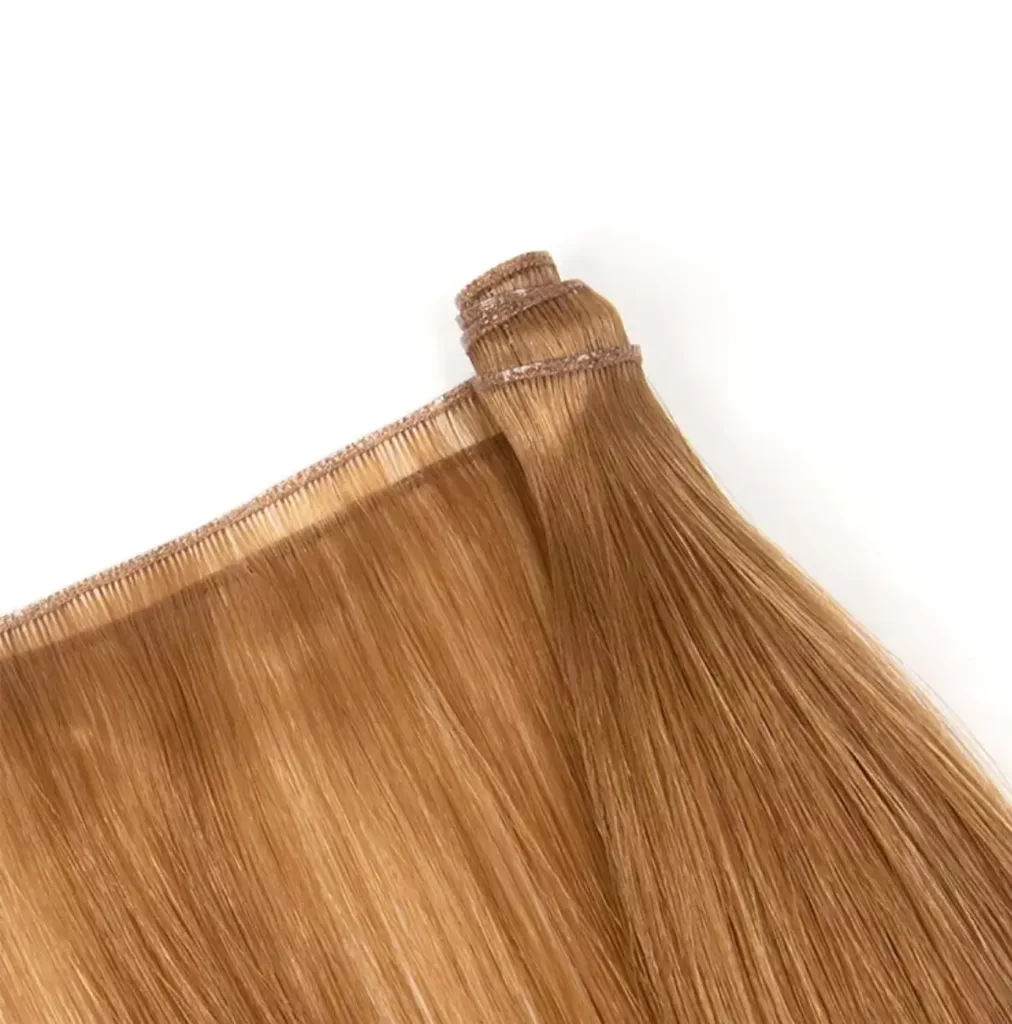
Genius weft has become a strong premium category because it solves several practical salon problems at once. It is thin, comfortable, easier to customize than hand-tied wefts, and easier for many stylists to use in real installation work. That gives it a clear position in the high-end market.
China remains a major source for this category because the supply chain is already mature. Buyers can usually find:
- more complete color systems
- more length and texture options
- stronger OEM and ODM support
- better packaging flexibility
- easier large-scale production support
For salon brands and wholesalers, this matters because importing is not only about buying hair. It is about building a repeatable supply program. A serious buyer usually wants more than one good order. The real goal is stable colors, stable seam quality, stable softness, and stable packaging across repeat cycles.
Step 1: Confirm the Exact Product Before Asking for Price
This is the first place where many buyers lose control of the order.
A quote only becomes meaningful when the product itself is clearly defined. If the product description is vague, different suppliers may be quoting completely different things under the same product name.
For genius weft, the buyer should confirm at least these points:
- hair quality level
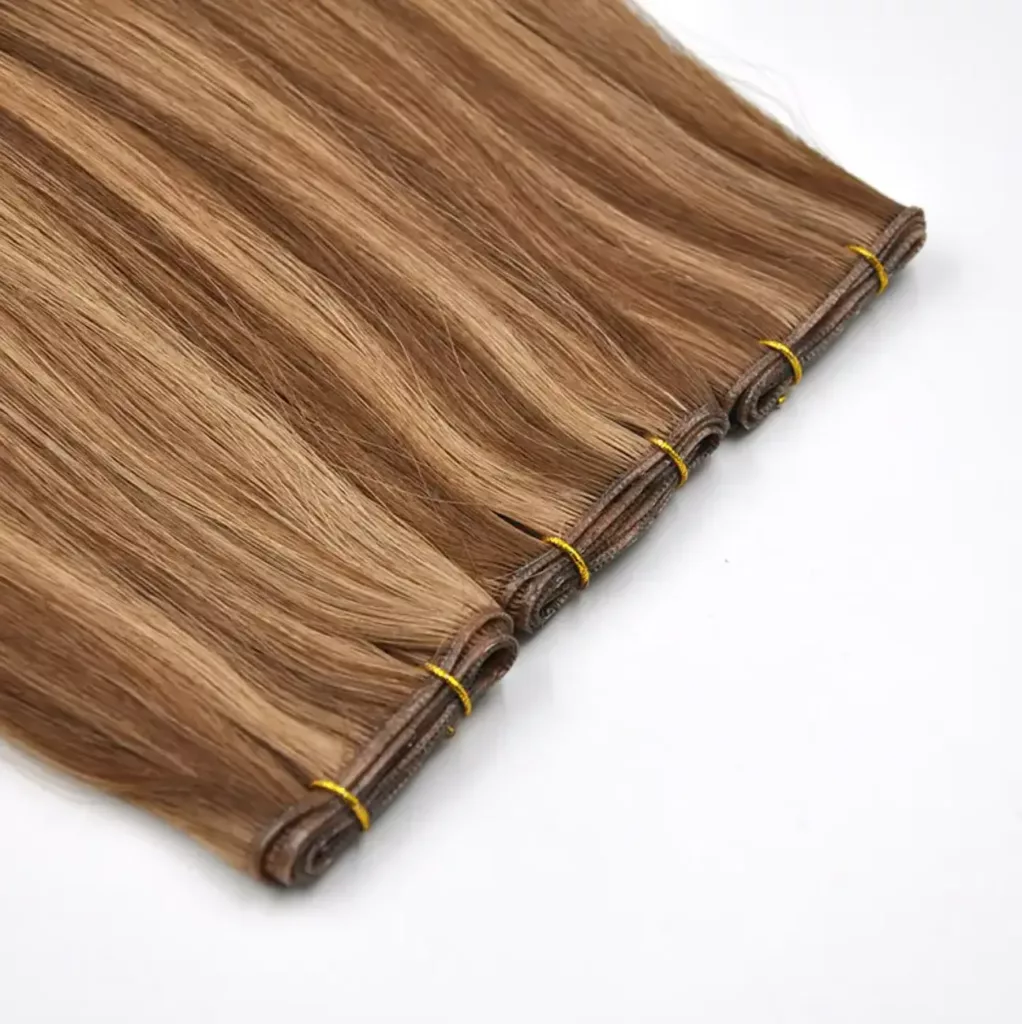
- seam style and seam thinness
- whether the weft is fully cuttable
- length range
- weight per piece or per pack
- color system
- texture
- donor mix or general material standard
- packaging requirements
- target market level
This matters because “genius weft” is not one exact universal item. One buyer may want an ultra-thin premium version for luxury salons. Another may want a more commercial version with lower cost and broader wholesale appeal. If those details are not confirmed first, price comparison becomes very weak.
A practical rule is simple: before asking for the best price, make sure every supplier is pricing the same product.
Step 2: Request Samples, But Test Them Like a Buyer, Not Like a Browser
This is one of the most important steps in the whole import process, and it should not be skipped if the order matters.
A sample is not only for checking whether the hair looks nice in the package. A proper sample test should answer whether the product behaves correctly for the target market. This was one of the strongest ideas in your earlier sourcing material: good wholesale buying depends on real testing, not just visual approval. The testing logic used for premium hand-tied wefts also applies here very well, especially around durability, tangling, color fastness, and shedding control.
A serious sample check for genius weft should include:
- softness at first touch
- seam thinness
- seam feel in the hand
- cuttability
- return-hair situation
- shedding level
- wash result
- post-wash texture stability
- color accuracy
- packaging quality
- overall feel compared with the target price level
If the buyer is selling mainly to salons, it is even better to let one or two trusted stylists touch the sample and give real feedback. Stylists notice problems quickly, especially around seam flexibility, comfort, blending, and whether the weft really behaves like a premium genius weft.

Step 3: Use a Real Testing Protocol Before Bulk Production
This is the part that was missing before, and it should be added clearly.
A serious buyer should not move from one sample directly to a full bulk order. A better way is to test in stages. Your earlier sourcing material described a phased testing logic very well: first small evaluation, then broader real-use testing, then small market testing, and only then larger expansion. That idea is very strong and should absolutely be carried into this article. :contentReference[oaicite:1]{index=1}
First phase: initial evaluation
Start with 1–2 samples.
At this stage, the goal is not to test everything. The goal is to reject obvious mismatch fast. Check:
- seam thickness
- softness
- basic cuttability
- initial shedding
- whether the color and texture match what was promised
If the first samples are clearly off, correct the specification before doing anything bigger.
Second phase: actual-use and stress testing
Then move into a more serious test phase with more samples.
This is where the useful testing ideas from your earlier article should be used more directly. The key testing focuses were:
- durability
- tangle resistance
- color fastness
- shedding assessment
For genius weft, that means practical checks like:
Durability testing
Test how the weft behaves after normal salon handling, brushing, washing, and repeated wearing. Look not only at the seam, but also at the hair strength itself. If the hair becomes weak, dry, or easy to break too fast, the lifespan claim is not strong enough. :contentReference[oaicite:3]{index=3}
Tangle-resistance testing
Stress-test the sample under real brushing and wear conditions. Good premium weft should not become messy or knot too easily after normal use. This is especially important if the supplier is claiming high-end quality. :contentReference[oaicite:4]{index=4}
Color-fastness testing
Wash the hair, style it, and expose it to light real-use conditions. If the color fades too quickly or shifts too easily, that usually tells you something about the dyeing quality and overall processing standard. :contentReference[oaicite:5]{index=5}
Shedding testing
Comb the weft, wash it, and handle it under different conditions to see whether strands come out too easily. With genius weft, this check is especially important because buyers usually expect the seam to stay stable even after cutting and repeated maintenance. Your older testing material made a strong point here: shedding tests are not just about hair loss, but about proving how secure the construction really is. :contentReference[oaicite:6]{index=6}
Third phase: market testing

Once the improved samples meet the standard, do not jump directly into a huge order. A better step is controlled market testing.
That means placing a smaller batch into:
- one salon
- one distributor
- one trusted stylist group
- one limited local market
This is where real feedback becomes useful. The buyer can learn:
- whether stylists like the seam
- whether clients like the feel
- whether maintenance is smooth
- whether repeat demand is realistic
Fourth phase: gradual bulk expansion
Only after the earlier stages are stable should the buyer expand purchase volume seriously. Your earlier sourcing framework explained this well: confidence should rise in stages, not in one jump. Continuous random testing even after larger orders is a much better way to protect quality than assuming the first good batch means the problem is solved forever.
Step 4: Check Whether the Supplier Can Really Produce What You Need Consistently
A lot of suppliers can say they produce genius weft. The real question is whether they can produce the version you need, at the level you need, with repeatability.
A useful supplier check should include questions like:
- What raw hair standard is being used?
- How thin is the seam?
- Is it fully cuttable?
- How do you control consistency across repeat orders?
- What colors are kept regularly?
- Which colors need custom production?
- What textures can be produced steadily?
- What is the normal production lead time?
- How do you handle custom packaging?
- What is the normal sample-to-bulk process?
A real factory should be comfortable answering these questions. Not with vague promises, but with practical explanations.
This is also where your earlier sourcing material was helpful. It emphasized that buyers should understand product origin, treatment process, quality-control logic, warranties or defect policy, and the manufacturer’s level of professional understanding before growing the relationship. That is exactly the right direction here too.

Step 5: Confirm MOQ, Price, Lead Time, and Payment Terms Clearly
Once the sample is approved and the supplier looks reliable, then it is time to move into the commercial terms.
The buyer should confirm:
- MOQ
- sample price
- bulk unit price
- packaging cost
- custom logo or branding cost
- lead time
- payment terms
- what is included in the quote
- what is not included
- shipping terms if relevant
A lot of buyers only ask for a basic price and then discover later that:
- packaging was extra
- certain colors had different MOQs
- lead time for custom orders was longer
- logo printing cost more than expected
- one “piece” did not mean the same thing between suppliers
A better habit is to confirm all commercial details in one summary and ask the supplier to confirm them back clearly.

Step 6: Confirm Packaging and Branding Before Production Starts
If the order is for a salon brand, wholesaler brand, or private-label customer, packaging should never be treated as a last-minute detail.
This may include:
- logo card
- custom bag
- insert card
- care card
- barcode
- color sticker
- length sticker
- outer carton mark
Before production starts, the buyer should confirm:
- packaging size
- packaging material
- print method
- logo position
- artwork approval
- quantity per carton
- carton mark details
This matters because the hair can be correct, but the order can still become messy if the branding details are wrong. Your earlier logistics material also made a useful point here: factory packaging can be a real time-saver for brand customers because goods can arrive ready to sell instead of needing extra repacking work. :contentReference[oaicite:9]{index=9}
Step 7: Plan Shipping and Customs Before the Goods Are Ready
Not every order should move the same way.
Express shipping
Best for:
- first samples
- small urgent restocks
- buyers testing a new supplier
Air freight
Best for:
- medium-sized urgent wholesale orders
- buyers who want speed but lower cost than express
Sea freight
Best for:
- larger volume orders
- buyers planning stock by cycle
- cost-sensitive bulk shipments
Your earlier packaging and shipment material also made a useful point here: because hair extensions are relatively light but high in value, many buyers prefer express air freight and door-to-door service, especially in premium B2B use. That is often true for genius weft too. :contentReference[oaicite:10]{index=10}
The supplier should usually be able to support the export side with standard documents such as:
- commercial invoice
- packing list
- shipment details
- product descriptions for customs use
Depending on the destination country and order value, the buyer may also need broker support or import planning on the local side.

Common Mistakes Buyers Make When Importing Genius Weft
The same mistakes appear again and again.
Asking for price too early
This creates unclear quotations because the product itself has not been fully defined yet.
Skipping the sample stage
This may save a little time at first, but it often creates a bigger loss later.
Approving the sample visually but not functionally
This is very common. The hair looked nice, but nobody tested:
- durability
- tangling
- color fastness
- shedding
- salon use feel
That is not enough for a serious wholesale order.
Choosing only by low price
A lower first quote can hide weaker consistency, weaker seam quality, poorer packaging, or less stable repeat production.
Not planning repeat-order consistency early
The first order is only the beginning. Serious buyers should think about how the second and third orders will stay aligned.

A Simple Import Workflow That Works Better
If the buyer wants a cleaner process, this order works well:
- define the exact genius weft specification
- request sample options
- do initial sample evaluation
- run actual-use quality testing
- do small market testing if needed
- evaluate supplier capability
- confirm MOQ, price, lead time, and payment
- confirm packaging and branding
- prepare shipment and document details
- expand order size gradually based on stable results
This is a safer system than jumping from inquiry to bulk payment too quickly.

My View
From a factory-side point of view, importing genius weft from China should not be treated like buying a random stock product. It works much better when the buyer treats it like a real sourcing project with real testing.
That is also where a factory like Hibiscus Hair Manufacturer should create value. A serious factory should not only send photos and quote prices. It should be able to discuss seam quality, hair quality, sample control, custom packaging, repeat-order consistency, and realistic lead times in a way that helps the buyer make safer decisions.
And this is where your original testing logic was very valuable. A good buyer should not trust one nice sample too quickly. They should test in stages, watch durability, tangling, color fastness, and shedding, and grow the order only after the results stay stable. That is how safer importing is done.
FAQ
What should I confirm first before importing genius weft from China?
Start with the exact product specification, not the price.
Should I order samples before placing a bulk order?
Yes. Sample approval and real-use testing are two of the safest parts of the whole import process.
What should I test on genius weft samples?
At minimum, test softness, seam feel, cuttability, shedding, tangling, wash result, and color fastness.
What is the usual MOQ for wholesale genius weft?
It depends on the factory, the color range, and whether the packaging is customized.
What shipping method is best for genius weft orders?
Express works well for samples, air freight for medium urgent orders, and sea freight for larger planned wholesale shipments.
How do I know if a supplier is really a factory?
Ask detailed production and testing questions. A real factory should be able to explain how the product is made, how quality is checked, and how repeat consistency is controlled.
Conclusion
Importing wholesale genius weft hair extensions from China is not difficult when the process is handled in the right order. First define the product clearly, then test samples properly, then confirm the supplier’s real ability, and only after that move into pricing, packaging, production, and shipping. That is the safer way to reduce mistakes and build a more stable long-term supply.