Clients ask this question when they see shedding, thinning, or breakage after wearing extensions. The fear is real, but the answer needs care.
Tape-in extensions should not cause hair loss when they are installed correctly, matched to the client’s natural hair density, maintained on schedule, and removed by a trained professional. They may contribute to hair loss or breakage when there is too much tension, poor placement, rough removal, weak natural hair, or long wear without maintenance.
From a salon and factory point of view, the problem is rarely “tape-ins” alone. It is usually a mix of client suitability, installation technique, aftercare, adhesive behavior, hair quality, and maintenance timing.
Do Tape-In Extensions Really Cause Hair Loss?
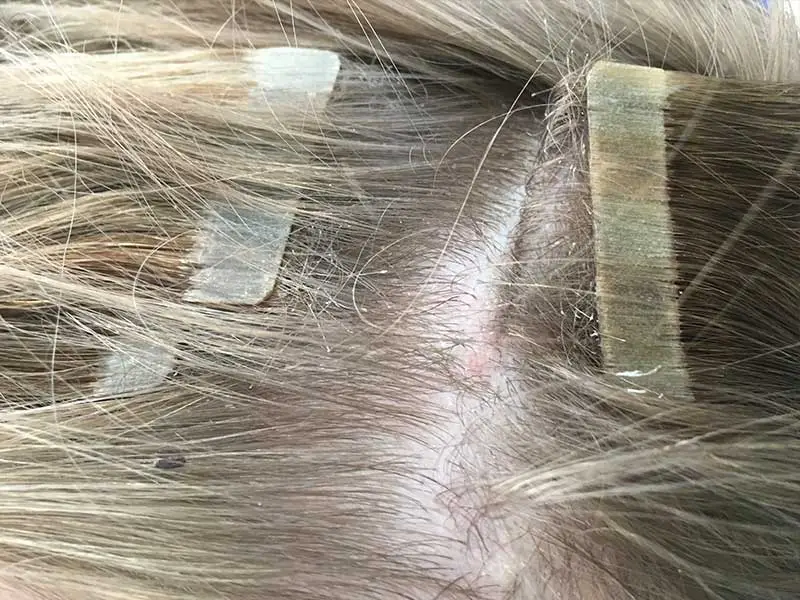
Tape-in extensions do not automatically cause hair loss. In many salon cases, they are flatter and lighter than some bulky extension methods.
But they can create problems when the client’s natural hair is too weak, the tapes are placed too tightly, the weight is not balanced, or the extensions are removed without softening the adhesive properly.
Dermatology sources warn that repeated pulling from tight hairstyles, weaves, or extensions can contribute to traction-related hair loss. That does not mean every extension causes hair loss. It means tension control matters. oai_citation:0‡aad.org
For salons, the safest explanation is simple: tape-ins can be safe, but they are not suitable for every client or every hair condition.
Possible Causes of Hair Loss with Tape-Ins
Hair loss after tape-ins can happen for different reasons. Some are related to installation. Some are related to client hair condition. Some are related to aftercare or removal.
The first job of a stylist is not to blame the product or the client too quickly. The first job is to check where the stress started.
| Possible Cause | What Usually Happens | What Stylists Should Check |
|---|---|---|
| Too much tension | Hair feels pulled near the root | Tape placement and section size |
| Incorrect placement | Discomfort, visible tabs, root stress | Distance from scalp and hairline areas |
| Too much weight | Thin sections cannot support the tapes | Grams per piece and total amount used |
| Poor removal | Natural hair pulls out with adhesive | Remover, timing, and removal technique |
| Wearing too long | Matting and stress near grown-out tapes | Maintenance schedule |
| Weak natural hair | Breakage happens even with light tension | Bleach history, shedding, and scalp condition |
| Poor aftercare | Tangling, slipping, or rough brushing | Products, brushing, sleeping habits |
| Low-quality hair | Dryness causes harder brushing and pulling | Wash test and cuticle condition |
Tape-ins are usually safer when the weight, placement, and aftercare match the client’s real hair condition.

What Stylists Should Check Before Installing Tape-Ins
A good tape-in result starts before the first tape is placed.
The stylist should check natural hair density, scalp condition, shedding level, chemical history, breakage around the hairline, and whether the client can follow aftercare. Thin, bleached, fragile, or actively shedding hair needs extra caution.
| Client Condition | Risk Level | Safer Decision |
|---|---|---|
| Healthy fine hair | Medium | Use lighter pieces and careful placement |
| Over-bleached hair | High | Delay service or reduce amount |
| Active shedding | High | Refer client to a professional before installing |
| Sensitive scalp | Medium to high | Avoid tight placement |
| Oily scalp | Medium | Explain washing and product rules |
| Strong medium-density hair | Lower | Tape-ins may work well with proper care |
For salons, this check protects the client and the business. If the client’s natural hair cannot support the weight, even good tape-ins can create complaints.
How to Prevent Hair Loss with Tape-In Extensions
Most tape-in problems can be reduced when salons control four things: client selection, placement, aftercare, and removal.
1. Control the weight
Do not use more hair than the client’s natural hair can support. Thin or fragile hair needs fewer pieces, lighter grams, or smaller tape sections.
2. Avoid tight placement
Tape-ins should not pull at the root. They should sit flat with enough space from the scalp so the client can move naturally without tension.
3. Teach aftercare clearly
Clients should avoid conditioner, oils, and heavy products near the tape tabs. They should brush gently, sleep with dry hair, and avoid tight ponytails that pull on the tapes.
For detailed care instructions, salons can read our guide on how to care for tape in hair extensions.
4. Remove tape-ins professionally
Removal should never be rushed. The adhesive must be softened properly before the tape is separated from the natural hair.
5. Keep a maintenance schedule
Tape-ins usually need move-up or reapplication every 6–8 weeks. Grown-out tape tabs can twist, pull, or mat if the client waits too long.
When Should Clients Stop Wearing Tape-In Extensions?
Clients should stop wearing tape-ins or return to the salon quickly if they feel pain, constant pulling, scalp soreness, heavy shedding, matting near the roots, or visible breakage around the tape areas.
Pain is not a normal part of tape-in extensions. Strong pulling is also not normal.
If the client already has active hair loss, scalp inflammation, or sudden shedding, the safest decision is to pause extensions and suggest professional evaluation. A stylist should not try to “cover” a hair loss problem with more hair.
For salons, this is important. Saying “no” to one unsuitable service can protect your reputation more than forcing an installation.
How Tape-Ins Compare to Other Extension Methods
Tape-ins are often considered a lower-tension option when they are installed correctly, but no method is risk-free. The safest method depends on the client’s hair density, scalp condition, maintenance habits, and stylist skill.
| Method | Strength | Main Risk | Better Fit |
|---|---|---|---|
| Tape-ins | Flat, fast, reusable | Slipping or tension if placed badly | Fine to medium hair with good aftercare |
| Mini tape-ins | Lighter and smaller | Less density per piece | Fine hair or small placement areas |
| Nano beads | No glue or heat | Bead tension or slippage | Clients needing flexible placement |
| Keratin tips | Discreet strand movement | Heat fusion and removal skill | Clients wanting longer wear |
| Clip-ins | Temporary and removable | Daily clipping stress if overused | Occasional volume or trial use |
| Halo extensions | No attachment stress | Wire fit and security | Very fragile hair or event styling |
The least risky method is not always the most popular one. It is the method the client’s natural hair can safely support.
Who Should Avoid Tape-In Extensions?
Tape-ins are not suitable for every client.
Clients with active shedding, very weak hair, severe breakage, scalp irritation, or extremely fragile hairlines may not be good candidates. In these cases, the safer choice may be to pause extension wear, use temporary clip-ins or halo extensions, or wait until the natural hair is stronger.
Clients who cannot follow aftercare may also have problems. Tape-ins need clean roots, gentle brushing, careful washing, and regular maintenance.
For thin or fragile hair clients, salons should consider lower-tension options, lighter tape pieces, mini tape-ins, or temporary methods instead of a heavy full-head install.
Product Quality Risks for Salons and Hair Brands
Hair loss complaints are not always caused by installation. Product quality can also affect how much stress the client feels during wear and removal.
If the hair is heavily coated, it may feel soft before installation but become dry after washing. When hair tangles, clients brush harder. That pulling can stress the tape area and natural hair.
If the adhesive is weak, the tape may slip and pull unevenly. If the adhesive is too messy or difficult to remove, the removal process may pull natural hair. If the tape tab is too thick or stiff, the client may feel tension or bulk near the root.
| Product Factor | Why It Matters | What Buyers Should Test |
|---|---|---|
| Full cuticle hair | Helps reduce dryness and tangling after washing | Wash, brush, and heat-style samples |
| Adhesive quality | Affects hold, residue, and removal | Test wear, remover response, and re-taping |
| Tape tab thickness | Affects comfort and flatness | Check flexibility and root feel |
| Hair weight per piece | Affects root tension | Match grams to client hair density |
| Color stability | Affects salon matching and repeat orders | Wash and compare color under daylight |
| Reuse performance | Affects salon value | Test after removal and reapplication |
Buyers who care about long-term softness can read our guide to full cuticle hair.

For Salons and Brands: Ask for Low-Tension Product Recommendations
For salons and hair brands, the best tape-in product is not only the one that feels soft in the sample bag. It must stay smooth after washing, hold securely during wear, remove cleanly, and match the client’s hair density.
If your clients often have fine hair, fragile hairlines, or concern about shedding, you should test lighter tape options, adhesive stability, and full cuticle hair quality before placing a larger order.
You can contact Hibiscus Hair to request tape-in samples or low-tension product recommendations for fine and sensitive hair clients.
FAQs About Tape-In Extensions and Hair Loss
Do tape-in extensions cause hair loss?
Tape-in extensions should not cause hair loss when they are installed, maintained, and removed correctly. They may contribute to breakage or shedding if there is too much tension, poor placement, rough removal, or weak natural hair.
Can tape-ins cause traction alopecia?
Tape-ins may contribute to traction-related hair loss if they pull repeatedly on the same areas. This is why sectioning, weight control, and regular maintenance matter.
Are tape-in extensions safe for thin hair?
They can be safe for some thin hair clients when lighter pieces and careful placement are used. Very weak or actively shedding hair may need a temporary method or a break from extensions.
Why does hair come out when removing tape-ins?
Some natural shedding is normal. But if large amounts of hair come out, the adhesive may not have been softened enough, or the removal may have been too rough.
How can salons prevent tape-in damage?
Salons can reduce risk by checking hair condition first, using proper sectioning, avoiding tight placement, teaching aftercare, and removing the extensions professionally.
What should wholesale buyers test before ordering tape-ins?
Buyers should test adhesive hold, removal residue, hair softness after washing, tape flexibility, color stability, shedding, and reuse performance.
Conclusion: Can Tape-In Extensions Cause Hair Loss?
Tape-in extensions should not cause hair loss when the client is suitable, the placement is controlled, the weight is balanced, and removal is done correctly. They can create breakage, shedding, or traction problems when there is too much tension, poor aftercare, rough removal, or weak natural hair.
For salons, the safest result starts with consultation and maintenance. For hair extension brands and wholesale buyers, the safest business decision starts with sample testing for adhesive quality, full cuticle hair, tape flexibility, clean removal, and reuse performance.
You can contact Hibiscus Hair to request tape-in hair extension samples, wholesale guidance, or low-tension product recommendations for fine and sensitive hair clients: