Many clients ask this after installation, especially when the color match looks close but not quite right. The short answer is yes in some cases, but not with every extension type, and never as a casual service without first checking the method, the hair quality, and the risk.
Yes, some human hair extensions can be dyed while they are in your head, but it depends on the extension type and the area you want to color. Mid-lengths and ends are usually easier and safer than root-area coloring. If you want to dye them yourself, removing them first is usually safer, more even, and less risky for the scalp.

This is not just about whether the hair can take color. It is also about whether you can control the color safely around the attachment area. If you still want to do it yourself, method choice, dye placement, and risk control all matter.
Can You Dye Hair Extensions Yourself?
Yes, you can dye some human hair extensions yourself. But the safe answer depends on the product type, the color goal, and whether the extensions are still installed or already removed.
If the extensions are real human hair, self-coloring is often possible. But if they are synthetic, do not dye them. And even with human hair, some methods are much safer to color after removal than while wearing them.
Human Hair vs Synthetic Hair
This is the first thing to confirm. Human hair extensions can often take color. Synthetic hair usually cannot handle normal hair dye well, and the result is often poor or unpredictable.
Product Type Changes the Safe Answer
Even if the hair itself is human hair, the attachment method still matters. A removable product gives you much more control than an installed product.
| Extension Type | Can You Dye It Yourself? | Safer On Head or Off Head? |
|---|---|---|
| Clip-ins | Yes | Off head |
| Halo hair | Yes | Off head |
| Hair wefts | Yes | Off head is easier |
| Tape-ins | Sometimes | Off head is safer |
| Keratin tips | Sometimes | Usually remove first |
So yes, self-dyeing is possible. But “possible” is not the same as “easy” or “low risk.”
Does It Depend on the Type of Hair Extensions?
Yes. This is one of the most important parts of the whole question.
Some extension types are much easier to dye safely than others. Removable extensions are usually the easiest. Installed methods are harder because you must avoid the attachment area and work close to your scalp.
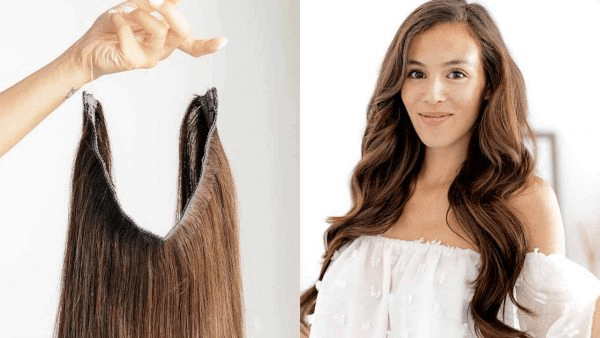
Clip-Ins and Halo Hair
These are the easiest types to dye because you can simply remove them and color them separately. That gives you:
- better control
- more even saturation
- less scalp risk
- easier rinsing
- easier drying

Hair Wefts
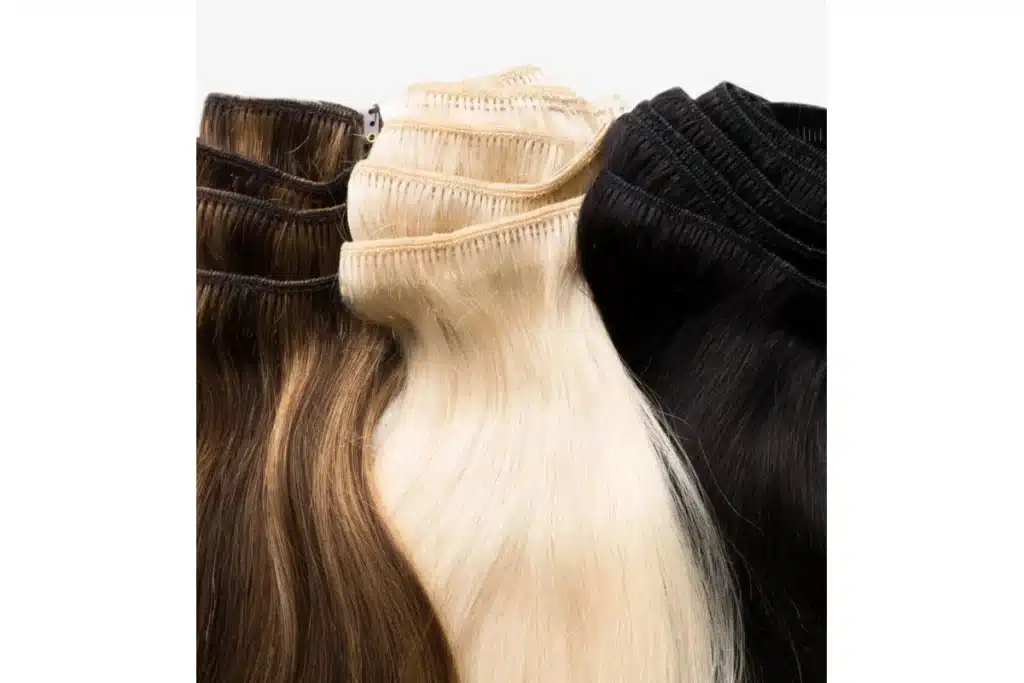
Hair wefts can also be dyed, and they are much easier to manage off the head than while sewn or attached in place.

Tape-Ins
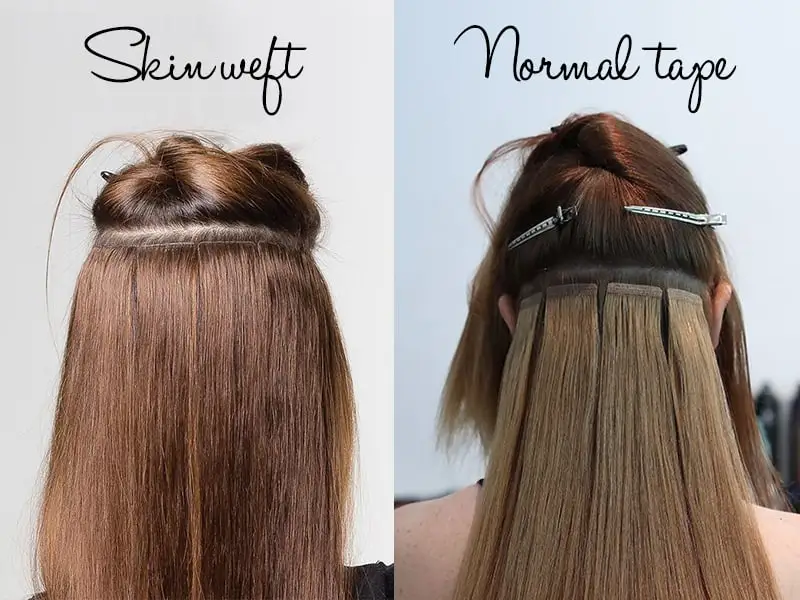
Tape-ins can sometimes be dyed while installed, but this is trickier because dye and especially developer should not sit heavily on the tape tabs.
1
Keratin Tip Extensions

Keratin tips are not a great first DIY color project while installed. The bond area makes root work harder, and careless coloring can affect both the extension hair and the bond area.
From a practical customer angle, removable types are always the easiest place to start.
Does It Also Depend on Which Part You Want to Dye?
Yes, very much. The dye area changes the difficulty a lot.
If you only want to color the mid-lengths or ends, the process is easier and safer. If you want to color near the roots, the job becomes much harder because the attachment area is close, and product control is more difficult.
%does the dye area matter for hair extensions
Root Area Is the Hardest Part
Root-area coloring is more difficult because:
- you work close to tape tabs or bonds
- it is easier to stain or weaken the attachment area
- it is harder to apply evenly by yourself
- it is easier to touch the scalp
- the result can become patchy faster
Mid-Lengths Are Easier
If your goal is only to soften warmth, darken slightly, or blend the middle area better, that is much easier to control.
Ends Are Usually the Safest Part
Ends are usually the easiest area to color because they are furthest away from the bond area and the scalp.
| Dye Area | Difficulty Level | Main Risk |
|---|---|---|
| Root area | High | Bond damage, scalp contact, uneven result |
| Mid-lengths | Medium | Uneven blending if rushed |
| Ends | Lower | Overprocessing dry ends |
If you are doing this yourself, root coloring is the part most likely to go wrong.
Is It Better to Dye the Extensions After Removing Them?
Yes. In most DIY situations, this is the safer and smarter option.
If you must dye your extensions yourself, removing them first is usually the best choice. It is safer, more even, easier to control, and less risky for your scalp and attachment points.

%is it better to dye extensions after removing them
Why Off-Head Coloring Is Better
When the extensions are removed, you can:
- see the whole piece clearly
- apply color more evenly
- avoid touching tape tabs or bond areas
- rinse more thoroughly
- avoid staining your scalp
Why It Is Better for Beginners
If this is your first time, off-head coloring gives you much more control. You are not fighting against mirrors, angles, scalp sensitivity, and hidden attachment points.
Why It Is Better for Hair Safety
The scalp is protected, the attachment system is protected, and the color result is usually cleaner.
From a customer point of view, off-head coloring is usually the safest DIY route.
What Are the Main Risks If You Dye Extensions While They Are in Your Head?
This part should be taken seriously.
The main risks are uneven color, damage to the attachment area, scalp irritation, shorter extension lifespan, and a result that is harder to correct later.
Risk 1: Uneven Color
It is harder to saturate installed extensions evenly, especially if you cannot clearly see the back sections.
Risk 2: Attachment Area Damage
Tape tabs, keratin bonds, or sewn areas can be affected if dye, developer, toner, or repeated rinsing reach them too heavily.
Risk 3: Scalp Irritation
If you are doing root-area work yourself, it is much easier to get product on the scalp.
Risk 4: Shorter Hair Life
If the extension hair is already processed, more coloring can make it:
- drier
- rougher
- more tangled
- less durable
| Risk | Why It Happens |
|---|---|
| Patchy result | Hard to apply evenly |
| Bond or tape issues | Product reaches attachment points |
| Scalp irritation | Poor control near roots |
| Drier extension hair | Extra chemical stress |
| Difficult correction later | Installed hair is harder to rework |
This is why many people think “the hair was bad,” when the real problem was the way the coloring was done.
Should You Go to a Professional Stylist Instead?
In many cases, yes.
If the extensions are installed, if the color change is big, or if the root area needs work, it is much better to let a professional stylist handle it or at least ask for professional advice first.
A Stylist Can Judge the Method Properly
A professional can usually see faster:
- whether the method should stay installed
- whether the extensions should be removed first
- whether the color goal is realistic
- whether the hair can handle another process
A Stylist Can Also Warn You Earlier
This matters a lot. A good stylist will tell you before starting:
- what can be done safely
- what is not a good idea
- what may shorten the life of the extensions
- what result is realistic
If You Still Want to DIY, Ask First
Even if you plan to do it yourself, it is still smart to ask a professional first, especially if you are unsure about method type or color direction.
If You Still Want to Dye Them While in Your Head, How Should You Do It?
If you still decide to do it while wearing them, keep the goal small and the process controlled.
If you dye extensions while they are still in your head, keep the color change conservative, avoid the bond area, work section by section, and focus more on mid-lengths and ends than on the root area.
Step 1: Confirm the Hair Type
Make sure the extensions are 100% human hair.
Step 2: Confirm the Method
Know whether you are wearing:
- tape-ins
- keratin tips
- wefts
- another installed method
If you are unsure, stop and ask your stylist.

Step 3: Keep the Color Goal Conservative
DIY installed coloring is best for:
- toning
- slight darkening
- warmth adjustment
- small blend correction
Do not start with strong lightening or bleach.
Step 4: Section the Hair Carefully
Work in small, clean sections so you can clearly see where the attachment area starts.
Step 5: Stay Away From the Root and Bond Area
Do not overload:
- tape tabs
- keratin bonds
- stitched or sewn top areas
- scalp-adjacent zones
If the root area must be changed, this is usually where DIY work becomes risky.
Step 6: Focus on Mid-Lengths and Ends
These areas are easier to control and safer for self-coloring.
Step 7: Rinse Gently and Thoroughly
Do not rub aggressively around the bonds. Rinse carefully and make sure product does not stay trapped near attachment points.
Step 8: Condition Well
Use conditioner or a hair mask on the mid-lengths and ends after coloring.
| DIY Step | Main Goal |
|---|---|
| Confirm hair type | Avoid coloring synthetic hair |
| Confirm method | Understand risk points |
| Keep color change small | Reduce damage risk |
| Section carefully | Improve control |
| Avoid root/bond area | Protect attachment system |
| Focus on mid-lengths and ends | Safer application |
| Rinse gently | Protect bonds and scalp |
| Condition after | Support hair feel |
This is still not the safest route. It is simply the safer version of an already riskier DIY choice.
My View
From a practical customer angle, yes, you can dye some hair extensions yourself. But whether you should do it while they are still in your head is a different question.
If the extensions are removable, I would almost always say: take them off first. That is safer, cleaner, more even, and much easier to control. If the extensions are still installed and you are thinking about root coloring, I would be much more careful. That is where the difficulty rises fast.
So my honest advice is simple:
- if possible, remove the extensions first
- if not, keep the color work small
- avoid the root and attachment area
- and if you are unsure, ask a professional stylist before doing anything
That usually saves more trouble than trying to fix a bad color result later.
Conclusion
Yes, you can dye some hair extensions while they are in your head, but it depends on the product type and the dye area. For DIY coloring, removing the extensions first is usually safer, more even, and better for both the scalp and the attachment system.

1