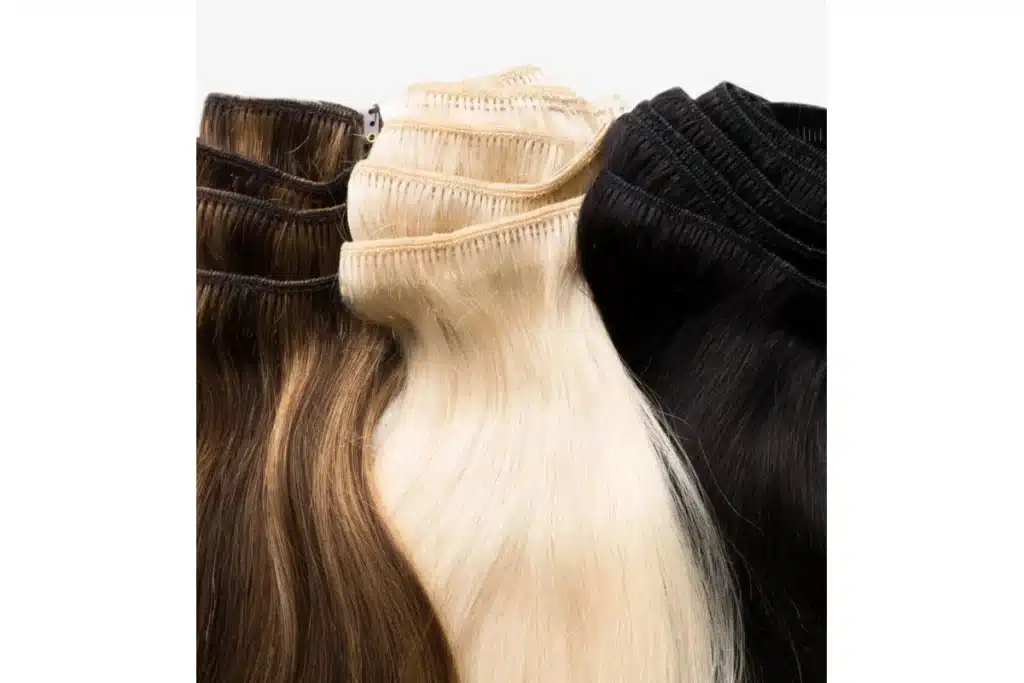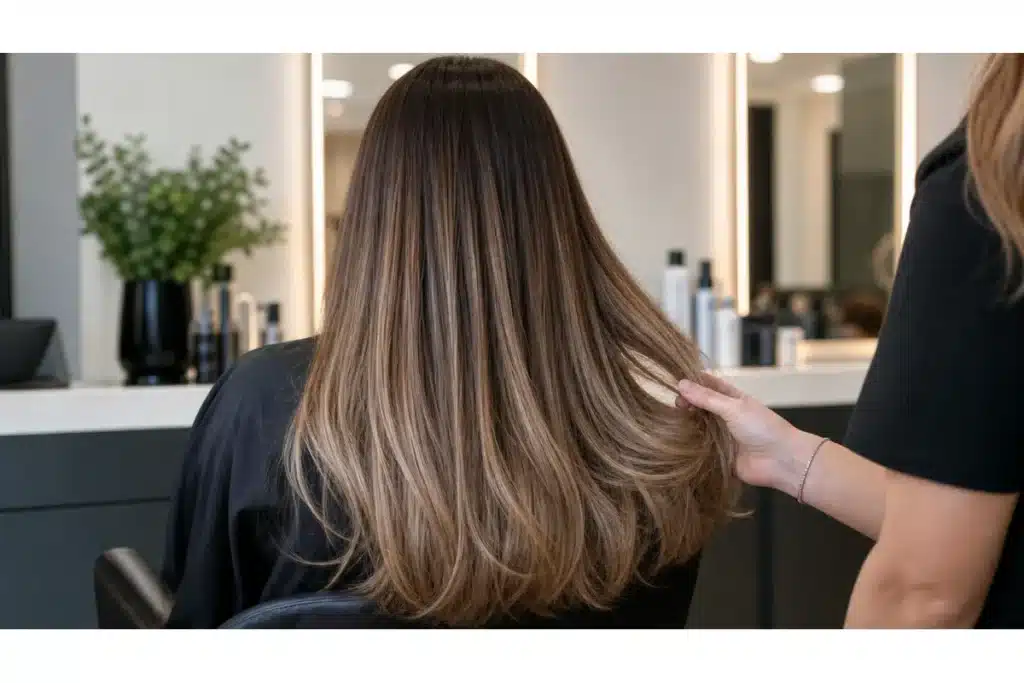
Fine hair clients want volume, but they also fear visible bonds, pulling, and damage. One heavy row or wrong attachment can turn a beautiful install into a complaint.
The best hair extensions for fine hair are lightweight, flat, and low-tension methods such as halo extensions, invisible tape-ins, light genius weft rows, and carefully planned K tips. The safest choice depends on the client’s hair density, scalp sensitivity, lifestyle, and maintenance habits.
Fine hair usually means the strand itself is delicate. Thin hair usually means lower density. Many clients have both, so salons should choose methods that stay discreet, spread weight gently, and avoid stress on fragile areas.
Are Hair Extensions Worth It for Thin Hair?
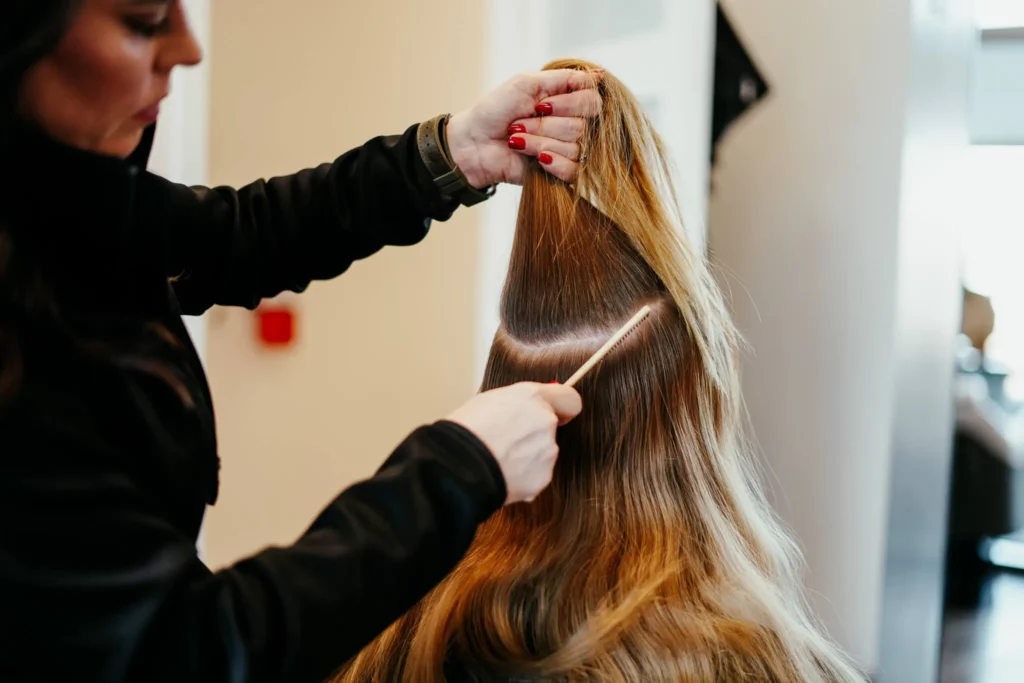
Hair extensions can be worth it for thin hair when the method is light, the placement is careful, and the client understands maintenance.
For thin hair clients, “worth it” does not mean maximum volume. It means a natural result that feels comfortable, hides well, and does not overload the natural hair.
The safest approach is to start lighter. Use fewer grams, flatter attachments, and lower-tension placement. Add density only where the client’s natural hair can support it.
For salons, this also protects retention. A client with fine hair is more likely to rebook when the extensions feel comfortable, stay discreet, and do not create panic during brushing or removal.
What Is the Best Type of Hair Extensions for Fine Hair?
The best type of hair extension for fine hair is usually the method that gives the least visible attachment and the lowest tension.
For most fine-hair clients, halo extensions, invisible tape-ins, light genius weft rows, and carefully planned K tips are the most practical options. The right choice depends on whether the client wants temporary volume, daily wear, row-based volume, or longer-term strand placement.
Fine Hair Extension Method Comparison
| Method | Best For | Main Advantage | Main Risk |
|---|---|---|---|
| Halo extensions | Temporary volume and first-time clients | No attachment on natural hair | Poor fit or too much weight can show |
| Invisible tape-ins | Fine to medium hair needing flat bonds | Flat, discreet, fast install | Adhesive care and oil control matter |
| Genius weft micro-rows | Clients needing row-based volume | Thin seam and wider weight spread | Too much row weight can create tension |
| K tips | Long-wear strand placement | Small bonds and custom mapping | Needs strict weight and removal control |
| Nano rings | No-heat discreet placement | Small bead system | Not suitable for every fragile hairline |
| Clip-ins | Occasional use | Easy on/off | Daily heavy wear may pull on fine hair |
There is no single “best” method for every fine-hair client. The safest method is the one that matches density, lifestyle, maintenance discipline, and stylist skill.
Invisible Tape-In Hair Extensions for Fine Hair
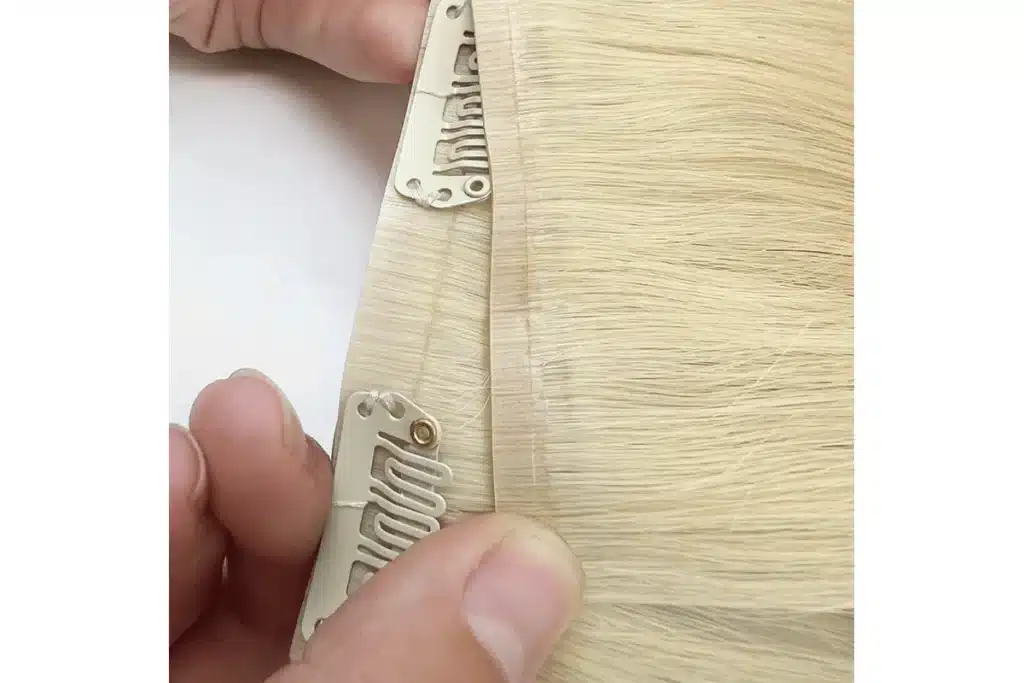
Invisible tape-ins can work well for fine hair because the tab lies flat and spreads weight across a wider area than many strand-by-strand methods.
They are especially useful when the client wants a semi-permanent option, fast installation, and a discreet root finish. The injection or invisible top can help mimic hair growing from the scalp.
The main risk is adhesive care. Oils, heavy conditioners, sweat, and poor removal can cause slipping or residue. For fine hair clients, tapes should be placed with clean spacing and not stacked too high near the crown.

| Item | Recommended Choice | Notes for Fine Hair |
|---|---|---|
| Tab size | Standard + mini or micro | Smaller tabs near hairline and parting |
| Density per tab | Light to medium | Add placement carefully instead of using heavy tabs |
| Row mapping | Usually 2–3 rows | Keep placement low and avoid crown stacking |
| Maintenance | 6–8 weeks | Prevent grown-out tabs from twisting |
| Hair quality | Full cuticle human hair | Better softness and less tangling risk |
Genius Weft Hair Extensions for Fine Hair
Genius weft can be a good option for fine hair when the stylist wants row-based volume without a bulky seam.
Compared with classic machine wefts, genius wefts usually sit flatter and feel lighter. Compared with many hand-tied wefts, they are often easier to customize because they can be cut with less shedding risk and usually have no short return hair at the top.
The risk is row weight. Fine hair cannot support too much layering. A genius weft should be installed as a light micro-row, with soft tension and careful placement.

| Step | Key Action | Success Signal |
|---|---|---|
| Create anchor track | Use small beads with soft tension | Client feels no pinch |
| Place weft | Follow head shape and avoid bulky layering | Seam lies flat |
| Stitch and secure | Keep stitches firm but not tight | Row moves naturally |
| Blend and finish | Cut softly, avoid blunt shelves | Natural fall and movement |
| Maintenance | 6–10 weeks | Row stays flat and comfortable |
Best Halo Hair Extensions for Thin Hair
Halo extensions are often one of the safest options for very fine or thin hair because they do not attach with tape, beads, bonds, or clips as the main support.
A halo uses a clear wire to hold the extension piece around the head. This means there is no direct tension on small sections of natural hair. For clients with fragile roots, sensitive scalps, or fear of damage, halo can be a smart first step.
But the best halo hair extensions for thin hair must be lightweight. A heavy halo can look artificial, feel unstable, or fail to blend with fine natural hair.
| Halo Buying Point | Better Choice for Thin Hair |
|---|---|
| Hair density | Light to medium |
| Color | Rooted, balayage, or multi-tone for blending |
| Wire fit | Adjustable and comfortable |
| Base design | Flat, flexible, and easy to hide |
| Length | Avoid going too long if natural hair is sparse |
| Hair quality | Soft full cuticle hair for natural movement |
Halo is best for temporary volume, events, photoshoots, and clients who do not want salon attachment methods. It is not ideal for clients who want 24/7 wear or high-intensity styling every day.

K Tip Hair Extensions for Fine Hair
K tip extensions can work for some fine-hair clients, but they require strict control.
They are not the first choice for every thin-hair client. The stylist must use lighter strands, smaller bonds, wider spacing, and careful placement away from fragile zones.
K tips may be useful when the client wants long-wear strand movement and has enough natural hair strength to support the bonds.
| Planning Point | Fine Hair Rule |
|---|---|
| Strand weight | 0.5–0.8 g in fragile areas |
| Stronger zones | 0.8–1.0 g only when supported |
| Placement | Avoid weak hairline and high-friction crown areas |
| Removal | Do not extend beyond planned wear time |
| Care | Loop brush, heat protectant, no oils near bonds |
For fine hair, K tips should be a precision service, not a default recommendation.

Do Hair Extensions Damage Fine Hair?
Hair extensions can damage fine hair when the attachment is too heavy, the tension is too tight, the method is poorly chosen, or maintenance is late.
They do not have to damage fine hair when the method is lightweight, the weight is matched to the section, and removal happens on time.
| Risk | What Happens | Safer Practice |
|---|---|---|
| Too much weight | Pulling on fragile roots | Use lighter grams and fewer rows |
| Visible attachments | Tabs, beads, or rows show through | Use flatter, smaller attachments |
| Late maintenance | Grown-out bonds twist or mat | Pre-book move-ups |
| Rough brushing | Breakage around attachments | Brush ends upward and support roots |
| Poor hair quality | Tangling creates pulling | Use hair that stays soft after washing |
| Wrong method | Client hair cannot support it | Choose halo or lighter options first |
For salons, the safest rule is simple: fine hair should not be forced to carry thick-hair volume.

Care and Maintenance for Fine Hair Extensions
Fine-hair clients need a simple routine. Too many rules will not be followed.
| Care Step | Fine Hair Rule |
|---|---|
| Brushing | Use a loop brush and support attachment areas |
| Washing | Wash as needed, usually 1–3 times weekly |
| Conditioner | Apply from mid-lengths to ends only |
| Heat styling | Use heat protectant and avoid attachment points |
| Sleeping | Loose braid or silk bonnet |
| Swimming | Pre-wet, braid, rinse after, and condition ends |
| Maintenance | Tapes 6–8 weeks, rows 6–10 weeks, K tips 12–16 weeks |
The most important rule is timing. Late maintenance creates more risk than the method itself.

What Salons and Buyers Should Check
For fine-hair clients, product choice must be tested more carefully than usual.
| Check Item | Why It Matters for Fine Hair |
|---|---|
| Hair softness after washing | Less tangling means less pulling |
| Full cuticle condition | Helps long-term smoothness |
| Attachment thickness | Fine hair shows bulky tabs or seams |
| Strand or weft weight | Too much weight creates stress |
| Color blending | Fine hair exposes poor color matching |
| End fullness | Thin ends can look unnatural |
| Removal behavior | Rough removal can damage fragile hair |
| Sample-to-bulk consistency | Protects repeat salon orders |
Buyers who serve fine-hair clients should not test only softness in the package. Wash, brush, install, remove, and check how the hair behaves under real salon use.Buyers who care about long-term softness can read our guide to full cuticle hair.
My View
For fine hair, I never start by asking how much volume the client wants. I start by asking how much weight the natural hair can safely carry.
Most fine-hair complaints come from overloading: too many grams, too many rows, bonds placed too high, or maintenance pushed too late. A lighter install that looks natural is better than a heavy install that creates fear after two weeks.
For most fine-hair clients, I would start with halo or invisible tape. I would use genius weft only as a light micro-row, and K tips only when the stylist can control strand weight and removal timing.
FAQs About Hair Extensions for Fine Hair
Are extensions worth it for very thin hair?
They can be worth it when the method is lightweight and low-tension. Halo extensions or a small number of invisible tapes are often safer starting options.
What are the best hair extensions for fine hair?
Halo extensions, invisible tape-ins, light genius weft rows, and carefully planned K tips can work well. The best choice depends on hair density, lifestyle, and maintenance habits.
What are the best halo hair extensions for thin hair?
The best halo extensions for thin hair are lightweight, flat, adjustable, and color-matched carefully. Heavy halos can look bulky or fail to blend.
Do hair extensions damage fine hair?
They can if the extensions are too heavy, too tight, poorly maintained, or removed roughly. Lightweight methods and on-time maintenance reduce risk.
Are K tips safe for fine hair?
K tips can work for some fine-hair clients, but only with lightweight strands, careful spacing, and professional removal on schedule.
How often should fine-hair clients maintain extensions?
Invisible tapes usually need maintenance every 6–8 weeks. Weft rows often need 6–10 weeks. K tips usually need planned removal around 12–16 weeks.
Conclusion
The best hair extensions for fine hair are lightweight, flat, and carefully matched to the client’s natural density.
Halo extensions are often the safest temporary option for very thin hair. Invisible tape-ins can work well for flat, discreet semi-permanent wear. Genius weft micro-rows can add soft row-based volume when weight is controlled. K tips should be used only with careful strand planning and strict removal timing.
For salons and buyers, the safest result comes from product testing, honest consultation, lightweight placement, and simple aftercare. You can contact Hibiscus Hair to request samples or product recommendations for fine-hair clients.