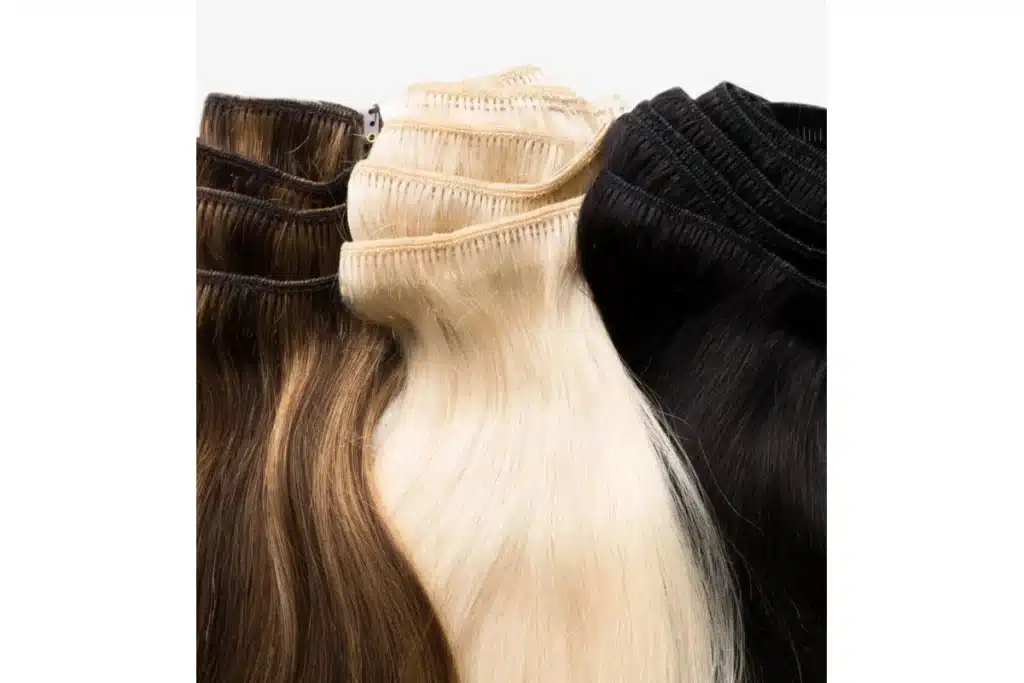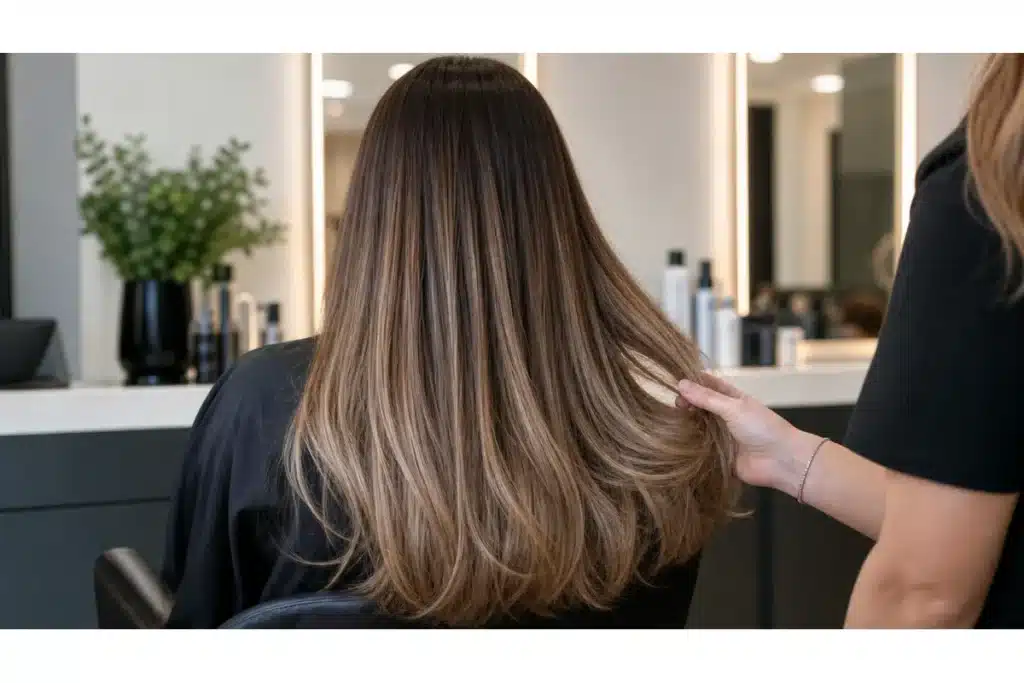
Choosing the best hair extension method is not about picking the newest technique. It is about matching the method to the client’s hair density, lifestyle, styling habits, maintenance discipline, and budget.
The best hair extension methods include tape-in extensions, weft extensions, keratin tips, I tips, nano rings, clip-ins, and halo extensions. Tape-ins work well for fast flat installs, wefts are strong for volume, keratin and I tips allow strand-by-strand placement, while clip-ins and halos are better for temporary use.
For salons, the safest method is the one you can install, maintain, remove, and explain consistently. A beautiful result means very little if the client returns with slipping, tension, matting, or poor aftercare.

Main Hair Extension Methods Explained
Picking the best method depends on four key factors: duration, comfort, look, and damage risk. Here are the main types with definitions, install steps, features, and ideal clients:
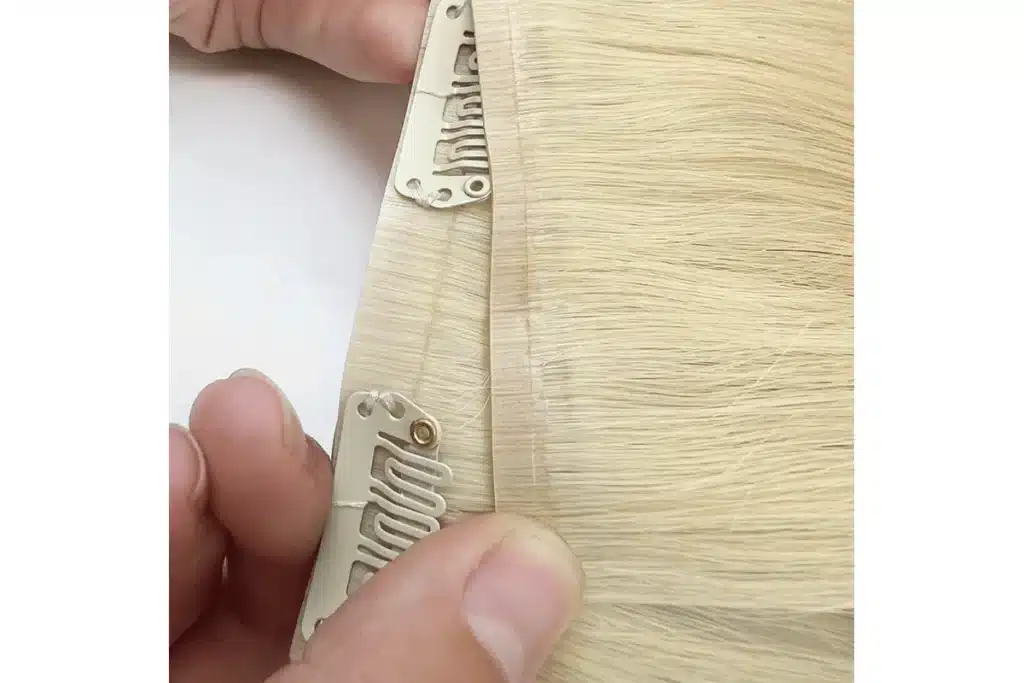
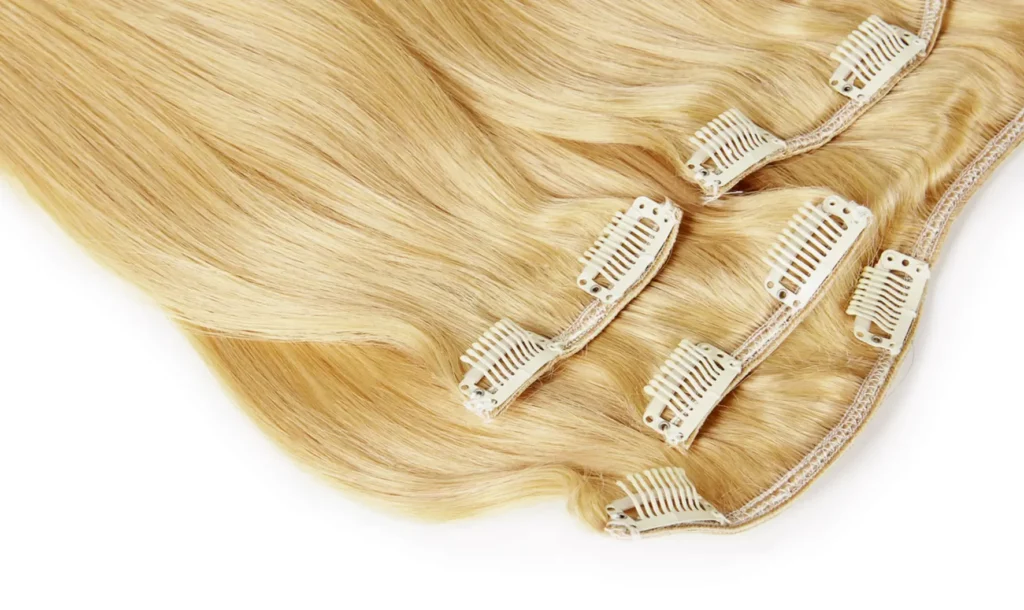
1. Clip-In Extensions
Clip-in extensions are removable wefts with small clips attached to the base. Clients can clip them in and remove them the same day.
Best for: events, photoshoots, retail clients, occasional volume, and clients who do not want salon installation.
Main advantage: fast, removable, no long-term attachment.
Main risk: daily heavy use can pull on fine hair if the set is too heavy or clipped into the same weak areas repeatedly.
2. Halo Extensions
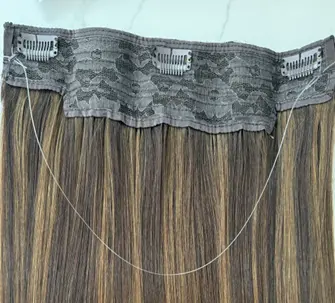
Halo extensions use a clear wire to hold one extension piece around the head. The natural hair covers the wire.
**Best for:** temporary volume, fine or sensitive hair clients, beginners, brides, and clients who want no beads, tape, glue, or bonds.
**Main advantage:** no direct attachment to natural hair, so tension is very low when the halo fits correctly.
**Main risk:** a heavy halo can feel unstable or look unnatural on very thin hair.
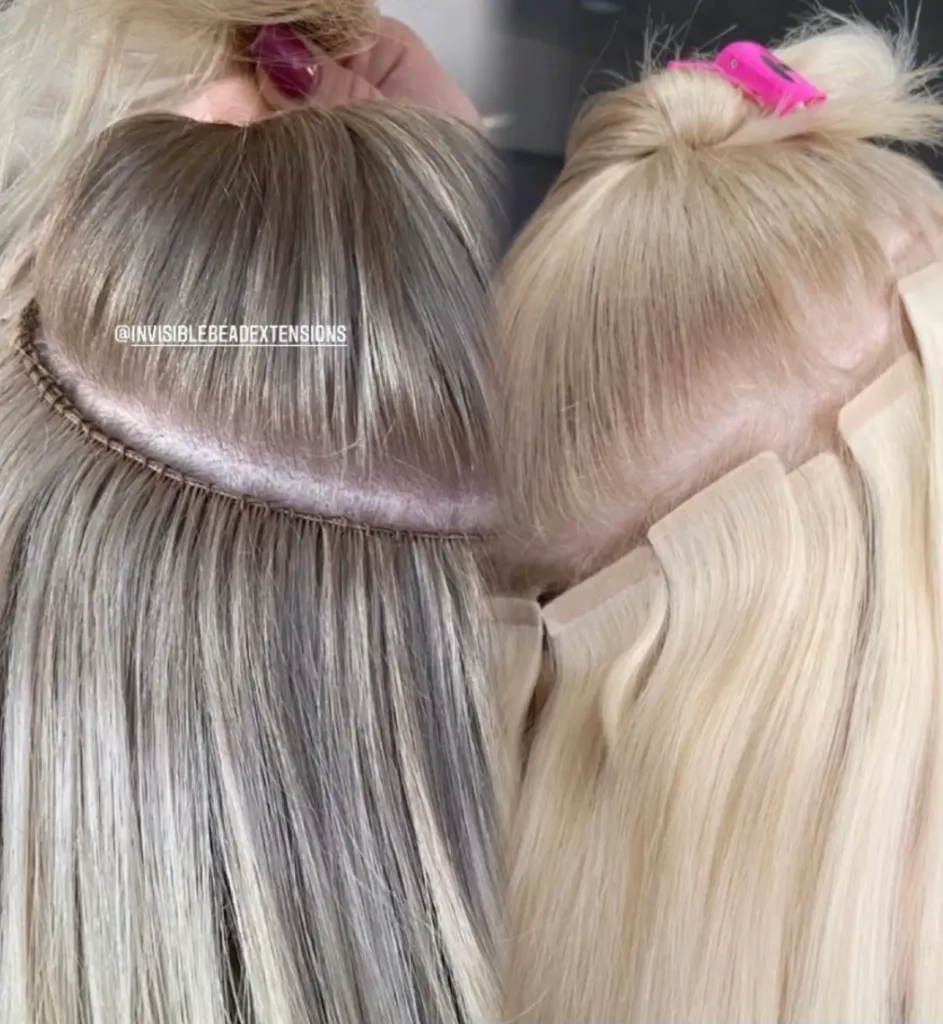
3. Tape-In Extensions
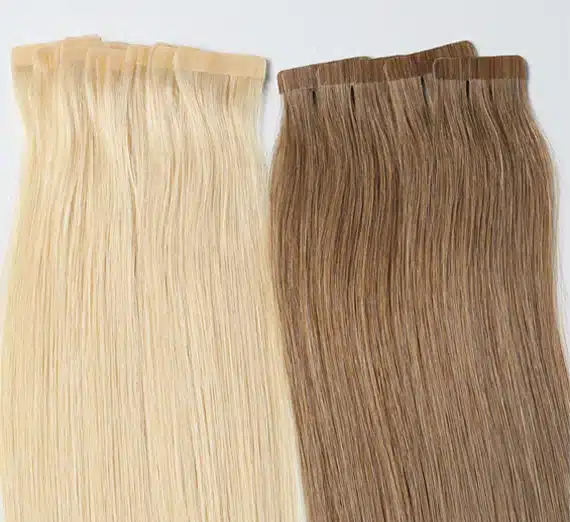
Tape-in extensions use flat adhesive tabs to sandwich small sections of natural hair.
Best for:** fine to medium hair, fast salon installs, flat root finish, and clients who can return for regular move-ups.
Main advantage:** quick application and flat placement.
Main risk:** oils, conditioner near the roots, sweat, or poor removal can cause slipping or residue.
Typical maintenance:** around 6–8 weeks.
Salons comparing flat adhesive systems can read more about tape-in hair extensions.
4. Weft Extensions
Subtypes:
- Machine Wefts: Sewn wefts; thick and sturdy.
- Hand‑Tied Wefts: Thin, flat, luxury quality; no cutting allowed.
- Genius Wefts: Hybrid, cuttable without shedding.
- Volume Wefts: Triple-layered for fuller base.
- Flat Wefts: Silk-like, flat, sealed edges.
- Butterfly Wefts: Wefts with holes for fast sew-ins.
- Invisible Tape Wefts / Long Tape Wefts / Volume Genius Wefts (combo wefts pre-taped).
Install Steps: Create braids or tracks; sew wefts. Takes 60–120 minutes.
Features:
- High volume and long-lasting
- Durable wefts, reusable
- Structured styling support
Best For: Clients wanting dense volume, bridal updos, premium salon services.

5. Heat Fusion Extensions
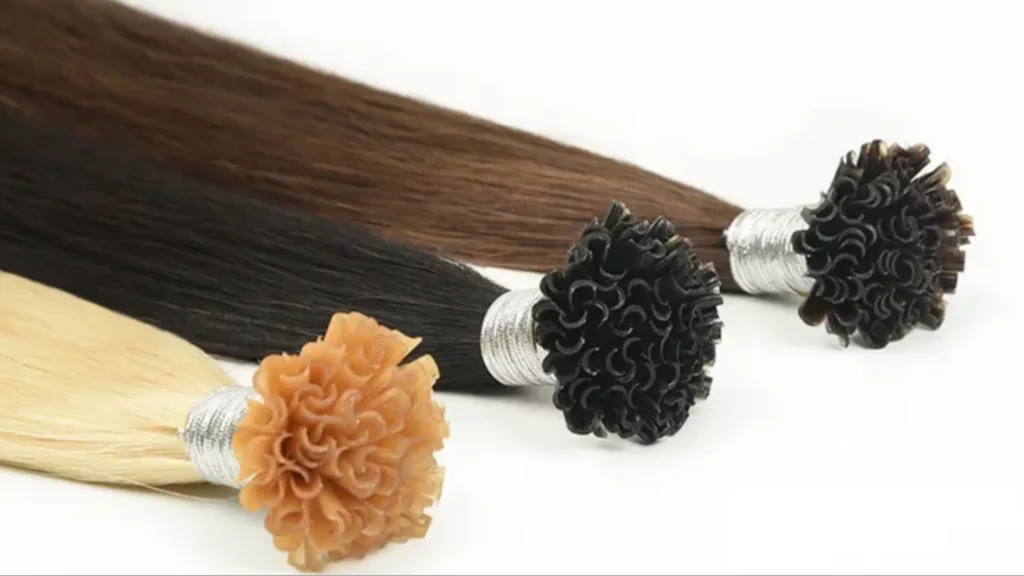
Heat fusion extensions use keratin-tipped strands applied with a heated tool. Common types include U Tip, V Tip, Flat Tip, and K Tip extensions.
Best for: clients wanting discreet strand-by-strand movement and longer wear.
Main advantage: custom placement and natural movement.
Main risk: poor heat control, wrong strand weight, or rough removal can damage natural hair.
Typical wear: several months, depending on hair growth, method, aftercare, and removal timing.
6. I Tip, Micro Ring and Nano Ring Extensions
I Tip, micro ring, and nano ring extensions use small beads or rings to attach tipped strands to natural hair. No heat is required during installation.
Best for: clients who want strand-by-strand movement without heat.
Main advantage: flexible placement and easier move-up or removal in many systems.
Main risk: bead size, strand weight, and tension must match the client’s natural hair. Poor placement can cause slipping or discomfort.
Typical maintenance: often 8–12 weeks depending on method, hair growth, and client care.

7. V‑Light Extensions
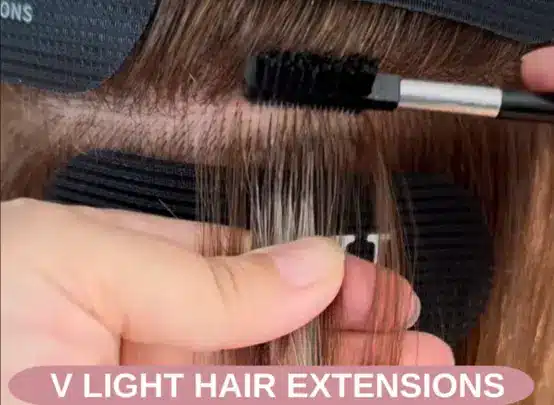
Definition: Ultra-thin V-shaped keratin tips fused with low heat.
Install Steps: Heat lightly; attach tip near roots for subtle volume. Takes 90–180 minutes.
Features:
- Minimal bulk
- Discreet root lift
- Ideal for thin hair
Best For: Delicate or thinning hair; clients seeking near-invisible enhancement.
Hair Extension Methods Comparison Table
| Method | Wear Time | Best For | Main Risk | Salon Difficulty |
|---|---|---|---|---|
| Clip-in | Same day | Events and temporary volume | Pulling if worn heavily every day | Low |
| Halo | Same day | Fine hair, beginners, no-attachment clients | Poor fit or too much weight | Low |
| Tape-in | 6–8 weeks | Fine to medium hair, flat installs | Slipping or adhesive residue | Medium |
| Weft / row methods | 6–10 weeks before move-up | Volume and medium to thick hair | Row tension or matting if overdue | Medium to high |
| Heat fusion / K Tip | Several months | Long-wear strand placement | Heat control and removal risk | High |
| I Tip / Nano Ring | 8–12 weeks before maintenance | No-heat strand placement | Bead tension or slipping | High |
| V-Light | Varies by system | Detail filling and discreet areas | Training and product control | High |
This table should guide the first consultation. Final choice still depends on hair density, scalp sensitivity, lifestyle, and maintenance habits.
Best Hair Extension Method by Client Type
| Client Need | Better Method Options | Why |
|---|---|---|
| First-time extensions | Halo, clip-in, small tape-in set | Lower commitment |
| Fine or thin hair | Halo, invisible tape, nano ring, light K tips | Smaller or flatter attachments |
| Thick hair | Weft, machine weft, fusion | Can support more volume |
| Long-term wear | Tape-in, weft, K Tip, I Tip | Designed for repeated salon maintenance |
| No heat preference | Tape-in, weft, I Tip, nano ring, halo | No heat tool required |
| No adhesive preference | Weft, I Tip, nano ring, halo | Avoids tape adhesive |
| High-volume result | Weft or fusion | Better density control |
| Temporary styling | Clip-in or halo | Easy on/off |
| Sensitive scalp | Halo first, then lightweight methods | Lower tension starting point |
A client with fine hair should not be given a thick-hair method just because she wants volume. The natural hair must be able to carry the weight.

What Is the Best Method for Salon Business?
For salons, the best method is not only the one clients request most. It is the method your team can install safely, maintain consistently, and explain clearly.
| Salon Goal | Better Method | Business Reason |
|---|---|---|
| Retail add-on | Clip-in, halo | Easy to sell without long appointment time |
| Fast repeat service | Tape-in | Predictable move-ups and re-taping |
| Premium volume service | Genius weft, hand-tied weft, machine weft | Higher ticket and repeat maintenance |
| Strand-by-strand luxury service | K Tip, I Tip, Nano Ring | Custom placement and premium pricing |
| Fine-hair service menu | Halo, invisible tape, nano, light K tips | Lower-tension options |
| Advanced stylist positioning | Fusion, row methods, V-Light | Requires training and supports higher pricing |
Salons should not offer every method at once. A safer menu is usually built around 2–3 core methods, clear consultation rules, and strong aftercare education.
What Salons and Buyers Should Check
The method is only half of the result. Product quality decides how the hair behaves after washing, brushing, coloring, installing, and removing.
| Check Item | Why It Matters |
|---|---|
| Full cuticle hair quality | Reduces tangling and long-term dryness |
| Tape adhesive | Affects slipping and residue |
| Weft seam strength | Affects shedding and comfort |
| Keratin bond behavior | Affects installation and removal |
| I Tip / Nano tip strength | Affects shedding and bead fit |
| Strand or weft weight | Affects tension on natural hair |
| Color stability | Protects salon matching |
| Sample-to-bulk consistency | Protects repeat orders |
Buyers should test samples before larger orders. A product should not only look soft in the package. It should perform after washing, brushing, installing, and removal.Buyers who care about long-term softness can read our guide to full cuticle hair.
My View
I do not think a salon needs every hair extension method. That usually creates confusion for stylists and clients.
A stronger service menu starts with a few reliable systems. Tape-ins are useful for fast, flat installs. Wefts are strong for volume clients. Keratin or I Tip methods work for strand-by-strand customization. Halo and clip-ins are good retail or temporary options.
The real skill is not naming every method. It is knowing when to say no. If a client’s hair is too weak, too fine, or too poorly maintained, the safest method may be a lighter option or no semi-permanent install yet.

FAQs About Hair Extension Methods
What is the best hair extension method?
There is no single best method for everyone. Tape-ins, wefts, keratin tips, I tips, nano rings, clip-ins, and halos all work for different clients.
Which hair extension method is least damaging?
Halo and clip-ins have very low tension because they are temporary. For semi-permanent methods, damage risk depends on weight, installation, maintenance, and removal.
What method is best for fine hair?
Halo, invisible tape, nano rings, and light K tips can work well for some fine-hair clients. The method must stay lightweight and discreet.
Which method lasts the longest?
Keratin fusion and some strand-by-strand methods can offer longer wear, but they also require professional installation and careful removal.
Are tape-in extensions better than weft extensions?
Not always. Tape-ins are flatter and faster. Wefts are stronger for volume. The better choice depends on client hair density and desired result.
Can salons mix hair extension methods?
Yes. Some salons combine methods, such as wefts for back volume and tape-ins or K tips for side blending. Mixed methods require careful weight and placement control.
What should salons test before buying extension products?
Salons should test hair softness after washing, shedding, adhesive or bond performance, color stability, attachment comfort, and sample-to-bulk consistency.
Conclusion
The best hair extension method depends on the client’s hair density, desired wear time, lifestyle, styling habits, and maintenance discipline.
Clip-ins and halos are best for temporary use. Tape-ins are strong for fast, flat salon installs. Wefts are excellent for volume. Keratin tips, I tips, and nano rings offer strand-by-strand customization. V-Light can be useful for detail work when the stylist is trained and the product is tested.
For salons and buyers, the safest choice is not the most popular method. It is the method you can install, maintain, remove, and repeat with stable product quality. You can contact Hibiscus Hair to request samples or product recommendations for your salon service menu.