Many salon owners and wholesalers ask this question because tape quality changes the whole service result. A good tape should hold well, remove cleanly, feel comfortable on the scalp, and match the client’s hair type and lifestyle. A weak tape choice can create slipping, sticky residue, difficult removals, and unhappy clients.
Hair extension factories usually use different tape formulas rather than one single “best” tape. In real production, factories choose tape based on hold strength, removal behavior, scalp sensitivity, climate, hair type, and salon preference. Common market names may include German white, American blue, yellow, or other supplier-specific labels, but the real difference is the adhesive performance, not the color name itself.
So the better question is not only “What kind of tape do factories use?” The better question is “Why do factories choose one tape instead of another, and which one fits the client or salon better?”

Do Hair Extension Factories Use One Tape or Several Types?
Factories do not usually rely on only one tape.

A serious hair extension factory normally keeps more than one tape option because different markets want different results. Some salons want stronger hold. Some want easier removal. Some need something gentler for finer hair or more sensitive scalps.
That is why most factories choose tape in a practical way:
- stronger hold for clients who need longer-lasting wear
- gentler tape for clients with finer hair or easier removals
- different options for different climates and aftercare habits
- different stock based on salon feedback and reorder patterns
So in real factory work, the tape choice is usually not about one “top tape.” It is about choosing the right adhesive behavior for the target market.
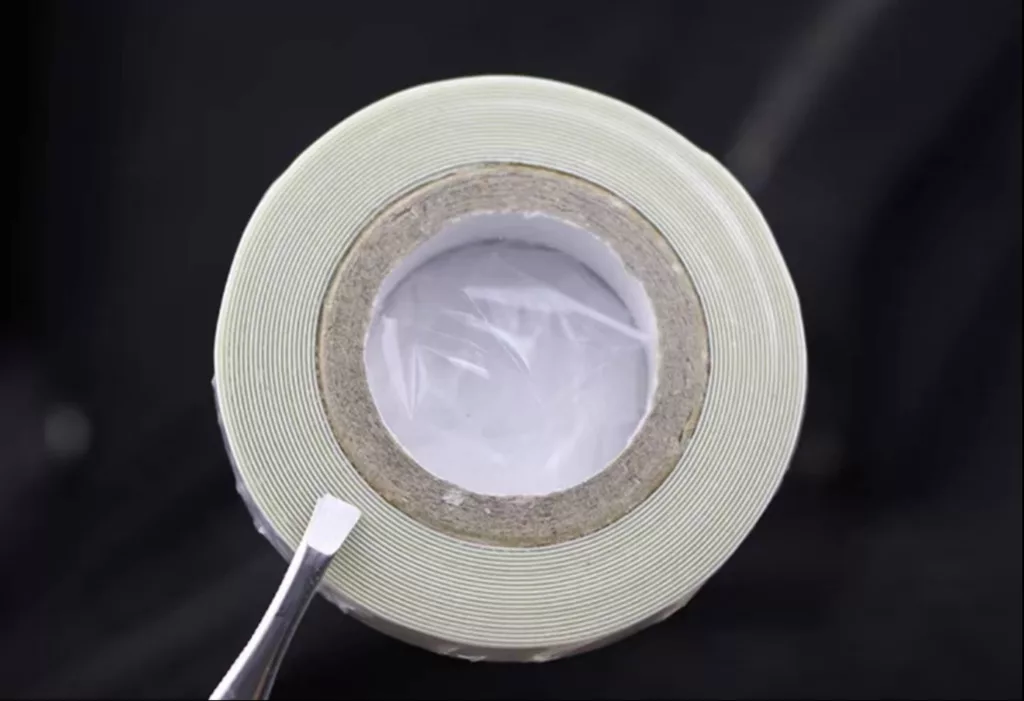
What Do Tape Names Like German White, American Blue, or Yellow Really Mean?
This part should be explained more carefully because many buyers misunderstand it.
Names like:
- German white
- American blue
- yellow tape
- malt tape
are often market names or supplier naming systems, not universal technical standards.
That means two suppliers may use a similar name, but the real adhesive behavior may still be different.
So when a buyer asks about tape types, the more useful questions are:
- How strong is the hold?
- How clean is the removal?
- Is it good for fine hair or thicker hair?
- How does it perform in heat, humidity, or frequent washing?
- Does it leave more or less residue?
From a factory point of view, these performance questions matter much more than the tape label itself.

1
1

1

1
1
1
1
What Do Factories Actually Look For When Choosing Tape?
Factories usually choose tape based on service performance, not marketing language.
1. Hold Strength
The first question is simple: does the tape hold well enough for the intended wear cycle?
If the hold is too weak, the tapes may slip early. If it is too aggressive, removal becomes harder and the service may feel less comfortable for some clients.
2. Removal Behavior
A good tape should not only hold. It should also come off in a controlled way with the right remover.
Factories and salons both care about:
- how fast the remover works
- how much residue is left
- how easy it is to clean and retape
- how much stress the removal puts on the hair
3. Scalp and Hair Type Suitability
Not every tape suits every client.
Finer hair, weaker hairlines, or sensitive scalps usually need more careful tape choices than thicker, denser hair.
4. Climate Performance
Heat, humidity, sweat, and frequent washing all affect tape behavior.
This matters a lot in:
- hot climates
- humid climates
- gym-heavy lifestyles
- swimming-heavy lifestyles
5. Salon Feedback and Repeat Orders
Factories usually learn a lot from reorder behavior.
If salons keep coming back for one tape type, that tells the factory something very practical:
- the installs are holding
- removals are acceptable
- clients are comfortable
- stylists trust the result
That kind of repeat feedback matters more than theory.

Common Tape Types Factories May Offer
Different factories may use different naming systems, but in practical business, tape options are often grouped by performance.
| Tape Type or Market Name | General Positioning | Best Use Direction |
|---|---|---|
| Strong-hold white tape | Higher hold strength | Medium to thick hair, stronger retention needs |
| Blue-type tape | Balanced hold and removal | General salon use, everyday wear |
| Yellow or lighter-hold tape | Softer hold | Fine hair, easier removal needs |
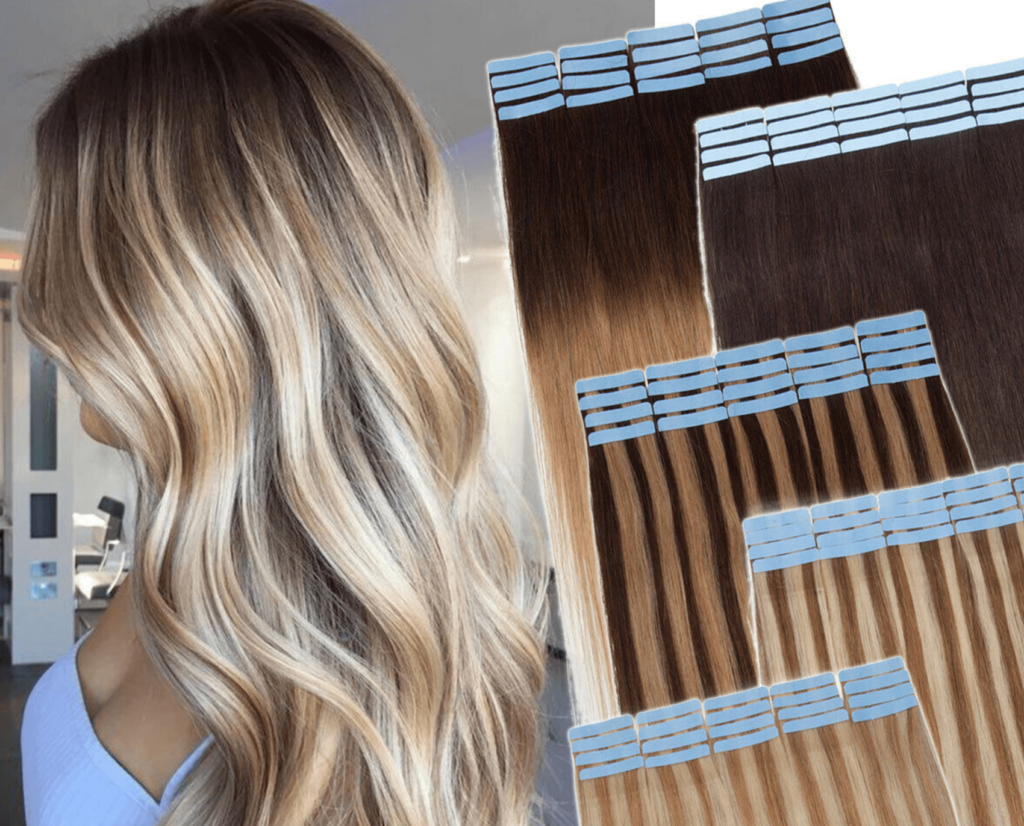
| Sensitive-scalp / gentler adhesive types | More comfort-focused | Fragile hair, sensitive scalp, careful installs |
The main point is this: factories usually do not choose tape only by color name. They choose by adhesive behavior.
How Should Salons and Wholesalers Choose the Right Replacement Tape?
This is the part many buyers care about most.
For replacement tape, the choice should match the actual client situation, not only the tape name used last time.
A salon should usually check:
- how long the last set lasted
- whether the client had slipping
- whether removal was clean or messy
- whether the client has fine, medium, or thick hair
- whether the client is active, swims often, or lives in humidity
- whether the scalp is sensitive
A practical rule is:
- if the tape slipped too early, consider a stronger hold
- if removal was too sticky or harsh, consider a gentler tape
- if the client has fine hair, do not use an unnecessarily aggressive adhesive
- if the client is very active, do not choose tape only for easy removal
That is the real professional way to choose replacement tape.

How Often Should Tape Be Replaced?
In most normal salon use, tape is usually replaced every 6–8 weeks.
That timing can vary depending on:
- hair growth speed
- aftercare quality
- climate
- product use near the base
- how oily the scalp becomes
The important point is this: even good-quality hair should not stay on the same tape for too long. Fresh tape is part of a clean, safe reinstall cycle.
What Makes One Factory Better at Tape-In Production Than Another?
The tape itself matters, but factory control matters too.
A better factory usually does these things more reliably:
- matches the tape to the product and market
- keeps tape quality stable from batch to batch
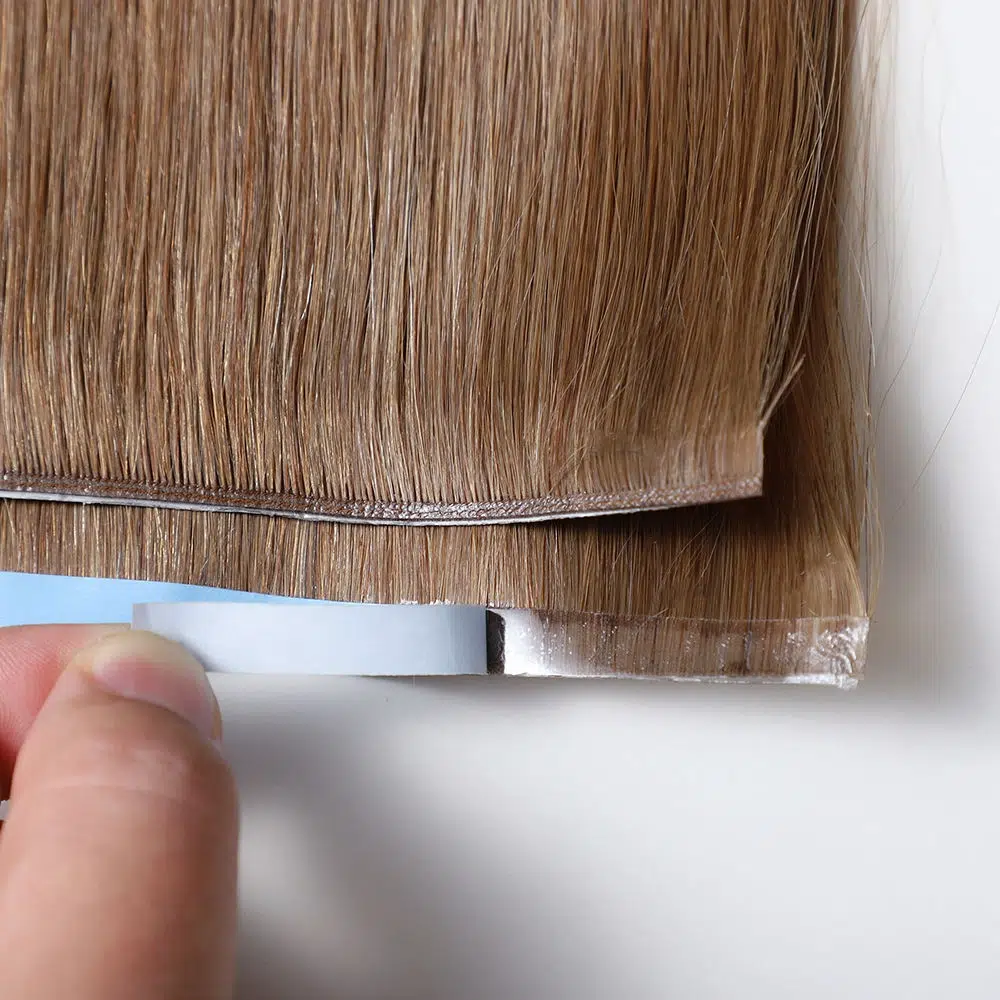
- checks how the tape sits on the PU top
- controls cleanliness before sealing
- understands replacement logic for salons
- gives realistic advice instead of only sales talk
That is why serious buyers should not only ask, “What tape do you use?”
They should also ask:
- Why do you use it?
- For what hair type?
- For what climate?
- For what wear cycle?
- How does it remove?
- Which replacement tape do you recommend later?
These questions usually tell you more about the factory’s professionalism than a tape color name alone.
My View
From a manufacturer’s point of view, the smartest tape choice is never just about the strongest adhesive. It is about balance.
A tape should:
- hold securely
- remove cleanly
- suit the client’s hair type
- fit the climate and lifestyle
- support repeat salon work without creating unnecessary trouble
That is also why I would not present tape names like German white or American blue as if they are the whole answer. In real factory work, those names are less important than the actual adhesive result.
For serious buyers, the better supplier is the one who can explain clearly:
- which tape fits which client
- which one is better for replacement
- which one is safer for fine hair
- which one is better in humid or active conditions
That is the difference between selling tape-in hair and actually understanding tape-in systems.


FAQ
Do all factories use the same tape for tape-in hair?
No. Most factories keep more than one tape option because different markets and clients need different adhesive behavior.
Are names like German white and American blue universal standards?
Not always. In many cases, they are market names or supplier naming systems, not strict global standards.
What matters more, the tape name or the tape performance?
The tape performance matters more. Hold strength, removal behavior, and suitability for the client are the real decision points.
Which tape is better for fine hair?
Usually a gentler tape is safer for fine hair, especially when easy removal and lower stress matter.
Which tape is better for active clients?
A stronger or more stable hold is usually better for active clients, swimmers, or humid climates, but it still needs clean removal later.
How often should tape be replaced?
Usually every 6–8 weeks, depending on hair growth, climate, and maintenance habits.

Conclusion
Hair extension factories usually use several tape options, not just one. The real difference is not the tape color name, but the hold, removal, comfort, and suitability for the target client. A good factory chooses tape based on performance, not only popularity, and helps salons and wholesalers make smarter replacement decisions too.
1