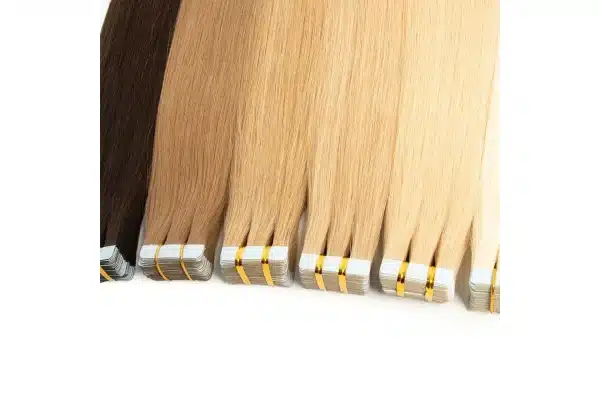
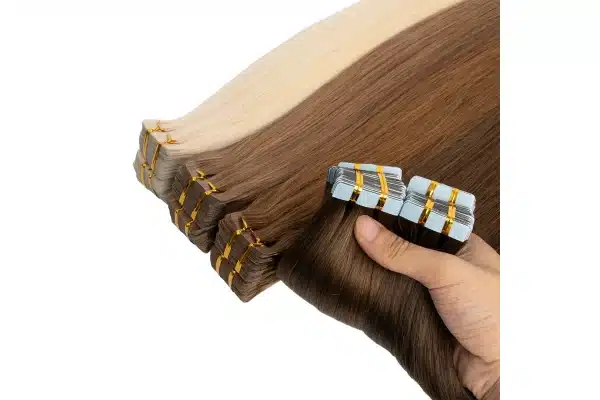
A tape tab looks thin on the counter. On fine hair, the finished sandwich may feel much heavier than the client expected.
Double sided tape for tape in extensions joins two tabs around a small section of natural hair. A single-sided setup can reduce bulk in some placements, but it does not fit every client or product. Check tab width, adhesive, and the client’s hair before choosing a replacement tape.
The label “strong tape” does not answer the real question. A stylist needs to know which surfaces are meant to meet, how much hair hangs from the section, and whether the client can hide the finished attachment.
When Do We Use Double Sided Tape for Tape In Extensions?
Use it when the extension system calls for a two-tab sandwich and the client’s hair can support and cover that pair.
Picture the finished sandwich
In a common tape-in application, one extension piece sits below a narrow section of natural hair and another sits above it. The adhesive faces meet through the natural hair. The two pieces should line up so one edge does not lift while the other presses down. This is why a stack of tabs on the table is not the right way to judge comfort.
Before choosing tape, place the two clean hair pieces against a sample section without sealing them. Check the combined thickness and the total hair hanging from that section. If the top piece shows at the client’s part, a stronger adhesive will not make it invisible.
| Setup detail | Two hair pieces | One hair piece with suitable backing |
|---|---|---|
| Hair weight at the section | Weight of both extension pieces | Weight of one extension piece |
| Visible top surface | Top hair tab must blend | Backing faces outward and needs checking |
| Adhesive contact | Specified surfaces must align | One-piece backing must suit the system |
| Typical planning question | Is the sandwich comfortable and hidden? | Will a lighter detail still look finished? |
This is a setup comparison, not a promise that one method holds longer. Adhesive chemistry, tab construction, hair preparation, and the manufacturer’s directions still matter. Our replacement-tape guide covers how to judge hold and residue after choosing the configuration.
Is Single Sided Tape Better for Fine Hair?
It can suit a small, discreet placement when the system is made for a one-piece attachment, but lighter does not automatically mean safer or less visible.
Check the outward-facing side
Some one-piece approaches replace the upper hair tab with a suitable backing. That changes the weight and can change what is visible when the client’s hair moves. It also changes how the adhesive contacts the natural hair and the extension tab. Use the backing specified for that tape system; do not improvise with an unrelated household tape or an untested liner.
Imagine a fine-haired client who wants a little fullness at the side, not a full length change. The stylist could compare one approved one-piece test section with a normal two-piece section at the same height. Lift the hair in the client’s usual part and look in a mirror. If the lighter setup flashes a shiny backing, the lower weight has not solved the appearance problem. This is a consultation example, not a claimed client result.
Ask the client whether they usually wear hair behind the ears. A side tab that stays hidden when the hair hangs down may show as soon as it is tucked back. Our tape-in placement guide helps with row location; this article is about the tape and backing choice on that row.
What Should We Test Before Buying Replacement Tape in Bulk?
Test the actual hair tab and the actual replacement tape together. Confirm the size, backing, cleanup method, and reapplication steps.
Make a small side-by-side sample
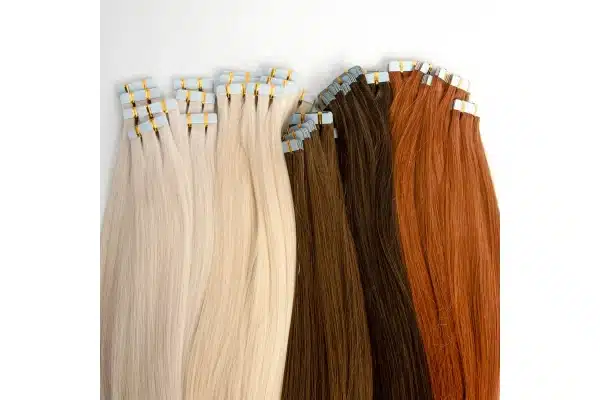
Use a clean tab from the hair product the salon stocks. Apply the replacement tape as directed and compare it with the original tab. Look at edge coverage. If the tape is narrower than the tab, the corners may lift; if it extends well beyond the tab, exposed adhesive can catch loose hair. Trim only if the tape maker and salon method allow it.
We also ask buyers to state whether they want a two-piece sandwich or a one-piece placement when they ask about tape in hair extensions. Otherwise, “send the same tape” can mean two different things. A physical sample is more useful than a broad claim that one roll works for every tab.
Retape one piece before ordering a carton
Remove the original adhesive using the approved instructions. Clean and dry the base. Apply the candidate tape, then check whether it lies flat, covers the usable tab area, and can be prepared for the chosen install. Keep notes on the new tape’s product name and lot. If a complaint arrives later, that record will narrow the question much faster than “the tape was good last time.”
What If the Tabs Lift or Feel Bulky?
First identify whether the trouble is visible thickness, poor adhesive contact, or placement. Those require different fixes.
If the row feels heavy before washing, compare the total hair weight at that section. A lighter configuration or fewer pieces may be a better change than buying stickier tape. If only one corner lifts, inspect tab alignment, tape coverage, and residue on the base. If the tab shows whenever the client parts the hair, move the location rather than adding more adhesive.
We do not treat every lift as a faulty tape claim. A photo of the tab and a note about the hair, backing, cleaning step, and install date make the discussion useful. They also help the salon avoid repeating the same setup at the next appointment.
My View
We would decide on the installation setup before ordering replacement tape. A salon that mainly installs full sandwiches needs consistent tape for paired tabs. A salon that sometimes makes small, one-piece additions should check the backing and instructions for that separate use. Mixing the two without a test creates an avoidable appointment problem.
The most useful comparison is physical. Put the hair pieces together, lift the surrounding hair, and ask whether the client can live with the weight and visibility. Then test the adhesive on the exact tab that will be reused. A narrow roll, a wide tab, and a rushed cleaning step are practical details, not small print. They can decide whether the attachment lies flat. If the salon changes tape, record the change so the next stylist knows which system is on the client’s head.
Frequently Asked Questions
Does double sided mean the client needs twice as much hair?
Not necessarily. A two-piece sandwich uses two extension pieces at each paired section, but the total number of sections depends on the planned result and the product’s piece weight.
Can we use single sided tape on any tape-in tab?
No. Confirm the backing and adhesive with the tape and hair suppliers. Run one trial on a clean tab before using a new configuration on a client.
Should we choose the strongest tape for every salon client?
No. Hold, cleanup, and client fit all matter. Use the maker’s instructions and test how the tape performs through the full installation and removal cycle.
Conclusion
Double sided tape for tape in extensions belongs to a defined two-piece setup. One-piece placements need their own compatible backing and test. Compare the finished weight, visible surface, tab coverage, and retape process before treating two rolls as interchangeable.