Replacement tape is not a small accessory in a tape-in extension service.
It affects how long the install holds, how cleanly the extensions can be reused, and how many maintenance visits turn into complaints.
For salons and hair brands, the best tape for tape-in extensions should hold securely, remove cleanly, leave minimal residue, and work well with the client’s hair condition and lifestyle.
Cheap tape may look fine before installation.
The problem usually appears after washing, sweating, brushing, or retaping.
Quick Answer: What Is the Best Tape for Tape-In Extensions?
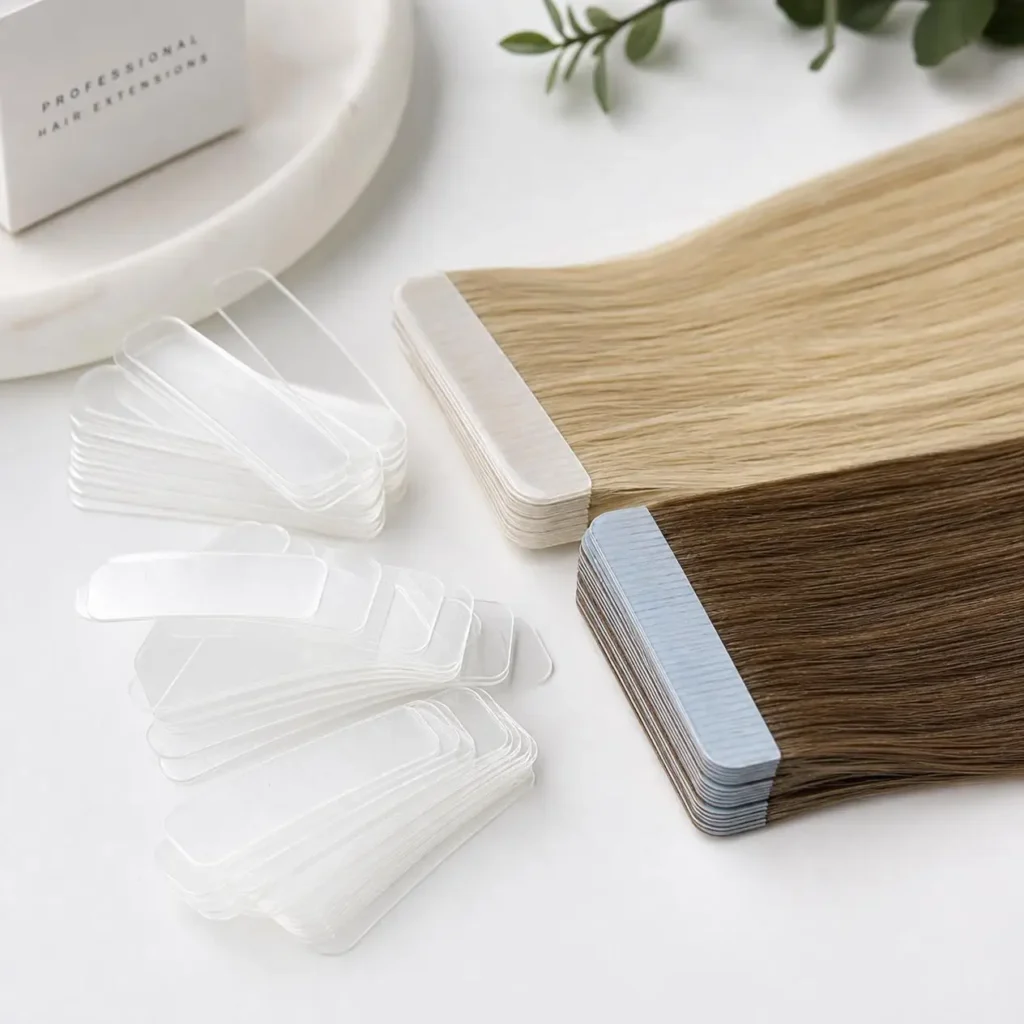
The best replacement tape for tape-in extensions is a professional adhesive tape made specifically for tape-in hair systems.
It should balance hold, comfort, clean removal, and retape performance.
| Key Factor | Why It Matters |
|---|---|
| Adhesive strength | Helps the tape stay secure during normal wear |
| Clean removal | Reduces residue and saves stylist time |
| Low residue | Supports better retaping and cleaner maintenance |
| Flat tab thickness | Keeps the tape sandwich less visible |
| Moisture resistance | Helps clients who sweat, wash often, or live in humid areas |
| Storage stability | Prevents adhesive from weakening before use |
For salon use, the goal is not just “strong tape.”
The goal is reliable tape that supports a clean service and repeat business.
Why Replacement Tape Quality Matters
Tape-in extensions depend on adhesive performance.
Even when the hair quality is excellent, weak tape can cause slipping, lifting, sticky residue, or early return appointments.
Clients often cannot separate hair quality from tape quality. If the tape slips, they may think the whole extension product is poor.
That is why replacement tape should be treated as part of the full tape-in system.
Not an afterthought.
For hair brands, this matters even more. If your tape-in extensions can be removed, cleaned, and retaped smoothly, customers get better reuse value.
That helps reduce complaints and supports repeat orders.
What Salons Should Look for in Replacement Tape
The best tape for tape-in extensions should hold well without making removal difficult.
Tape that is too weak can slip early. Tape that is too aggressive can leave heavy residue or cause discomfort during maintenance.
| Tape Feature | What to Check | Salon Risk If Poor |
|---|---|---|
| Hold strength | Does it stay secure after normal washing and wear? | Early slippage |
| Residue level | Does it clean off easily after removal? | Longer maintenance time |
| Tab thickness | Does it sit flat inside the tape sandwich? | Bulky roots |
| Flexibility | Does it move naturally with the client’s hair? | Pulling or stiffness |
| Moisture response | Does it lift after sweat or humidity? | Shorter wear time |
| Storage condition | Does the adhesive stay stable before use? | Weak bonding before installation |
Good tape should make salon work easier.
It should not add extra cleaning time.
Adhesive Strength: Strong Hold Is Not Enough
Many salons look for the strongest tape first.
That makes sense, but strength alone is not the full answer.
A tape-in bond needs to hold through normal daily movement, brushing, and washing. But it also needs to be removed safely when the client returns for maintenance.
If the adhesive is too aggressive, removal may take longer and create more pulling.
This is especially important for fine, fragile, or thinning hair clients. Repeated pulling from tight hairstyles, weaves, or extensions may contribute to traction-related hair loss when tension is not managed properly.[1]
The right tape should support the install.
It should not create unnecessary stress.
Residue: The Hidden Cost of Poor Tape
Residue is one of the biggest problems with low-quality replacement tape.
When tape leaves too much adhesive behind, the stylist needs more time to clean the extension tab and the client’s natural hair.
That slows down maintenance appointments.
It also affects the next installation. If old adhesive is not removed properly, fresh tape may not bond well.
For salons, low-residue tape saves time and protects the service experience.
For hair brands, it reduces after-sales complaints.
A tape that holds well but removes badly is still not ideal for professional use.
Why Replacement Tape Fails Early
When tape fails early, the tape is not always the only problem.
Stylists should check the full service process before changing products.
| Problem | Possible Cause | What to Check |
|---|---|---|
| Tape slips after a few days | Hair was not cleaned properly | Oil, conditioner, silicone, or product residue |
| Tape lifts at the edges | Tape was not sealed evenly | Section thickness and pressure |
| Tape feels gummy | Old tape or poor storage | Heat, humidity, or expired adhesive |
| Heavy residue remains | Poor adhesive quality | Removal process and cleaning time |
| Client feels pulling | Placement is too tight or heavy | Distance from scalp and natural hair density |
| Retaped extensions fail again | Old adhesive was not fully removed | Residue on the extension tab |
This table is useful for salon training.
It helps separate product issues from installation issues.
Best Replacement Tape for Different Client Types
Not every client needs the same tape performance.
Some need stronger moisture resistance. Some need lower residue. Some need a softer and flatter attachment because their natural hair is fine.
| Client Type | Tape Priority | Why |
|---|---|---|
| Fine hair clients | Flat, low-residue tape | Reduces bulk and cleaning stress |
| Oily scalp clients | Stronger hold and strict prep | Oil can weaken adhesion |
| Active clients | Better moisture resistance | Sweat may shorten wear time |
| Humid climate clients | Stable adhesive performance | Humidity can increase lifting risk |
| Sensitive scalp clients | Comfort and clean removal | Helps reduce irritation risk |
| Reuse-focused clients | Easy retaping | Protects the value of reusable hair |
If a client has redness, itching, burning, swelling, or strong discomfort after adhesive contact, stop the service and recommend professional advice. Contact dermatitis can be triggered by irritants or allergens and may cause itching, swelling, burning, or tenderness.[2]
Do not treat skin reactions as normal extension wear.
How to Apply Replacement Tape Properly
Good tape can still fail if it is applied over residue or handled incorrectly.
A clean retape process is essential.
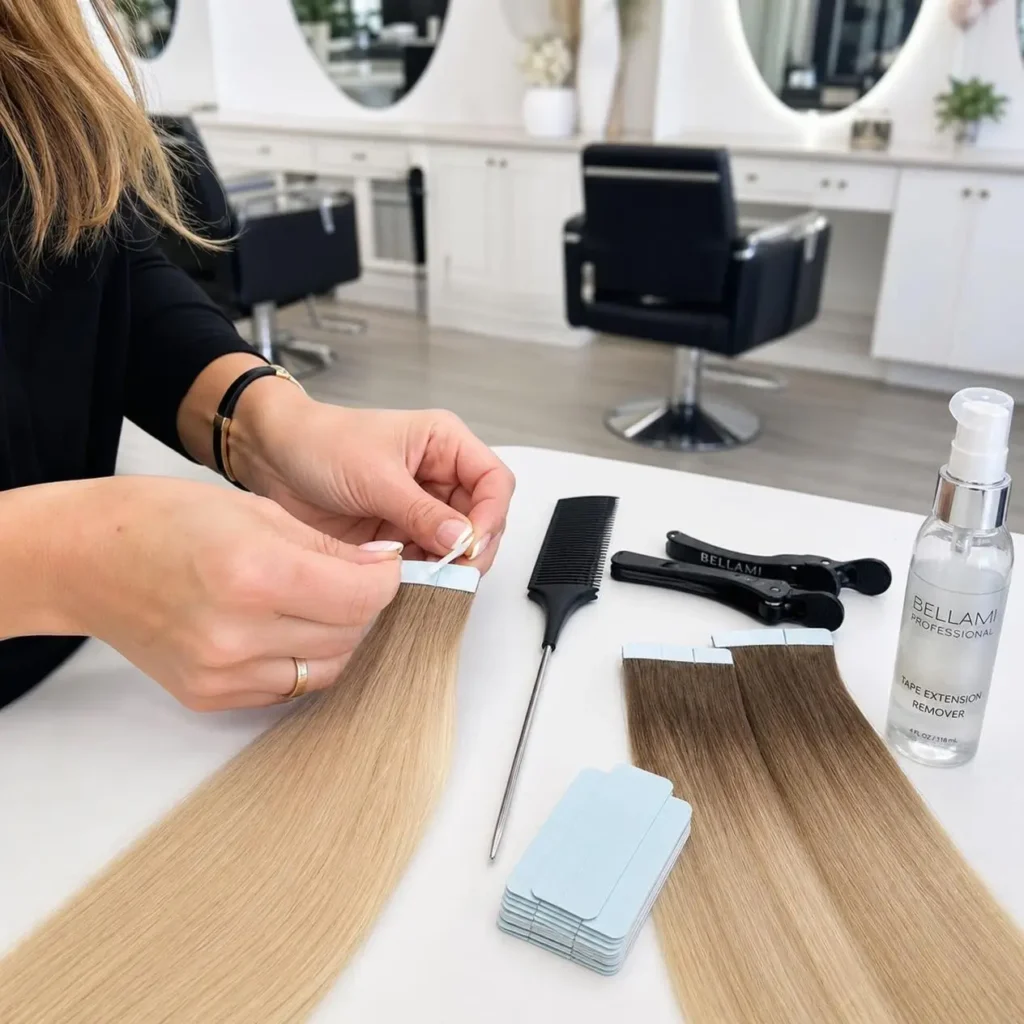
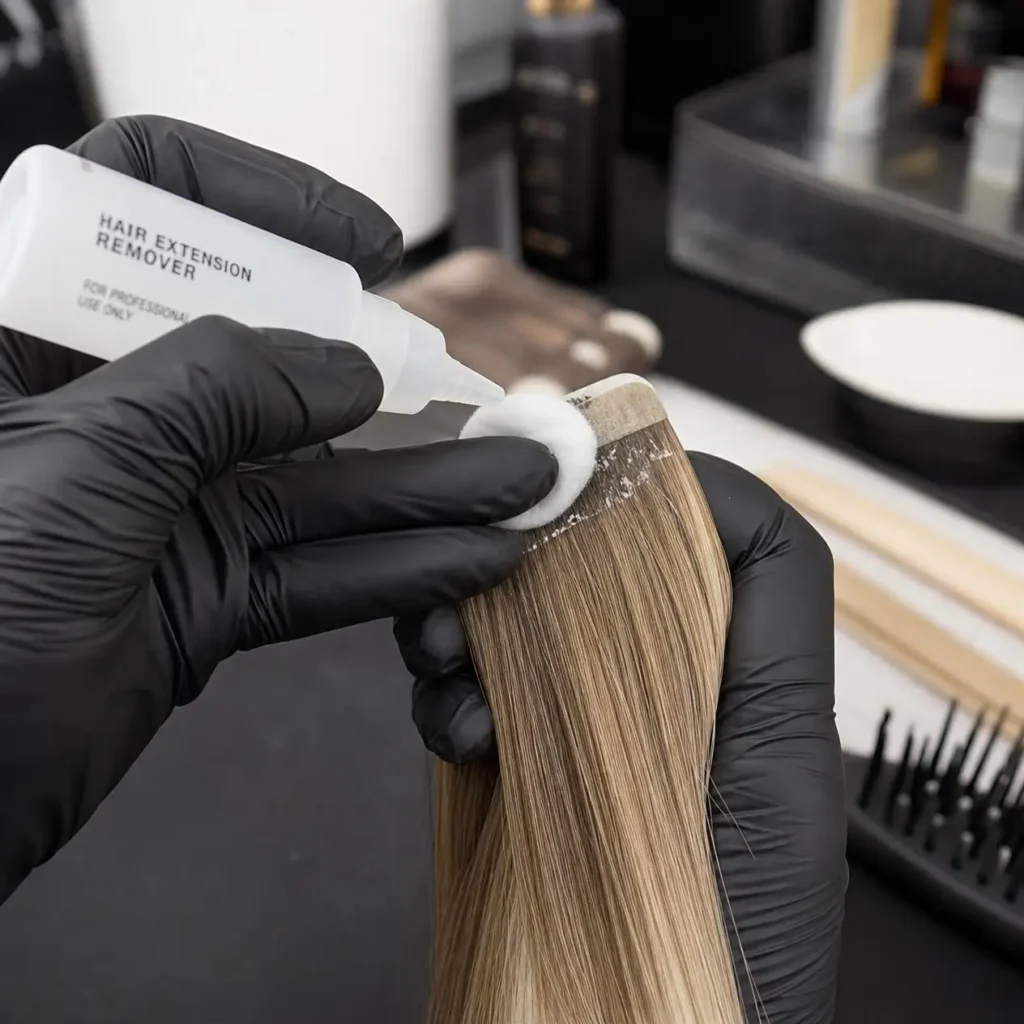
For salons, the process should include:
- Remove the old tape-in extension with professional remover.
- Clean all adhesive residue from the extension tab.
- Make sure the tab area is dry.
- Apply fresh replacement tape evenly.
- Press firmly across the full tab.
- Avoid touching the adhesive surface with fingers.
- Reinstall only on clean, dry natural hair.
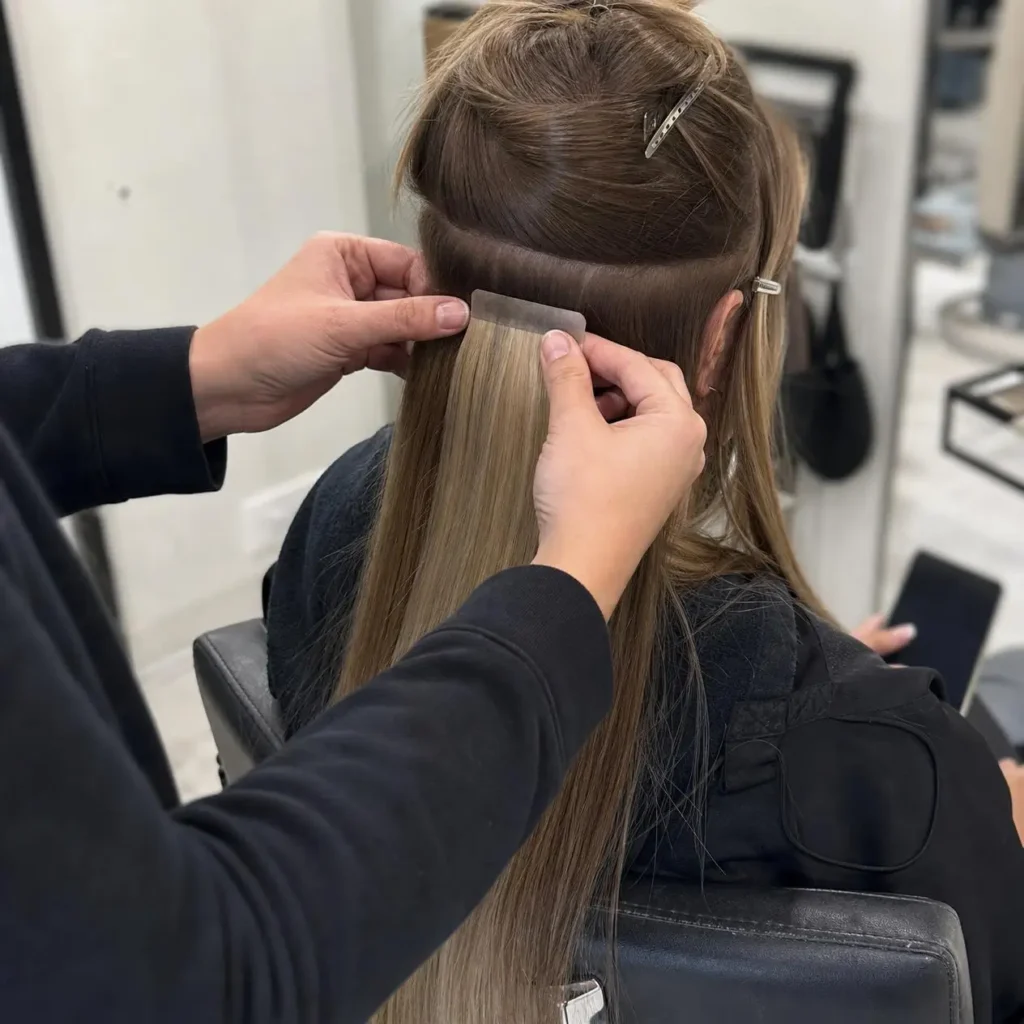
The tape should sit flat.
No lifting edges. No trapped residue. No uneven pressure.
Small details decide the result.
Storage: Why Tape Can Fail Before Use
Replacement tape can lose performance before installation if it is stored poorly.
Heat, humidity, air exposure, and dust can affect adhesive stability.
Tape should be stored in a cool, dry, sealed place. Keep it away from direct sunlight, steam rooms, wet stations, and open air.
Do not leave tape tabs exposed on a workstation.
If tape feels dry, overly soft, gummy, or uneven before use, do not apply it to a client.
Storage is part of quality control.
What Salons Should Test Before Buying Tape in Bulk
For professional buyers, sample testing is safer than relying on supplier claims.
Before ordering replacement tape in volume, test it through a real salon cycle.
Check:
- How easy it is to apply
- Whether it lies flat inside the tape sandwich
- How well it holds after washing
- Whether it lifts after sweat or humidity exposure
- How much residue remains after removal
- How long cleaning takes
- Whether clients report discomfort
For hair brands, also check return rate.
If customers often complain about slipping, gummy tabs, or messy removal, the tape may be hurting your product reputation.
Replacement Tape and Hair Quality Work Together
Replacement tape matters, but it cannot fix poor hair quality.
If the tape-in hair tangles, dries out, or becomes hard to brush, clients may pull more during daily care. That extra pulling can stress the tape bonds.
This is why premium tape-in systems should combine stable adhesive with smooth, manageable hair.
For professional salon clients, full cuticle hair is usually a better choice because the strands are aligned root to tip. With proper care, this helps the hair stay smoother and easier to manage.
If you are sourcing complete tape-in systems, review premium tape-in hair extensions instead of comparing tape tabs alone.
The adhesive and the hair should work as one system.
FAQ
What is the best tape for tape-in hair extensions?
The best tape is a professional replacement tape made for tape-in extensions. It should hold securely, remove cleanly, leave minimal residue, and work well with your tape-in hair system.
Can I reuse old tape tabs?
No. Old tape tabs should be removed and replaced with fresh tape every time the extensions are reinstalled.
Why does replacement tape leave sticky residue?
Sticky residue can come from low-quality adhesive, old tape, poor storage, wrong remover, or incomplete cleaning.
How can salons reduce tape-in extension returns?
Use fresh replacement tape, clarify the client’s hair properly, clean old adhesive fully, apply the tape evenly, and give clear aftercare instructions.
Should hair brands test replacement tape before wholesale orders?
Yes. Hair brands should test adhesive hold, removal, residue, retaping, and client comfort before placing larger orders.
Conclusion
The best replacement tape for tape-in hair extensions is not only strong.
It should hold securely, remove cleanly, leave minimal residue, and support smooth retaping for salon maintenance.
For salons, good tape saves time and reduces complaints. For hair brands, it protects product reputation and lowers return risk.
If you are sourcing tape-in hair extensions or replacement tape for professional use, you can contact Hibiscus Hair to request samples, wholesale pricing, or product recommendations.