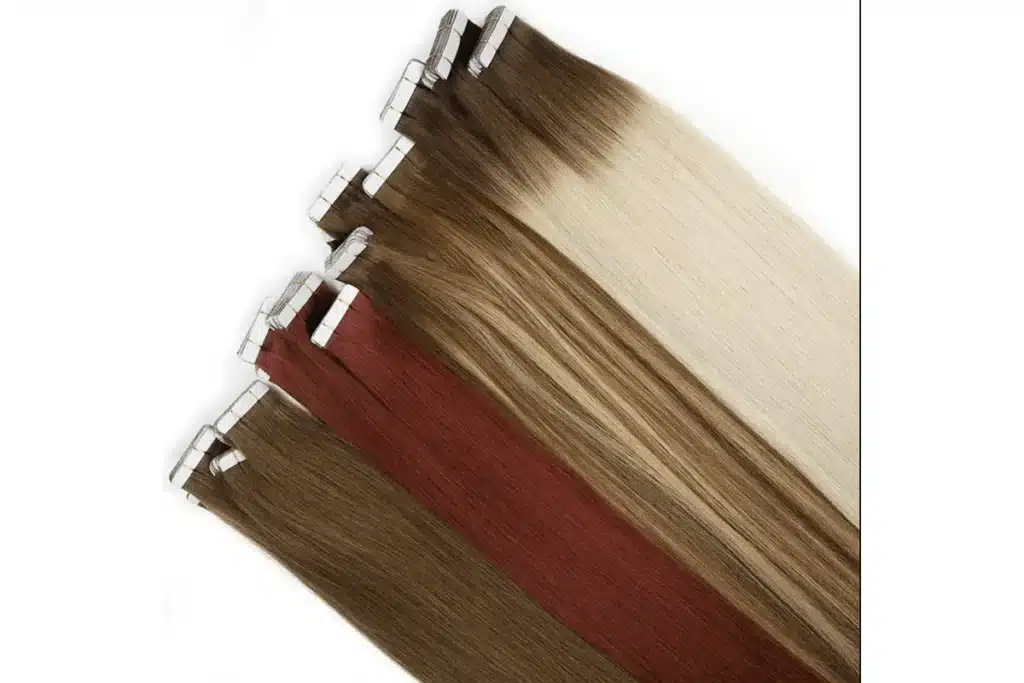
A DIY removal can look simple online. A small mistake can turn into pulling, breakage, and a painful detangle. You want your hair safe, and you want a clear plan.
You can remove hand tied extensions at home only when you work slowly, use the right tools, and follow the correct order. You should open beads fully, slide them down with low resistance, release the weft without pulling, then detangle trapped shed hair before washing.

If you are about to start, do not rush. I will show you what is safe to do at home, what steps matter most, and when you should stop and book a professional.
Can You Take Out Hand Tied Extensions at Home?
You may feel tempted to do it yourself to save time and money. You may also feel stressed because the row feels tight or itchy. That feeling is real.
Yes, you can take out hand tied extensions at home in some cases, but you need the right tools and a calm process. If you see heavy matting, scalp irritation, or beads that will not open, you should stop and get help.
Dive deeper
I am a hair extensions manufacturer, so I do not remove extensions for clients in a chair. But I do see what happens after removals go wrong. I also review feedback from salons and end users. That is why I keep DIY guidance simple and safety-first.
What makes DIY possible
DIY removal can work when:
- the install is not overdue
- the bead line is easy to see
- the scalp is calm
- there is no tight matting under the row
- you can sit with good light and mirrors
DIY removal fails when you try to “force” anything. A bead should open and slide with low resistance. If you need strength, something is still locked.
Risk signs I never ignore
I suggest you pause if you notice:
- sharp pain at the bead line
- redness, bumps, or broken skin
- a tight felt-like mat near the row
- beads that look crushed or stuck
- a strong odor or dampness trapped near the base
These signs do not mean you are doing something wrong. They mean the removal requires a different plan.
| What you see or feel | What it often means | What I suggest |
|---|---|---|
| mild itching, no redness | product buildup or dryness | remove slowly, plan a gentle wash after |
| beads are far from scalp | grow-out is heavy | work in smaller sections and expect more shed hair |
| hair feels “stuck” under row | trapped shed hair | detangle before washing |
| pain when you touch beads | tension or irritation | stop DIY and contact a stylist |
If you want the safest DIY removal, you should treat it like a careful project. You should not treat it like a quick fix.

How to Remove Hand Tied Extensions at Home?
If you start without an order, you will get lost fast. Then you may pull. Pulling is what causes most damage in DIY removal.
To remove hand tied extensions at home, you should follow this order: set up mirrors and tools, isolate a small section, open one bead fully, slide it down, repeat across the row, release the weft, then detangle trapped shed hair before you wash.
Dive deeper
I suggest you think in “small sections” from start to finish. Small sections keep tension low and keep your hands in control.
Step 1: Set up your space
You need bright light. You need a front mirror and a back mirror, or a phone camera view. You also need a chair that supports your back. If you cannot see the bead axis, you will squeeze the wrong direction.
Step 2: Work on one row segment at a time
You should not try to remove the whole row in one go. You should pick a segment of 2–4 beads. You should clip all other hair away.
Step 3: Open beads fully before sliding
This is the main rule. A half-open bead will drag. Dragging will rip hair. If the bead does not slide with low resistance, you should re-open it and free caught strands.
Step 4: Release the weft only when beads are loose
Some installs have thread or stitching holding the weft. You should not cut anything near the scalp unless you clearly see thread only. If you cannot identify the method, you should not cut.
Step 5: Detangle trapped shed hair before washing
When the weft comes off, your natural hair can collapse and knot. You should finger-separate shed hair first. You should brush only after the section feels loose.
| DIY step | Your goal | Common mistake |
|---|---|---|
| mirror setup | full bead visibility | working blind and squeezing wrong |
| small sections | low tension | removing too much at once |
| open then slide | low resistance | dragging a half-open bead |
| release weft last | protect base hair | cutting without seeing thread |
| detangle before wash | stop matting | washing first and tightening knots |
If you follow this order, you reduce panic moments. You also protect your natural hair, which is always the priority.
What Tools Do You Need for DIY Hand Tied Removal?
Many people try DIY with random pliers. That usually ends with crushed beads and stuck hair. Then removal becomes painful.
For DIY hand tied removal, you need bead opener pliers with smooth inner surfaces, a rat-tail comb, strong clips, small scissors for thread only, and a gentle detangling brush. You also need good lighting and two mirrors.
Dive deeper
I like simple kits because simple kits reduce mistakes. Your goal is control, not speed.
The core tools and why they matter
- Smooth bead opener pliers: you open beads without crushing them
- Rat-tail comb: you part cleanly and see bead direction
- Duckbill clips: you keep hair out of the way
- Small sharp scissors: you cut thread only, not hair
- Detangling brush: you reduce force on your hair
- Spray bottle or light detangler: you add slip only when needed
Tools I suggest you avoid
- Serrated pliers that bite and slip
- Large scissors that cut wide zones
- Tweezers, knives, or metal picks near the scalp
- Glue or tape “hacks” to hold things while removing
A quick tool test
Before you begin, you can test your pliers on one bead that is already visible. If the pliers slip, stop. Slipping means you will crush beads and trap hair.
| Tool | What it should do | What happens if it is wrong |
|---|---|---|
| bead opener pliers | open bead cleanly | bead collapses and traps hair |
| rat-tail comb | clean parting | messy parting causes pulling |
| strong clips | stable sections | hair mixes and tangles fast |
| small scissors | thread-only cutting | accidental hair cutting |
| detangling brush | low-force brushing | ripping and breakage |
If you invest in one thing, invest in the right pliers. Good pliers are the difference between calm removal and painful removal.

How Do You Open Beads Safely Without Ripping Hair?
Most DIY damage comes from the bead step. People squeeze the wrong direction. People also try to slide beads before they are fully open.
To open beads safely, you should find the flat side of the bead, open it in the correct axis, and test with low resistance before sliding. If the bead drags, you should stop and re-open it. You should never pull hair through a bead.
Dive deeper
I teach one principle to keep DIY safe: if it does not move easily, it is not ready. This principle protects your hair better than any “fast” trick.
Understand bead shape
Most beads are flattened during install. That means you do not open them by squeezing the same direction again. You open them by reversing the flatten direction. If you squeeze wrong, you tighten the clamp.
The low-resistance slide rule
After you open a bead, you should slide it down with two fingers. You should not need force. If you need force, hair is caught or the bead is still tight.
What to do when hair is caught
You should re-open the bead. Then you should use your fingers to free the caught strands. You should not use sharp tools near the scalp. Sharp tools can cut natural hair.
| Bead problem | Why it happens | What you should do |
|---|---|---|
| bead will not open | wrong axis or tool slip | change angle, re-grip, use smooth pliers |
| bead opens but drags | hair is caught inside | re-open fully and free strands with fingers |
| bead feels sharp | bead is crushed | stop DIY and get professional help |
| pain during slide | tension is high | work smaller, check scalp, pause |
A calm bead step sets up the whole removal. If you rush this part, every later step becomes harder.
How Do You Prevent Matting and Manage Shed Hair During DIY Removal?
When you wear hand tied extensions, shed hair stays trapped. This is normal. The danger starts when shed hair collapses into a knot during removal.
To prevent matting, you should detangle in stages while the row is still partly supported. You should finger-separate shed hair first, then brush mid-lengths, then brush ends. You should avoid washing before detangling.
Dive deeper
This step is where many DIY removals go wrong, even when beads are opened correctly. People remove the whole row, then they see a “ball” of shed hair, then they panic brush. Panic brushing causes snapping.
Why shed hair looks scary
A person can shed 50–100 hairs a day. Over weeks, that is a lot. Extensions hold those hairs in place. So when you remove the row, the shed hair becomes visible at once. This is normal. The goal is to remove it without tangling your live hair.
The safest detangle pattern
- Use your fingers near the scalp first
- Split the section into smaller pieces
- Use a light detangler only on the problem zone
- Brush from ends upward in short strokes
- Support the root area with your hand so you do not pull the scalp
What to do if you find a tight mat
A tight mat is not a brush job. It is a slow separation job. You can add slip and gently loosen from the edges. If the mat feels like felt, you should stop DIY. A professional can remove it with less damage.
| Tangling level | How it feels | Best DIY action |
|---|---|---|
| light | small knots | finger separate and gentle brush |
| medium | clumps but movable | add slip, split, slow detangle |
| heavy | tight near scalp | isolate and tease slowly, no force |
| extreme | hard felt-like mat | stop DIY and book a stylist |
If you respect this step, you protect your natural hair density. This is the real value of a safe removal.
Should You Wash Before or After Removing Hand Tied Extensions?
Many people want to wash first because the scalp feels oily. But water can tighten tangles fast. That can make removal harder.
You should usually remove first, detangle shed hair, then wash. Washing before removal is only safe when hair is already fully detangled and there is no matting risk. After removal, you can cleanse and reset the scalp.
Dive deeper
I keep this rule simple because it prevents the most common DIY disaster: wet matting.
Why washing first can backfire
Water swells hair. Water also increases friction. If you already have shed hair trapped near the row, water can lock it into a knot. Then the knot becomes harder to separate. That is why many stylists detangle before washing.
A safer wash plan after removal
- Do a gentle shampoo on scalp
- Rinse longer than you think you need
- Apply conditioner only mid-length to ends
- Rinse again until hair feels clean
- Dry the scalp fully
If you have hard water, your hair can feel rough even after washing. You can use a chelating or clarifying step sometimes. You should not overdo it. You should rehydrate after.
| Hair condition | Wash plan | What to avoid |
|---|---|---|
| heavy buildup | clarify after detangle | heavy conditioner at roots |
| dry and fluffy | gentle wash + mask on lengths | harsh clarifier too often |
| sensitive scalp | mild shampoo only | scratching hard near roots |
| hard water feel | chelating sometimes | skipping conditioner on lengths |
A clean reset helps you plan the next step. Some people reinstall soon. Some people rest the hair for a few days. Both options work when the scalp is calm.
When Should You Stop DIY and Book a Professional?
DIY is not always the right choice. The smartest move can be stopping early before damage starts.
You should stop DIY removal if you feel sharp pain, see scalp irritation, find extreme matting, or cannot open beads without force. You should also stop if you cannot clearly see thread or structure near the scalp.
Dive deeper
I know some people push forward because they already started. That is normal. Still, the best results come from stopping at the right time.
Red flags that mean “stop now”
- pain that increases with every bead
- beads that look crushed or sharp
- swelling, redness, bumps, or broken skin
- matting that feels like a hard pad
- hair that will not separate even with slip and time
These are not “tough moments.” These are structural and scalp warnings.
Why stopping protects your long-term hair
Hand tied methods are designed to be gentle when maintained on time. Problems often come from delayed maintenance and heavy friction. When DIY removal becomes forceful, traction and snapping can happen. This can reduce density around the row area. You may not see it that day. You may see it weeks later.
| DIY situation | Risk level | Best next step |
|---|---|---|
| bead opens and slides easily | low | continue slowly in small sections |
| beads drag and catch hair | medium | pause, re-open, free strands carefully |
| sharp pain or scalp irritation | high | stop and book professional help |
| severe matting | very high | stop and get a safe dematting plan |
If you want to protect your hair and also protect your investment in extensions, stopping at the right time is a professional choice.
My opinion
I think DIY removal should be treated as a controlled process, not a quick job. I also think the safest DIY plan is “low resistance only.” If anything needs force, you should pause. I also see better outcomes when clients use high-quality full cuticle hair, because it tangles less and stays smoother, so removal and detangling become easier with proper care.
FAQ
Can you remove hand tied extensions at home without pliers?
I do not suggest it. Beads need the correct opening tool. Without it, you are likely to crush beads or pull hair.
Does DIY removal cause hair loss?
DIY removal can cause breakage and traction if you pull or rip through tangles. Slow work and low resistance reduce this risk.
Why does it look like you are losing a lot of hair during removal?
Shed hair is trapped during wear. When you remove the row, that shed hair becomes visible at once. This is often normal.
What if you cannot find where the thread is?
If you cannot clearly see thread or structure, you should not cut. You should book a stylist so the weft and your natural hair stay safe.
Can you reuse hand tied wefts after DIY removal?
Reuse depends on how clean the removal is and whether the weft seam stays intact. If the seam is cut or frayed, reuse becomes harder.
Should you use oil to help beads slide out?
You should not use heavy oil near the bead line. Oil can increase slip during wear, and it can also create buildup. Use controlled slip only when detangling.
How long should you wait before reinstalling?
This depends on scalp comfort and hair condition. Some people reinstall soon. Some people rest a few days. If the scalp is irritated, rest is often smarter.
Conclusion
DIY removal can work when you use the right tools, follow a strict order, and avoid force. If you see pain, stuck beads, or matting, you should stop and book help.