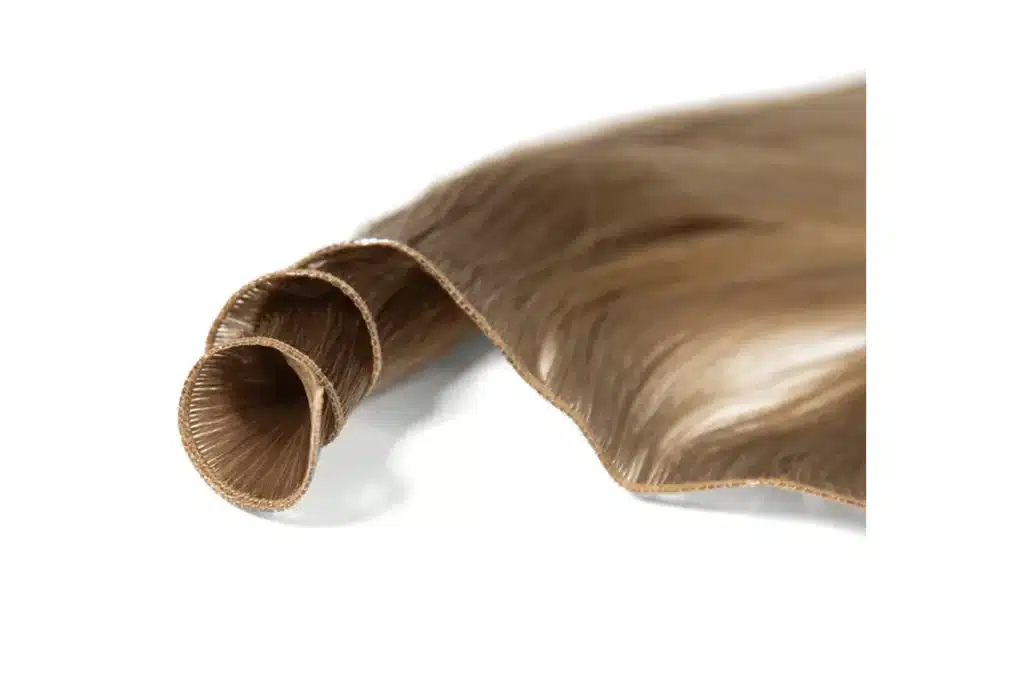
Too little hair creates thin ends; too much adds weight, cost, and installation time. A full-head plan should balance density, length, method, and client comfort.
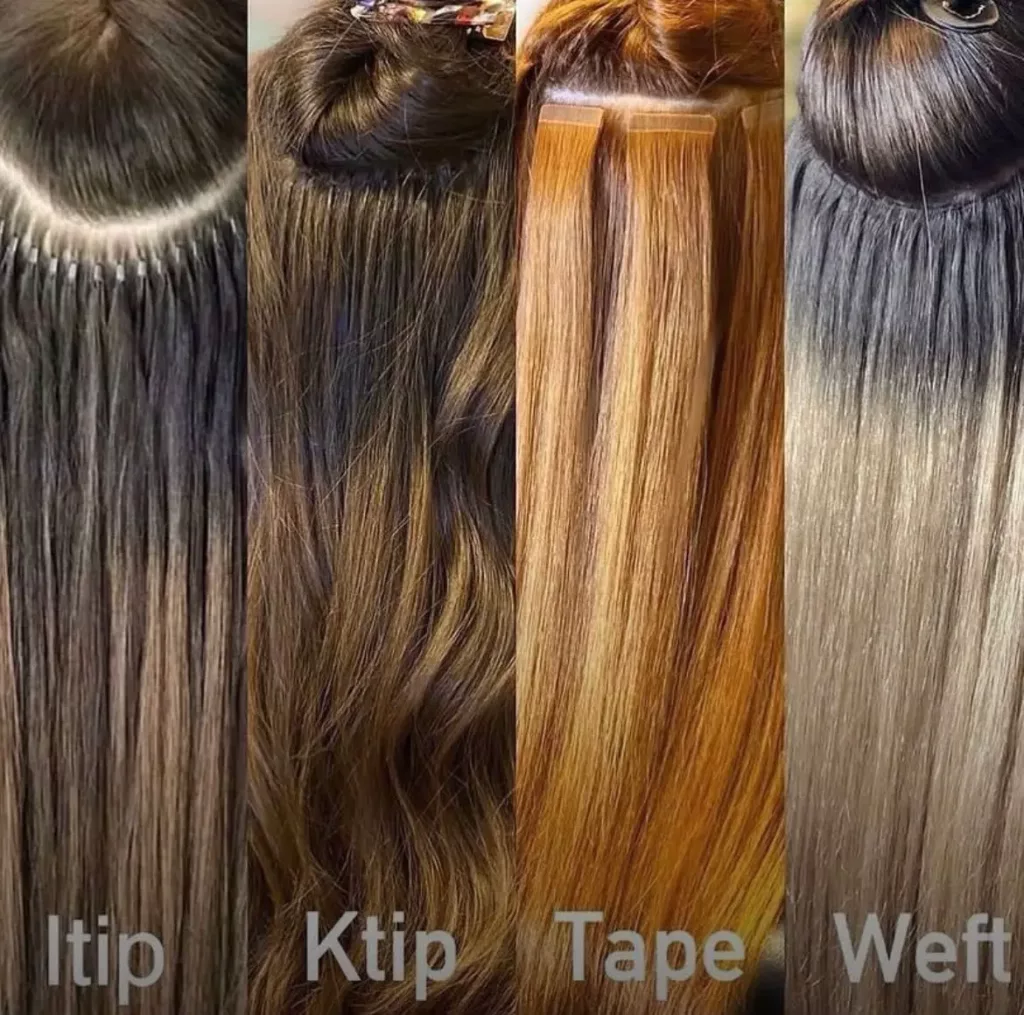
Most full-head installations use about 100–200g of hair, but the unit varies by method: 40–60 tape pieces, 120–160 keratin strands, 150–200 I-tip strands, or roughly 2–4 weft packs. Fine hair needs less; thick hair and major length changes need more.
The correct quantity still depends on natural density, haircut, extension length, grams per piece, and the client’s goal. The guide below explains how to compare methods, calculate pack counts, and avoid underfilling or overloading the natural hair.Full-Head Hair Extension Quantity Chart
The following ranges are practical starting points, not fixed installation rules.
| Extension Method | Typical Full-Head Range | What to Confirm |
|---|---|---|
| Hand-Tied or Other Wefts | 100–200g | Grams per weft, row count, and natural density |
| Tape-In Extensions | 40–60 pieces, or 20–30 sandwiches | Grams per piece, tape size, and target length |
| Keratin Extensions | 120–160 strands | Grams per strand and placement area |
| I-Tip Extensions | 150–200 strands | Strand weight, bead size, and natural density |
| Clip-In Extensions | 150–200g total | Total width, number of wefts, and end density |
These ranges should be adjusted after checking the client’s natural hair, haircut, desired length, and the weight of each product unit.
Salon Resource: Full-Head Extension Quantity Planner
Record the client’s density, current length, target result, extension method, grams per unit, and total stock required before installation.
Request the quantity planner, sample plan, and wholesale pricing
What Determines the Quantity for a Full Head?
A full-head quantity should not be selected from hair density alone. Stylists should consider the complete installation plan.
1. Natural Hair Density and Strength
Fine hair normally needs less total weight, but that does not mean every lightweight method is suitable. Check whether the natural sections can support the planned attachments.
Medium-density hair usually offers more flexibility across tape, weft, and strand-by-strand methods.
Thick hair often requires more grams to prevent the natural ends from showing through the extensions.
2. Current Haircut
Blunt bobs, short layers, and dense ends usually need more hair for blending than long, softly layered hair.
A dramatic change from short hair to long extensions may require additional density through the sides and ends.
3. Desired Result
- Volume only: Often needs approximately half to two-thirds of a standard full set
- Natural length and volume: Usually fits the standard quantity range
- Major length transformation: May require additional grams for full ends and side coverage
4. Extension Length
Longer extensions need enough density to prevent thin or transparent ends. A quantity that works at 14 inches may not create the same result at 22 or 24 inches.
5. Weight Per Piece, Strand, or Pack
Pack count is not a reliable comparison unless the buyer knows the net grams inside each pack.
Always confirm:
Usable hair length
Net hair weight
Pieces or strands per pack
Grams per piece or strand
Attachment weight

Full-Head Quantity by Extension Method
Hand-Tied and Other Hair Wefts
A full-head weft installation commonly uses 100–200g, depending on natural density, row count, extension length, and the fullness of the ends.
Do not calculate quantity from pack count alone. Different suppliers may use different grams per pack.
For professional row-based services, review the weight and construction of the selected hair weft extensions before deciding how many rows or wefts to install.

Tape-In Extensions
Most full-head tape-in installations use 40–60 individual pieces, equal to approximately 20–30 sandwiches.
Fine hair may need 30–40 pieces, while thick hair, blunt cuts, or longer transformations may require 60–80 pieces.
When comparing tape-in hair extensions, check both piece count and net grams. Two packs with the same number of pieces may contain different amounts of hair.

Keratin Extensions
A typical full-head keratin installation uses approximately 120–160 strands.
Fine hair may need closer to 100–120 strands, while thick hair or a major length change may need more. The final count depends heavily on whether each strand weighs 0.5g, 0.8g, or 1g.
Professional buyers should confirm strand weight when sourcing keratin hair extensions.

I-Tip Extensions
A full-head I-tip installation often uses 150–200 strands.
Lighter strands may require a higher piece count to reach the same total grams. Heavier strands provide more fullness per piece but may not suit fine or fragile natural hair.
When planning I-tip hair extensions, calculate both strand count and total installed weight.

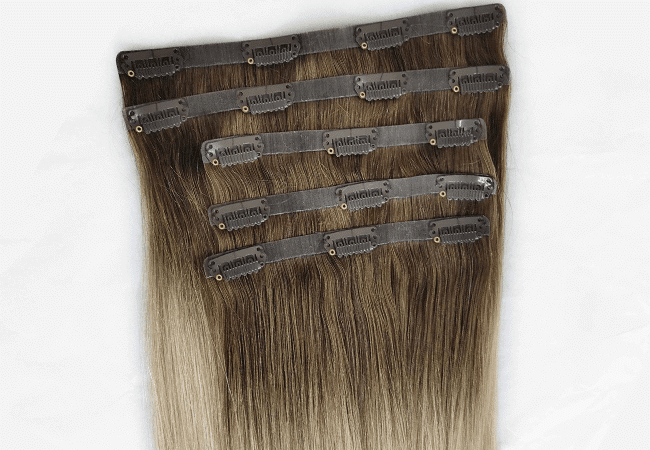
Clip-In Extensions
Clip-in quantity is better measured by total grams and weft width than by piece count.
A seven-piece set and a ten-piece set may provide similar weight if the weft widths are different. For a full-head result, many clients need approximately 150–200g, while volume-only use may require less.
Double stacking should only be used when the natural hair can conceal the additional wefts and support the final weight comfortably.
How to Calculate Packs, Pieces, or Strands
Use total target grams as the starting point.
Step 1: Choose the Target Hair Weight
Estimate the required grams from the client’s natural density, current haircut, extension length, and desired result.
Step 2: Confirm the Supplier’s Unit Weight
Check:
- Grams per pack
- Grams per tape piece
- Grams per keratin strand
- Grams per I-tip strand
- Total grams in a clip-in set
Step 3: Calculate the Required Units
For example:
- A 150g target using 50g weft packs requires three packs.
- A 150g target using 1g keratin strands requires approximately 150 strands.
- A 150g target using 2.5g tape pieces requires approximately 60 pieces.
These calculations provide a stock-planning estimate. The stylist must still adjust placement and total weight for the individual client.
Factory Insight: Compare Net Grams, Not Pack Count
Pack size is not standardized across hair extension suppliers.
In a hypothetical comparison, three 50g packs provide 150g of hair, while three 30g packs provide only 90g. The second order contains 40% less hair even though the buyer purchased the same number of packs.
Before comparing quotations, record the net hair weight, number of pieces or strands, and grams per unit. A lower pack price may simply reflect less hair rather than better value.
Keep the approved weight specification with the sample order so the bulk shipment can be checked against the same standard.
Does Hair Quality Affect the Required Quantity?
Yes. Hair with very thin ends may need more grams to create the same visual fullness as hair with stable end density.
Quality should be judged after washing, not only from the softness of a new sample. Buyers should check:
- End fullness
- Shedding
- Tangling
- Cuticle direction
- Color consistency
- Texture after air drying
- Repeat-order consistency
For premium salon programs, full cuticle hair is worth evaluating because the hair must remain manageable through washing, styling, maintenance, and reuse.
A quality label does not replace sample testing. Compare several products using the same washing, drying, and brushing process.
FAQs About Full-Head Hair Extension Quantity
How many grams of hair extensions are needed for a full head?
Most full-head installations use approximately 100–200g. Fine hair or volume-only services may need less, while thick hair and major length transformations may require more.
Is 100g enough for a full head?
One hundred grams may be enough for fine hair, shorter lengths, or volume-only services. It may look too thin on thick hair, blunt cuts, or long transformations.
How many tape-in pieces are needed for a full head?
Most clients need 40–60 individual pieces, equal to 20–30 sandwiches. Fine hair may need fewer, while thick hair may need 60–80 pieces.
How many keratin bonds are needed for a full head?
A standard full-head installation often uses 120–160 strands. Always confirm the weight of each strand because 0.5g and 1g bonds create very different total quantities.
How many I-tip extensions are needed for a full head?
Most full-head I-tip installations use 150–200 strands. The final count depends on strand weight, natural density, length, and the desired result.
Should buyers compare packs, pieces, or grams?
Use grams as the main comparison. Pack, piece, and strand counts are useful only when the weight of each unit is known.
Can different extension methods be combined?
Yes, when the combination solves a specific placement or blending need. The stylist should still calculate the total installed weight and avoid overloading the same natural-hair sections.
Are full-head extensions suitable for every client?
No. Clients with active shedding, scalp irritation, weak attachment areas, or significant breakage may not be suitable. The natural hair and scalp should be assessed before quantity planning.

Conclusion
Most full-head hair extension installations require approximately 100–200g, but the correct unit depends on the method.
Tape-ins are counted by pieces and sandwiches. Keratin and I-tip extensions are counted by strands. Wefts and clip-ins should be compared primarily by total grams.
The final quantity must also account for natural density, haircut, target length, end fullness, and grams per unit. Pack count alone is not enough for accurate planning.
For salons and hair brands, document the target grams and approved product specification before ordering. This reduces underfilling, excessive weight, unexpected stock shortages, and inconsistent repeat orders.
You can contact Hibiscus Hair to request a full-head quantity planner, product samples, wholesale pricing, or a method recommendation for your salon or brand.