6D hair extensions get attention because they promise something every busy salon cares about: faster installs with neat, repeatable bond placement. That is the attraction. But speed alone is never enough. If the team is not trained well, if the bond quality is poor, or if the client is not a good fit, a fast system can still create slow problems later.
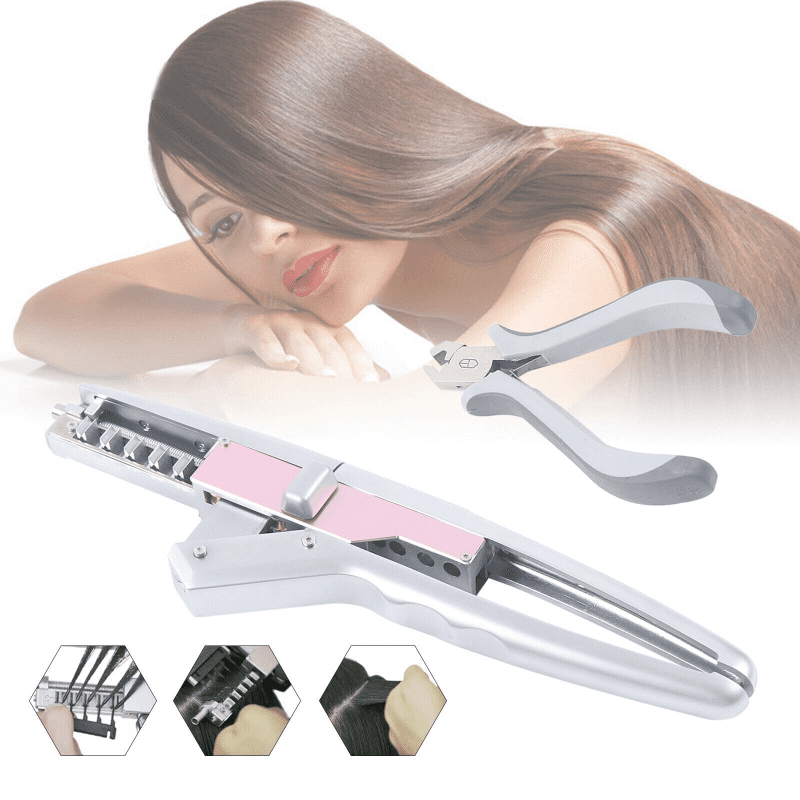
6D hair extensions are a keratin-bond system that uses a cartridge tool to place multiple pre-bonded strands in one press. Their biggest advantages are installation speed, cleaner spacing, and better workflow consistency. Their main drawbacks are tool cost, training demands, stricter quality control, and the fact that poor sectioning or weak aftercare can still lead to slip, breakage, or unhappy grow-out.
So the real question is not only whether 6D is fast. The better question is whether 6D fits your salon model, your team’s skill level, your client base, and your pricing structure.
What Are 6D Hair Extensions?
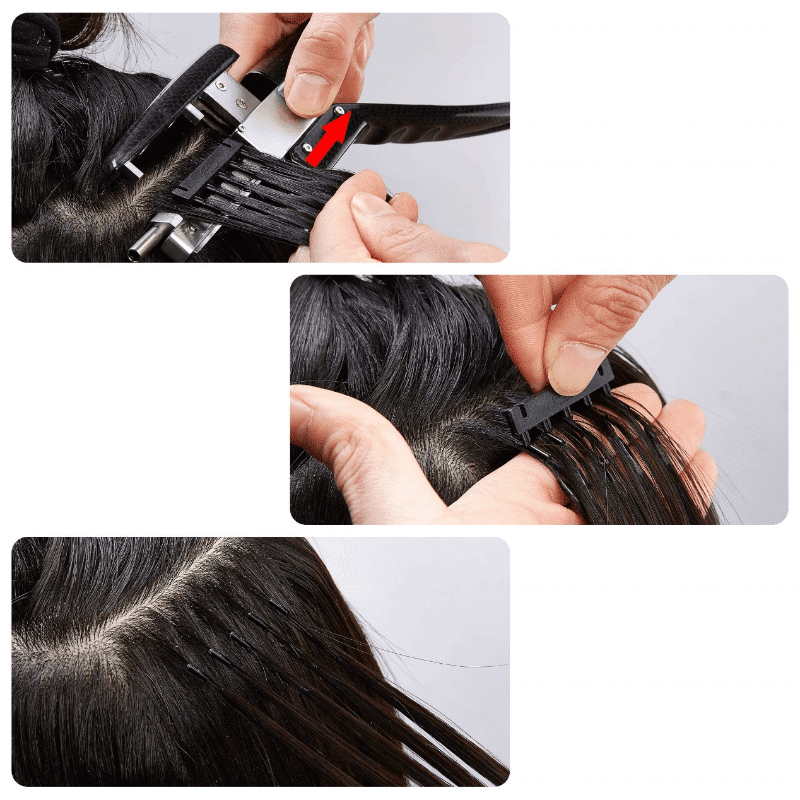
6D hair extensions are a keratin-bond extension system that uses a cartridge tool to place multiple small pre-bonded strands at once. The basic idea is not to change what strand-by-strand bonding is, but to change how it is delivered.
That difference matters.
Traditional keratin systems rely more heavily on manual placement, strand by strand. 6D is built around a more standardized delivery method. The cartridge holds pre-tipped strands, and the tool helps the stylist place them in a cleaner and faster pattern.
So when people ask what 6D really is, the clearest answer is this:
6D is not a different hair origin. It is not a tape system, a bead system, or a weft system. It is a faster, more structured way to apply keratin-bond strands.
That is why 6D often appeals to:
- salons that want more speed
- teams that want more consistency
- stylists who want a tidier placement pattern
- clients who like the flexibility of strand systems but want a cleaner service structure
The result can look very neat when done properly, but it still depends on the same fundamentals as any bond system:
- correct section size
- correct bond size
- correct spacing
- correct mapping
- correct aftercare
So 6D is not a shortcut around skill. It is a system that rewards structured skill.

6D Hair Extensions Pros and Cons
This is the real core of the topic. The system has clear advantages, but it also has clear trade-offs.
Pros of 6D hair extensions
Faster installation
The biggest advantage is speed. Because the tool places multiple strands in one press, the stylist can work much faster than with fully manual strand-by-strand bonding.
For salons, that can improve:
- chair efficiency
- team scheduling
- daily capacity
- stylist energy over long installs
More consistent spacing
When a team is trained properly, 6D can help create more even bond placement. That consistency improves the look of the finished install and can also help the grow-out behave more predictably.
Neater finish
Small, tidy bonds placed in a structured grid can create a polished result. Clients who like bond systems often care about how clean the install looks when the hair is worn down, waved, or styled into many everyday looks.
Better team standardization
This is a very important business point. In salons with more than one stylist, 6D can make it easier to create a more repeatable service standard. That matters if the goal is not just one good install, but a service that different team members can deliver more consistently.
Cons of 6D hair extensions
Tool and cartridge cost
6D is not only about hair. It also depends on equipment and consumables. The applicator, cartridges, and supporting materials all affect cost. If a salon prices the service too casually, those costs can quietly reduce profit.
Training curve
The system may look easier from the outside because the tool helps with placement, but that can be misleading. In reality, poor sectioning, bad spacing, weak angle control, or overloading fine hair will still create problems.
Less forgiving when standards are weak
A manual stylist with strong judgment can sometimes adjust freely when a section is difficult. A structured delivery system works best when the team is following good rules. If the salon has weak SOPs, weak supervision, or rushed training, 6D can become messy fast.
Aftercare still matters
Some clients hear “fast install” and imagine “easy maintenance.” That is not the same thing. Once the bonds are in, the client still needs the right wash, brush, drying, and maintenance routine.
Bottom line on pros and cons
If your team is trained, your pricing is realistic, and your clients are screened properly, 6D can be a very strong salon service. If those parts are weak, the same system can create rework, complaints, and inconsistent results.
How Do 6D Hair Extensions Work?
6D works best when the workflow is clean and structured. The tool improves speed, but the service still depends on good professional habits.
A practical salon workflow usually looks like this:
1. Consultation and density planning
Before anything is installed, the stylist should assess:
- natural density
- anchor strength
- length goal
- texture match
- color match
- whether the client is actually suitable for a bond system
This is important because the bond count and bond weight should match the client’s real anchor strength, not just the visual result they want.
2. Preparation
The hair should be clarified, fully dried, and kept free of conditioner or oil at the root area. A clean prep base helps the bonds set more predictably and reduces early problems.
3. Mapping
The stylist maps clean rows and controlled spacing across the head. This part decides how comfortable and natural the final install feels.
Bad mapping usually causes:
- uneven density
- poor daily movement
- visible bond concentration
- unnecessary stress in weaker areas
4. Cartridge loading and strand choice
The stylist chooses a cartridge and strand weight that match the client’s density. This step matters much more than many new users expect.
Too much weight on weak hair can create stress fast. Too little weight can create a thin, underpowered result.
5. Bond placement
The tool is used to align and set several bonds in one press. This is the part that creates the time-saving advantage of 6D. But even here, the stylist still has to control:
- parting cleanliness
- bond angle
- spacing
- section balance
- tension
6. Quality check and blending
Once the install is done, the stylist should check:
- bond security
- bond spacing
- tension comfort
- visual blend
- movement
- whether any areas need trimming or rebalancing
That is how 6D should work in a professional setting. It is a system for faster structured placement, not a replacement for placement judgment.
6D vs Traditional Keratin Bonds: What Is the Real Difference?
This is a useful comparison because some stylists hear “6D” and assume it is a completely different method. It is not.
Both systems are still keratin-bond systems. The biggest difference is the delivery method.
Traditional keratin bonds
Traditional keratin work gives the stylist more manual control over each individual placement. That can be useful for highly customized work, especially when the stylist wants to adapt every section more freely.
6D
6D is more structured. It improves speed and can improve consistency when the team is trained well. It is often a better fit for salons that want a repeatable system instead of a very slow fully manual process.
Which is better?
Neither is always better.
1
Traditional bonds can be better for:
- highly custom manual work
- stylists who prefer slower precision
- special placement needs
6D can be better for:
- structured workflows
- team-based salons
- faster full-head installs
- service standardization
So the real choice depends on salon style, not only technique preference.
How Long Do 6D Hair Extensions Last?
This question has two parts:
- how long the install lasts on the head
- how long the hair itself stays usable across cycles
Wear time on the head
For many clients, the practical wear cycle is around 6 to 10 weeks. That is not fixed. It changes with:
- growth speed
- aftercare
- exercise habits
- swimming
- brushing habits
- hair density
- bond spacing
For first-time clients, an early check at around 4 weeks is often smart. It helps catch tension or care issues before they become bigger problems.
Hair longevity across reuse
This depends heavily on:
- hair quality
- bond quality
- removal quality
- aftercare
- whether the hair is professionally rebonded
If the hair is high quality, especially full cuticle human hair, and the removal is careful, many stylists can reuse a good amount of the hair after professional rebonding.
That is why “How long does 6D last?” should not be answered with one number only. The install cycle and the hair lifespan are not the same thing.
Who Is 6D Best For?
6D is not for every salon and not for every client.
It usually fits best when the salon wants:
- faster full-head installs
- more standardized team results
- a tidy bond layout
- a service that feels structured and scalable
- a keratin-bond option with better workflow speed
It can also fit clients who want:
- strand flexibility
- natural-looking bond placement
- many styling options after installation
- a more polished bond pattern than some less structured systems
From a business angle, 6D often suits:
- salons with structured training
- salons that already understand bond systems
- teams that want predictable service timing
- businesses that price by real service value, not by lowest market price
Who Should Be More Careful With 6D?
This section matters, because a method can be good and still not be right for a certain client.
More caution is needed with:
- very fine or fragile hair
- postpartum shedding periods
- clients with scalp sensitivity
- clients with weak hairlines
- clients whose hair has already been heavily damaged by chemicals
- clients who are unlikely to follow aftercare rules
This does not always mean “do not install.” It means:
- use lighter bonds
- use wider spacing
- reduce density
- test a smaller section first
- or delay the service if the anchors are not healthy enough
A method should never be pushed just because it is popular.
Do 6D Hair Extensions Damage Hair?
6D does not automatically damage hair. The real risk comes from mismatch, poor technique, or weak aftercare.
The most common causes of damage are:
- bond weight too heavy for the anchor
- spacing too tight
- dirty or crossed hairs in the bond
- poor angle placement
- rough removal
- clients ignoring aftercare
Risk control points
Match weight to anchor strength
Fine hair needs lighter bonds and more conservative density.
Keep clean parts
Crossed hairs inside a bond create extra stress and increase the chance of knotting or breakage.
Control direction and spacing
Harsh bond angles create pulling during normal movement. Good spacing reduces local overload.
Teach aftercare clearly
Clients should know:
- how to brush
- how to wash
- how to dry the roots
- what products to avoid on bonds
Early red flags
These should be taken seriously:
- chalky or white-looking bonds
- clustered shedding in one zone
- itch or tightness lasting beyond the first 48 hours
- discomfort in concentrated placement areas
If those signs show up, the answer is not to “wait and see” for too long. The better response is to reassess and correct the install early.
Common 6D Mistakes Stylists Make
This is a useful section because a lot of 6D problems are not random. They are pattern mistakes.
1. Taking sections that are too big or too weak
If the natural section does not match the bond weight, the result becomes unstable.
2. Spacing too tightly
Dense placement may look full at first, but it can create too much local stress later.
3. Poor angle control
Even a clean bond can behave badly if the placement direction does not match the natural hair movement.
4. Rushing the quality check
The tool speeds up placement, but that makes it even more important to pause and check whether the pattern still looks balanced.
5. Underpricing the service
If a salon forgets to include:
- tool amortization
- cartridge cost
- training time
- recheck time
the service may look busy but not actually profitable.
6. No early recheck system
First-time clients often need an earlier review point. Skipping that can allow small issues to become bigger ones.
Is 6D Hair Extension Good?
This is the real salon question.
Yes, 6D can be very good, but only when the salon is ready for it.
It tends to work well when:
- the team is trained
- the salon follows a written procedure
- the pricing covers real costs
- the clients are screened properly
- the aftercare system is simple and enforced
It is less suitable when:
- training time is very limited
- staff turnover is high
- the salon is competing only on low price
- there is no system for early rechecks
- the team wants speed without discipline
So 6D is not good because it is trendy. It is good when the salon can support it properly.
My View
From a factory-side point of view, 6D is a good system when the salon treats it like a real method, not like a shortcut.
The speed advantage is real. The consistency advantage can also be real. But neither one matters if the salon does not have the right training, bond quality, mapping discipline, and aftercare structure behind it.
This is also why I still prioritize full cuticle hair for systems like 6D. Better hair quality usually gives better reuse value, better styling response, fewer tangles, and fewer complaints after the first weeks of wear. A salon can only build a strong 6D service when both sides are solid:
- the application logic
- the hair and bond quality
So my view is simple:
6D is worth offering when the salon wants a structured bond service and is ready to do it properly. It is not worth offering just because it sounds fast.
FAQ
What hair quality works best with 6D?
Full cuticle human hair usually performs best because it styles better, tangles less, and holds up better across reuse cycles.
Can clients swim with 6D?
Yes, but aftercare matters. The hair should be rinsed after swimming, lengths should be protected, and oils should stay away from the bonds.
How many strands are needed for a full head?
It depends on density goals, head size, and anchor strength. Many installs fall in the 150–250+ range, but the real answer should always be based on the client’s hair.
Can 6D hair be reused?
Often yes, if the hair quality is high and the removal and rebonding are handled professionally.
Is 6D suitable for very fine hair?
It can be, but only with lighter bonds, wider spacing, conservative density, and careful assessment of anchor strength.
Is 6D better than traditional keratin bonds?
Not always. 6D is usually better for speed and structure. Traditional manual bonds may still be better for highly customized detailed work.
Is 6D good for busy salons?
Yes, if the salon has structured training and pricing. That is one of the clearest cases where 6D can make sense.
Conclusion
6D hair extensions can be a strong salon method when the team is trained, the bond quality is stable, and the service is priced and managed properly. The biggest strengths are speed, cleaner structure, and better consistency. The biggest risks are weak training, poor sectioning, and unrealistic expectations. When the method fits the salon and the client, 6D can raise both efficiency and service quality.
1