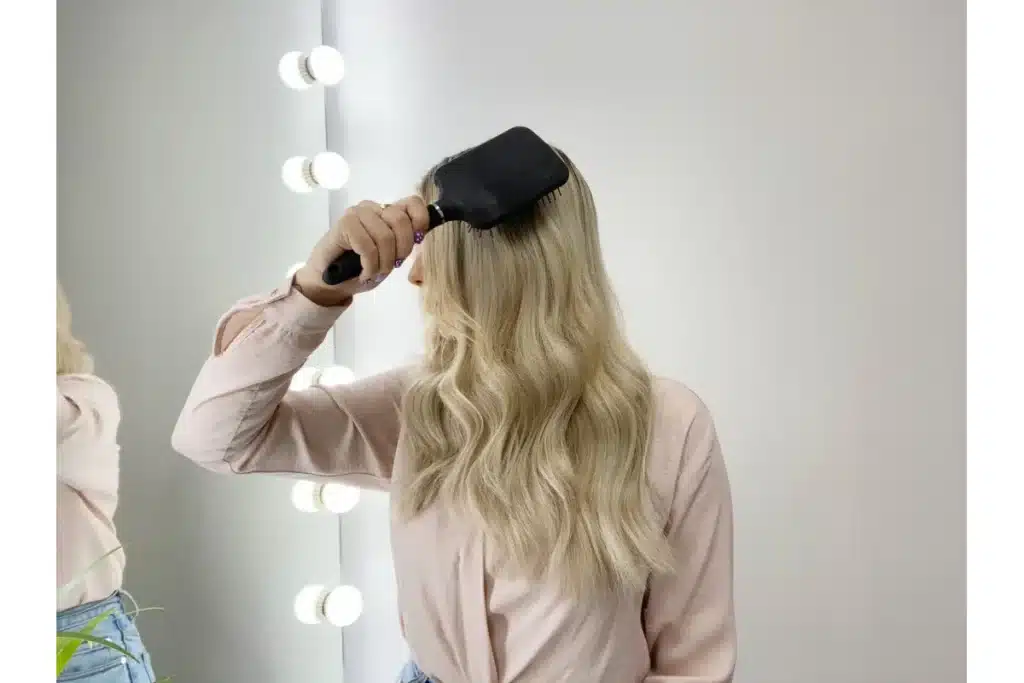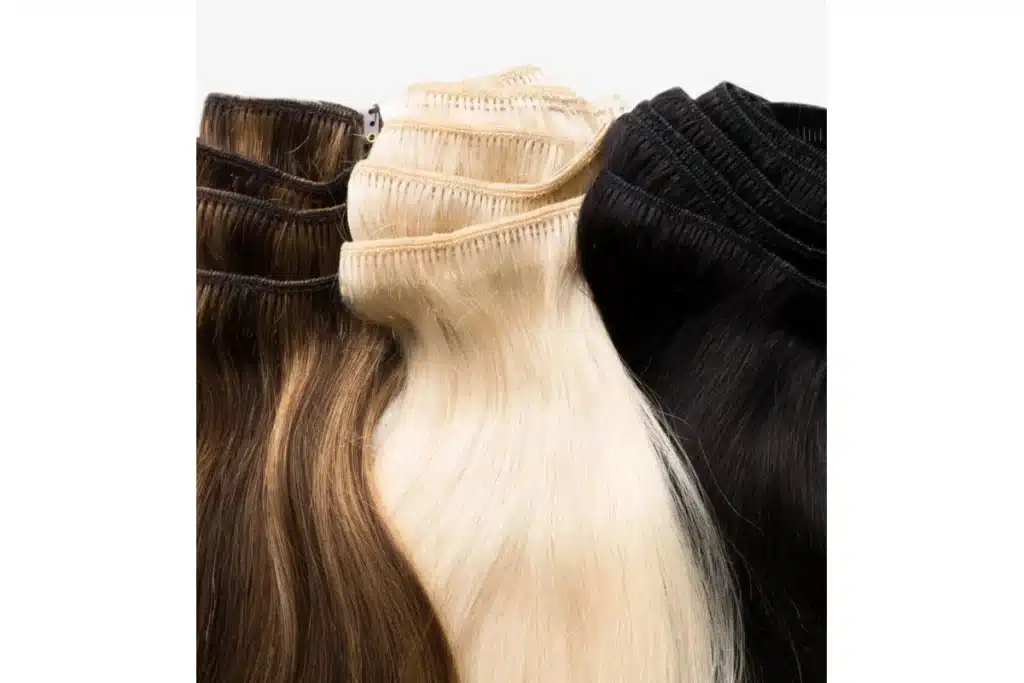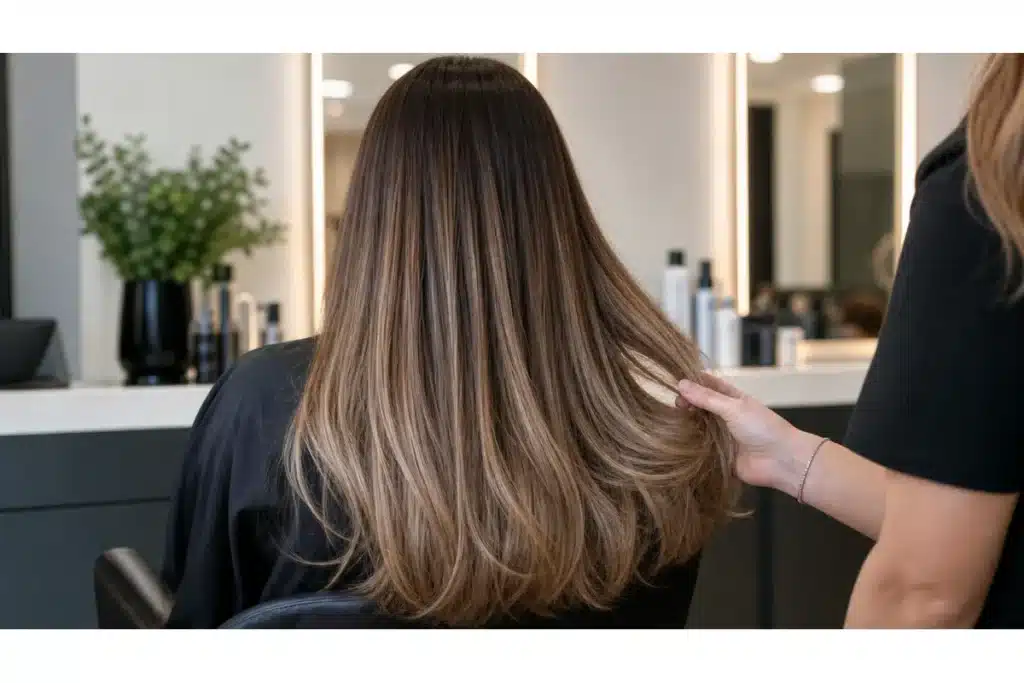
Clients often think “permanent hair extensions” means the hair stays in forever. That is not true. These methods stay in for weeks or months, but they still need salon maintenance.
Permanent hair extensions are salon-applied systems such as tape-ins, keratin bonds, micro-rings, nano rings, and wefts. They are designed for longer wear than clip-ins or halos, but they must be installed, moved up, and removed professionally.
For salons and buyers, the best permanent method depends on the client’s natural hair, lifestyle, budget, maintenance habits, and the quality of the extension hair.
What are permanent extensions?
Many people confuse “permanent” with “forever.” That confusion leads to wrong expectations. I set clear definitions and practical boundaries.
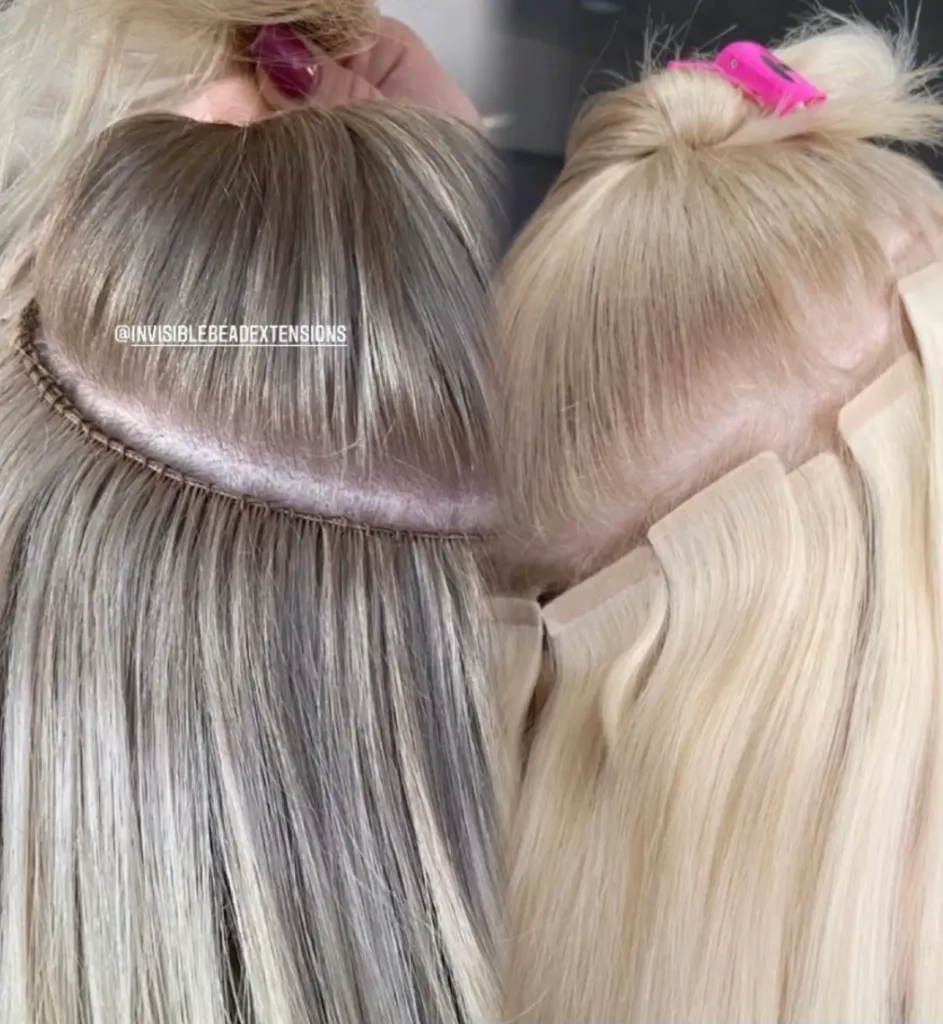
Permanent extensions are professional attachments that remain in the hair for weeks or months. Trained technicians fit them. The client does not remove them daily. The systems use adhesive, heat-bonded keratin, mechanical rings, or sewn wefts.
Dive deeper: clear definition, scope, and clinical distinction
Definition and scope
I define permanent extensions as salon-installed hair augmentations that require professional application and scheduled maintenance. The hair remains attached to the natural hair until a salon removes or repositions it. The alignment with the hair shaft, bond integrity, and reapplication schedule define the real service life.
Clinical distinction vs temporary systems
Temporary systems like clip-ins or halos are consumer products. The client applies them at home. Permanent systems require tools and technique. Permanent systems affect the hair shaft and the scalp environment. That requires professional assessment before application.
Why salons offer them
I explain three business reasons. First, permanent services create recurring revenue due to maintenance appointments. Second, premium materials justify higher pricing. Third, repeat clients build trust and referrals.
| Feature | Permanent Extensions | Temporary Extensions |
|---|---|---|
| Application | Salon professional | Self-applied |
| Wear time | Weeks to months | Daily removal |
| Tools | Heat, micro-rings, sewing | None or simple clips |
| Revenue model | Service + maintenance | Single sale |
Practical note. I always evaluate scalp health, hair integrity, and client habits before recommending a permanent method. A correct fit reduces risk and increases satisfaction.
Permanent vs Temporary Hair Extensions
| Feature | Permanent Hair Extensions | Temporary Hair Extensions |
|---|---|---|
| Common types | Tape-in, keratin, micro-ring, weft | Clip-in, halo, ponytail |
| Wear time | Weeks to months | Daily wear and removal |
| Application | Salon professional | Usually self-applied |
| Maintenance | Regular move-ups required | Removed after use |
| Best for | Long-term volume or length | Occasional styling |
| Main risk | Poor install or late maintenance | Clip tension or poor blending |
What are the pros and cons of permanent extensions?
Clients want benefits and fear damage. That worry matters. I list clear pros and cons and mitigation steps.
Permanent systems deliver seamless, everyday results. They require maintenance and an upfront investment. The right method minimizes risk.
Dive deeper: benefits, risks, and professional mitigation
Clinical benefits
Permanent extensions provide consistent volume and length. They allow complex color effects without damaging the client’s own hair. They integrate with professional styling. They support advanced looks like balayage on extensions only.
Common risks and causes
Damage arises from incorrect weight distribution, poor attachment, or weak hair. Over-tension at bonds causes traction alopecia. Low-grade hair sheds faster and tangles. Incorrect adhesive or excess heat weakens the natural shaft.
How to mitigate risks
I recommend an initial consultation with a hair integrity test. The test includes a strand thickness check and a gentle pull test. I select a method that matches shaft diameter and density. I recommend full cuticle, single-donor hair to reduce tangling. I train staff on spacing, bonding angle, and load per follicle.
| Pro | Why it matters | Mitigation |
|---|---|---|
| Natural movement | Blends with client hair | Use full cuticle hair |
| Long wear | Client convenience | Set maintenance schedule |
| High-value service | Salon revenue | Train technicians |
| Versatility | Color and style options | Match method to hair type |
| Higher cost | Upsell opportunity | Offer financing or packages |
What are the types of permanent hair extensions?
Many sources list a few names. That creates incomplete advice. I provide full categories and subtypes with technical notes.
Permanent methods fall into four families. They are tape-in systems, keratin bond systems (heat applied), micro-ring systems (no heat), and weft systems (sewn or taped). Each family has subtypes for specific client needs.
Tape-in family (adhesive based)
- Classical Tape-In: Two adhesive strips sandwich the client’s hair. The bond is flat. The install is fast. This is ideal for medium-thickness hair.
- Invisible Tape-In (PU base): Hair is injected into a transparent polyurethane base. The base mimics the scalp and reduces edge visibility. Use for very short or fine hairlines.
- Stitched Tape-In: Tape base with 1–2 stitched rows increases tensile strength and reduces shedding. Use when client needs durability and repeated wears.
- Micro Tape-In: Small, flower-shaped tape sections disperse hair for a fuller blend. Use for fine or thinning zones.
- Mini Tape-In: Tiny tabs for precision placement around the hairline or partings. Best for fine hair.
- Invisible Tape Weft: Pre-taped weft using injection tech for a flat, fast application. Good for full-head installs with reduced chair time.
- Long Tape Weft: Long pre-taped wefts reduce install time for large-volume jobs.
Practical points: Tape adhesives vary by tack level. Use medical-grade adhesive for longevity and low-irritation. Reapplication occurs typically every 6–8 weeks.

Keratin bond family (heat applied)
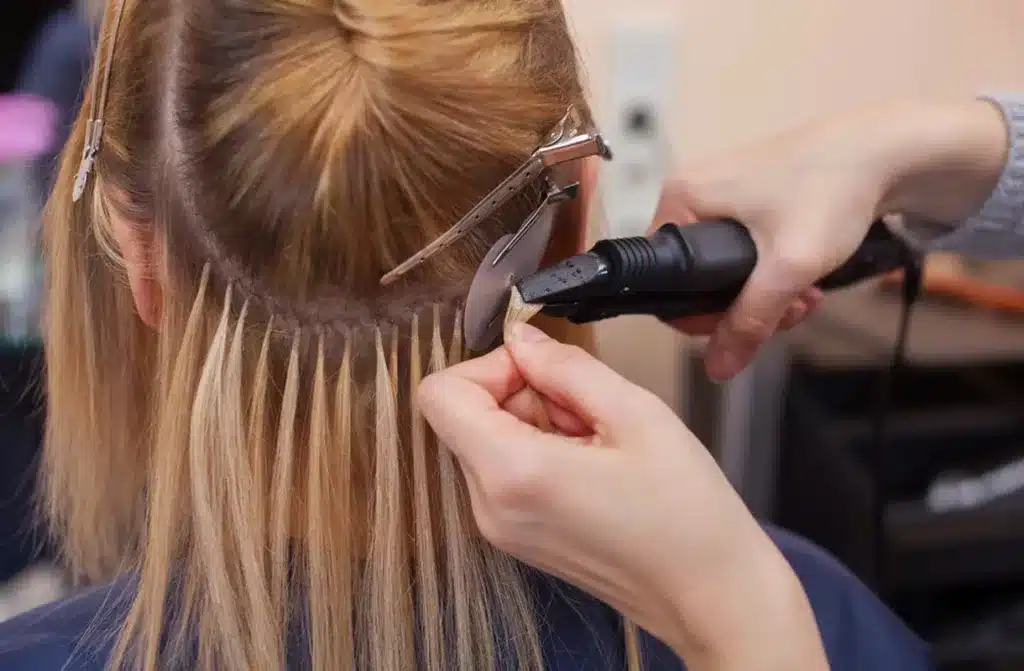
- U-Tip (Nail) Bonds: Keratin pre-tips shaped like a U. Use a heat connector to melt bond around the natural hair. Very secure and natural when placed correctly.
- V-Tip Bonds: V-shaped keratin creates a slimmer bond profile. Good for fine hair and for blending near the hairline.
- Flat-Tip Bonds: Flat keratin bonds lay flatter than U or V tips. They can be trimmed and shaped to match the client’s layering.
Practical points: Use dedicated heat tools with temperature control. Avoid repeated heating on the same bond. Keratin bonds are strong but not typically reusable.
Micro-ring family (no heat)
- I-Tip (Stick Tip): Hair is tipped and inserted into a micro-ring. The ring is clamped. Movement is 360°. Reusable and gentle if rings are correctly sized.
- Nano Ring: Smaller rings that reduce bulk and visibility. They require precision tools. Use for clients prioritizing invisibility.
- Micro Ring / Micro Loop: Larger beads for sturdy attachment without glue or heat.

Practical points: Rings compress around a strand of natural hair. Use silicone-lined rings for reduced slipping. Re-lifts involve sliding rings and re-clamping.
Weft family (sewn or taped)
- Regular Machine Weft: Sturdy two-layer weft. Cuttable and durable. Good for standard full-head installs.
- Volume Weft: Triple-layer weft to increase fullness with fewer wefts. Good for heavy density needs.
- Hand-Tied Weft: Thin, handmade weft that lies flat. Luxury choice. Cannot be cut without risk of shedding.
- Genius Weft: Hybrid of hand and machine methods. Thin top, cuttable, low shedding. Suited to high-end salons.
- Flat Weft: Thin and sealed to prevent shedding. Comfortable and discreet.
- Volume Genius Weft: Double/triple-layered Genius design for thickness with invisibility.
- Butterfly Weft: Weft with pre-spaced holes to speed beaded and reduce bulk.

How Long Do Permanent Hair Extensions Last?
| Method | Maintenance Cycle | Hair Reuse | Notes |
|---|---|---|---|
| Tape-in | 6–8 weeks | Yes, if retaped properly | Adhesive care matters |
| Keratin bond | 3–5 months | Usually no | Professional removal required |
| Micro-ring / nano ring | 8–12 weeks | Yes | Ring size and tension matter |
| Weft | 6–10 weeks | Yes | Depends on weft construction |
The install cycle and the hair lifespan are not the same thing. A method may need move-ups every few weeks, while high-quality hair can still be reused for a longer period.
This taxonomy helps when matching a client’s hair, activity level, and budget to the right system. I recommend in-salon trials for new technicians.
How long do permanent hair extensions last?
Clients ask about weeks and months. They expect precise guidance. I give realistic timelines and factors that influence longevity.
Lifespan depends on the method, hair grade, client care, and maintenance cadence. The same extension will last longer when installed correctly and cared for.
Typical lifespans by method
- Tape-in: 6–8 weeks before re-lift. The tapes can be reused 3–4 times when cleaned properly.
- Keratin bonds (U/V/Flat): 3–5 months with proper placement. Keratin tips are single-use.
- Micro-rings / Nano: 8–12 weeks between adjustments. The hair strands are reusable for many cycles.
- Wefts (sewn/taped): 6–10 weeks per install. Weft bundles can be restitched or reused depending on weft type and handling.
Factors that shorten lifespan
- Heat exposure from styling tools at the bond area.
- Use of oily or silicone-heavy products that break down adhesives.
- Rough brush technique and poor detangling.
- High-tension hairstyles like tight ponytails.
- Excessive chemical services performed by inexperienced stylists on the bonded area.
Maintenance schedule
- Tape-in: Re-lift every 6–8 weeks. Clean tape residue with approved solvent. Replace tapes when tack weakens.
- Keratin bond: Remove and reapply after 3–5 months. Use a heat protector on the natural hair.
- Micro-ring: Slide and clamp rings or replace every 8–12 weeks. Replace silicone liners as needed.
- Weft: Re-sew or re-tape after 6–10 weeks. Monitor weft edge for shedding.
| Method | Re-lift interval | Key maintenance |
|---|---|---|
| Tape-In | 6–8 weeks | Clean adhesive, replace tapes |
| Keratin Bond | 12–20 weeks | Professional removal only |
| Micro-Ring | 8–12 weeks | Slide rings, check liners |
| Weft | 6–10 weeks | Restitch, check seals |
I train clients on gentle wetting, brush direction, and product selection. Proper education extends lifespan and protects your salon’s reputation.
How do permanent extensions work?
Technicians need to know the mechanics. That knowledge prevents mistakes. I explain the physical and chemical actions behind each method.
Each system attaches hair by a different mechanism. Adhesion, fusion, mechanical clamping, or sewing are the core techniques. The technique determines tools, risks, and aftercare.
Tape-in mechanics
Tape-in extensions use pressure-sensitive adhesive. The adhesive bonds two thin wefts around a thin slice of natural hair. The bond relies on clean hair and proper pressure. Solvent breaks down adhesive at removal. Tools: application tabs, leveling comb, and a solvent for removal.
Step summary:
- Section hair. 2. Clean hair at the root. 3. Place lower tape under natural hair. 4. Sandwich with upper tape. 5. Press firmly and check alignment.
Keratin bond mechanics
Keratin tips melt when heated with a connector. The molten keratin flows around small sections of natural hair. The keratin cools and solidifies into a rigid bond. Tools: temperature-controlled heat connector, pliers, and a finishing trimmer.
Step summary:
- Section hair. 2. Load extension under heat. 3. Apply heat to melt keratin. 4. Roll and press the bond to shape. 5. Trim bond if needed.
Micro-ring mechanics
Micro rings clamp around a small section of natural hair and the extension’s tip or loop. Silicone liners increase grip and reduce metal-to-hair contact. Tools: insertion needle, pliers, and high-precision rings.
Step summary:
- Thread natural hair into ring. 2. Insert extension tip. 3. Position ring close to the root but not on the scalp. 4. Clamp ring with pliers.
Weft mechanics
Wefts are sewn onto a track or integrated with a tape base. The track can be a beaded foundation or a cornrow. Tools: curved sewing needle, thread, or tape guns for pre-taped wefts.
Step summary:
- Prepare the base (braid or bead row). 2. Align weft. 3. Sew with secure stitches or apply tape. 4. Check tension across the scalp.
| Method | Core mechanics | Primary tools |
|---|---|---|
| Tape-In | Pressure adhesive | Tape tabs, leveling comb |
| Keratin Bond | Heat fusion | Heat connector, pliers |
| Micro-Ring | Mechanical clamp | Rings, pliers, needle |
| Weft | Sewing / tape | Needle, thread, tape |
What are the best permanent hair extensions?
Buyers ask for “the best.” That request is incomplete. I explain evaluation criteria and offer recommendations by client goal.
The best extension is the one that matches the client’s hair, the stylist’s skill, and the salon’s service model. Material quality and factory control top the list.
Key selection criteria
- Hair quality: Full cuticle, single-donor hair resists tangling and lasts longer.
- Weft construction: Sealed edges and even density reduce shedding.
- Adhesive & keratin quality: Medical-grade adhesives and keratin formulas reduce irritation and improve lifespan.
- Color matching: Natural color blends and a wide color palette lower the need for salon color correction.
- Batch consistency: Same-donor lots provide uniform texture across large orders.
| Goal | Recommended system | Why |
|---|---|---|
| Luxury | Hand-tied / Genius Weft | Thin top, natural lay |
| Fast installs | Invisible Tape Weft | Reduced chair time |
| Fine hair | Nano Ring / V-Tip | Low profile bonds |
| Budget-friendly | Regular Machine Weft | Cost effective, durable |
Best Permanent Hair Extensions by Client Need
| Client Need | Better Options | Why |
|---|---|---|
| Fast salon service | Tape-in extensions | Flat, quick, reusable |
| Long-term secure wear | Keratin bonds | Strong individual attachment |
| No heat or glue | Micro-ring / nano ring | Mechanical bead attachment |
| Maximum volume | Weft extensions | Good density and row coverage |
| Fine hair | Invisible tape, nano ring, V-tip | Lower-profile attachment |
| Thick hair | Weft, U-tip, machine weft | Stronger support for volume |
How to choose the right permanent extension for your client?
Stylists need a repeatable decision path. I provide a clinical checklist and a mapping table.
A good consultation reduces rework. The checklist identifies hair health, client priorities, and technical constraints.
Consultation checklist
- Ask about daily routine and styling tools.
- Inspect scalp and hair for disease, breakage, or thinning.
- Measure hair diameter with caliper or visual gauge.
- Perform a gentle pull test to assess anchoring strength.
- Discuss maintenance willingness and budget.
- Determine desired outcome: length, volume, or both.
Decision matrix (example)
| Client profile | Recommended system | Rationale |
|---|---|---|
| Thick hair, needs volume | Hand-tied weft / Volume Weft | Wefts distribute weight and add thickness |
| Fine hair, wants invisibility | Nano Ring / Invisible Tape-In | Low-profile bonds reduce visibility |
| Active client, swims often | Keratin U-Tip with waterproof care | Strong bond, careful aftercare |
| Budget-conscious | Machine Weft | Lower product cost, effective install |
This step-by-step system standardizes consultations across your staff and improves client outcomes.

Quality Checks for Salons and Wholesale Buyers
For salons and hair brands, permanent hair extensions should be tested before bulk ordering.
| Check Point | Why It Matters |
|---|---|
| Full cuticle hair | Reduces tangling and dryness |
| Attachment quality | Affects comfort, hold, and removal |
| Color consistency | Protects repeat orders |
| Weight accuracy | Helps service planning |
| Reuse performance | Improves long-term value |
| Sample-to-bulk consistency | Reduces complaints |
A good sample test should include washing, brushing, installing, removing, and checking the hair again after drying. First-touch softness is not enough.

My View
I do not like calling these methods truly “permanent.” They are better described as professional longer-wear extensions.
The method matters, but the bigger difference is matching the right system to the right client. Tape-ins are fast and flat. Keratin bonds are secure. Micro-rings avoid heat and glue. Wefts are strong for volume.
From a manufacturer’s point of view, hair quality and attachment construction decide whether salons get repeat clients or complaints. Full cuticle hair, stable color, clean bonds, good tape, and consistent batches are more important than chasing the cheapest product.
FAQs About Permanent Hair Extensions
What are permanent hair extensions?
Permanent hair extensions are salon-applied extensions that stay in the hair for weeks or months, such as tape-ins, keratin bonds, micro-rings, nano rings, and wefts.
Are permanent hair extensions actually permanent?
No. They are not permanent forever. They need regular move-ups, removal, or reapplication depending on the method.
How long do permanent hair extensions last?
Tape-ins usually need maintenance every 6–8 weeks, micro-rings every 8–12 weeks, wefts every 6–10 weeks, and keratin bonds usually last around 3–5 months.
Do permanent hair extensions damage hair?
They should not damage hair when installed, maintained, and removed correctly. Damage usually comes from poor placement, too much weight, tight tension, or late maintenance.
What is the best permanent hair extension method?
There is no single best method. Tape-ins are good for fast flat installs, keratin bonds for secure wear, micro-rings for no-heat attachment, and wefts for volume.
Which permanent extensions are best for fine hair?
Invisible tape-ins, nano rings, V-tips, and lightweight wefts may work better for fine hair when weight and placement are controlled.
Conclusion
Permanent hair extensions are not permanent forever. They are professional longer-wear methods that stay in the hair for weeks or months and need proper maintenance.
Tape-ins, keratin bonds, micro-rings, nano rings, and wefts all have different strengths. The right choice depends on the client’s hair density, lifestyle, comfort needs, budget, and maintenance schedule.
For salons and hair brands, the safest choice is to test both the hair quality and attachment structure before ordering. You can explore our tape-in hair extensions, keratin hair extensions, hair weft extensions, or contact Hibiscus Hair to request samples.